
Embracing Winter
Winter can be hard and really drag on especially if you have animals. Here are some ideas to make the dark, dreary months a bit more pleasurable.
Embracing Winter
After all it is going to happen anyway!
You can put it off no longer; it’s time to get the waterproofs and thick jumpers out of storage and your wellie boots on. We gingerly go through our winter coat pockets and pull out an array of objects ranging from a once prized pinecone, bits of hay, a poo bag to a single glove and a mouldy dog treat from months ago!
Winter in the UK can be cold, wet, and in some years, really drag on. The desire to hibernate until the spring is real, and I think if I didn’t have dogs and horses, that is probably what I would do. So, another benefit of having dogs is that they encourage us to get outside and exercise, even when we would rather not.
A woodland walk is lovely at this time of year and often much drier underfoot than the footpaths. The scent is often strong with mushrooms and fungi on the forest floor, and various wildlife passing through seeking food and shelter. Nature has shut down for deep rest, and the landscape can just be variations of brown and grey with the occasional sighting of red from holly berries or rosehips, yet to be eaten by birds or deer. There is some interest in the hedges and garden, but mostly seed heads such as fennel, hogweed, and ivy, and they look beautiful against the pale grey skies.
Don’t forget to scan the horizon and spot collections of mistletoe that form in large pom-pom shapes high up in trees. The trees will be bare, so spotting mistletoe is much easier at this time of year and a welcome splash of green in amongst the brown.
If you are very lucky, you will be rewarded for braving the weather with a spectacular air show from a swirling mass of ever-changing shapes made by thousands of starlings forming a murmuration. This phenomenon occurs at dusk from November until late February.
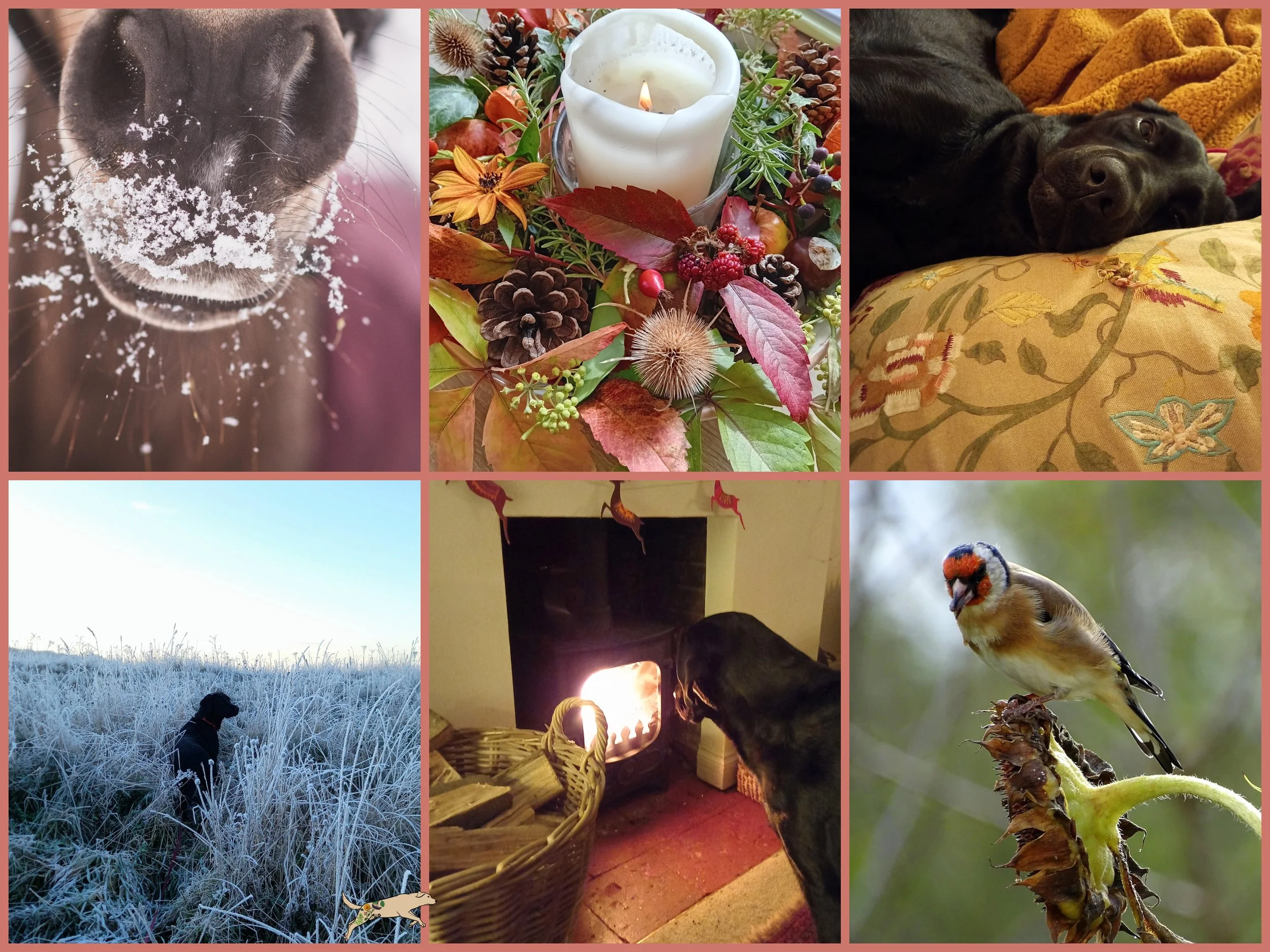
Snow always brings huge excitement for dogs, and even the most sensible hound can turn into a boisterous puppy again as they roll in the snow, get the zoomies, and generally let their hair down.
Keeping horses in winter can be really hard, and every year around February after months of rain, snow and ice, you always question your life choices.
The memories of mud, frozen water, treacherous conditions under foot and hoof, limited turnout, mud fever, lugging hay, water and feed plus dealing with heavy wet turnout rugs does surprisingly fade by around May time.
Finding the joy in the everyday.
The ritual of taking in early morning light is still very important for our circadian rhythm and the wake sleep cycle, this also applies to our dogs. A morning walk or just spending time in the garden at first light will help you adjust to the change of season and improve sleep. It is also important to limit blue light from TV and computer screens which will disrupt the delicate cycle.
Starting the day a little slower rather than a mad rush, eases you into the day ahead. One way is to light a tea light while you drink you first cup of tea or coffee, sit quietly and watch the flame with no interaction and certainly no social media.
Foraging for items such as pine cones, lichen covered twigs, coloured leaves, crab apples and feathers for wreaths & decorations.
I love listening to the horses contentedly munching on sweet hay and slipping my hand down the side of their rug knowing they are warm, dry and comfortable for the night ahead.
Taking flasks of boiling water to the stables so the horses can have a warm breakfast on the bitterly cold days.
Breaking the ice on the field trough and lifting out a complete sheet of ice in one go.
Little things that make the long cold days & nights more bearable.
Fairy lights, preferably those with a golden glow are a non negotiable in the house over winter. They bring warmth and light to the gloom that these dreary months can offer.
Gorgeous hearty stews made in the slow cooker. Prepare the night before, put on low in the morning and return home to an absolute treat especially if herb dumplings are involved!
Homemade soups using root veg you have grown yourself.
Drying coats for the dogs not only offer warmth, particularly for elderly dogs, but help cut down the wet, mud and grit that comes with wet dogs at this time of year.
There are some days when it might be hard to get the dogs out, you wake up full of cold or flu or the weather is just so horrendous all you can manage is a dash round the block. These are the days to make use of the snuffle mats, interactive toys or other ways to incorporate scent work indoors. Using their noses and problem solving skills is so satisfying for them and you may find they are really tired afterwards.
Making a batch of bone broth for the dogs. It is a welcome and nourishing treat on the bitter days. It can be frozen in small containers and gently reheated and served warm.
Electric blanket set on high 30 minutes before bed time, absolute heaven! The dogs appreciate it as well or there are dog friendly versions for the dogs that prefer their own bed.
Fleece lined waterproof over trousers, are a must have for dog walking and you may not want to take them off once you get home!
Everything in nature winds down for winter, taking time to rest, recuperate & slowly recharge. The herb and vegetable garden has taken its self off to bed. The Calendula was still going strong until 3 consecutive nights of hard frost finished them off. I have made “bug hotels” from twigs, moss and leaves which will give welcome shelter and food for many small creatures.
Fallen leaves are used as a layer to protect plants over winter and the sunflower and fennel heads are full of seed so the birds can help themselves to a banquet when temperatures start to drop.
Perhaps this winter, rather than wishing the darker evenings away, we could learn to welcome them. To enjoy the warmth of home, the nourishment of good food, the restorative qualities of rest and the simple pleasure of having our dogs beside us. After all, spring will come soon enough. For now, perhaps winter is inviting us to slow down and simply be.

Canine Enrichment Herb Garden
Everything is covered to help you easily build your enrichment garden. Important topics include the choice of herbs, adding interactive items such as snuffle mats, choosing planters and pots, soil health, the importance of a chemical-free lawn, and ways to embrace nature with your dog throughout the seasons.
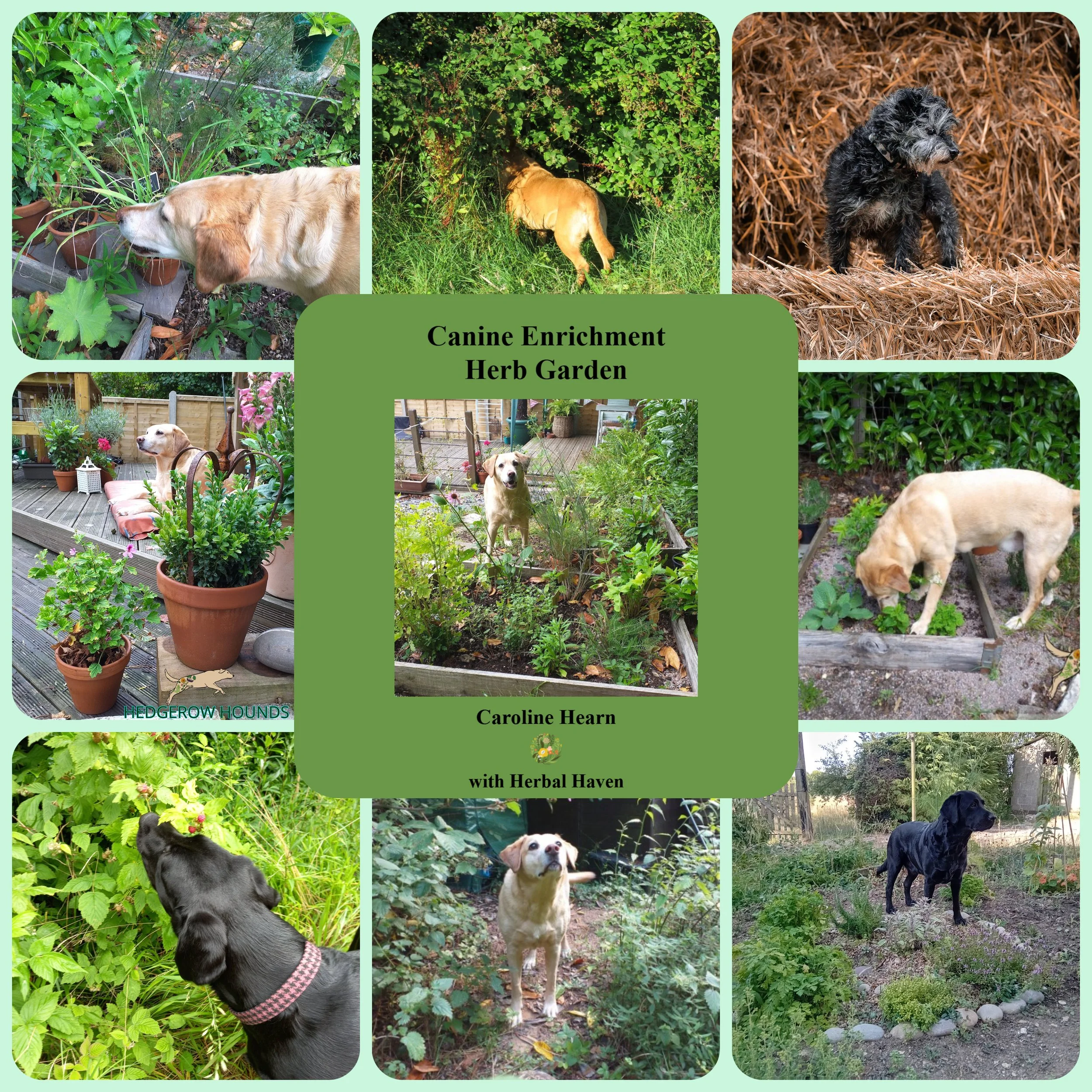
A book celebrating the love of dogs, the beauty of herbs, and the wonders of nature.
My first book is about a topic I am deeply passionate about and that has been an interest of mine for many years. It is written from a holistic approach to creating an enrichment space, using knowledge gained over the past 35 years and given to me by my greatest teachers: the dogs themselves.
So, what exactly is an enrichment garden, and why should we create one?
An enrichment garden offers dogs the freedom to move and explore at their own pace, without human interference or direction. This can be a dedicated space or incorporated into our existing garden. It encourages natural behaviours and curiosity, rather than learned responses, allowing dogs to be themselves without pressure to respond to our expectations of what they should be doing. The space will include herbs, textures underfoot, and aromas for the dog to interact with, as well as to move their body in a therapeutic way to calm the nervous system and improve mobility.
There is a section on providing enrichment for dogs with specific needs, such as the elderly, blind, or disabled dogs, as well as puppies.
Importantly, there is a chapter on ways we can benefit from this beautiful space, too.
The area we are going to create for our dogs can provide the following:
An outlet for instinctual behaviours such as sniffing, foraging, grazing, problem solving, digging, and exploring; all fantastic for reducing stress, frustration, and lowering anxiety.
Mental stimulation with scent from the environment and additional items such as snuffle mats and interactive toys.
A sensory experience with scent, sound, and texture underfoot. The garden will constantly change because of plant growth, weather conditions, seasonal changes, and what wildlife has visited the garden. Every day will offer something a little different.
Encouragement of natural movement without our influence or expectations.
Building confidence in themselves as the effects of sniffing and exploring lower the stress hormones and make the world seem a less scary place.
By going through a natural range of movements over varying textures and terrains, we are encouraging the dog to work all their body systems.
Enhanced well-being and quality of life.
A space that is appealing to look at, and that we enjoy spending time in with our dog.

We explore the many herbs that are suitable and safe for the herb garden, whether you choose to plant them in pots or directly into the ground.
With so many dog-friendly herbs to choose from, there is an extensive list in the book, as well as plants to avoid. Many are hardy and evergreen, so will provide interest all year round. If you have a small space and want to create an enrichment area in pots, then that is covered too.
Providing texture and varying terrain is also important, and how the dog’s body adapts and processes the information that is being fed back to them as they travel over hard and soft ground, slopes, and step over small obstacles.

Adding in texture, such as shingle, wood chippings, moss, mat-forming herbs, textured pathways, and sand, all add to the sensory experience.
Everything is covered to help you easily build your own enrichment garden. Important topics such as the choice of herbs, adding interactive items like snuffle mats, choosing planters and pots, soil health, the importance of a chemical-free lawn, and ways to embrace nature with your dog throughout the seasons.

Learn how simple adaptations in your garden can provide a sensory experience as well as therapeutic movement.
The book is available on Amazon as an e-Book or paperback on the link below: Here is the link https://www.amazon.co.uk/dp/B0FHKYK5T9
Or there are often paperbacks on the shop to buy. https://www.hedgerowhounds.co.uk/products/canine-enrichment-herb-garden-book
If you are looking for more help in creating your own enrichment garden for your dog or perhaps your dog has specific needs then I do offer a consultation to support and advise you. Here is the link: https://www.hedgerowhounds.co.uk/products/p/canine-enrichment-garden
The book also talks about enjoying the changing seasons and appreciating the way nature adapts throughout the year.