Which herbs are suitable for a dog friendly garden?
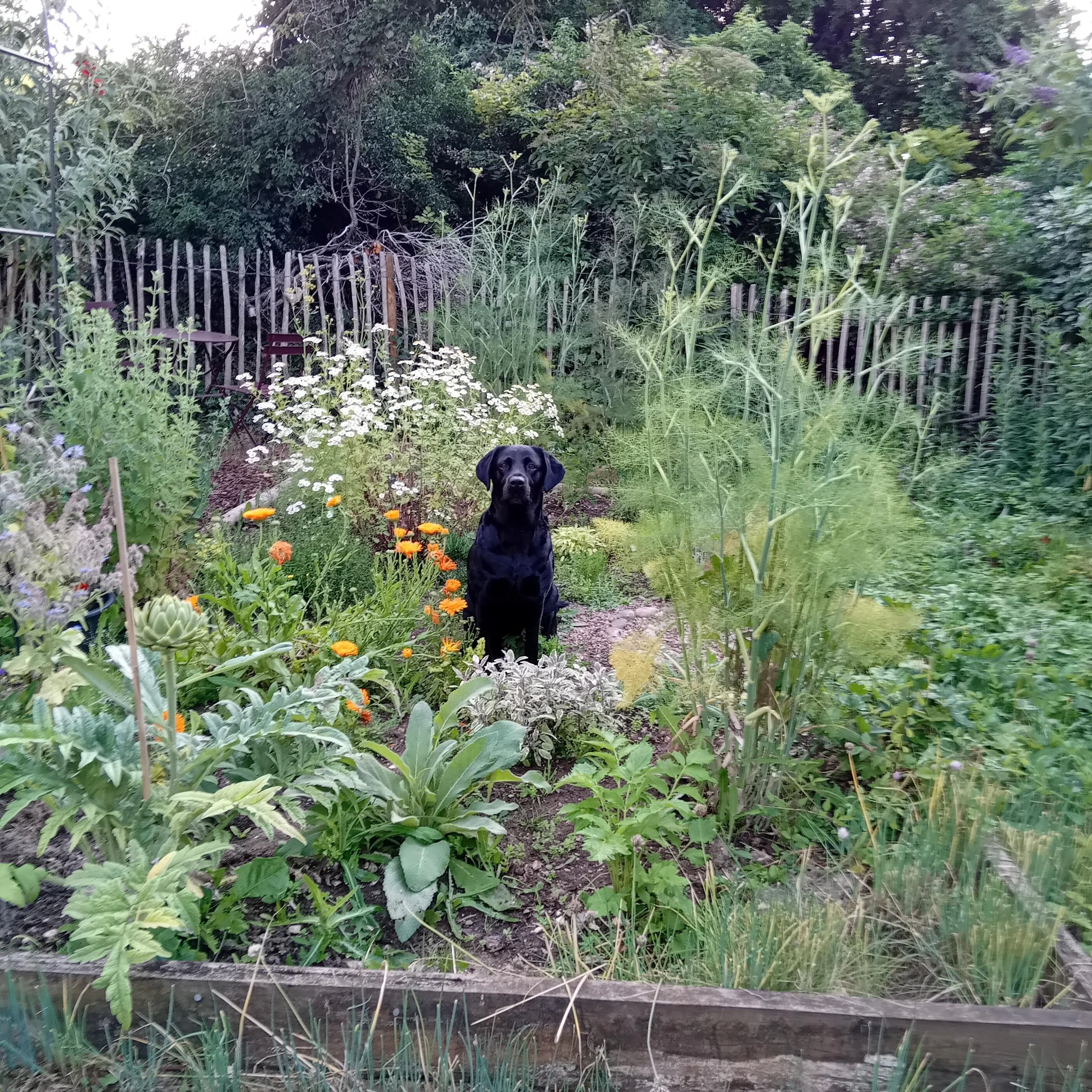
Would you love to create a dog friendly enriching outdoor space for your dog? This blog will explore which dog friendly herbs you can grow either in a herb garden or in pots.
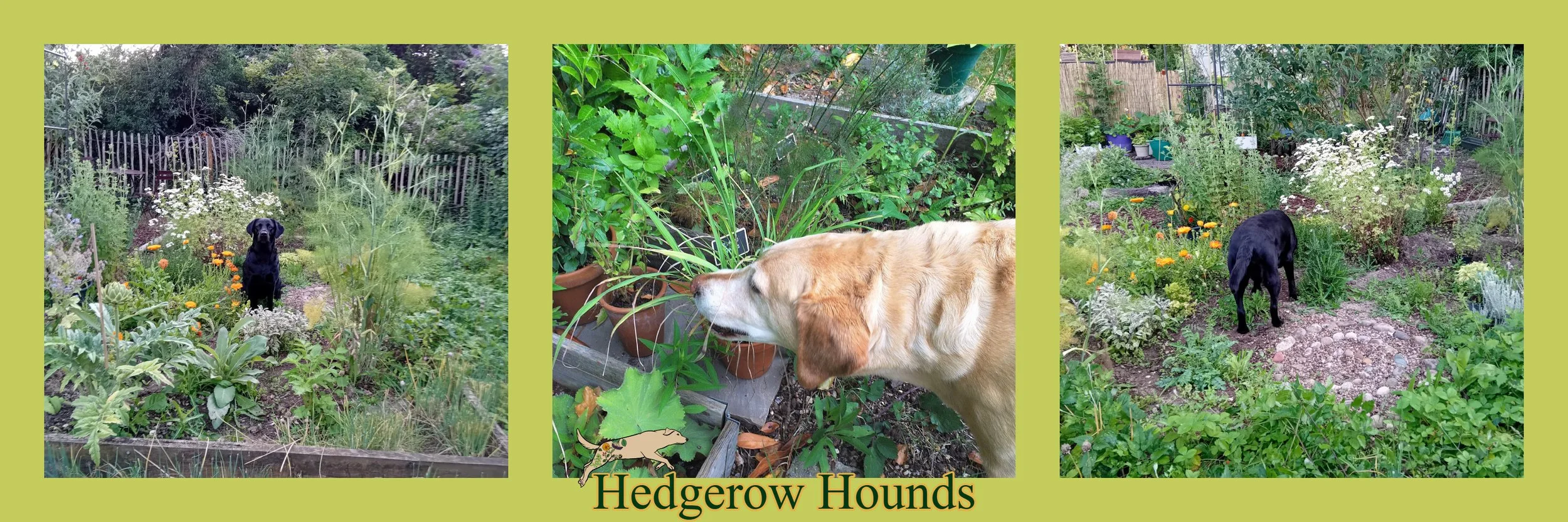
Making the most of your outdoor space and creating a sensory area to enrich the life of your dog.
If you want to learn more about planting a herb garden which will be safe for your dog to explore, sniff, wander through, walk over or even possibly nibble on then here are a few great herbs to get you started. These can be grown in the ground, troughs or pots.
These are some of my favourites:
Barley grass (Hordeum vulgare )
Barley grass is easy to grow in pots, and your dog may well eat the fresh shoots as they appear. It can be quickly grown from seed, and you will find it at most garden centres. It is often called “cat grass”. I usually rotate the grass I grow with wheatgrass, oat grass and lemongrass.
Calendula (Calendula officinalis)
Calendula, also known as pot marigold, is a hardy annual, with the most glorious orange daisy-like flowers that last well into the autumn months. Not to be confused with the summer bedding plant Tagetes, it makes a very effective balm or cream to ease and soothe many skin complaints. Regularly deadhead after flowering to prolong the flowering season.
Catmint (Nepeta cataria)
Nepeta is a hardy perennial with highly aromatic foliage and pretty mauve flowers. It is a huge hit with cats who will often nibble on the leaves and roll on the plant. Catmint is a good choice to plant as edging and looks beautiful spilling out onto a pathway.
Chamomile
Chamomile is a delicate and aromatic herb traditionally used for calming the digestion and nervous system. It can easily be grown in pots or planted into the soil. It will release a beautiful calming scent when your dog sniffs or walks through its leaves and flowers.
Fennel (Foeniculum vulgare)
Fennel is a fabulous herb. The vibrant green and bronze varieties are great if you want to create some height in your herb garden and perhaps disguise an unsightly fence. Fennel grows between 3-5 feet in height and forms long feathery plumes followed by umbels of yellow flowers in the summer and autumn. Every part of this herb smells and tastes of aniseed. It is a nice one for your dog to brush by or walk between if you plant two side by side.
I will often pick some and finely chop it before adding a sprinkle into my dog’s food. You can harvest and dry the seeds at the end of summer for winter use.
Lavender (Lavandula angustifolia)
There are so many varieties of lavender to choose from; the smaller English lavender has a very good aroma, while the flamboyant French lavender with the cute “rabbit ears” petals popping out of the top is very lovely too. There isn’t much difference in terms of scent between them all, so pick whichever variety makes you happy.
Lavender has so much to offer in the enrichment garden as it is evergreen, very fragrant, has a calming aroma, and is beautiful while being a huge hit with pollinators.
Lemon Balm (Melissa officinalis)
Lemon balm has a citrus taste and smell and is traditionally used for calming the mind and gut. Like its cousin, mint, it is very invasive, so ideally needs to be contained in a pot, or it will spread everywhere.
Lemon grass (Cymbopogan citratus)
You can grow lemon grass in pots for the summer, but it is unlikely to survive winter, so you will need to bring it inside. I have known a couple of my dogs to eat the young shoots of lemon grass, which are more tender and have a stronger citrus taste than the older leaves, which can become tough and fibrous as the plant ages.
I usually have wheat grass, oat grass and lemon grass together in pots, should the dogs want to help themselves to the moist shoots.
Mint (Mentha piperita)
There are so many species of mint to choose from, so go with the one you like, but don’t be tempted to plant it directly in the soil, as it will soon invade your entire herb bed. Instead, plant it in a large pot or trough and pick regularly to stop it from becoming tall and leggy.
Marjoram (Origanum marjorana)
Marjoram is such a great but underrated herb. It has a fantastic, strong aroma with pretty leaves, and the variegated variety is particularly nice. It has a dense growing habit and grows fairly low to the ground, a maximum of 50cm tall, which makes it robust enough to withstand paws walking over the top of it.
Parsley (Petroselinium crispum)
Parsley is a must-have in the garden as it’s so versatile. There are flat leaf and curly leaf to choose from, and the flavour is very similar, so stick to the one you prefer. I will often go into the garden and pick parsley, finely chop it and add it to the dog’s meals.
Rosemary (Rosmarius offininalis)
What a joy Rosemary is, with an aroma that cannot fail to lift the spirits. Can you walk past a rosemary bush without running your hands through the leaves and inhaling the scent? I certainly can’t!
It is evergreen, hardy, and has beautiful flowers that pollinators adore. In recent studies, rosemary has also been shown to improve memory. It will grow happily in a large pot or planted in well-drained soil, and there is also a trailing rosemary if you want to use it more as a ground cover plant.
Sage (Salvia officinalis)
Sage is another must-have for the garden. The leaves are soft but also somewhat leathery to the touch, which makes them tough enough to withstand a dog walking over them and survive to tell the tale. There are varieties with blue-green, dark purple, and variegated leaves, adding a bit of colour throughout the autumn and winter months as well. It has a wonderful pungent smell and strong flavour.
Thyme (Thymus vulgaris)
Thyme is a hardy perennial that loves the sun and is tough as old boots. It is another one which only grows to around 60cm in height and provides good ground cover. There are many varieties on sale, and the lemon and orange thymes have a fantastic smell and taste, with the golden thyme adding a splash of colour. Thyme is also another herb that is robust enough to survive dogs walking through it.
Want to learn more?
To learn more about which herbs to plant in your dog friendly garden and enrichment space then my book Canine Enrichment Garden will guide you on how to make a fantastic space for your dog to enrich all their senses.
Or there are paperbacks on the shop to buy. https://www.hedgerowhounds.co.uk/products/canine-enrichment-herb-garden-book
If you prefer an eBook then pop over to Amazon The book is available on Amazon as an e-Book or paperback on the link below: Here is the link https://www.amazon.co.uk/dp/B0FHKYK5T9
Another blog all about the book is here to explore further: https://www.hedgerowhounds.co.uk/blog/canine-enrichment-herb-garden
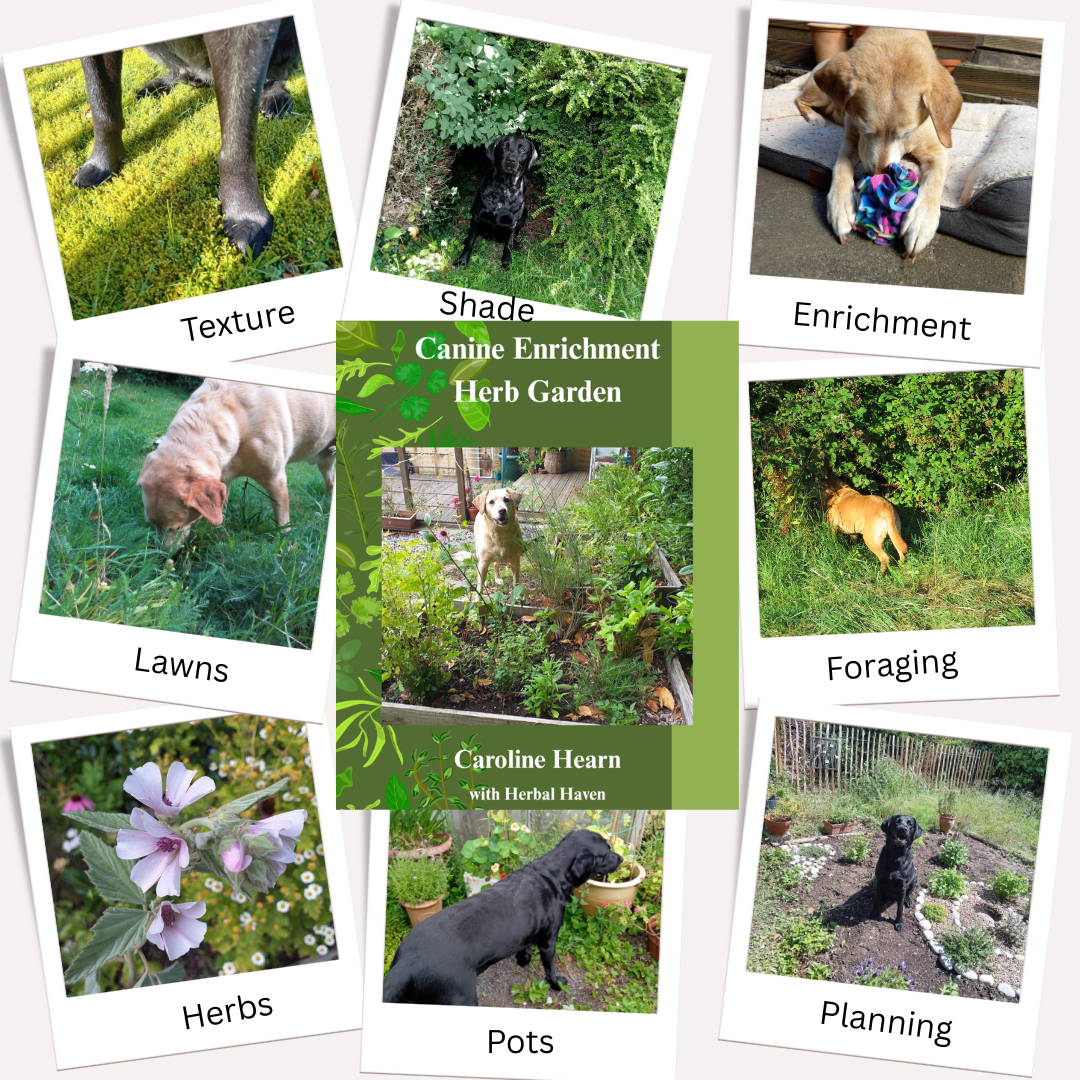
Some of the topics covered within the book.

Holistic Dog Care Consultation
A holistic approach is necessary in order to get the whole picture and cover any area that may be influencing the issues the dog is experiencing.

From pups to senior dogs, those with mobility issues or active working dogs or perhaps you want to explore a more natural diet or lifestyle for your dog?
A holistic dog care consultation provides an opportunity to look at your dog as an individual and consider the different aspects of their lifestyle that may influence their wellbeing.
I have worked in the canine and equine natural healthcare industry for 30 years and have a particular interest in canine wellbeing, nutrition, herbs and holistic approaches to caring for dogs.
What is a holistic dog care consultation?
Rather than looking at one aspect of your dog's care in isolation, a holistic approach considers the bigger picture.
Every dog is different, and factors such as diet, lifestyle, exercise, enrichment, environment, routine and emotional wellbeing can all form part of that picture.
During a consultation, we can discuss your dog's individual circumstances and explore practical, natural approaches that may complement the care you are already providing.
What can we discuss?
Depending on your dog's individual needs, a consultation might include areas such as:
Nutrition and feeding
Herbs and natural approaches to everyday wellbeing
Supporting an active and healthy lifestyle
Enrichment and mental stimulation
Exercise and daily routine
Creating a more supportive home environment
Seasonal care
General wellbeing
Understanding your dog's individual needs
The consultation is tailored to you and your dog, rather than following a standard checklist.
Diet. Is your dog thriving on their current diet, or would they benefit from a few changes?
Exercise. Is the exercise that your dog gets suitable for their age, fitness or mobility?
Holistic Lifestyle. This would include your dog’s daily routine & the things they find challenging.
Medication. If your dog is on medication, this may need to be taken into account, so as not to interfere with its effectiveness.
A holistic approach to your dog's wellbeing
Our dogs live very different lives from those of their ancestors. They share our homes, our routines and increasingly our busy lifestyles.
Sometimes small changes to the way we feed, exercise, enrich or interact with our dogs can make a meaningful difference to everyday wellbeing.
A holistic consultation gives you the opportunity to step back and look at the bigger picture.
It is not about trying to change everything at once. Often, a few simple and realistic changes are the best place to start.
My approach
I draw on my many years as a canine sports massage therapist, raw food and fresh feeding expert and my lifetime with dogs to help you and your dog.
I don't believe in a one size fits all approach. What works beautifully for one dog may not be appropriate for another, which is why understanding the individual dog is so important.
The aim is to give you practical information and ideas that you can incorporate into everyday life, at a pace that feels manageable for both you and your dog.
Would a holistic dog care consultation be useful for you?
If you would like to take a more holistic approach to your dog's everyday care but aren't sure where to begin, a consultation can provide an opportunity to discuss your concerns, ask questions and explore some practical options.
Sometimes it helps simply to have someone knowledgeable look at the bigger picture with you.
If you would like to discuss the problems you are experiencing with your dog, then a consultation with Caroline can help put you and your dog back on the right track.
Here is the link: https://www.hedgerowhounds.co.uk/products/p/consultation
A holistic consultation is not intended to replace veterinary care. If your dog is unwell, has persistent or concerning symptoms, or you are worried about a change in their health, veterinary advice should always be sought.
Caroline Hearn
MICHT. IIHHT. Dip.ICAT. ISCP.Dip.Canine Nutrition