Teaching Your Dog to Use a Car Ramp.
Jumping out of the boot of cars puts huge strain on the dogs shoulders and forelimb joints. Getting dogs used to using a ramp when they are young is far easier than teaching an elderly dog or one that is recovering from an injury or operation.

Teaching your dog to calmly use a ramp to get in and out of the car is time well spent.
Sooner or later owners of medium or large dogs that cannot be lifted in and out of the car will need some assistance due to old age, injury, recovery after surgery or mobility problems.
Jumping out of the boot of cars, even for fit healthy dogs puts a huge strain on their shoulders and forelimb joints, so it is a good idea to get dogs used to using a ramp early on before they are actually needed. For dogs that have to regularly jump out of a high vehicle such as a 4×4 a ramp can save a lot of wear and tear to joints and prevent future injury . This is as important for young dogs with fragile, growing joints as it is for seniors with signs of arthritis. As the saying goes “an ounce of prevention is worth a pound of cure”
Where many people encounter problems is when the dog, that has never been introduced to a ramp before is suddenly presented with it at a step angle propped up against a car bumper. Then either the dog rushes and tries to jump it or flatly refuses to go up it, they will also often launch themselves out of the car rather than calmly come down the ramp. This is particularly unhelpful if you dog is recovering from an injury or operation.
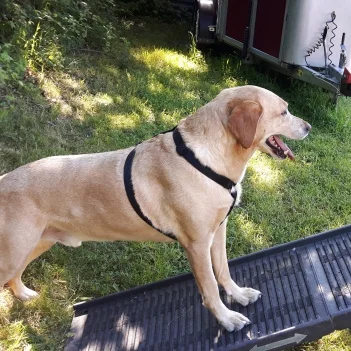
To get your dog calmly and confidentiality using a ramp it is best to go back to basics and get them to walk along the ramp while it is flat on the ground and even asking for sit half way across it. Then slightly incline one end by propping up on a step to give them the sensation of transferring weight onto their rear quarters and walking up an incline.
Whatever you use must create a firm base that does not move and wobble around when your dog walks on it.
At this point add an audible cue such as “step” as soon as the dog is about to place a paw on the ramp. For dogs that have limited or no vision this is invaluable as you can say the word all the way up and down the ramp and stop the second they reach the top or the bottom which gives them an idea of where they are and a feeling of safety. After a while they get to know how many steps it takes to get to the end.
Treats can be a great help by either sprinkling a few along the ramp or have someone at the other end of the ramp to offer encouragement and a very tasty treat as a reward.
With dogs that rush at the ramp or elderly dogs that have limited body strength I have found a harness really helpful to steady them and give a feeling of safety. One hand on the harness and the other cradling their bottom can help no end. With regards to the surface of the ramp, make sure it is sturdy and non slip with a defined raised edge.
Once the dog is totally comfortable going up and down the ramp on a flat surface followed by raising one end, progress to placing it on the bumper of the car. Use you chosen cue word as the dog approaches the ramp and encourage them to calmly climb, tapping the ramp lightly with your fingers at first can sometimes help as can a treat placed at the end of their nose to guide them into the car.
A dog that waits as the boot is open is also going to make life easier for unloading them safely down the ramp so maybe some work is required with the wait command for the best results.
If the ramp is introduced carefully then should a time come when it is regularly needed it will be hassle free and such a help to your dog and also save any strain on your back if you have been attempting to lift them in and out of the car.
Caroline Hearn - Sports & Holistic Therapist MICHT. Dip.ICAT. MIAAT
www.hedgerowhounds.co.uk
Holistic Care of your Senior Dog
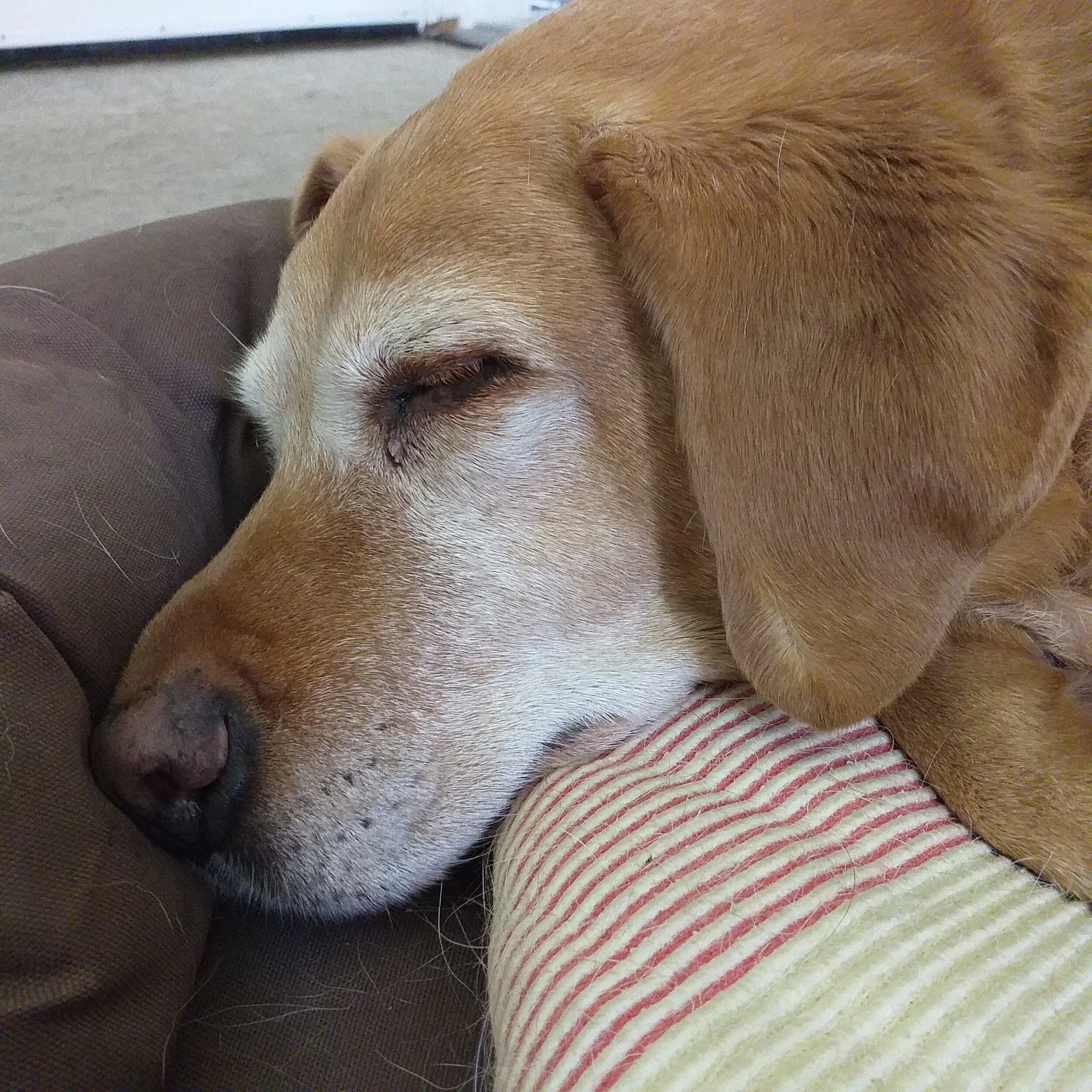
It is inevitable that as our beloved dogs age their requirements will change and they start to show visible signs of slowing down and a reluctance to perform tasks which they once enjoyed.
Here are a few pointers to look out for and changes to put in place which can make a positive difference to your senior dogs quality of life and make the transition into their golden years a little easier.

Possibly the first sign that your dog is feeling his advancing years is loss of mobility, general stiffness or a reluctance to do certain activities.
Noticing that our dog is limping is an easy sign to spot but sometimes things can be much more subtle. They could suddenly refuse to jump in or out of the car, be constantly licking their legs, struggle to lift themselves off of their bed, exhibit uncharacteristic behaviours or are starting to no longer be clean in the house.
Weight reduction: Excess weight certainly makes it more difficult to improve or manage health complaints, particularly where joint pain is concerned. It will also mean that the positive lifestyle changes that you put in place are less successful.
“Fat is not inert, it contains precursors of inflammatory mediators, which is like petrol on an arthritic joint fire” H Capon - Canine Arthritis Management
Pain relief and Supplements Many people are reluctant to resort to veterinary prescribed medication for pain relief but they can be really useful in the overall management of pain and inflammation and if used alongside an entirely holistic approach you can often greatly reduce the use for drugs altogether. It is important that the dog is not in pain and is encouraged to gently exercise with minimal compensatory movement, this will allow muscle tone to improve which aids in supporting fragile joints, maintaining weight loss and increasing the range of movement in joints. Non-steroidal anti inflammatory drugs (NSAIDs) are not without their side effects in longer term use particularly where the kidneys, liver and stomach are concerned, so this is why it is really important to make many other lifestyle changes that give an overall improvement to health and not just rely on medication.
There are many supplements available for aging dogs which can help with mobility issues brought on by old age. It is important to start early particularly with a dog who has been very active or for working and competition dogs that have suffered more wear and tear over the years. Glucosamine, chondroitin and green lipped mussel based supplements have been popular for some time in helping to improve the mobility of joints but there are also other natural ingredients that are often added such as Boswellia serrata, msm (methylsulfonylmethane) and turmeric which are used to for their anti-inflammatory properties. The inclusion of Omega 3 fatty acids in the diet is a great idea for mobility, improved coat and skin and overall reduction in inflammation.
Suitable Flooring & Home Improvements: Inappropriate flooring such as laminate and slippery tiles can really take their toll on arthritic, frail or nervous dogs. They struggle to grip on the surface underneath them causing strain on their joints, risk of falls and it can really knock their confidence. Simple additions of rubber backed runners and mats in these areas can make a huge difference.
Keeping any excess hair in between the pads, well trimmed will prevent slipping and also very importantly, keep the nails short. I will explain why this is just so important in managing the arthritic dog in the blog https://www.hedgerowhounds.co.uk/news/paw-and-nail-care
Use a car ramp It is so much kinder to your dogs joints and particularly to their shoulders than jumping in and out of the car, not to mention the potential strain to your own back if you lift the dog to and from the boot of a car.
Take time to get them used to going up and down the ramp on a lead and support them by cradling chest and hind end or use a suitable harness to guide them up if necessary until they get confident using it, make it fun by using treats, it will be worth the effort and invaluable as the dog gets older. Purchase one that you find easy to use and importantly has non slip footing and ideally it should have a raised border which can help blind dogs sense that they are close to the edge of the ramp whilst walking up it. Read our blog for more advice on this: https://www.hedgerowhounds.co.uk/news/teaching-your-dog-to-use-a-car-ramp
Dog beds Elderly dogs sleep a lot so providing a soft bed which offers protection and support for their joints is crucial. Some dogs love to stretch out and others curl up in a ball, so bear this in mind when choosing a bed. If you have the hard plastic beds make sure they are big enough so that the dog isn`t forced into an unnatural shape and that they have enough room to stretch out when needed, this is particularly important for neck and limb comfort. I find that senior dogs cope better with a raised bed, as this aids in getting up from a prone position. Not so high they have to jump down from it but raised enough to assist in getting on and off with ease. There are many new orthopaedic style dog beds that are really supportive and much more suitable than many blankets which end up entangled around the dogs legs and offer no support to the body.
Additional warmth can really help arthritic and elderly dogs, particularly in winter. The heat pads that are filled with wheat and placed into the microwave are very useful and for longer periods of constant heat, the Pet Remedy heat pad is excellent.
Exercise Requirements will start to change and this can become tricky in a multiple-dog household if you have an oldie that still thinks they can keep up with the younger dogs and as much as they enjoy themselves at the time the following days can see them really struggle because they have overdone it. There will come a time when the older dog needs to be walked separately so they get the benefit of exercise that is appropriate for them at their level of mobility.
Inappropriate exercise such as repeated ball throwing or vigorous tug-of-war games will have to become a thing of the past as they will undoubtedly undo any of the good work put in place with a holistic healthcare plan.
If you have very elderly or frail dogs then all they need is a mooch around the garden or a very gentle short stroll, leaving them to dictate the pace. One of a dog’s greatest joys is sniffing and following a scent, so to prevent them from doing this is taking away one of their basic needs. It is so upsetting to see people dragging their elderly dogs behind them on a lead, it causes the dog stress and puts tremendous strain on their joints and muscles as they try and keep up with the handler.
Many dogs lose their confidence and feel vulnerable as they become frail or their eyesight and hearing fails, often becoming vocal or reactive, maybe for the first time in their life. See this as a sign that they are not coping well with the environment they are being exercised in and only allow familiar, calm dogs to interact with them or take the dog somewhere very quiet where they feel safe.
Complementary therapies are really helpful for the older dog and help keep them mobile. Massage and gentle body work is excellent and can pick up muscle weakness, compensatory movement, stiff joints and tight shortened muscles which when all the information is put together helps form a picture of how your dog is using their body and why that may be so. Ask your therapist for some homework you can do in between treatments. Heat pads are a good idea for very cold weather or use a soft fleece dog coat for additional warmth. Acupuncture is a fantastic treatment for the elderly dog and helps in managing arthritic conditions in particular. The fine needles are applied in very precise areas of the body to stimulate the release of endorphins which are the body’s own form of pain relief.
Age-related cognitive decline Is the canine equivalent of dementia which can vary in its symptoms from mild to severe. The symptoms can include staring into space, confusion at which way a door opens even though the dog may have used the same doorway for years, restlessness and becoming vocal at night, soiling in the house, and extreme changes in temperament towards people and other dogs. It is important to rule out other physical factors such as pain, infection, or sudden decline in eyesight for instance before coming up with a plan of action to manage the situation.
Although there is no cure for cognitive decline providing the dog with stimulating mind games such as hunting for treats and toys in the garden or using food puzzles and snuffle mats can help keep their minds active. The inclusion of antioxidants and omega-3 fatty acids in the diet will also help in some way to slow the decline down if the initial symptoms are spotted early.
Listed below are supplements that are targeted to support the needs of the aging dog and are all available on the Hedgerow Hounds shop.
The Golden Years herbal blend is handmade specifically to support the needs of senior dogs. https://www.hedgerowhounds.co.uk/products/golden-years-1