

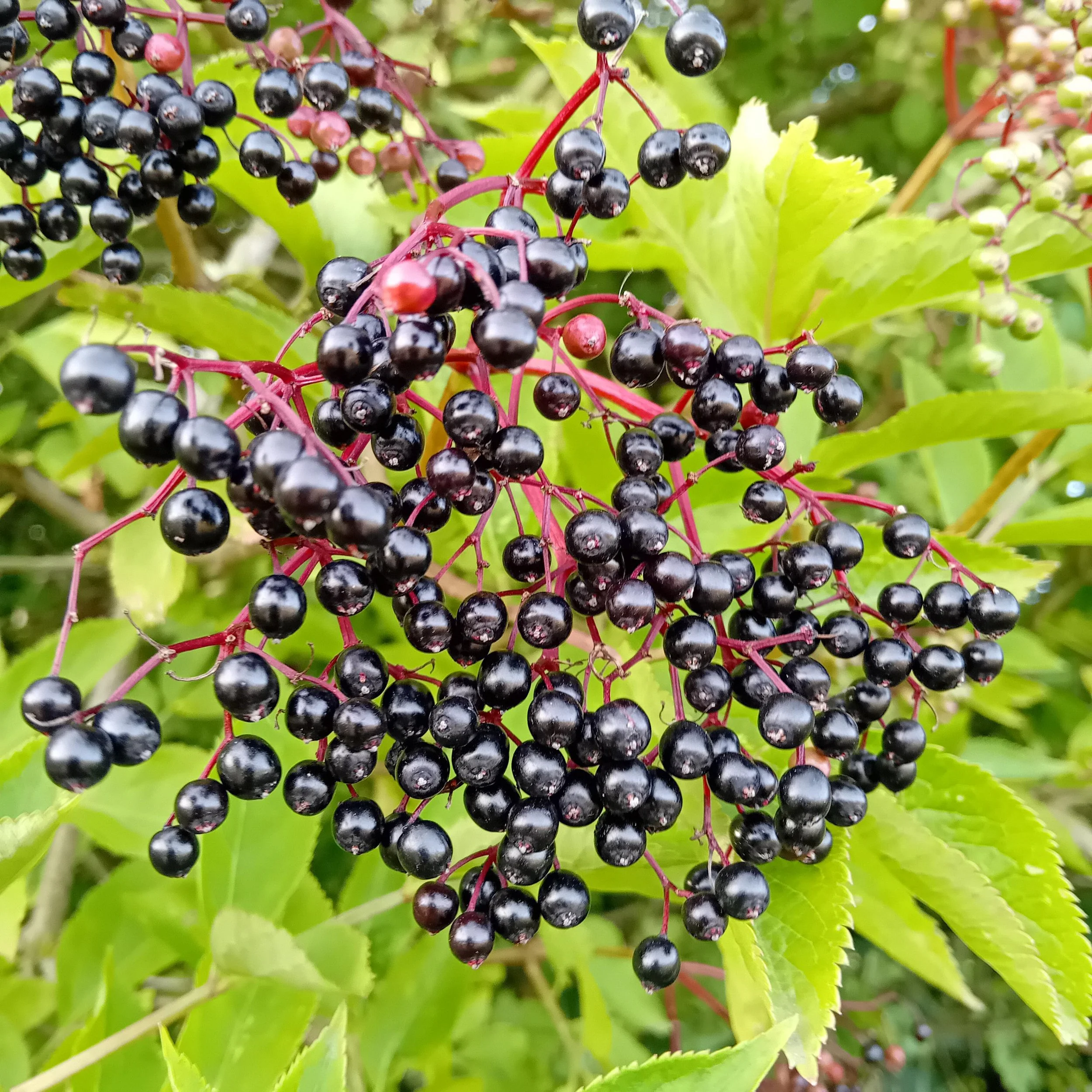
Elderberry Recipe
If you only make one home remedy for yourself this Autumn, it should be either Elderberry cordial or syrup. Elderberry is packed full of vitamin C, powerful antioxidants and well known for it`s anti-viral, immune boosting properties. I always have a cordial or syrup at hand over the winter months and it is very effective at nipping colds & flu in the bud at the very first signs of a sore throat, cough or sniffle.
This recipe is just for YOU and not one to share with your dogs. Elderberries must be cooked before consuming and discard the leaves, stems, and any unripe green berries before cooking.

Sambucus nigra - Common Elder
If you only make one home remedy for yourself this Autumn, it should be either Elderberry cordial or syrup. Elderberry is packed full of vitamin C, powerful antioxidants, well known for its anti-viral, immune boosting properties. I always have a cordial or syrup at hand over the winter months, and it is very effective at nipping colds & flu in the bud at the very first signs of a sore throat, cough, or sniffle.
This recipe is just for YOU and NOT one to share with your dogs. Elderberries must be cooked before consuming, and discard the leaves, stems, and any unripe green berries before cooking.
Elderberry syrup
You will need:
500g ripe berries, approx. 5-7 elderberry heads (discard those that are unripe, especially green ones.) Dont add the leaves, stems or branches as they are toxic.
A handful of Blackberries is a nice addition and are ripe at the same time.
750ml filtered water
Rind of 1 orange plus 1 tablespoon of the juice
350g of dark sugar or 170g of honey
Optional - cinnamon stick, 4 cloves, a piece of stem ginger, a stick of liquorice, and if you only want one spice, then choose Star Anise for its natural anti-viral properties.
How to make:
The easiest way to pick elderberries is to leave the berries on the stem until you get home, then run a fork down the stems until the berries fall off into a colander. Rinse gently with water and then remove any unripe green berries & bits of stem. Alternatively, pop them in a bag and place them in the freezer; the berries usually break away from the stalks very easily when frozen.
Place the rinsed berries, water, orange rind, and chosen spices into a large saucepan and bring to a boil, simmer very gently for 40 minutes, squashing the berries with a spoon to extract as much juice as possible. Allow to cool slightly, then drain through a fine sieve placed over a bowl or ideally through a muslin cloth/ cotton t-towel so you can thoroughly squeeze all the juice out of the berries.
Rinse out the saucepan and return the juice into the pan, add the sugar or honey, and warm through until it melts into the juice, stirring all the time.
Store: Pour into a sterilised bottle, place in a fridge, and use within one month or better still, pop into ice cube trays or small freezer-friendly pots so you can have some handy throughout the depths of winter.
Take a tablespoon a day neat off the spoon, drizzle onto live yogurt, place an elderberry cube into a mug of hot water, or add to your favourite tipple to enjoy on a cold, wintery evening.
You can also use the syrup as a base to make gelatine gummies or mix it with balsamic to make a delicious glaze for meat, fish, or vegetables.
www.hedgerowhounds.co.uk
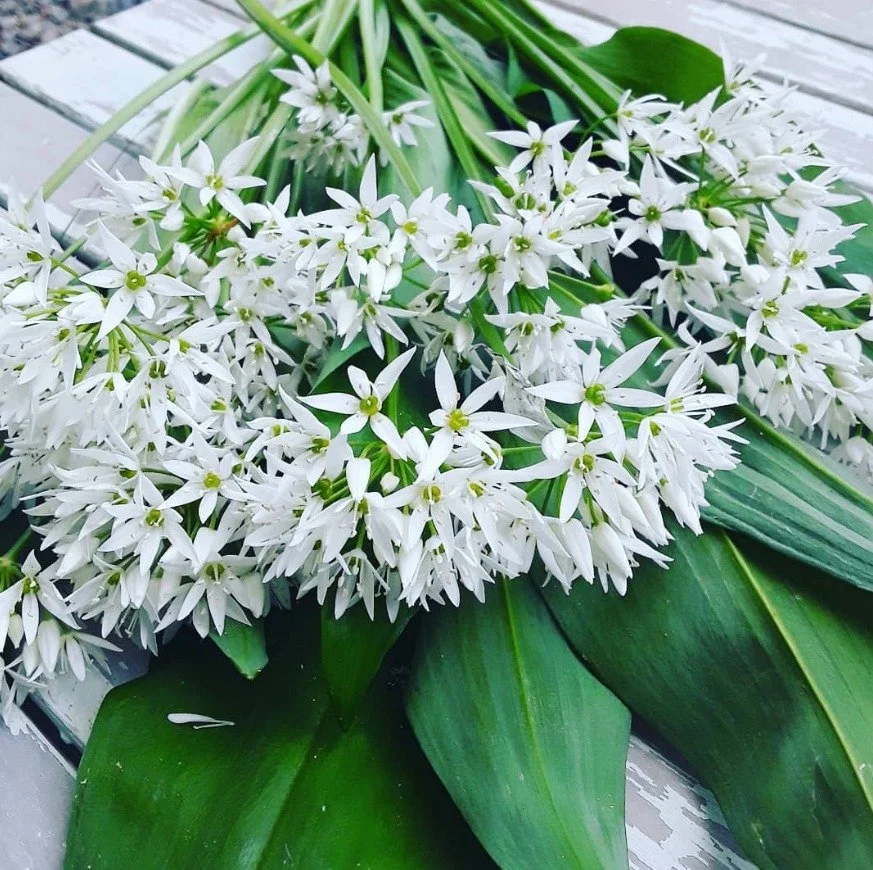
WILD GARLIC, IDENTIFYING & FORAGING
Wild Garlic season is here and it`s a sure sign that spring has finally arrived.

Wild garlic, from spring leaf in March through to full flower in May, the leaves, buds & flowers are all beautiful to eat.
The long awaited first shoots of wild garlic (Allium ursinum) always signals spring is here. As with most wild plants, it goes by many names. Ramsons is probably the most widely used, but depending on the region, also goes by devils posy or bears garlic. It was believed that wild garlic was devoured by brown bears as they came of of hibernation, probably due to the plants cleansing, antiparasitic, antifungal and antiviral properties.
Wild garlic has broad, spear shaped leaves with a long tender stem and can cover vast areas of woodland floor and alongside the shaded banks of brooks and streams. Depending on your location, the leaves start to appear in the South around early March, but further North it can be late April, early May.
All parts of wild garlic are edible, and it is unnecessary to dig up and eat the root as the whole plant has so much to offer anyway. The leaves can be used in stir-fries, made into pesto, stirred into scone and bread recipes and make a fantastic garlic butter. The buds are beautiful pickled in cider vinegar and kimchi recipes and the flowers make salads extra special and have a very delicate garlic flavour.

It is wise to also learn how to identify the two plants that grow in the same environments and to the complete novice, look a little similar. One is Lilly of the Valley, although I have never seen it growing wild, the young leaves can look similar to wild garlic, however it doesn’t smell of garlic in the slightest and the flowers are completely different.
The other potential is Lord & Ladies when it is first emerging in spring, but again it has no garlic smell and doesn’t have the white buds & flowers, so highly unlikely you will mistake this for wild garlic. It is essential to learn what not to pick as well as what is safe to eat.
You can often smell wild garlic before you see it and the second it is picked it releases its garlicky aroma. When driving home you`ll need the windows open as the smell is overpowering, another sign you have definitely picked wild garlic!
When picking it is good practise to pick individual leaves rather than just grab handfuls. This ensures you don’t clear large areas of the plant and importantly you are not inadvertently picking other plants that are growing through it. When you are cleaning your foraged ingredients, always sort through every stem so there are no imposters that you can`t identify nestled in there.

Caroline Hearn - owner of Hedgerow Hounds, lover of herbs and keen forager.
www.hedgerowhounds.co.uk

WILD GARLIC SCONES
For the keen foragers amongst you here is a special scone recipe for you to enjoy. It can also be made using fresh watercress and will be equally lovely.

A treat just for the foragers amongst you - Wild Garlic & Cheese Scones
We have been kindly given this recipe by Kerry Torrens, a nutritionist, member of the Guild of Food writers and author for BBC Good Food and Olive Magazine
Cheese and Wild Garlic Scones
Delicious straight from the oven, these scones are a great way to celebrate the wild garlic season. Don’t forget the flavour of this much-loved foraged herb is robust, so more often than not, less is most definitely more!
You will need:
140g self-raising flour
140g wholemeal spelt flour
1 tsp baking powder
60g soft butter, cut into small cubes
30g parmesan, finely grated, plus extra for topping (or a vegetarian hard cheese)
10g wild garlic, finely chopped
1 egg (medium)
3 tbsp natural yogurt
3 tbsp milk, plus extra to glaze
How to make:
Heat oven to 190C/ fan 170C/ gas mark 5. Cook for 15-20 minutes - Makes 14-16 scones.
Combine the flours, baking powder and a pinch of salt in a mixing bowl.
Add the cubes of butter and rub into the flour with your fingertips, until it resembles breadcrumbs.
Stir in the finely grated parmesan and the chopped wild garlic – make sure they are evenly distributed.
Whisk together the egg, yogurt and milk in a jug, make a well in the centre of the dry ingredients and add the egg mixture. Bring the mix together with a table knife to make a soft dough – you can add a little more milk if the mix is dry but not too much that it becomes sticky
Turn out on a floured work surface and roll to about a 3cm thickness. Using an upturned glass or a cutter (about 5-6cm in diameter) cut out your scones, place them on a greased or lined baking sheet. Repeat the process until all of the dough is used. Lightly glaze the scones with milk or an egg wash and sprinkle on some extra grated parmesan.
Bake for 15 – 20 minutes until golden and hollow sounding when you lightly tap the base. Leave to cool on a wire rack.
Nutrition notes: I’ve used parmesan in my cheese scones, this aged cheese has mineral binding properties that makes it an especially useful source of bone-building nutrients.
Whole-meal spelt is a little richer in protein than wheat flour and contributes more zinc.
While the star ingredient is of course the wild garlic, rich in polyphenols and sulphur compounds that support our detox systems, folklore tells us wild garlic is the perfect food to reset the system after a Winter’s hibernation.
Serving ideas: I like to top these scones with a dollop of ricotta and a spoonful of chilli jam.
Kerry Torrens is a member of the Guild of Food Writers and a contributing author to a number of publications including BBC Good Food and Olive magazine. Find her on Instagram at @kerry_torrens_nutrition_