SEASONAL FEEDING - Making the Most of Fresh Ingredients
The majority of people have lost their connection with the land, nature and the changing seasons.
Natures larder provides us with a huge variety of produce at the perfect time when it will be of most benefit to us nutritionally. With a few small changes we can all benefit from eating seasonally which is better for us, our dogs and the environment.

Spring, Summer, Autumn and Winter, seasonal feeding at its freshest and finest. Featuring Hedgerow Hounds seasonal herbal blends.
The majority of people have lost their connection with the land, nature and the changing seasons.
Natures larder provides us with a huge variety of produce at the perfect time when it will be of most benefit to us nutritionally. With a few small changes we can all benefit from eating seasonally which is better for us, our dogs and the environment.
We can utilise herbs and vegetables in the Spring, which are a perfect cleansing tonic to gently ease us out of the long winter months, where we have no doubt been overindulging and less active.
To the cooling and hydrating bounty of Summer, followed by the real bumper harvest of Autumn, which gives us all the foods we need to help boost our immunity and general health in preparation for the cold Winter months ahead.
Here at Hedgerow Hounds, we are passionate about seasonal ingredients, and if you really want to embrace seasonality, then we have a seasonal range of handmade herbal blends.
What`s so special about seasonal food?
Eating more seasonally ourselves and by including some of these foods in our dogs’ diet, we can benefit in so many ways.
. We can reconnect with the cycles of nature and really appreciate the food that is available for a short period of time.
. It is better value for money as well as kinder to the environment, to buy ingredients when they are in abundance locally and haven’t travelled halfway round the world before they even get to our kitchen.
. We can support the local communities, such as small producers, farmers’ markets, organic growers, and game dealers.
. The produce is fresher and therefore more nutritious as it is harvested when ripe or at its best, and has minimal travelling time before we can purchase it.
Could we survive without sugar snap peas from Egypt, asparagus from Peru, and eating Strawberries in January? These have travelled thousands of miles, are harvested unripe, and sprayed with chemicals, gas, or wax to stop them from deteriorating in transit.
Or could we wait until they are ready to eat locally and benefit from much more flavour and far higher nutritional value, while enjoying so many other foods in the meantime?
How does incorporating seasonal food benefit our dogs?
If you feed raw or home-cooked food to your dog, then it is important to offer a good variety of foods over the coming months. If you feed dried or tinned food, it is also possible to start incorporating a small amount of fresh ingredients into the bowl at feed times.
By offering variety, you can ensure your dog gets a broad range of nutrients and avoid the intolerances that can occur if the same protein and carbohydrate are fed continuously.
A wide spectrum of fresh ingredients, either animal proteins or of plant origin, nurtures a healthy gut microbiome, which is vital for a healthy immune system and overall optimal health. The more diverse the diet, the less you will have to rely on supplementation.
By feeding what is in season, you are providing food at its very best. This often means that you don’t need a large amount to benefit from the superior nutritional value.
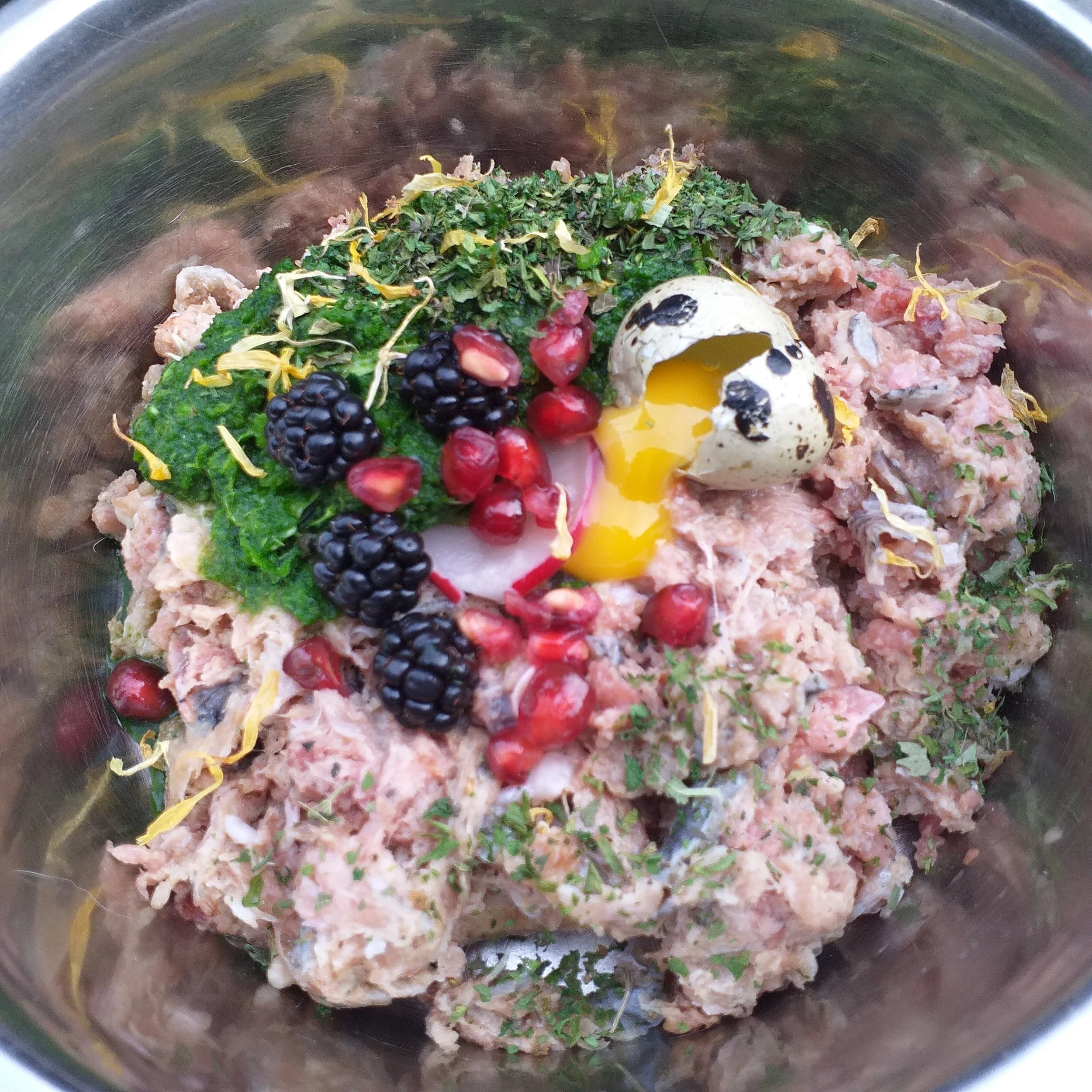
A few local, handpicked ripe blackberries added to the food will be far superior to a larger number of blueberries that have covered many air miles. Including some free-range, wild, or organic meat whenever you can will also provide your dog with superior-quality ingredients.
Depending on your location, there is generally a good range of proteins available from Spring to Summer, but when Autumn comes, there is suddenly a whole new larder available to the raw feeder or home cook.
The game season varies by the species, but generally partridge and pheasant are available from September until February. Venison is dependent on breed, but around November to March, and Duck from September until January.
If you have been relying on beef, lamb, chicken, and fish from March until August, then this addition of free-range, often organic and minimally farmed protein is a huge bonus. You can either use in addition or temporarily replace the proteins you regularly use until the availability ends.
Putting a small amount of vegetables aside for your dog when preparing your own is a good practice. It will soon become second nature to save a broccoli stalk, steam a little extra courgette, cut off a small slice of pear or apple, or lift out the couple of squashed raspberries that are in the bottom of the punnet for your dog’s supper. You will also start to look out for seasonal bargains at the butchers’ or farmers’ market.
If you can forage for ingredients such as blackberries, dandelion leaves, cleavers, and either keep a few hens or find a local organic supplier of eggs, then that is a big win.
Adding a little fresh, local, and seasonal produce even two or three times a week will help to gradually improve your dog’s overall diet. If your dog is new to fresh ingredients, start off with very small amounts and include one new addition at a time, until they adjust to a different way of eating.
As a rule, although each dog is an individual, the majority of the meal is made up of animal protein, with anything from 5% to 15% being provided by vegetables and berries that are suitable for your dog.
Spring
Spring ingredients offer a gentle tonic to cleanse and wake up the system after less active months and a diet of heavier, warming meals. Many of these ingredients that come into their own now offer support for the kidneys, liver, and lymphatic system that can often get sluggish over the Winter months. You may observe that your dog seeks out the fresh grass shoots as they appear, which are full of energy, sweetness, and moisture.
The Nature’s Skin Tonic is perfect for a gentle Spring cleanse after the long winter months and also great for dogs that are itchy and suffer from seasonal allergies at this time of year.
Incorporate some of the following into your dog’s meals:
Spring nettle tops, Cleavers, Dandelion leaf and root, Asparagus, Watercress, Milk Thistle, Spring Greens, New season Lamb, Rabbit & Free range eggs.
Summer
Summer ingredients are cooling, hydrating, and uplifting, and we are spoilt for choice at the range of produce available. If you can grow a few vegetables yourself, such as courgette, cucumber, spinach, salad greens, chard, and parsley, then these will be bursting with flavour and goodness, and you can add a little of these freshly picked ingredients to your dog’s food. If you grow blackberries and raspberries, you will find that the dogs often help themselves to the fruit from the lower branches.
Nature’s Bounty appears on the shop in February and covers the Summer months until early November. It is a nutritious blend that contains an organic seaweed, and Bounty’s main task is to naturally repel fleas and ticks, which it has successfully done for many years.
Incorporate small amounts of the following:
Fennel, Melon, Spinach, Celery, Blueberries, Bilberries, Raspberries, Dandelion, Seaweed, Sorrel, Courgettes, Mint, Parsley, Calendula, Cucumber, Green beans, Carrot tops, Lettuce, Rabbit, Free range eggs.
Autumn
Autumn provides nourishing produce to prepare for the colder months and are typically rich in antioxidants and high in vitamin C. Many of these vegetables, fruits, and berries also lend themselves to preserving by the process of dry storage, freezing, and fermentation, which would traditionally be used to ensure a supply of nutritious foods through the lean months of Winter that lie ahead:
Incorporate small amounts of the following:
Squash, Blackberries, Rosehips, Beetroot, Pumpkin, Apples, Pear, Burdock root, Chicory, Nettle seeds, Fennel and Dill seeds, Almonds, Pumpkin seeds.
Game meat to include: Partridge, Pheasant, Grouse, Pigeon, Guinea fowl, Quail, Venison, and Duck.
Fish, including Pollack, Mackerel, Coley, and Haddock.
Winter
Winter provides us with comforting food for warmth and sustenance.
Incorporate small amounts of the following:
Ginger root, Turmeric, Kale, Celeriac, Thyme, Ruby Chard, Brussels sprouts, Winter Squash, Jerusalem artichoke, Pear, Russet apple, Turkey, Duck, Venison, Mussels.
Caroline Hearn MICHT, Dip ICAT. MIAAT
Equine and Canine Sports Massage Therapist and Canine Holistic Health Specialist
Find out more at www.hedgerowhounds.co.uk
Instagram hedgerow_hounds Facebook @HedgerowHounds
Feeding Vegetables to Dogs
There is a lot of conflicting advice about feeding dogs vegetables. Here we will explore which are suitable and what to avoid or keep to a minimum.

Should I add vegetables or not? If so which type?
So should we bother feeding vegetables to our dogs and will it even benefit them?
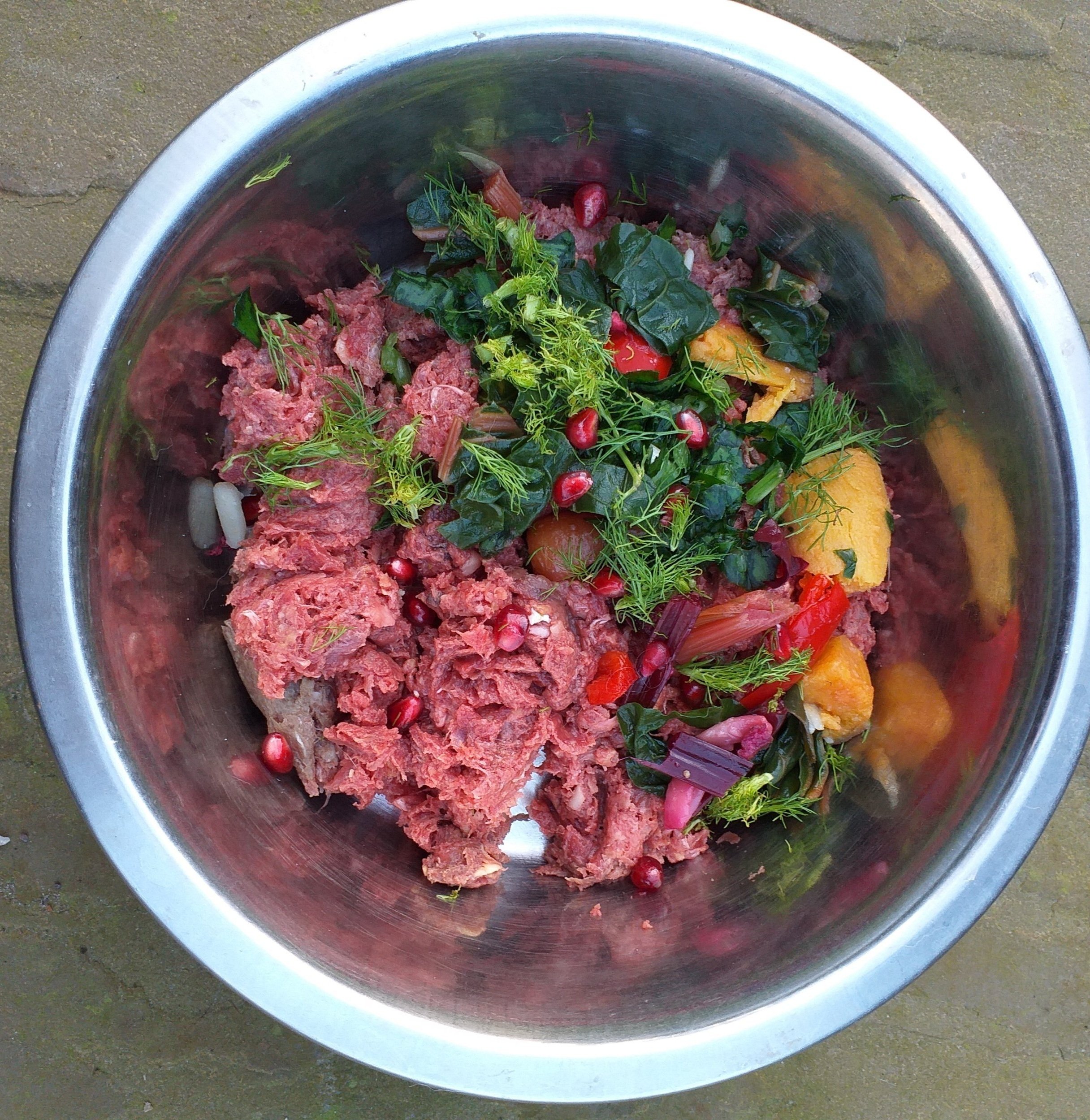
There are many benefits to including some fresh vegetables to our dogs diet. It is important that they are prepared in a way that our dogs can digest them either through cooking, steaming or blitzing to a smoothie. We should all be including more veg in our diets so maybe the easiest way is just to prepare a bit extra when you are preparing your own meals and then set it aside for your dog.
Phytonutrients
The term ‘phytonutrients’ is a name for a variety of compounds only found in plants that have a vast array of health-giving properties. They are covered in far greater detail in the vegetable and fruit section and are a useful way to provide additional micronutrients and antioxidants to your dog’s diet. If the inclusion of fruit, vegetables and seeds is a new experience for your dog, then start off by incorporating tiny amounts until his system adapts and you find the ingredients that suit your particular dog.
Probably the best known of the phytonutrients are carotenoids and flavonoids.
Carotenoids are plant pigments responsible for the vibrant red, yellow, orange and green hues found in vegetables, fruits and plants that can play an important role in protecting cells against harmful effects of light, air and pollution. Beta-carotene, lycopene and lutein are all different types of carotenoid that can easily be included in the diet. They act as anti-oxidants which protect cells from free radicals, which are substances that work to destroy cell membranes and DNA.
Foods that are rich in carotenoids are:
· Lutein: collard greens, Swiss chard, lettuce, spinach, kale and dandelion greens.
· Lycopene: red/orange bell peppers, watermelon, pomegranate, apples, mint and blackberries.
· Beta-carotene: carrots, sweet potato, broccoli and romaine lettuce.
· Flavonoids: These give berries their red, blue and purple colour and can be included in the diet in the form of blueberries, blackberries, raspberries and bilberries.
So, what does the inclusion of veg and fruit have offer to our dogs?
They provide a wealth of vitamins, minerals, anti-oxidants and fibre, including vitamins A, B, C, E and K, and minerals such as calcium, potassium and magnesium.
Anti-oxidants protect against many diseases due to the aging process, and for a degenerative condition such as progressive retinal atrophy a diet rich in anti-oxidants is the only known way to slow down the deterioration of this eye disease.
Fresh vegetables also encourage enzyme production and offer a gentle cleansing and balancing effect on the ph. levels of the body.
Depending on the type of vegetable, they provide soluble and insoluble fibre, which benefit the gut bacteria, and can bind to and remove certain toxins as well as adding bulk and moisture to the faeces.
With intensively farmed animals and soil depletion becoming a concern, our food is lacking in the level of nutrients that it provided many years ago, so the addition of vegetables, herbs, berries and some grains is a way to try and fill any nutritional gaps. The more variety we can add into our dog’s diet the less we will have to rely on dietary supplements.
An ideal herbal supplement in the Hedgerow Hounds range is Nature’s Boost, which combines vegetables, herbs, seeds & superfoods.
How to prepare and feed.
Due to the fact that dogs cannot digest the cellulose in vegetables, the best way to serve is to blend in a food processor to break down the plant’s tough cell wall, until they resemble a thick smoothie consistency, which also mimics the partly digested contents of a prey animal’s stomach.
Other options would be to lightly steam them or finely grate them into the food.
If you want to make larger batches up or you are lucky enough to grow your own veg and have a glut in the summer, then the pureed, pulped veg can be frozen into ice cube trays or pots for convenience.
If they are served whole many dogs just lift pieces of veg out, eat around them in the bowl, or pass them out the other end undigested, to make full use of the nutrients they need to be broken down.
A good feeding guideline would be 7% vegetables and 3% berries, although if you are looking to reduce the overall cost of home-prepared food, or if the dog needs to lose weight, then more veg can be added to make up a quarter of the meal.
The addition of vegetables will change the overall percentages, so subtract from the muscle meat and not the bone or offal which provides the calcium and vitamins. So, for instance a usual 80-10-10 ratio would become 70% (meat) 10% (bone) 10% offal and 10% vegetables.
Start off with a small amount and then monitor how your dog is handling the inclusion of vegetables in his diet.
It is not essential to feed vegetables every day, but even three times a week will be beneficial, rotating different types and changing with the seasons where possible

www.hedgerowhounds.co.uk
Feeding Raw Bones
When choosing a raw bone for your dog, take into consideration, their size, feeding style (ie: greedy), behaviour and their experience of eating bones.
Feeding raw bones can be a concern for some owners.
Here we explain the best bones to start off with and what to consider when feeding bones to your individual dog.

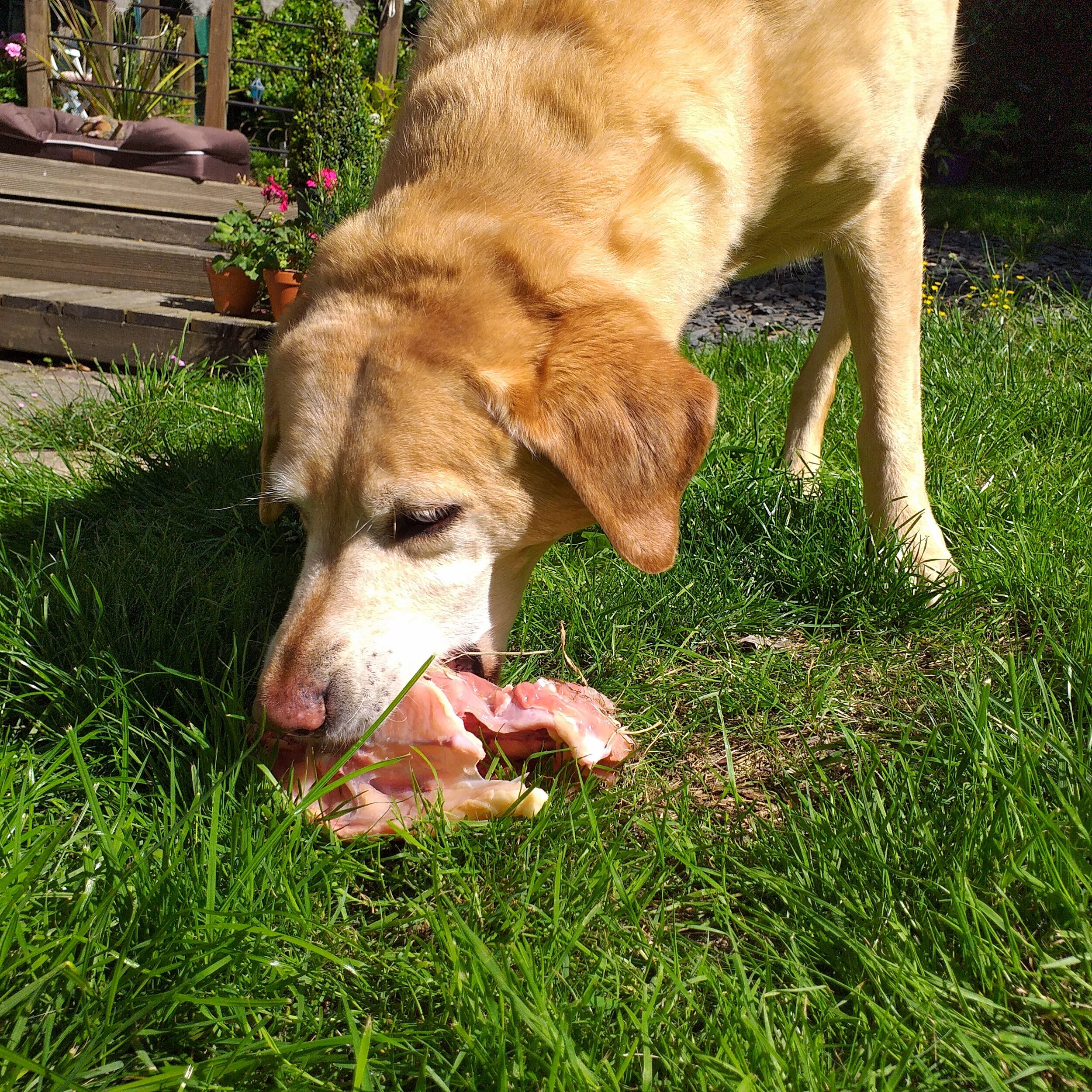
Edible bones, such as this raw chicken carcass, go towards the daily bone ration and are the ideal starter bone for pups, young dogs and beginners. They are soft, flexible and contain a lot of cartilage.
Bone is a very important part of feeding a raw food diet, but it is a subject that can cause worry and concern for the dog owner and often a reason people decide to rule out raw feeding altogether.
The inclusion of raw bone in the diet provides nutrients such as calcium, phosphorous, magnesium, fat soluble vitamins, amino acids and essential fatty acids, all of which are used by the body for blood and bone formation. Calcium is regarded as a macro-mineral and is the most abundant and essential mineral in the body. It isn`t just needed for optimum skeletal growth but also responsible for the correct functioning of muscle and nerve impulses, keeping the immune system healthy and regulating the heartbeat.
Meat contains high levels of phosphorous and very little calcium so feeding a diet of only meat and offal would be extremely deficient in vital minerals as well as giving the dog loose stools.
Our dogs anatomical features:
So what has nature blessed a dog with to make him so efficient at eating and digesting bone?
Just a glimpse inside a dog’s mouth will show a whole range of “tools” to make the job of piercing, tearing and slicing meat and bone an easy task. A pair of specialised teeth for crushing, called the Carnassial are the largest and most jagged of the premolars and you will notice your dog tilting his head on the side in order to bring them into full use.
Unlike ourselves and herbivores, a dogs jaw has no sideways, grinding action, so in order to add lubrication within the mouth and around the food there is a lot of saliva production to assist its transit to the stomach. Once in the stomach there is an incredibly strong stomach acid to not only help kill any bacteria but also to dissolve raw bone.
Edible vs Recreational
Raw bones are split into two categories of edible and recreational bones.
Edible bone is consumed completely in one sitting and adds towards the dog’s dietary calcium requirements. Examples would be chicken necks and wings, duck feet, lamb ribs, pigs trotters, chicken carcass or the finely ground bone within a minced complete meal.
Recreational bones are not completely consumed within one sitting and add little if anything towards the dietary calcium requirements. These would be something like a large beef knuckle bone or a venison neck as an example. The main advantage of these large bones is that they keep the teeth clean and also provide the psychological benefits that come with the chewing action, such as a release of serotonin, dopamine and oxytocin, which are the calming and feel good hormones.

Recreational bones are for teeth cleaning and also release feel good hormones as the dog chews them. They are not included as bone content, as they are not consumed in one sitting.
With 90% of dogs in the UK under 3 years of age having some form of periodontal disease and needing a general anaesthetic to remove a build-up of plaque on an annual basis, kibble despite what we are lead to believe, does not clean teeth. If you watch a dog eat kibble they gulp and swallow, there is certainly no abrasive grinding taking place in order to keep the teeth plaque free.
Potential issues with certain bones:
If ever there is a problem with bones it is generally due to feeding a bone which is too small for your particular dog, leaving the dog unsupervised or giving very rigorous chewers weight bearing bones.
Chicken wings: Better suited for small dogs as medium and large dogs or those that are greedy feeders, can try and swallow them whole and due to the shape of the wings, carry a choke risk.
Marrow bones: The central marrow is extremely high in fat and can cause diarrhoea. They tend to be weight bearing bones so are extremely hard, which in very vigorous chewers can cause tooth fractures. There is the danger of the bone encircling the lower jaw when it has been chewed down into a “ring”, often requiring veterinary assistance. Dispose of the bone long before this risk is a possibility.
Neck bones: Chicken and duck necks are better for smaller dogs unless you can guarantee your larger dog will not swallow them whole. I have seen dogs do this on a number of occasions, with no negative consequences whatsoever as their strong stomach acid made short work of digesting it, but it is better that they chew them first. The necks have a good covering of meat on the bone and turkey and goose necks are ideal for medium to large breeds and provide a meal in themselves.
Vertebral bones: Bones that form the neck and vertebral column in larger animals such as sheep and venison, when eaten right down will become circular and have a higher risk of causing choke. This also applies to ox tail. If your dog has a reliable leave command then you can remove the bone when it starts to become eaten down into smaller sections.
Ribs: If ribs are fed from young animals such as lamb or beef then they are soft and contain a good amount of central red marrow and you will find that dogs can crunch them up with ease. The only potential problem and why it is essential to supervise your dog when they eat bones, is that they can very occasionally become stuck across the roof of the mouth and require assistance to remove them.
Avoid:
There are some pet stores that still sell large baked knuckle bones for dogs. They are often sourced from overseas and are extremely dangerous due to the likelihood of cooked bones splintering and causing perforations to the gut often with fatal consequences. Raw hide chews are also a major choke hazard and are known to cause obstructions in the bowel which require emergency surgery.
Choosing the right bone for your dog:
The main problem area when introducing raw bones to a dog is not offering a bone that is appropriate in size or type for that individual dog. It is always better to feed a bone that is a little too large than too small and also pair the bone with the chewing style of that particular dog.
If you are transitioning a dog onto a raw diet that has previously been eating kibble and you plan to feed edible bones then it is wise to leave 2-3 weeks before introducing whole bones to give the stomach acid time to adjust in order to adequately digest raw bone. Your dog will still be receiving his calcium ration from the complete minces that contain 10% finely ground raw bone.
Raw chicken or duck carcass are good starter bones as they still contain some meat on the bones and plenty of cartilage making them flexible and easy to crunch. They are usually from young birds which mean that the bones are still quite soft.
If your dog is straining to pass a motion or the stool is very white and crumbly then you know that they have too much bone content in their diet and you will need to re-evaluative the percentage. The majority of dogs do well on 10% - 12% bone in their diets with no issues.
If you feed raw mince which contains the standard 10% bone, be mindful when also giving whole edible bones alongside. This will mean that your dog could have too much bone in their system at once causing constipation or gut problems. If you want to feed the occasional whole edible bone then give a mince that has no bone content for that day.
Multiple dog households:
This can certainly be a big challenge for some owners and even the most placid dog can see a raw bone as the highest valued item he has ever been in possession of. If you have a dog that shows strong resource and food guarding behaviour then offering a raw bone of any type could be a tricky situation so unless you are working through this particular type of issue with a qualified behaviourist it is wise not to put the dog in that situation.
Every dog has to be treated as an individual character in order for things to run smoothly. Some will strut around for ages showing everyone their “prize”, others will just take the bone off into the garden and bury it, you may have a dog that becomes very protective of such a precious item and then there are those greedy ones that will chew until their mouths bleed or the nervous dogs whose motto is “if it`s in my stomach then no one else can get to it” and attempt to swallow the bone whole rather than risk it being taken off them by another dog or their owner. Offering the bone or trachea when it is directly out of the freezer can help slow the consumption down.
If you have a number of dogs with very individual ways of tackling a bone then it can prove extremely difficult to manage and the only safe way is for them to be sectioned off in their own safe space where they can relax and enjoy their bone. Edible bones tend to be eaten within minutes, so they are less of an issue than the recreational bone which can be around for days on end.
When whole raw bones are just not an option.
It is really important that you feel confident and happy in providing your dog with nourishing meals. If feeding whole bones, edible or otherwise causes you to panic and worry and is creating friction and tension within your four legged family, then just don’t feed them whole bones.
If you are giving complete meals where muscle meat, offal and ground bone is added for you, then your dog will be getting the calcium they need. If the percentage is not clear on the product label then ask the manufacturer, as it should be between 10-12 % ground bone. The raw bone is finely ground so it is unlikely you will notice it when dishing up and your dog will have no trouble digesting it.
Semi frozen tracheas are a good alternative to bones, especially for seniors or those with missing teeth, large dogs need the beef version while small dogs can manage the lamb.
If recreational bones are not fed and even tracheas cause problems then you will have to resort to other ways of keeping their teeth clean via a toothbrush or micro-fibre cloth and dog friendly toothpaste.
www.hedgerowhounds.co.uk
Carnivore or Omnivore?

Whether dogs are carnivores or omnivores seems to spark many a passionate debate.
All their anatomical attributes point to them being facultative (scavenging) carnivores. Which in general terms means that they are predominately meat eaters but they can, if needed survive on plant matter.
One way to explore what our dogs are designed to eat is to look at their anatomical and physiological features and what nature has given them in order to survive to the best of their abilities.
Dogs come in a vast array of shapes, sizes and specific breed types but basically their anatomy and how their bodies work has barely changed over thousands of years.
The natural wild survival and behavioural traits may have lessened over the centuries but there are still many attributes that our pet dogs have in common with their distant ancestors.
Scenting ability
Nature has given the dog the most exceptional sense of smell for a very good reason. Dogs dedicate 33% of their brain for the very important task of following a scent, which is essential if you need to track and kill your own dinner or seek out something tasty to scavenge.
Their ability to recognise a scent is exceptionable and with 300 million olfactory receptors compared to our 5 million they are in a different league to most other mammals when it comes to scenting ability.
A dog can quickly use his nose to gain lots of information about his environment and also to detect species that have travelled through the surrounding area. They also have the physique to run at speed with their nose a matter of centimetres from the ground and to follow a scent over many miles, even when the “prey” has long since passed by.
Dew Claws
Dogs have a pointed dew claw on the inner aspect of their front legs which does not come into contact with the ground until they are moving through the faster paces, then it provides a very important role.
Many people think that dew claws have no purpose, but if you have ever observed a dog eating a raw bone you will see that they dig the dew claw into the meat or sinew to position and prevent movement of the bone while eating.
Dew claws also have a vital role in stabilising the lower leg and in particular when cornering at speed, as there are five tendon attachments coming off it leading to muscles that prevent twisting of the limb when it comes into contact with the ground. This can prove essential in injury prevention when travelling over uneven terrain at high speed, such as the chasing of prey or needing to flee a source of danger.
Head
Carnivores have very big jaws in relation to the size of their heads. Although they have reduced facial muscles to allow for the opening of the mouth, the primary muscles that operate the jaws are the large, developed temporalis muscle on their skull and combined with powerful neck and shoulder muscles, overpower, hold prey , crush bones and have the strength to carry away items that have been scavenged so they can be eaten in a safe environment.
Teeth
The teeth of the dog are probably the biggest clue as to what canines are designed to eat. Like a Swiss army knife, each group of teeth have a very specific job to do in order to deal with capturing, puncturing and devouring almost a whole carcass. None of the structure or function of the dogs teeth and jaws lend themselves to eating or grinding cereals.
Incisors are the small teeth at the front of the mouth, they are used to nibble and strip away sinew and meat from the bone.
Canine teeth also referred to as fangs or cuspids are the long pointed teeth used for holding and puncturing flesh. There are two canines in the upper jaw (maxilla) and two in the lower jaw (mandible). They are single rooted teeth and the upper canine tends to be longer and more pointed than the lower.
Premolars are designed to crush and slice due to their uneven surface and scissor like action. There is a modified molar called a Carnassial which you will see as the largest and most jagged premolar. It has three roots and is a heavy-duty tool to crush bones and meat. A dog will often tilt their head to one side to gain full use of this tooth when gnawing on a bone or to slice through a large chunk of meat for easier swallowing. The top jaw has two molars each side and the bottom jaw has three which are used for crushing.
Mouth
Dogs do not have any side to side action in their jaws so unlike ourselves or herbivores they can’t grind their food before swallowing. Their jaw is a simple hinge joint and has a chomping up and down movement and a strong, muscular tongue which can manipulate food to where it can be crushed by the powerful jaws.
They do not possess any salivary amylase, which is a specialised digestive enzyme that herbivores and omnivores produce in their mouth and together with the chewing and grinding action of the molars starts to immediately break down starchy carbohydrates before we even swallow.
The oesophagus is capable of allowing the passage of large pieces of meat, after all the dog isn't capable of breaking the meat down by chewing or salivary amylase, so it needs to get the food to where that can happen, which is in the stomach.
Stomach and Digestive tract
Dogs have a short digestive tract so they can expel waste quickly which is particularly important if they have been eating food that is covered in bacteria.
We have all seen dogs eat the most disgusting and decaying of items, which if eaten by ourselves would have us omitted to hospital, yet at worst they may have a slight upset tummy for 24 hours.
They have an incredibly strong stomach acid of around pH1 which is needed to break down large amounts of protein, to dissolve bone and as a protection against any decaying food that may have been scavenged. The walls of their stomach are covered in a thick mucosa to provide protection from the corrosive acid and to literally stop the stomach from digesting itself.
Dogs produce amylase in their pancreas which is passed into the blood stream to assist in digesting carbohydrates.
All the leading dog food companies state that dogs have no nutritional need for carbohydrates in their diet, yet they appear in very large amounts in the majority of processed foods.
Recent studies have shown that there has been some adaptation over the years in dogs’ ability to digest starch. One study comparing wolves to our domestic dogs showed that dogs of today had between 4 – 30 copies of a gene code for amylase while wolves had 2 copies. This shows that dogs may now find it easier to digest carbohydrates, but with such a large gap between 4 and 30 copies it also shows that some dogs will not thrive as well as others on a high carbohydrate diet. It comes back to the importance of treating a dog as an individual and just like ourselves, what is ideal for one person can be very detrimental to the health of another.
Behaviour traits
Dogs still exhibit some of the behaviour traits of their ancestors and in certain breeds this will be particularly noticeable.
Man has taken full advantage of these natural behaviours and over many hundreds of years, through selective breeding have created companions to work alongside them. This can be anything from using their natural herding instinct to manage sheep, tracking and bringing down prey to feed the owners family and retrieving shot game.
Many dogs are keen diggers and will bury food and in particular bones as if storing them for a time when food is scarce.
Heightened senses and prey drive
All their senses are heightened, eyesight, hearing and in particular sense of smell so they can continually analyse who is approachable and where any potential food source may be.
This strong prey drive is still noticeable today in the gundog, terrier and hound groups who are just primed to follow a scent or in the case of sight hounds to chase sudden movement.
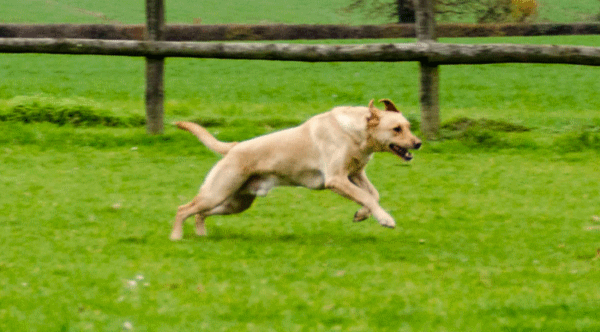
Instinctively driven to eat seasonal berries, grasses and herbivore droppings.
ling an empty stomach and go some way to enriching the life of a highly sensory being that is our beloved If dogs are given a large, natural environment to wander over it is surprising how much time they spend exploring, sniffing, experimenting what is edible and generally foraging. This can include a particular type of grass, seasonal berries, herbs, plant roots or tubers, clay soil or rotting wood. This could be for medicinal use, to ease a stomach upset, rid the body of parasites, provide additional fibre and moisture or to top up on minerals that are lacking in their diet.
Studies of wild canine populations demonstrate the wide variety of food stuffs that they will eat over the changing seasons. This is also dependant on location and if there is access to fallen fruit, nuts, berries, fish, small mammals or waste food from human inhabitation nearby in which to supplement the diet.
Dogs particularly favour the droppings of herbivores such as horses, cows and deer. Although this is only digested, fermented grass and possibly hay in the case of domesticated animals, it does provide enzymes, fibre, moisture and have probiotic qualities.
What are dogs?
Set aside for a moment your views on what dogs should be eating and look instead at what Canis Lupus Familiaris, aka our dogs, actually are?
They are highly intelligent, inquisitive, scavengers, exploring their world primarily by scent. They investigate aroma, taste, texture and edibility with all their senses. They are foragers, trackers, diggers, chewers, adventurers, opportunists and hunters. They are playful, problem solvers that adapt to their environment and not only the food source that is available at that given time but also the volume and frequency of that food.
Nature has given them the anatomy and physiology to eat a vast array of food types and if it was absolutely necessary, the ability to track, catch or at least scavenge their own dinner.
Baring all this in mind, are we not doing them a major disservice by serving up the same beige pellets in a bowl, every single day for a lifetime?
I am certainly not suggesting that you encourage or allow your dog to chase and catch wildlife, but could you offer some more enrichment at mealtimes?
This could be by adding a little steamed or pureed vegetables into their meals, a sprinkling of herbs or blackberries, offering some appropriate fresh cooked food, rotating the flavour or type of food you offer, the use of interactive food toys, snuffle mats, games in the garden that involve tracking and finding their favourite treats or food.