Which herbs are suitable for a dog friendly garden?
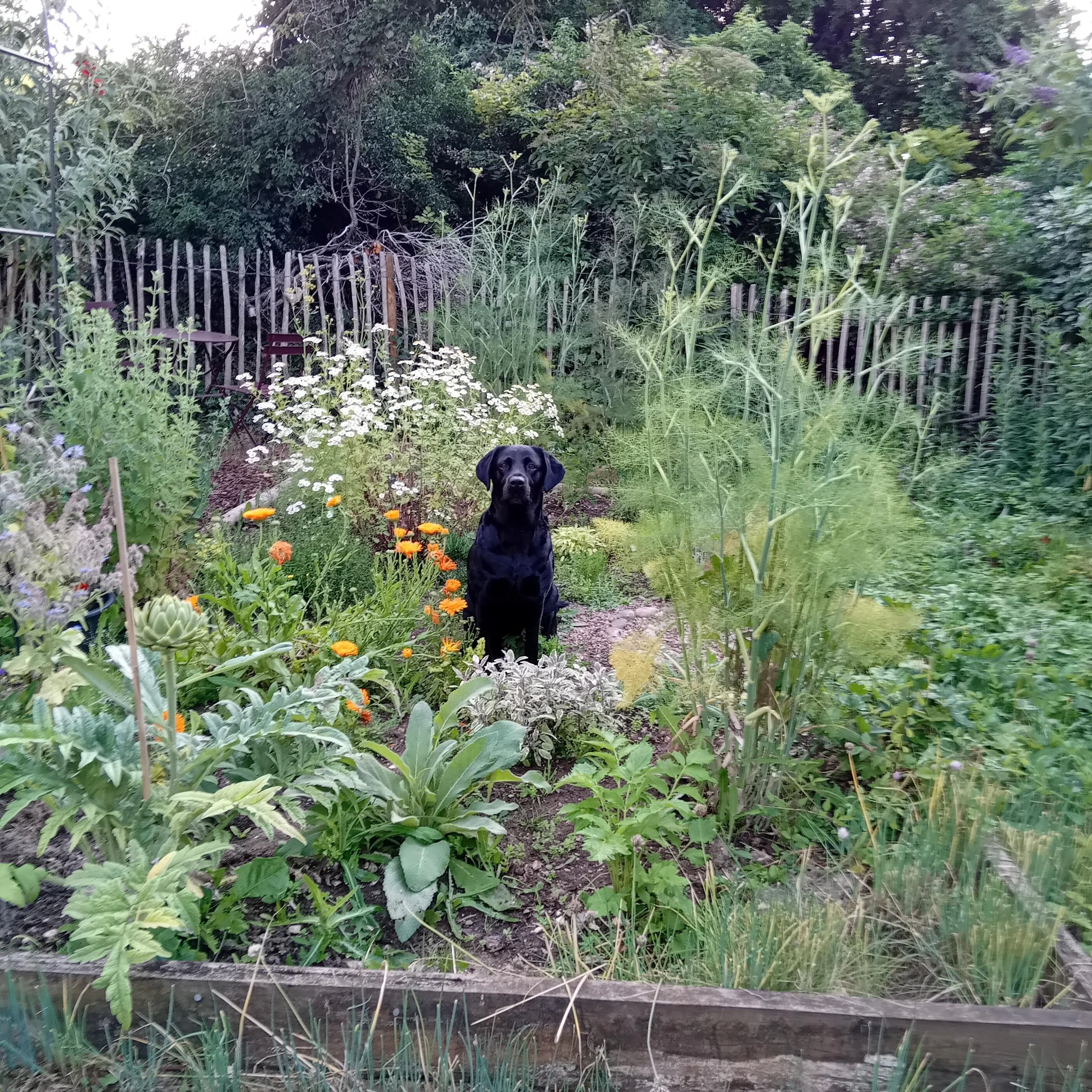
Would you love to create a dog friendly enriching outdoor space for your dog? This blog will explore which dog friendly herbs you can grow either in a herb garden or in pots.
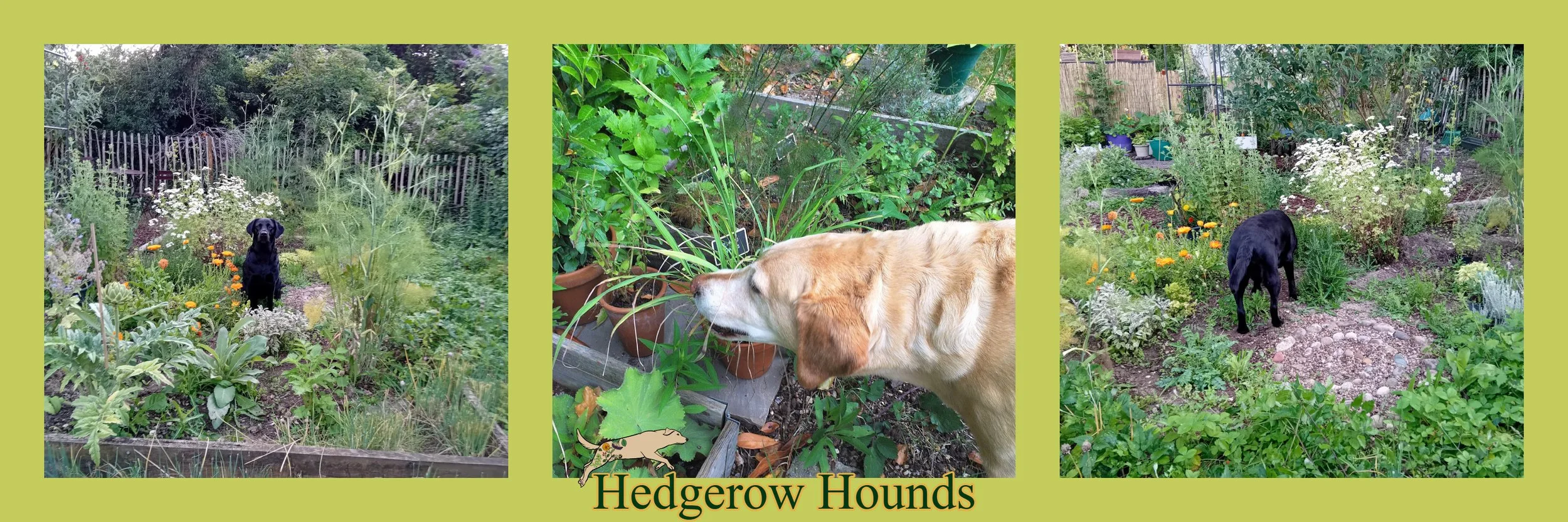
Making the most of your outdoor space and creating a sensory area to enrich the life of your dog.
If you want to learn more about planting a herb garden which will be safe for your dog to explore, sniff, wander through, walk over or even possibly nibble on then here are a few great herbs to get you started. These can be grown in the ground, troughs or pots.
These are some of my favourites:
Barley grass (Hordeum vulgare )
Barley grass is easy to grow in pots, and your dog may well eat the fresh shoots as they appear. It can be quickly grown from seed, and you will find it at most garden centres. It is often called “cat grass”. I usually rotate the grass I grow with wheatgrass, oat grass and lemongrass.
Calendula (Calendula officinalis)
Calendula, also known as pot marigold, is a hardy annual, with the most glorious orange daisy-like flowers that last well into the autumn months. Not to be confused with the summer bedding plant Tagetes, it makes a very effective balm or cream to ease and soothe many skin complaints. Regularly deadhead after flowering to prolong the flowering season.
Catmint (Nepeta cataria)
Nepeta is a hardy perennial with highly aromatic foliage and pretty mauve flowers. It is a huge hit with cats who will often nibble on the leaves and roll on the plant. Catmint is a good choice to plant as edging and looks beautiful spilling out onto a pathway.
Chamomile
Chamomile is a delicate and aromatic herb traditionally used for calming the digestion and nervous system. It can easily be grown in pots or planted into the soil. It will release a beautiful calming scent when your dog sniffs or walks through its leaves and flowers.
Fennel (Foeniculum vulgare)
Fennel is a fabulous herb. The vibrant green and bronze varieties are great if you want to create some height in your herb garden and perhaps disguise an unsightly fence. Fennel grows between 3-5 feet in height and forms long feathery plumes followed by umbels of yellow flowers in the summer and autumn. Every part of this herb smells and tastes of aniseed. It is a nice one for your dog to brush by or walk between if you plant two side by side.
I will often pick some and finely chop it before adding a sprinkle into my dog’s food. You can harvest and dry the seeds at the end of summer for winter use.
Lavender (Lavandula angustifolia)
There are so many varieties of lavender to choose from; the smaller English lavender has a very good aroma, while the flamboyant French lavender with the cute “rabbit ears” petals popping out of the top is very lovely too. There isn’t much difference in terms of scent between them all, so pick whichever variety makes you happy.
Lavender has so much to offer in the enrichment garden as it is evergreen, very fragrant, has a calming aroma, and is beautiful while being a huge hit with pollinators.
Lemon Balm (Melissa officinalis)
Lemon balm has a citrus taste and smell and is traditionally used for calming the mind and gut. Like its cousin, mint, it is very invasive, so ideally needs to be contained in a pot, or it will spread everywhere.
Lemon grass (Cymbopogan citratus)
You can grow lemon grass in pots for the summer, but it is unlikely to survive winter, so you will need to bring it inside. I have known a couple of my dogs to eat the young shoots of lemon grass, which are more tender and have a stronger citrus taste than the older leaves, which can become tough and fibrous as the plant ages.
I usually have wheat grass, oat grass and lemon grass together in pots, should the dogs want to help themselves to the moist shoots.
Mint (Mentha piperita)
There are so many species of mint to choose from, so go with the one you like, but don’t be tempted to plant it directly in the soil, as it will soon invade your entire herb bed. Instead, plant it in a large pot or trough and pick regularly to stop it from becoming tall and leggy.
Marjoram (Origanum marjorana)
Marjoram is such a great but underrated herb. It has a fantastic, strong aroma with pretty leaves, and the variegated variety is particularly nice. It has a dense growing habit and grows fairly low to the ground, a maximum of 50cm tall, which makes it robust enough to withstand paws walking over the top of it.
Parsley (Petroselinium crispum)
Parsley is a must-have in the garden as it’s so versatile. There are flat leaf and curly leaf to choose from, and the flavour is very similar, so stick to the one you prefer. I will often go into the garden and pick parsley, finely chop it and add it to the dog’s meals.
Rosemary (Rosmarius offininalis)
What a joy Rosemary is, with an aroma that cannot fail to lift the spirits. Can you walk past a rosemary bush without running your hands through the leaves and inhaling the scent? I certainly can’t!
It is evergreen, hardy, and has beautiful flowers that pollinators adore. In recent studies, rosemary has also been shown to improve memory. It will grow happily in a large pot or planted in well-drained soil, and there is also a trailing rosemary if you want to use it more as a ground cover plant.
Sage (Salvia officinalis)
Sage is another must-have for the garden. The leaves are soft but also somewhat leathery to the touch, which makes them tough enough to withstand a dog walking over them and survive to tell the tale. There are varieties with blue-green, dark purple, and variegated leaves, adding a bit of colour throughout the autumn and winter months as well. It has a wonderful pungent smell and strong flavour.
Thyme (Thymus vulgaris)
Thyme is a hardy perennial that loves the sun and is tough as old boots. It is another one which only grows to around 60cm in height and provides good ground cover. There are many varieties on sale, and the lemon and orange thymes have a fantastic smell and taste, with the golden thyme adding a splash of colour. Thyme is also another herb that is robust enough to survive dogs walking through it.
Want to learn more?
To learn more about which herbs to plant in your dog friendly garden and enrichment space then my book Canine Enrichment Garden will guide you on how to make a fantastic space for your dog to enrich all their senses.
Or there are paperbacks on the shop to buy. https://www.hedgerowhounds.co.uk/products/canine-enrichment-herb-garden-book
If you prefer an eBook then pop over to Amazon The book is available on Amazon as an e-Book or paperback on the link below: Here is the link https://www.amazon.co.uk/dp/B0FHKYK5T9
Another blog all about the book is here to explore further: https://www.hedgerowhounds.co.uk/blog/canine-enrichment-herb-garden
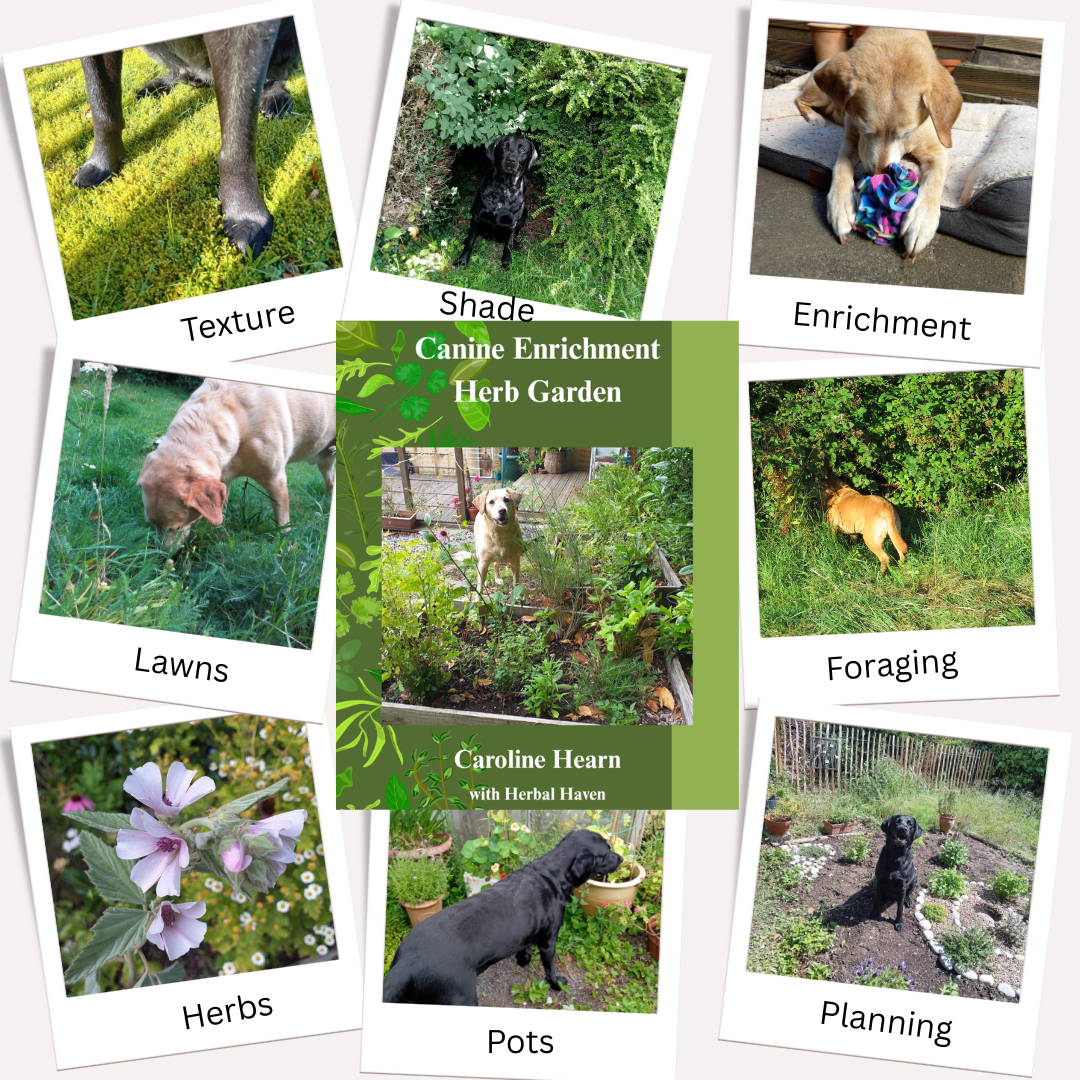
Some of the topics covered within the book.

Holistic Dog Care Consultation
A holistic approach is necessary in order to get the whole picture and cover any area that may be influencing the issues the dog is experiencing.

From pups to senior dogs, those with mobility issues or active working dogs or perhaps you want to explore a more natural diet or lifestyle for your dog?
A holistic dog care consultation provides an opportunity to look at your dog as an individual and consider the different aspects of their lifestyle that may influence their wellbeing.
I have worked in the canine and equine natural healthcare industry for 30 years and have a particular interest in canine wellbeing, nutrition, herbs and holistic approaches to caring for dogs.
What is a holistic dog care consultation?
Rather than looking at one aspect of your dog's care in isolation, a holistic approach considers the bigger picture.
Every dog is different, and factors such as diet, lifestyle, exercise, enrichment, environment, routine and emotional wellbeing can all form part of that picture.
During a consultation, we can discuss your dog's individual circumstances and explore practical, natural approaches that may complement the care you are already providing.
What can we discuss?
Depending on your dog's individual needs, a consultation might include areas such as:
Nutrition and feeding
Herbs and natural approaches to everyday wellbeing
Supporting an active and healthy lifestyle
Enrichment and mental stimulation
Exercise and daily routine
Creating a more supportive home environment
Seasonal care
General wellbeing
Understanding your dog's individual needs
The consultation is tailored to you and your dog, rather than following a standard checklist.
Diet. Is your dog thriving on their current diet, or would they benefit from a few changes?
Exercise. Is the exercise that your dog gets suitable for their age, fitness or mobility?
Holistic Lifestyle. This would include your dog’s daily routine & the things they find challenging.
Medication. If your dog is on medication, this may need to be taken into account, so as not to interfere with its effectiveness.
A holistic approach to your dog's wellbeing
Our dogs live very different lives from those of their ancestors. They share our homes, our routines and increasingly our busy lifestyles.
Sometimes small changes to the way we feed, exercise, enrich or interact with our dogs can make a meaningful difference to everyday wellbeing.
A holistic consultation gives you the opportunity to step back and look at the bigger picture.
It is not about trying to change everything at once. Often, a few simple and realistic changes are the best place to start.
My approach
I draw on my many years as a canine sports massage therapist, raw food and fresh feeding expert and my lifetime with dogs to help you and your dog.
I don't believe in a one size fits all approach. What works beautifully for one dog may not be appropriate for another, which is why understanding the individual dog is so important.
The aim is to give you practical information and ideas that you can incorporate into everyday life, at a pace that feels manageable for both you and your dog.
Would a holistic dog care consultation be useful for you?
If you would like to take a more holistic approach to your dog's everyday care but aren't sure where to begin, a consultation can provide an opportunity to discuss your concerns, ask questions and explore some practical options.
Sometimes it helps simply to have someone knowledgeable look at the bigger picture with you.
If you would like to discuss the problems you are experiencing with your dog, then a consultation with Caroline can help put you and your dog back on the right track.
Here is the link: https://www.hedgerowhounds.co.uk/products/p/consultation
A holistic consultation is not intended to replace veterinary care. If your dog is unwell, has persistent or concerning symptoms, or you are worried about a change in their health, veterinary advice should always be sought.
Caroline Hearn
MICHT. IIHHT. Dip.ICAT. ISCP.Dip.Canine Nutrition
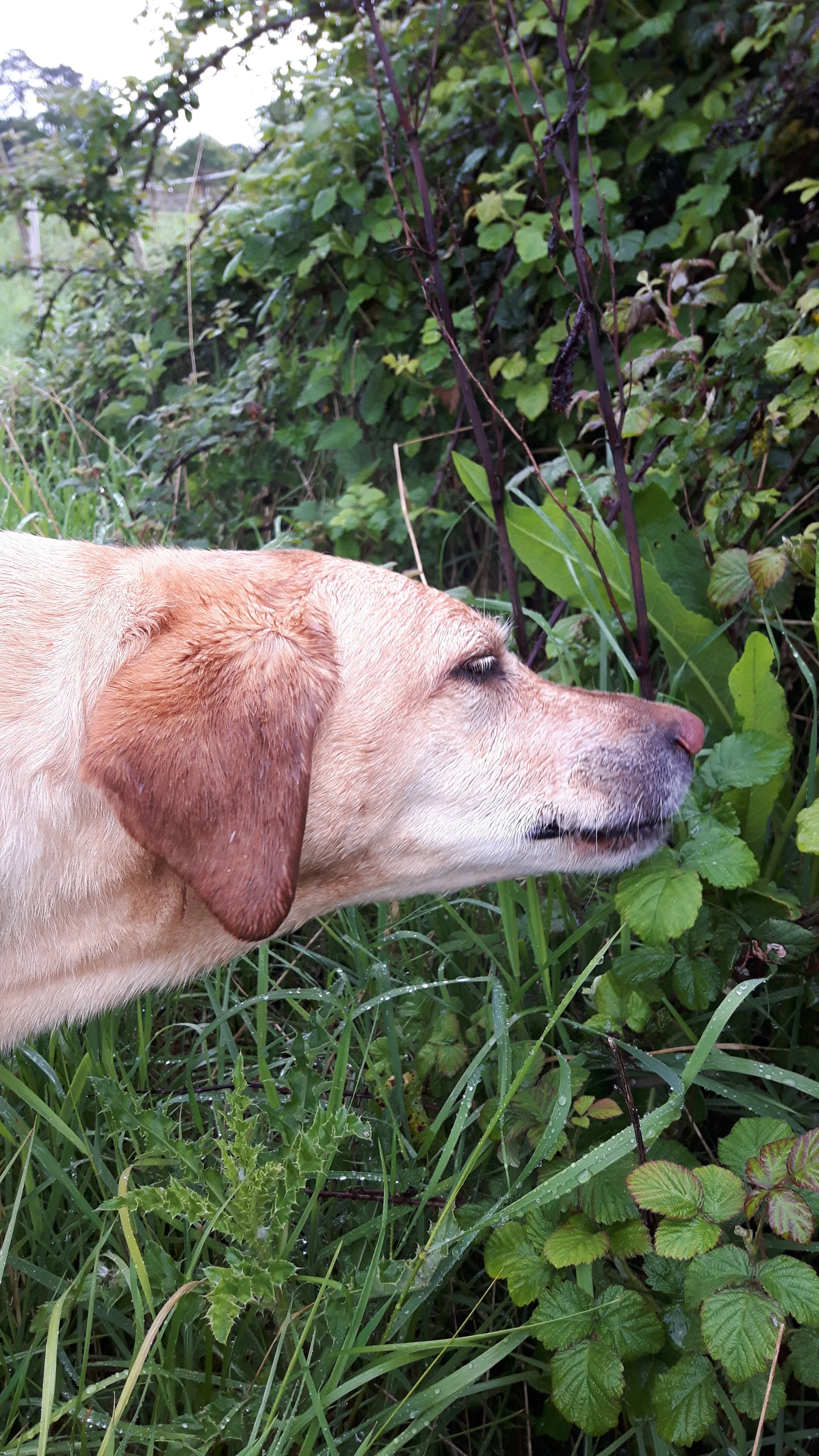
Why does my dog eat grass?
Why do they do it, and what might our dogs be getting out of eating their daily helping of “Dr Green” - and most importantly, should it be something we discourage?
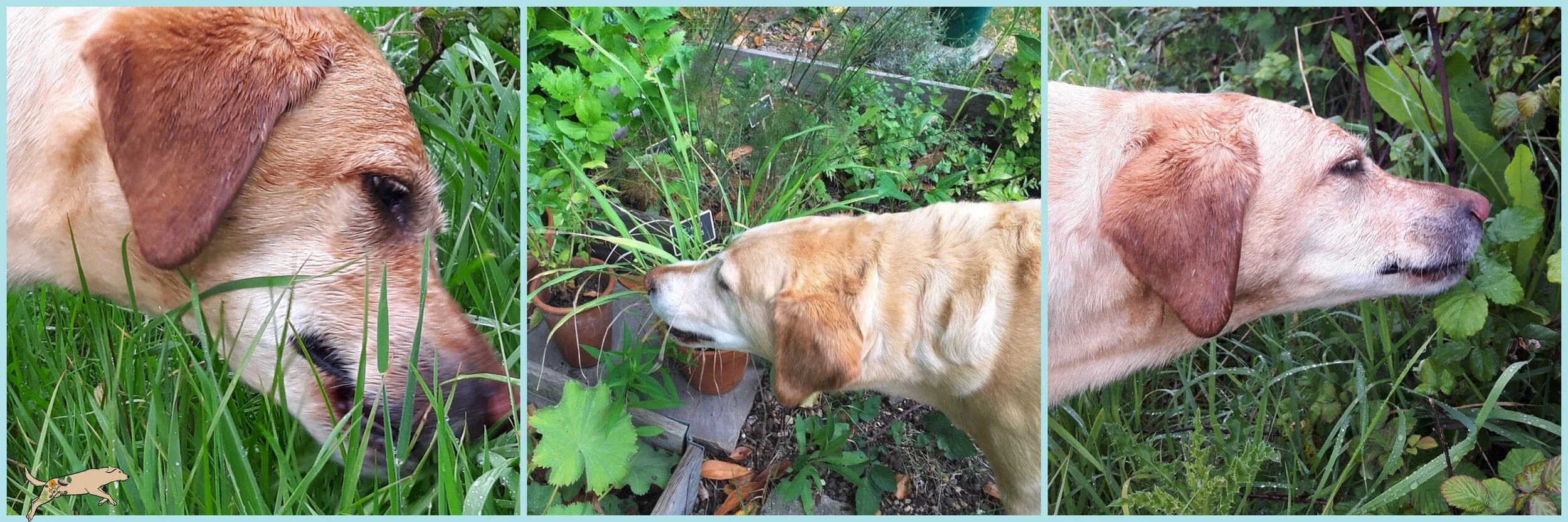
Dogs eating grass is something I am asked about on a regular basis and it can cause concern for owners as they presume that their dog must be ill or lacking in nutrients of some kind. So what might our dogs be getting out of eating their daily helping of “Dr Green” and should it be something we discourage?
The most popular grass our dogs seek out is Elymus Repens commonly known as Couch grass or funnily enough Dog Grass!
The new shoots in the spring are tender, moist and sweet with natural occurring sugars but as the grass matures it can become rough with tiny barbs which you can feel if you run your fingers down the middle and outer edges. This may be relevant when the dog chooses a certain patch of grass for a specific purpose. Other herbs selected in the early months are cleavers and dandelion leaves, these are an effective spring tonic for the liver, urinary and lymphatic system, which can become sluggish over the winter months.
Some dogs, particularly those on a dry food diet may be seeking out additional water from the leaves and roots or even the dew that lays on the top of the shoots. I have observed that dogs will rush to nip out the tops of grass first thing in the morning but show very little interest in the same patch in the afternoon.
Fibre:
Vegetables and fresh grass are abundant in a variety of dietary fibres which are needed to keep the gut and the beneficial gut microbes within it functioning effectively. There is now evidence to show how the balance of our gut microbiome impacts on our mental and physical health, this also applies to our dogs. Encouraging a healthy population of good microbes means there is far less space for the bad microbes to take up residence.
I expect most of us have seen our dogs take immense delight in consuming the droppings of animals such as cows and horses which is basically just pre-digested grass which once passed through a herbivore contains digestive enzyme and probiotic qualities.
If you feel your dog is eating too much grass or may need more fibre in their diet then try adding a few steamed vegetables or blitzing raw veg in a blender and adding it to their meals. This can include broccoli, spinach, courgette, kale, parsley, dandelion greens or even some spirulina to see if they reduce their intake. This can often stop the desire to consume large quantities of grass within a few days. A really useful supplement with is rich in chlorophyll and green vegetables is the Greens, Seeds & Superfoods blend which can be found on this link: https://www.hedgerowhounds.co.uk/products/greens-seeds
Nutrients:
Grasses do not offer a large amount of nutrients to our dogs, but they do provide a certain amount of vitamin A, B, iron, fibre and silica as well as astringent properties and chlorophyll which dogs really seem to crave at certain times of the year.
There is a theory that our dogs still have some of the traits of their distant ancestors. Wolves and wild canines would hunt and kill herbivores or possibly scavenge from the carcass and consume some of the contents of the preys stomach which contain partly digested grasses, herbs and other roughage. This provides welcome moisture, fibre and enzymes to help in the process of digesting a heavy, meat rich meal.
When to investigate further:
The majority of dogs will eat grass most days and seem to thoroughly enjoy the experience. They will do this despite having a good balanced diet which includes fibre from vegetables and never have any adverse effects such as vomiting afterwards.
However, there are circumstances where further investigation is necessary. There is no doubt that some dogs will actively seek out certain grasses to induce vomiting. You may notice your dog drooling, licking their lips, swallowing hard and rushing outside to eat grass. This tends to be a rapid, frantic, grabbing at grass rather than the slow, selective grazing usually seen. After vomiting has occurred this may give temporary relief of nausea, reflux or easing of stomach irritation. Most of us would have seen our own dogs or those of others do this and they seem to be totally unaffected afterwards and back to their normal self within minutes.
If your dog is regularly eating large volumes of grass particularly after their meals and then vomiting, there could be an underlying health issue that needs investigating by your vet. Dogs may induce vomiting in order to eat the regurgitated food immediately afterwards as they have an inability to absorb nutrients and need to re-ingest the stomach contents to make it more digestible, this will also require a visit to your vet for further tests.
Eating a large amount of course grass which cannot be digested will cause stomach irritation and add volume and bulk to the stools as well as being passed out the other end almost intact. Dogs can exhibit this behavior if they are carrying a worm burden as it encourages elimination of parasites. To rule out this possibility it is important to carry out a fecal worm count to establish if this is the actual cause.
Where to take additional care:
Often the only access dogs have to grass is from the lawn, footpaths that run alongside arable fields or from eating young shoots of barley or wheat growing in fields. All these areas are very likely to have been treated with chemicals of one form or another. We should avoid using artificial fertilisers or chemical treatments on our lawns as dogs will ingest them and also absorb the chemicals through the skin on their pads. Special care is needed to avoid arable fields at certain times of the year or at the very least keep dogs on a lead if you have no choice but to walk alongside them.
If you want to provide a clean source of fresh grass or greenery then it is easy to grow couch, barley or wheat grass in individual pots for your dog to help themselves as and when they desire. You could also make a small area in the garden where your dog can be free to sniff, explore and have access to grasses and herbs which are pollutant and chemical free.
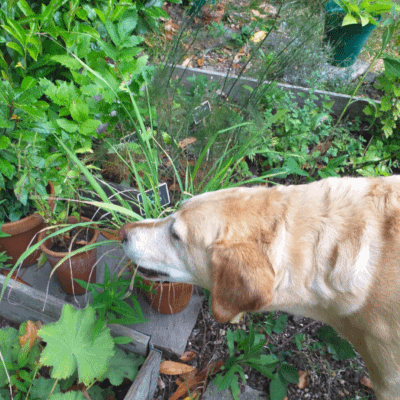
Grass can be grown in pots for the dogs to pick at if they wish. This pot has Lemon Grass in but Wheat and Barley grass are also easy to grow and well received.
Your Dogs Dental Health
Keeping your dogs’ teeth clean and in good health is so important for their overall health and long-term wellbeing.

Keeping your dogs’ teeth clean and in good health is so important for their overall health and long-term wellbeing.
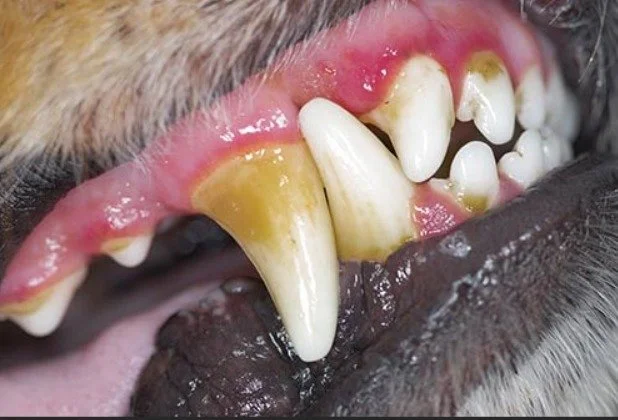
What is the difference between Plaque & Tartar? Plaque is a build-up of saliva, food, and bacteria that forms on the teeth, eventually turning into a brown hard substance, known as tartar. Tartar causes damage to the teeth and gums and can lead to gingivitis. The resulting bacteria can enter the bloodstream and damage the kidneys, liver, and heart.
Health dangers of a build-up of plaque, tartare, and gum disease. The bacteria that`s formed in an unhealthy mouth can travel via the bloodstream to the heart and circulatory system. This bacteria can cause heart and bowel disease and affect the immune system. There is also the added risk and expense of dogs having to receive a general anaesthetic for teeth cleaning, which is something we want to avoid if possible, particularly when caring for elderly dogs or those with other underlying health complications.
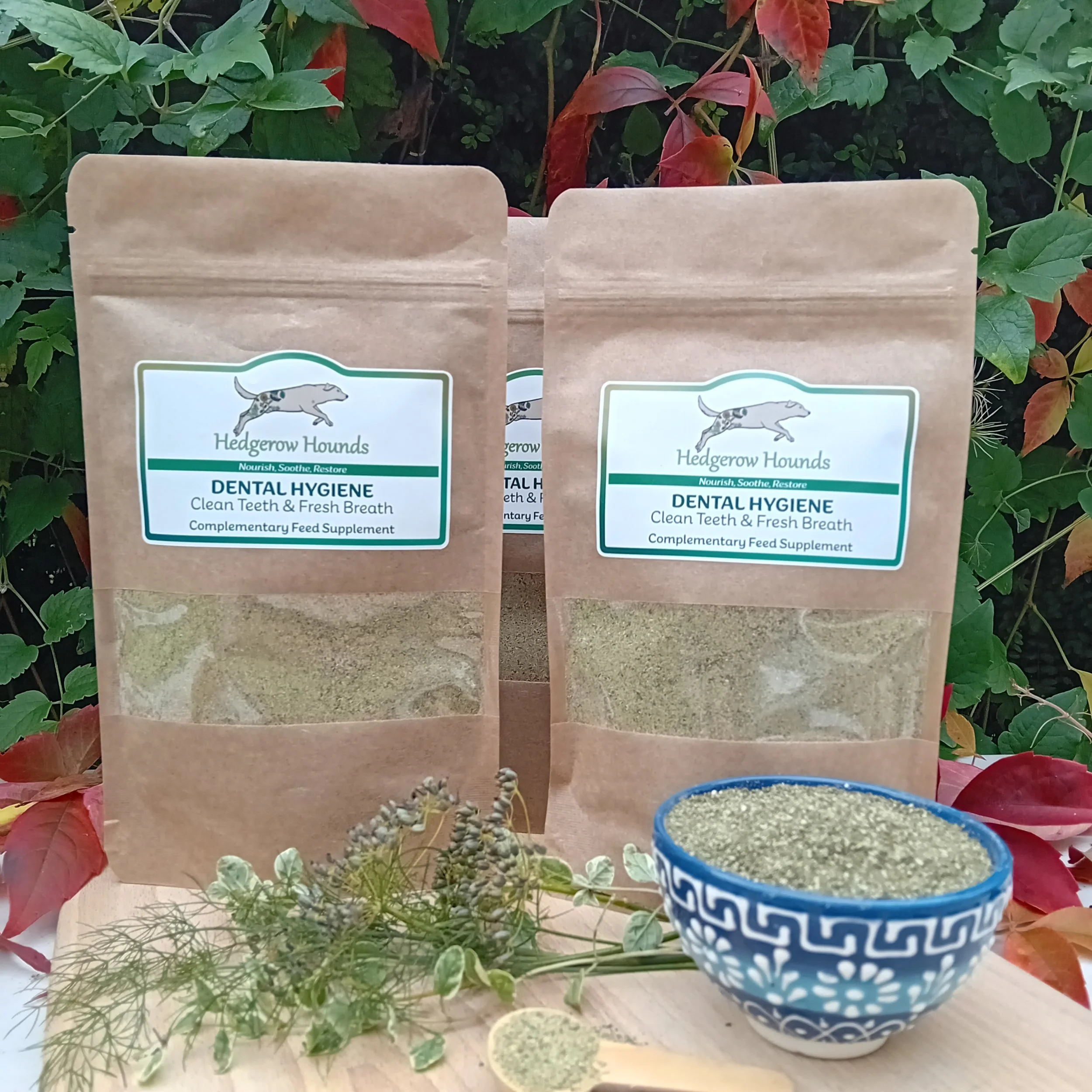
The Dental Hygiene blend has been made to improve oral health, loosen hardened tartar, prevent or greatly slow down the build-up of tartar and plaque, and assist in the maintenance of teeth and gums which is particularly useful in elderly dogs, that perhaps can no longer have a general anaesthetic.
The link to buy Hedgerow Hounds Dental Hygiene Blend is https://www.hedgerowhounds.co.uk/products/dental-hygiene
There is also a blog all about dental hygiene blend here https://www.hedgerowhounds.co.uk/news/dental-hygiene-formula
Other ways to speed up tartar removal and prevent further build-up.
Feeding abrasive size-appropriate recreational raw bones and natural chews.
Toothbrushing or cleaning with a lint cloth
Signs of tooth pain, gum disease, or mouth infection:
Eating less, hesitancy to eat, favouring soft food over hard, dropping food and much slower eating than normal.
Bad breath, red swollen gums, discoloured teeth.
Inability or reluctance to open their mouth.
Blood on gums, bedding, or toys.
Scratching at their face or swelling and heat along the tooth line.
70% of dogs over 3 years of age have some form of dental disease. Small breeds such as toy Poodles, Cavalier King Charles, Schnauzers, and the Brachycephalic breeds are particularly prone and in larger breeds, the Greyhound is predisposed to tooth and gum disease.
Hedgerow Hounds makes veterinary-formulated supplements for dogs. The company was founded and is owned by a qualified holistic canine therapist with 30 years of experience in holistic dog care and nutrition.
Dental Hygiene Formula
The dental hygiene formula for dogs has been created to clean tartar and plaque from the teeth and to improve the overall health and hygiene of the mouth and gums. Although this blend’s main aim is to improve oral health there are so many benefits to feeding this supplement for improving all aspects of health and optimal wellbeing.

The dental hygiene formula for dogs has been created to clean tartar and plaque from the teeth and to improve the overall health and hygiene of the mouth and gums. Although this blend’s main aim is to improve oral health there are so many benefits to feeding this supplement for improving all aspects of health and optimal wellbeing.
The blend is made up of ingredients of the highest human-grade food quality.
The Seaweed used is a certified Organic Fucus vesiculosus Seaweed. It is traceable to the precise location of harvest, from remote areas of the British Isles and Nordic region, so you can thoroughly trust the purity and source.
High quality, pollution-free seaweed is highly nutritious and offers your dog the following benefits:
An effective prebiotic, high in antioxidants.
High levels of vitamins, minerals, trace elements, amino acids, antioxidants & omega fatty acids.
Iodine for optimum thyroid function.
Improves skin, coat, and nail health and loss of pigmentation.
Improved oral health by preventing or aiding in the removal of tartar and plaque formation. Seaweed has antibacterial properties to act against harmful bacteria in the mouth and alongside the other ingredients used greatly aid in disease prevention of teeth and gums.
Fennel is added for its ability to inhibit the build-up of plaque due to its high levels of polyphenols. Fennel can also reduce the growth of harmful bacteria and yeast. It has good levels of manganese, magnesium, Iron, calcium, and fibre. It also helps ease any intestinal gas and aids in digestion.
Oregano has powerful anti-inflammatory, antimicrobial, and antibacterial actions. All these properties assist in creating good oral health and helping to ease issues such as gingivitis. Due to Oregano’s high levels of antioxidants, it is also effective at balancing the gut bacteria.
What is it good for? This dental hygiene for dogs has been specifically created with oral health in mind. It can help remove the build-up of plaque and tartar, and create a healthier environment in the mouth so issues are less likely to occur. If your dog has a serious dental issue that requires veterinary intervention the blend can be used afterwards to aid in the prevention of further disease and hopefully eliminate the need for another tooth clean under anaesthetic, which is particularly important when caring for senior dogs or those with other health problems.
How to use: There are several options for using this dental blend depending on the current health of your dogs mouth and the amount of tartar you are aiming to reduce.
As with any new supplement, it is recommended that you gradually introduce the blend over 5 days. If your dog has a visible build-up of tartare, stained teeth, bad breath, and inflamed gums then it is suggested that the suggested amount is fed over the space of approximately 15 weeks, although you may see a marked improvement well before then. All the amounts to feed are dependent on your dog’s body weight and are stated on the labelling of the product.
If your dog already has clean teeth and good oral health and you would like to keep it that way as they age, then the initial “loading” amount over several weeks isn`t necessary. It is suggested that you feed the full amount for 6 weeks and then drop down to half that amount for maintenance. As an example, a 35kg Labrador would have half a teaspoon (approx. 2g of the powder) daily for 6 weeks, after this time the amount given can be halved if required to a quarter teaspoon (1g) for 5-7 days a week.
If at any time you see discolouring of the teeth, the amount can then of course be increased again to the maximum amount of half a teaspoon for that particular body weight. Each dog is an individual and the rate of plaque formation will vary depending on breed, age, diet and lifestyle so initially it may take a little while to find the exact amount that is suited to your dog.
Can I speed up the removal of hard tartar? Yes, you can speed up the process if there is hard tartare or a build-up in certain areas. Abrasive natural chews or size-appropriate recreational raw bones will help lift the tartar. Teeth cleaning with a toothbrush or lint cloth to ease any loosening tartar away. You may find there is often a stained area at the very top of the canine tooth nearest to the gum line which bones and chews can`t reach. This can be removed with a lint cloth or toothbrush once the supplement has been used for a couple of months.
Important message for certain health concerns:
Due to seaweed’s naturally occurring iodine content, it is not suitable for dogs that are undergoing veterinary treatment for hyperthyroidism or on thyroid medication. Also, avoid feeding this blend to pregnant and lactating females until the litter is weaned.
Hedgerow Hounds makes veterinary-formulated supplements for dogs. The company was founded and is owned by a qualified holistic canine therapist with 30 years of experience in holistic dog care and nutrition.
The Importance of Water to your Dogs Health
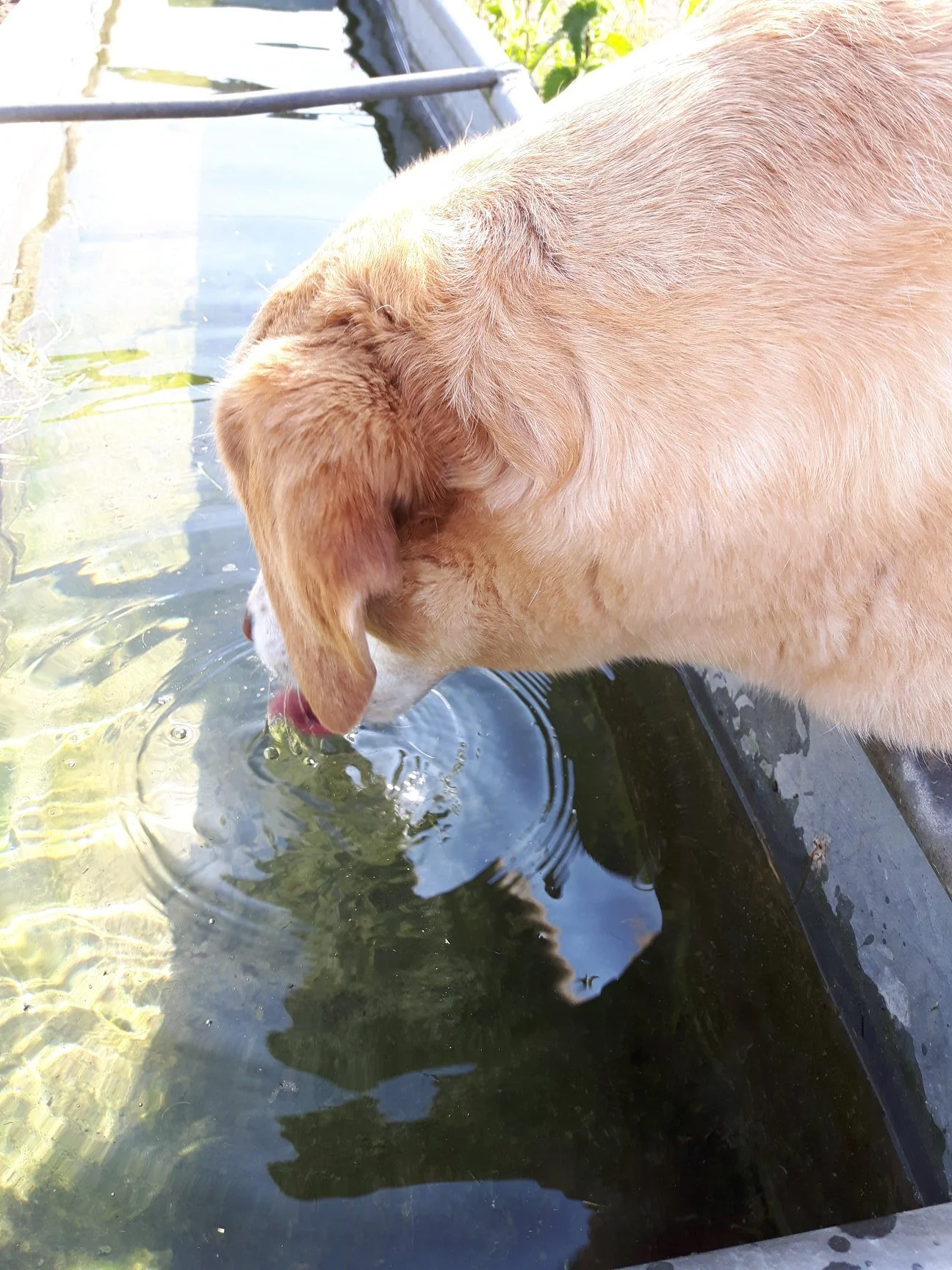
Dogs are made up of around 70% water and it supports every bodily function.
In this current hot spell it is even more important to provide a generous amount of clean, fresh water which helps maintain a normal body temperature and to keep the essential electrolyte balance.

Dogs are made up of around 70% water and it supports every bodily function, without an adequate supply dogs become dehydrated and seriously ill.
In this current hot spell it is even more important to provide a generous amount of clean, fresh water which helps maintain a normal body temperature and to keep the essential electrolyte balance.
Water bowls need to be scrubbed clean to remove any saliva which quickly builds up and is an environment for bacteria to grow. Newly poured water in a clean bowl is much more inviting to a dog and will encourage them to drink freely.
As a guide a dog needs 1oz of water per 1lb of body weight. There are certain circumstances in which a dog will need more water such as very hot weather (3-4 times as much), a bitch that is nursing puppies, kibble fed dogs will need more water than dogs fed a moist food, a dog that has a bout of vomiting and diarrhoea and in this heat it is wise to contact your vet as its essential that they maintain their body fluids.
If you have to take your dog out in warm weather then take plenty of water and a water bowl that your dog is familiar with. At shows and competitions there are often bowls left out for dogs to drink from, not only is there a potential risk of infection between the dogs but also many dogs refuse to drink, even when thirsty from a communal bowl which is full of others saliva and who can blame them.
If you leave your dog at home while you go out make sure they have a non spill bowl, a raised bowl on a stand or a second water bowl elsewhere, then should the water get tipped over there is still another source. Fresh water in the garden is also a good idea but remember to bring the bowl in at night or discard the water and scrub clean before allowing the dog to drink from it due to risk of contamination from wildlife and importantly slugs and snails which will visit it over night and possibly be carrying lungworm.
The signs of dehydration are shown as the dog being very listless, dull sunken eyes, dry, tacky gums and nose, absence of or passing very dark urine, unsteady gait or even collapse.
Along with the above symptoms there are a couple of ways of testing for dehydration in your dog. One is to press lightly on the gums and as you remove your finger the pink colour should return with a couple of seconds.
Another way is to lift a fold of skin up between the dogs shoulder blades and then release, the skin should return immediately. If the dog is dehydrated then the skin will slowly return to normal or may even stay upright. Any of these symptoms would require immediate care from a vet for a successful outcome and full recovery of the dog.
For dogs that are not big drinkers you may need to encourage them to take more fluids in hot weather. This can be done by blending ingredients naturally high in moisture and either offering it to them or stirring into their food. This smoothie shown below, using watermelon, lettuce, chard, spinach & berries blended with water, can also be made into a dog friendly ice lolly or frozen into Kongs etc. Bone broth (home made or shop bought) diluted with water can tempt even the fussiest drinker to consume more fluids.

Natural Digestive Support for Dogs
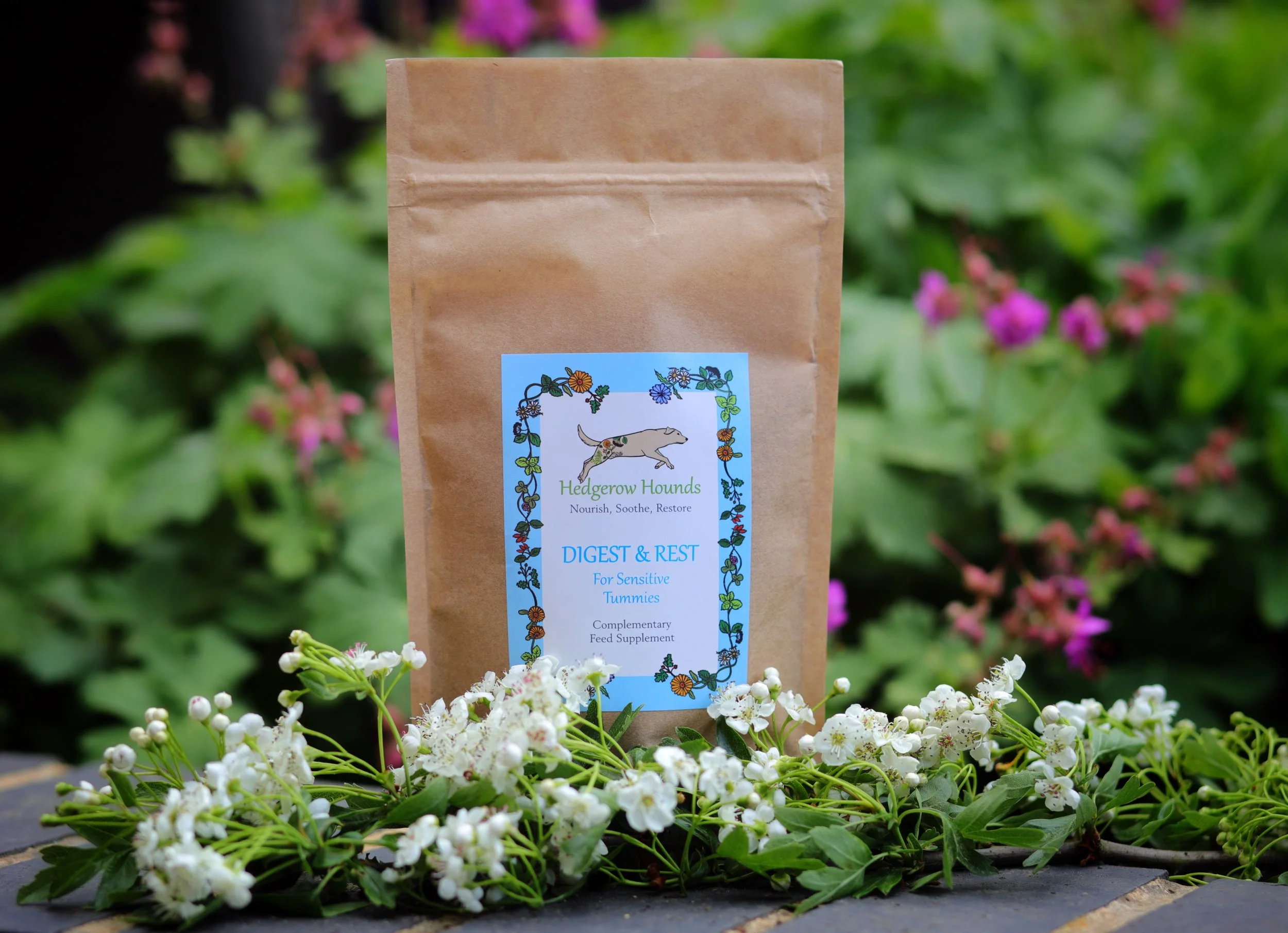
Digest & Rest is the perfect blend for tummy troubles, managing reflux and to aid in anal gland issues.

What does Digest & Rest help with? Digest & Rest was created to help dogs that suffer from digestive upset, constipation, and nausea. It is also ideal for managing anal gland problems. If your dog has a very sensitive digestion, then this blend is ideal if you are intending to make any changes to the diet and will make any transitions much smoother.
It has a very neutral taste and smell, so it will not be off-putting to even the fussiest dog and can be “hidden” in tasty food for the really suspicious, picky eater.
Here are a list of some of the ingredients in Digest & Rest and why they were specially chosen.
Marshmallow - Marshmallow root contains around 35% mucilage, which is a slippery substance to ease irritation of the mucous membranes. This makes it ideal to soothe an irritated throat, gut discomfort or tummy troubles. It is also invaluable for managing reflux and hunger nausea, which can occur just after eating or in the early hours of the morning when the dog’s stomach is empty. Marshmallows’ strongest affinities are with the digestive system, respiratory and urinary tracts.
Chamomile - Chamomile is chosen for its antispasmodic properties as well stimulating digestion as it is quite bitter tasting. Chamomile is also relaxing, so helps if the upset tummy is caused by an anxious, excitable, stressed mind.
Slippery Elm - Slippery elm has been used for centuries to ease digestive upset and soothe the whole digestive tract due to its mucilage properties once it becomes wet.
Fennel - Fennel is useful for expelling intestinal gas and helping to ease stomach cramps.
Psyllium husks - Psyllium are husks from the Plantago ovata species. They provide a form of soluble fibre which when in contact with water, forms a soothing gel which passes through the digestive tract. The husks add bulk to the stools and help with constipation, diarrhoea and aids in the correct emptying of anal glands. Psyllium is also a useful prebiotic to encourage good gut bacteria.
How to use:
Digest & Rest is a very versatile blend to use and you can adapt it to suit your specific dog’s needs. The measured amount can be added to wet food and stirred in, and for dried food, it is recommended that you add a splash of water to the powder and stir it into a paste before incorporating it into the food.
For supporting nausea. If your main reason for choosing this blend is to support reflux or perhaps your dog is recovering from a cough, there are several ways to use this blend for maximum effect. If the powder is made into a thick paste with a little warm water, this starts to release the mucilage, which will coat the mouth and oesophagus as it is consumed. You can try adding this paste to the food, or alternatively, some dogs benefit from a tiny meal or snack with Digest & Rest shortly before the main meal is given, so experiment with this to see what most benefits your dog. Small snacks could include a raw egg, plain cottage cheese, natural live yoghurt or a splash of goats’ milk.
For support with hunger pukes. Some dogs can experience hunger nausea in the early hours of the morning and may bring up some frothy, slimy vomit or start to retch as they experience an uncomfortable nausea. As long as they are well in themselves and have no other symptoms to suggest something more serious is going on, then feeding a very small meal or snack in the evening, which contains the Digest & Rest, can often ease these symptoms overnight and into the early hours. Small snacks can be those listed above or a tiny portion of their main meal set aside for this purpose.
Happy Customer Review
“Our French bulldog now sleeps all night, without the constant air licking, coughing, retching and regurgitation. I never want to be without Digest & Rest” Happy dog and happy owner.
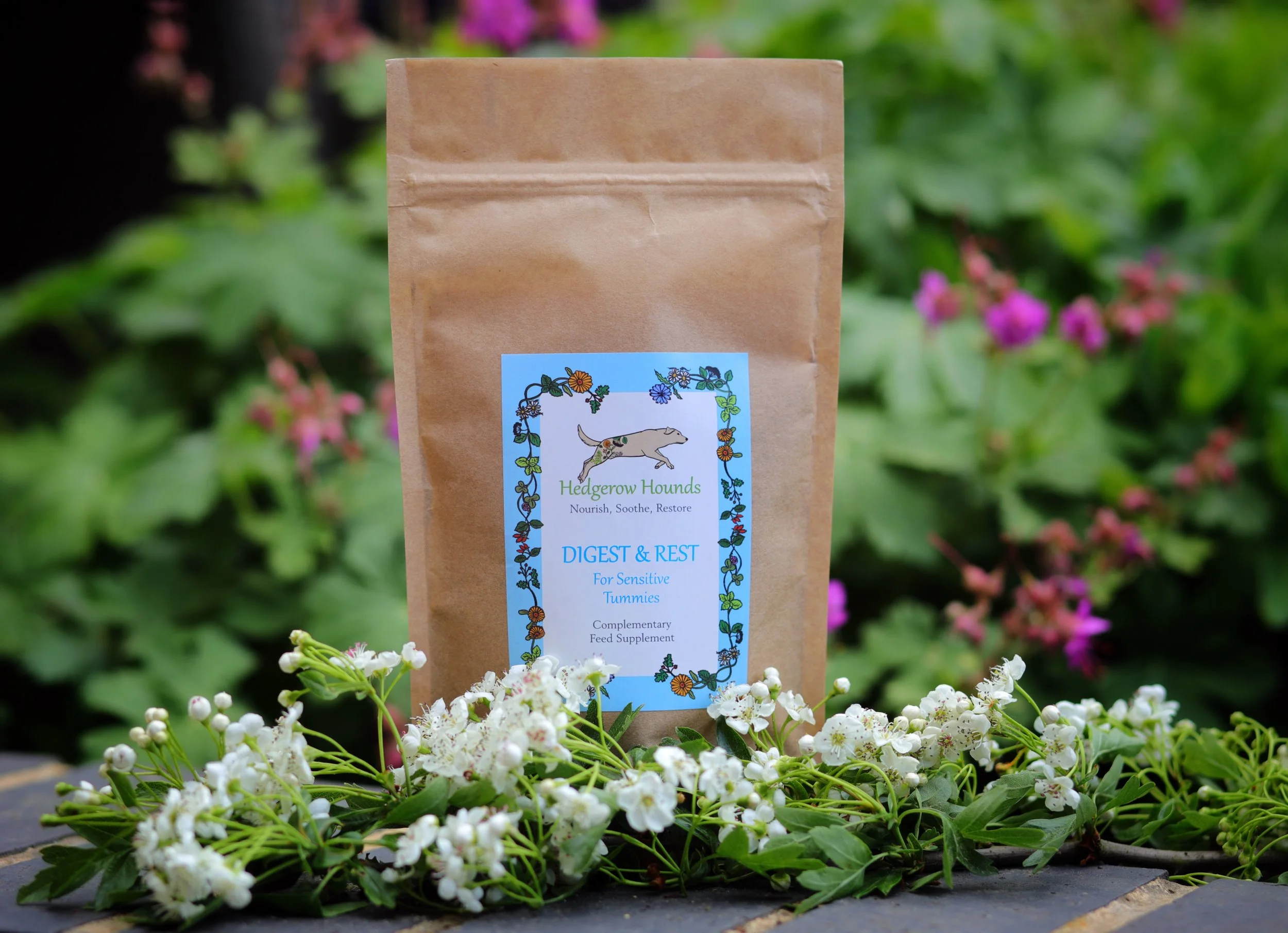
A beautiful blend of herbs, roots, and seeds specifically to soothe the gut, aid digestion, and help anal gland issues.

All our products are veterinary formulated, but should not be used instead of consulting your vet should your dog have a health problem.
Hedgerow Hounds is owned by a qualified holistic canine therapist with 30 years of experience in healthcare and nutrition, and the blends are formulated by a veterinarian.