
Holistic Dog Care Consultation
A holistic approach is necessary in order to get the whole picture and cover any area that may be influencing the issues the dog is experiencing.

From pups to senior dogs, those with mobility issues or active working dogs or perhaps you want to explore a more natural diet or lifestyle for your dog?
A holistic dog care consultation provides an opportunity to look at your dog as an individual and consider the different aspects of their lifestyle that may influence their wellbeing.
I have worked in the canine and equine natural healthcare industry for 30 years and have a particular interest in canine wellbeing, nutrition, herbs and holistic approaches to caring for dogs.
What is a holistic dog care consultation?
Rather than looking at one aspect of your dog's care in isolation, a holistic approach considers the bigger picture.
Every dog is different, and factors such as diet, lifestyle, exercise, enrichment, environment, routine and emotional wellbeing can all form part of that picture.
During a consultation, we can discuss your dog's individual circumstances and explore practical, natural approaches that may complement the care you are already providing.
What can we discuss?
Depending on your dog's individual needs, a consultation might include areas such as:
Nutrition and feeding
Herbs and natural approaches to everyday wellbeing
Supporting an active and healthy lifestyle
Enrichment and mental stimulation
Exercise and daily routine
Creating a more supportive home environment
Seasonal care
General wellbeing
Understanding your dog's individual needs
The consultation is tailored to you and your dog, rather than following a standard checklist.
Diet. Is your dog thriving on their current diet, or would they benefit from a few changes?
Exercise. Is the exercise that your dog gets suitable for their age, fitness or mobility?
Holistic Lifestyle. This would include your dog’s daily routine & the things they find challenging.
Medication. If your dog is on medication, this may need to be taken into account, so as not to interfere with its effectiveness.
A holistic approach to your dog's wellbeing
Our dogs live very different lives from those of their ancestors. They share our homes, our routines and increasingly our busy lifestyles.
Sometimes small changes to the way we feed, exercise, enrich or interact with our dogs can make a meaningful difference to everyday wellbeing.
A holistic consultation gives you the opportunity to step back and look at the bigger picture.
It is not about trying to change everything at once. Often, a few simple and realistic changes are the best place to start.
My approach
I draw on my many years as a canine sports massage therapist, raw food and fresh feeding expert and my lifetime with dogs to help you and your dog.
I don't believe in a one size fits all approach. What works beautifully for one dog may not be appropriate for another, which is why understanding the individual dog is so important.
The aim is to give you practical information and ideas that you can incorporate into everyday life, at a pace that feels manageable for both you and your dog.
Would a holistic dog care consultation be useful for you?
If you would like to take a more holistic approach to your dog's everyday care but aren't sure where to begin, a consultation can provide an opportunity to discuss your concerns, ask questions and explore some practical options.
Sometimes it helps simply to have someone knowledgeable look at the bigger picture with you.
If you would like to discuss the problems you are experiencing with your dog, then a consultation with Caroline can help put you and your dog back on the right track.
Here is the link: https://www.hedgerowhounds.co.uk/products/p/consultation
A holistic consultation is not intended to replace veterinary care. If your dog is unwell, has persistent or concerning symptoms, or you are worried about a change in their health, veterinary advice should always be sought.
Caroline Hearn
MICHT. IIHHT. Dip.ICAT. ISCP.Dip.Canine Nutrition
Green Dog Pesto - Spring
Spring brings lots of vibrant new growth, both in the veg patch and in the wild. It`s too good an opportunity to miss!

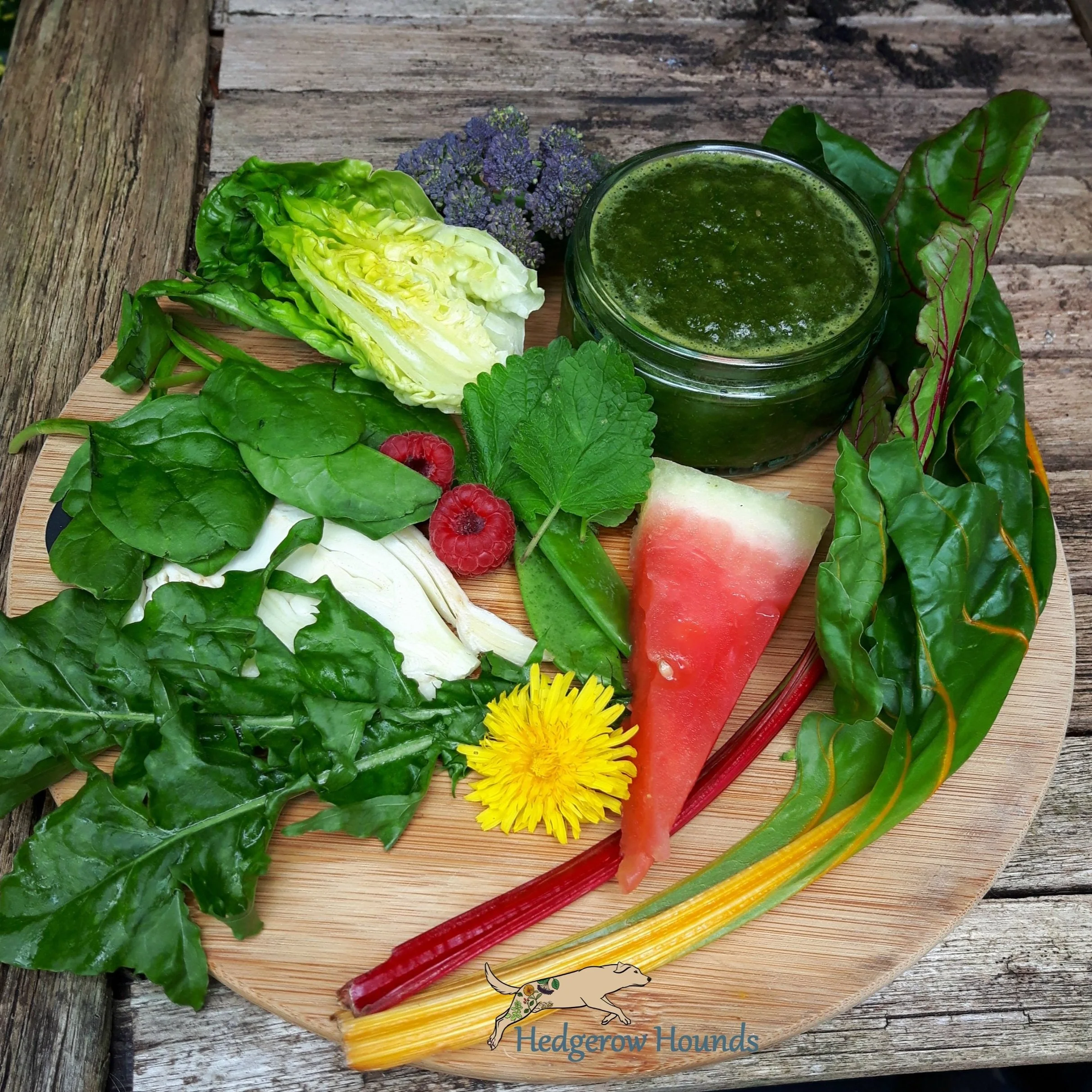
Full of fresh green goodness, this smoothie recipe for your dog has a little twist in the form of added nuts and seeds.
Almonds are rich in vitamin E and magnesium, and Pumpkin seeds are a good source of zinc and selenium. As an alternative to almonds, a brazil nut can be added, but avoid using macadamia or any salted nuts.
At this time of year, there is no shortage of seasonal greens, but the following are favourites of mine. Choose a few leaves from the following or add one or two to your dog’s usual veggie blend.
Parsley, Fennel, Basil, Little Gem or Coz lettuce, cavalo nero kale, Wild Garlic, Dandelion leaves, Watercress, Cleavers, Spinach, Chard, Spring Greens, Asparagus stalks.
Many of these are easy to grow at home or can be foraged for, and when freshly picked, are even more nutritious.
You will need
A selection of Summer greens (approximately 2 cups full)
2 whole, unblanched almonds
5 Pumpkin seeds
A splash of water, cooled green tea (caffeine-free) or make a tea from a Hedgerow Hounds herbal blend, Nature’s Tonic or Nature’s Bounty, as an example.
How to Make:
Place your selected leaves and any veggies into a smoothie maker or blender and add enough water or your herb tea to blend into a thick puree consistency.
Keep in the fridge and use within 2 days or freeze in individual moulds for later use
If your dog is new to eating vegetables, then start off with small amounts and gradually increase over a week or two. Steamed or pulped, (low GI and low starch) vegetables can make up around 10%-15% of your dogs meals and are a nice addition to any diet.
Caroline Hearn – Hedgerow Hounds
SEASONAL FEEDING - Making the Most of Fresh Ingredients
The majority of people have lost their connection with the land, nature and the changing seasons.
Natures larder provides us with a huge variety of produce at the perfect time when it will be of most benefit to us nutritionally. With a few small changes we can all benefit from eating seasonally which is better for us, our dogs and the environment.

Spring, Summer, Autumn and Winter, seasonal feeding at its freshest and finest. Featuring Hedgerow Hounds seasonal herbal blends.
The majority of people have lost their connection with the land, nature and the changing seasons.
Natures larder provides us with a huge variety of produce at the perfect time when it will be of most benefit to us nutritionally. With a few small changes we can all benefit from eating seasonally which is better for us, our dogs and the environment.
We can utilise herbs and vegetables in the Spring, which are a perfect cleansing tonic to gently ease us out of the long winter months, where we have no doubt been overindulging and less active.
To the cooling and hydrating bounty of Summer, followed by the real bumper harvest of Autumn, which gives us all the foods we need to help boost our immunity and general health in preparation for the cold Winter months ahead.
Here at Hedgerow Hounds, we are passionate about seasonal ingredients, and if you really want to embrace seasonality, then we have a seasonal range of handmade herbal blends.
What`s so special about seasonal food?
Eating more seasonally ourselves and by including some of these foods in our dogs’ diet, we can benefit in so many ways.
. We can reconnect with the cycles of nature and really appreciate the food that is available for a short period of time.
. It is better value for money as well as kinder to the environment, to buy ingredients when they are in abundance locally and haven’t travelled halfway round the world before they even get to our kitchen.
. We can support the local communities, such as small producers, farmers’ markets, organic growers, and game dealers.
. The produce is fresher and therefore more nutritious as it is harvested when ripe or at its best, and has minimal travelling time before we can purchase it.
Could we survive without sugar snap peas from Egypt, asparagus from Peru, and eating Strawberries in January? These have travelled thousands of miles, are harvested unripe, and sprayed with chemicals, gas, or wax to stop them from deteriorating in transit.
Or could we wait until they are ready to eat locally and benefit from much more flavour and far higher nutritional value, while enjoying so many other foods in the meantime?
How does incorporating seasonal food benefit our dogs?
If you feed raw or home-cooked food to your dog, then it is important to offer a good variety of foods over the coming months. If you feed dried or tinned food, it is also possible to start incorporating a small amount of fresh ingredients into the bowl at feed times.
By offering variety, you can ensure your dog gets a broad range of nutrients and avoid the intolerances that can occur if the same protein and carbohydrate are fed continuously.
A wide spectrum of fresh ingredients, either animal proteins or of plant origin, nurtures a healthy gut microbiome, which is vital for a healthy immune system and overall optimal health. The more diverse the diet, the less you will have to rely on supplementation.
By feeding what is in season, you are providing food at its very best. This often means that you don’t need a large amount to benefit from the superior nutritional value.
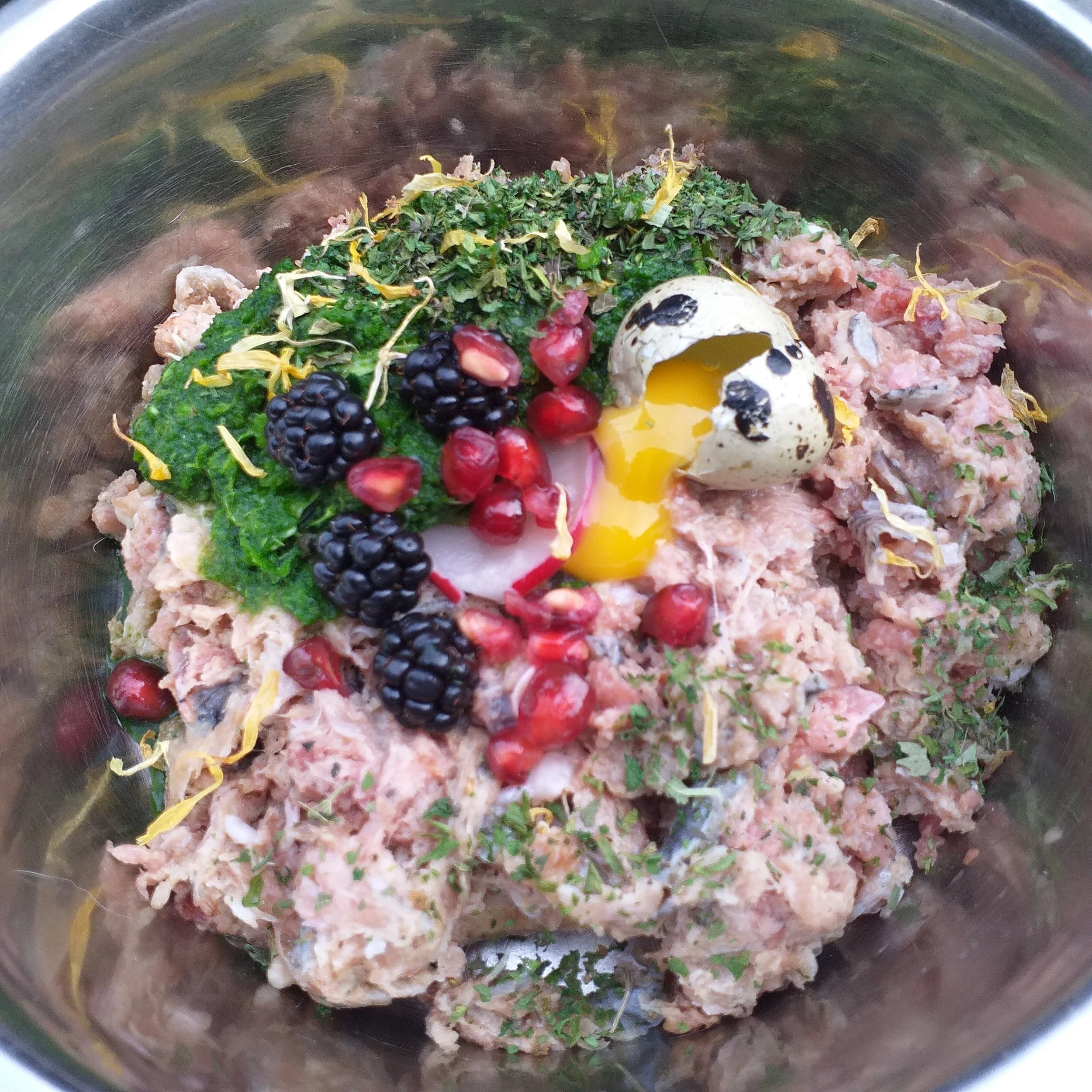
A few local, handpicked ripe blackberries added to the food will be far superior to a larger number of blueberries that have covered many air miles. Including some free-range, wild, or organic meat whenever you can will also provide your dog with superior-quality ingredients.
Depending on your location, there is generally a good range of proteins available from Spring to Summer, but when Autumn comes, there is suddenly a whole new larder available to the raw feeder or home cook.
The game season varies by the species, but generally partridge and pheasant are available from September until February. Venison is dependent on breed, but around November to March, and Duck from September until January.
If you have been relying on beef, lamb, chicken, and fish from March until August, then this addition of free-range, often organic and minimally farmed protein is a huge bonus. You can either use in addition or temporarily replace the proteins you regularly use until the availability ends.
Putting a small amount of vegetables aside for your dog when preparing your own is a good practice. It will soon become second nature to save a broccoli stalk, steam a little extra courgette, cut off a small slice of pear or apple, or lift out the couple of squashed raspberries that are in the bottom of the punnet for your dog’s supper. You will also start to look out for seasonal bargains at the butchers’ or farmers’ market.
If you can forage for ingredients such as blackberries, dandelion leaves, cleavers, and either keep a few hens or find a local organic supplier of eggs, then that is a big win.
Adding a little fresh, local, and seasonal produce even two or three times a week will help to gradually improve your dog’s overall diet. If your dog is new to fresh ingredients, start off with very small amounts and include one new addition at a time, until they adjust to a different way of eating.
As a rule, although each dog is an individual, the majority of the meal is made up of animal protein, with anything from 5% to 15% being provided by vegetables and berries that are suitable for your dog.
Spring
Spring ingredients offer a gentle tonic to cleanse and wake up the system after less active months and a diet of heavier, warming meals. Many of these ingredients that come into their own now offer support for the kidneys, liver, and lymphatic system that can often get sluggish over the Winter months. You may observe that your dog seeks out the fresh grass shoots as they appear, which are full of energy, sweetness, and moisture.
The Nature’s Skin Tonic is perfect for a gentle Spring cleanse after the long winter months and also great for dogs that are itchy and suffer from seasonal allergies at this time of year.
Incorporate some of the following into your dog’s meals:
Spring nettle tops, Cleavers, Dandelion leaf and root, Asparagus, Watercress, Milk Thistle, Spring Greens, New season Lamb, Rabbit & Free range eggs.
Summer
Summer ingredients are cooling, hydrating, and uplifting, and we are spoilt for choice at the range of produce available. If you can grow a few vegetables yourself, such as courgette, cucumber, spinach, salad greens, chard, and parsley, then these will be bursting with flavour and goodness, and you can add a little of these freshly picked ingredients to your dog’s food. If you grow blackberries and raspberries, you will find that the dogs often help themselves to the fruit from the lower branches.
Nature’s Bounty appears on the shop in February and covers the Summer months until early November. It is a nutritious blend that contains an organic seaweed, and Bounty’s main task is to naturally repel fleas and ticks, which it has successfully done for many years.
Incorporate small amounts of the following:
Fennel, Melon, Spinach, Celery, Blueberries, Bilberries, Raspberries, Dandelion, Seaweed, Sorrel, Courgettes, Mint, Parsley, Calendula, Cucumber, Green beans, Carrot tops, Lettuce, Rabbit, Free range eggs.
Autumn
Autumn provides nourishing produce to prepare for the colder months and are typically rich in antioxidants and high in vitamin C. Many of these vegetables, fruits, and berries also lend themselves to preserving by the process of dry storage, freezing, and fermentation, which would traditionally be used to ensure a supply of nutritious foods through the lean months of Winter that lie ahead:
Incorporate small amounts of the following:
Squash, Blackberries, Rosehips, Beetroot, Pumpkin, Apples, Pear, Burdock root, Chicory, Nettle seeds, Fennel and Dill seeds, Almonds, Pumpkin seeds.
Game meat to include: Partridge, Pheasant, Grouse, Pigeon, Guinea fowl, Quail, Venison, and Duck.
Fish, including Pollack, Mackerel, Coley, and Haddock.
Winter
Winter provides us with comforting food for warmth and sustenance.
Incorporate small amounts of the following:
Ginger root, Turmeric, Kale, Celeriac, Thyme, Ruby Chard, Brussels sprouts, Winter Squash, Jerusalem artichoke, Pear, Russet apple, Turkey, Duck, Venison, Mussels.
Caroline Hearn MICHT, Dip ICAT. MIAAT
Equine and Canine Sports Massage Therapist and Canine Holistic Health Specialist
Find out more at www.hedgerowhounds.co.uk
Instagram hedgerow_hounds Facebook @HedgerowHounds

The Holistic Approach to Dog Worming
Talking about worms is not a pleasant subject but it is nevertheless a very important topic to explore in order to keep your dog healthy and those that are in close contact with them safe. There are several internal parasites which can affect our dogs, sometimes with serious health implications and may carry the risk of being passed onto ourselves.
Talking about worms is not a pleasant subject but it is nevertheless a very important topic to explore in order to keep your dog healthy and those that are in close contact with them safe.
There are several internal parasites which can affect our dogs, sometimes with serious health implications and may carry the risk of being passed onto ourselves.
Initially, there are few symptoms that indicate our dog has worms, until there is a growing population when diarrhoea, weight loss, poor condition, irritation of the rectum are noticed. Once these are evident the dog will have reached a high level of infestation, which is something we want to avoid ever happening.
Just the mere thought of our dogs carrying parasites can cause concern for many people and it has become common practise to frequently use drugs, often combined with flea and tick treatments, in order to try and eliminate any parasites.
Anthelmintics is the name given to a group of drugs which are administered specifically to kill or expel parasitic worms. Indiscriminate worming with these drugs every one to three months, when there are no intestinal worms present is costly to your pocket, damaging to the environment and not least counterproductive to the health of your dog and ultimately increases the risk of resistance to wormers.
So what options are available to us if we want to limit the amount of chemicals used but still keep our dogs in good health?
Here we explore the most common worms that dogs can come into contact with and what solutions are available when forming an effective worming programme.
Roundworms:
The most common type of intestinal parasite is the roundworm (Toxocara Canis and Toxascaris leonine). They are white or very light brown in colour and grow up to several inches long.
A large percentage of puppies will be born with round worm larvae in their system which is transferred through the uterus during gestation or via the mother’s milk. Pups with a heavy worm infestation look in poor condition with a distended “pot” belly appearance and will often vomit up large amounts of roundworms which resemble spaghetti. Very heavy worm burdens have the added risk of complications such as an intestinal blockage. Roundworms can easily be passed onto humans and extra hygiene precautions are needed especially when children are handling puppies. It is important to pick up all dog faeces immediately to reduce soil contamination.
Tapeworm:
Tapeworm is the largest of the intestinal worms with multiple segments that attach to the intestinal wall via a sucker on their head piece from which additional segments grow. These segments are regularly shed and appear in the faeces or stuck to the hair under the tail. The tapeworm requires an intermediate host such as a flea or louse, so it is vital to establish a holistic regime where the control of these parasites is also considered.
Hookworms:
Hook worms are particularly unpleasant as they attached themselves to the wall of the small intestine and suck the hosts blood. This can result in severe anaemia which may be fatal in small puppies. Hook worms are transmitted through ingesting contaminated soil and water or via the mother’s milk.
Whip worms:
These are small, thin worms with one enlarged end and if seen in the faeces resemble pieces of string. They live in the large intestine and do not shed eggs continuously, as is the case of roundworm and hookworm. Symptoms include bloody, mucous covered diarrhoea.
Lungworm:
Incidence of Lungworm, such as French heartworm, is on the rise and cases can be found countrywide.
Lungworm needs an intermediate host such as slugs, snails, frogs and foxes but the most common form of lungworm is Crenosoma vulpis (Fox Lungworm) transmitted by the urban fox. If a dog becomes infected with French Heartworm symptoms include exercise intolerance, laboured noisy breathing, coughing and as the condition progresses excessive bleeding even from a tiny wound, weight loss, collapse and seizures. Worryingly some dogs never show any symptoms until they suddenly become extremely ill.
A blog specifically about Lungworn can be found here https://www.hedgerowhounds.co.uk/news/be-lungworm-aware
Giardia:
Puppies as well as adult dogs are often infected with this parasite which can cause severe diarrhoea. It can be present in ponds, streams and puddles which have been contaminated with faeces.
Resistance to chemical worming preparations:
Resistance to chemical wormers has long been recognised as a growing concern in horses, cattle and sheep. According to the British Veterinary Association this is predominately caused by the overuse of wormers as an automatic, preventative method of parasite control. With the overuse of wormers in dogs becoming an issue combined with inaccurate weight measurement therefore affecting the dosage administered, resistance to these drugs is a real possibility in the near future.
Natural preventatives:
Many guardians are keen to take the holistic approach to a worming regime and will incorporate a number of foods or supplements within the dog’s diet. These can be extremely helpful in making the dog more unpalatable to worms and other parasites but should not be relied upon to kill internal parasites should your dog already have a worm burden. Once a clear faecal worm count is achieved then they are a good means of natural prevention. Regular worm counts should still be used to confirm that your chosen natural preventative is working effectively for your particular dog.
Pumpkin seeds:
Ground pumpkin seeds contain an amino acid called Cucurbitacin which is said to immobilise intestinal worms therefore making them easier to pass. As a preventative the dose is one teaspoon of ground seeds per 10lbs of bodyweight once a day. The seeds used can be fresh or dried.
Garlic:
Feeding garlic to dogs always causes concern but it can be useful as a preventative for worms and fleas if given correctly. Freshly crushed garlic that has been allowed to sit for around 10 minutes to active the allicin is more potent, therefore smaller amounts can be fed. It is not advisable to give large amounts of garlic or feed it over long periods of time as this increases the risk of anaemia. It should also be avoided if your dog is on blood thinners and removed from the diet for 2 weeks before and after surgery due to its blood thinning properties. As a general guide a quarter of a clove per 20kg of bodyweight is fed. Due to its very pungent smell and bitter taste it is very unlikely that your dog would eat any more than this small amount in his meals.
Diatomaceous Earth (DE):
Silicon Dioxide, commonly referred to as DE is a dietary supplement fed in powdered form which originates from fossilised water plants called Diatoms. It is believed to act as a natural ‘wormer’ but recent studies suggest that its use is limited. If you use this method, then regular worm counts will confirm if it is effective in your dog. Only use food grade DE and mix with moist food as it can easily be inhaled accidently while your dog is eating.
Herbal “Intestinal Hygiene Control”:
There are a number of companies that offer medicinal herbal products that aim to create an adverse environment in the gut to aid in naturally repelling and assist to expel parasites. They come in the form of a small biscuit type treat or a liquid as provided by Verm-X or in a tincture such as Four Seasons. They are a cost-effective way of natural prevention and are administered as a daily dose for 3 days a week or as with the tincture, one day a month. Higher doses are needed where prevention of Lungworm is concerned.
Faecal Worm Counts:
Using faecal worm counts is an intelligent way of testing which parasites, if any, our dogs are carrying and to what level of infestation. It is also an accurate way to reassure us that our chosen method of worm prevention, be that natural or chemical, is working effectively. We can then make informed choices if in fact our dogs need worming at all, and if so, what product is suited to target that parasite.
A faecal egg count (FEC) is used to count the number of worm eggs in your dogs faeces and the results are shown as “eggs per gram” (epg). This is an indication of how many live adult worms are in the gut.
I have used a faecal worm count service for the last seven years and in that time of sending off regular tests on several dogs, there has only ever been one positive test which was for fox lungworm.
Collecting and sending off a stool sample is easy and does not need a referral from your vet, although some vets do offer an in-house worm count service.
A testing kit can be purchased online and sent to you in the post, you will need a separate kit for each individual dog. You then collect a small sample of your dogs stool into the pot and return in the envelope provided. Results come back very quickly by email or text and you have a printout of the results to keep for your records. All being well there will be “none seen” written in the right-hand column against each parasite tested for. There is also a colour key which ranges from no larvae seen through to high levels noted in the sample.
The Lungworm test is carried out by collecting a small sample of your dogs stools over a period of three days, due to the fact that lungworm intermittently shed larvae. It is essential that in a multi dog household, individual stool samples are kept separate and clearly identified. You need to know which dog produced the sample. This became evident when I tested three of my dogs, who are exercised together in the exact same fields every day and only one tested positive for fox lungworm. Read our blog all about lungworm: https://www.hedgerowhounds.co.uk/news/be-lungworm-aware
Should you get a positive result back and it is decided that a chemical wormer is necessary then it is important to administer a product that targets those specific parasites and that the dog is accurately weighed so the correct dosage is given. Many people guess the weight of their dog and usually under rather than over estimate it. If this happens regularly, then the administered wormer will kill the weak worms leaving the more robust ones to flourish. All vet surgeries and most pet shops have digital scales you can use to establish the accurate weight of your dog.
A company that I have used for many years as they give such a superb service is Wormcount.com.
I asked Michaela Murray from Wormcount.com
How often do you recommend using a faecal worm count test?
It all depends on the risk factors surrounding your dog. If he is an ‘urban’ dog who goes for walks around the streets on a lead and is therefore never more than 3 feet away from you, then you will always know where his nose is! You will know if he has eaten anything such as dog or fox poo or any carrion such as dead birds. These are all carriers of worms. He is a low-risk dog. His worm count interval will largely depend upon previous counts. If he has a clear count, then he may even be able to go as long as 6 months between tests.
If, on the other hand, he is a ‘country, beach or park’ dog who goes ranging off the lead and is therefore into everything, then he is a high-risk dog and you should consider testing him every 2 to 3 months.
It used to depend largely upon where you lived as to how heavy the worm burden was – especially for lungworm species – however, now that more of us take our dogs on holiday with us all over the country, then there is a much greater spread. We have had positive cases of all 5 species of lungworm from all over the UK, even on the islands. There is fox lungworm on the Isle of Wight, The Isle of Man and even Shetland!
Most horse owners are now aware of the problems regarding the resistance to chemical wormers and how important it is to have an appropriate testing and worming programme in place. Have you found a steady increase in dog owners now using the worm count service rather than just automatically worming every 2-3 months or has it been a slow progression?
“When we first started worm counting 20 years ago we worked solely with horse owners. We were asked by them if we tested dogs as many horse owners also own dogs. We had the technology and expertise to test all animals but had been rarely asked to use it. Once we made it known that we would test any animals we were very quickly inundated with all manner of animal poo!”
We do test thousands of dogs every year however, we also have many tortoises, lizards, bunnies, horses, zoo and farm animals as clients.
Many of our owners still conventionally worm and use the screen we offer to check that their programme is working but the vast majority are turning away from automatically worming and are instead worming only when a positive worm screen indicates that it is necessary. They also find the added fat and food screen that we offer within our worm count invaluable for checking that their dogs are digesting their food properly. This is especially important when changing from conventional to raw feeding.
I see that you have added a new kit to test for Giardia, why is this and are faecal samples collected and tested in a different way for this parasite?
We added the gold standard giardia screen to our portfolio of tests as a direct result of requests from clients. There are many ‘home tests’ available on the market but most of these are simply not sensitive enough and some can only guarantee a 70% accuracy. We will only ever use the best possible testing methods for our clients.
The sample we require is taken over one day. If the dog passes faeces more than once in a day then you should take a small piece each time he goes. The sensitivity of our test is so high that it only needs one day’s poo. It works very well in conjunction with our worm egg screen.
Testing for giardia can be either in response to an episode of unexplained diarrhoea or used as an annual check to ensure that all is well as giardiasis (the disease which occurs when giardia species are present) does not always show symptoms and dogs can have recurring bouts.
www.hedgerowhounds.co.uk
Feeding Vegetables to Dogs
There is a lot of conflicting advice about feeding dogs vegetables. Here we will explore which are suitable and what to avoid or keep to a minimum.

Should I add vegetables or not? If so which type?
So should we bother feeding vegetables to our dogs and will it even benefit them?
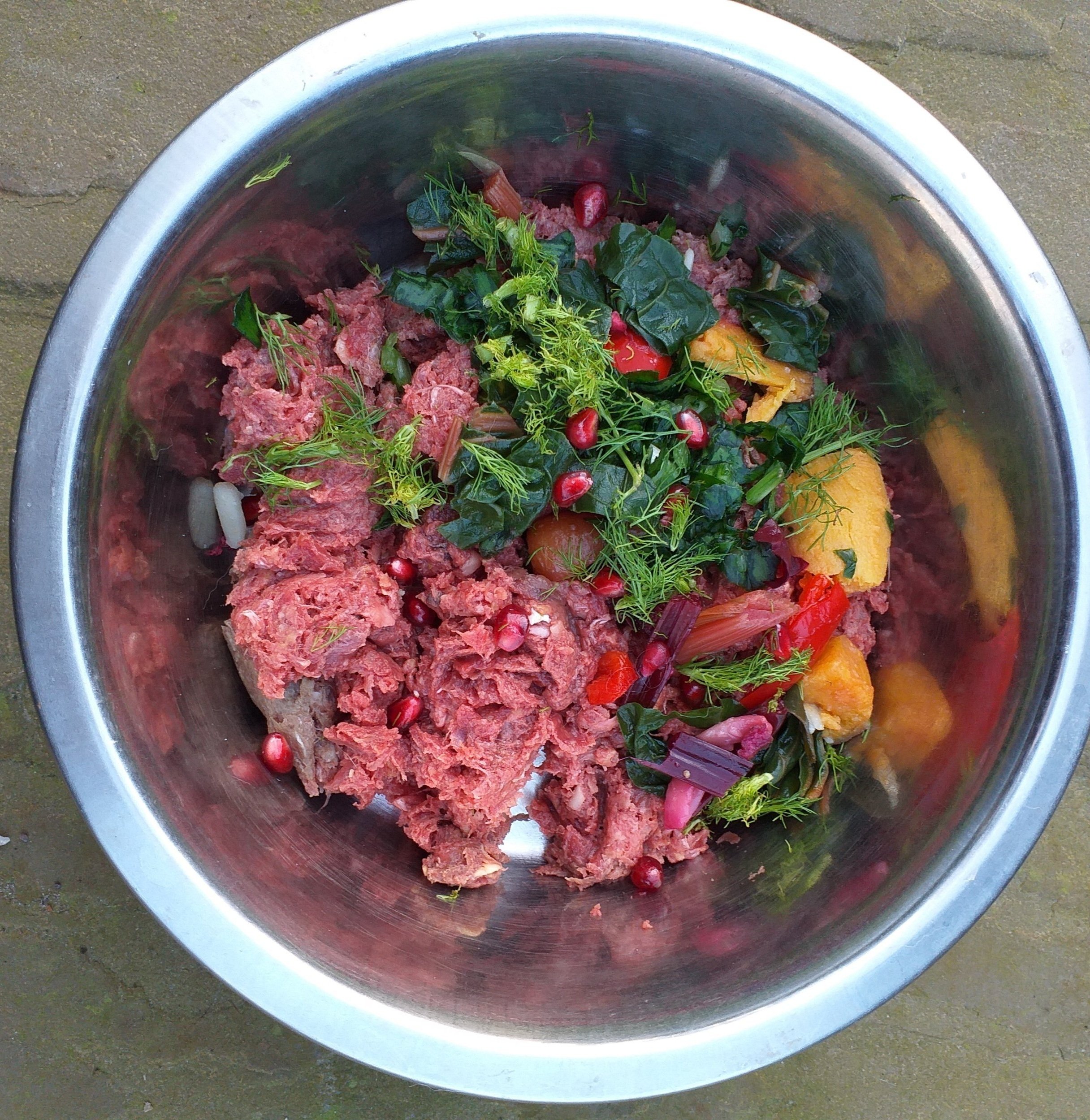
There are many benefits to including some fresh vegetables to our dogs diet. It is important that they are prepared in a way that our dogs can digest them either through cooking, steaming or blitzing to a smoothie. We should all be including more veg in our diets so maybe the easiest way is just to prepare a bit extra when you are preparing your own meals and then set it aside for your dog.
Phytonutrients
The term ‘phytonutrients’ is a name for a variety of compounds only found in plants that have a vast array of health-giving properties. They are covered in far greater detail in the vegetable and fruit section and are a useful way to provide additional micronutrients and antioxidants to your dog’s diet. If the inclusion of fruit, vegetables and seeds is a new experience for your dog, then start off by incorporating tiny amounts until his system adapts and you find the ingredients that suit your particular dog.
Probably the best known of the phytonutrients are carotenoids and flavonoids.
Carotenoids are plant pigments responsible for the vibrant red, yellow, orange and green hues found in vegetables, fruits and plants that can play an important role in protecting cells against harmful effects of light, air and pollution. Beta-carotene, lycopene and lutein are all different types of carotenoid that can easily be included in the diet. They act as anti-oxidants which protect cells from free radicals, which are substances that work to destroy cell membranes and DNA.
Foods that are rich in carotenoids are:
· Lutein: collard greens, Swiss chard, lettuce, spinach, kale and dandelion greens.
· Lycopene: red/orange bell peppers, watermelon, pomegranate, apples, mint and blackberries.
· Beta-carotene: carrots, sweet potato, broccoli and romaine lettuce.
· Flavonoids: These give berries their red, blue and purple colour and can be included in the diet in the form of blueberries, blackberries, raspberries and bilberries.
So, what does the inclusion of veg and fruit have offer to our dogs?
They provide a wealth of vitamins, minerals, anti-oxidants and fibre, including vitamins A, B, C, E and K, and minerals such as calcium, potassium and magnesium.
Anti-oxidants protect against many diseases due to the aging process, and for a degenerative condition such as progressive retinal atrophy a diet rich in anti-oxidants is the only known way to slow down the deterioration of this eye disease.
Fresh vegetables also encourage enzyme production and offer a gentle cleansing and balancing effect on the ph. levels of the body.
Depending on the type of vegetable, they provide soluble and insoluble fibre, which benefit the gut bacteria, and can bind to and remove certain toxins as well as adding bulk and moisture to the faeces.
With intensively farmed animals and soil depletion becoming a concern, our food is lacking in the level of nutrients that it provided many years ago, so the addition of vegetables, herbs, berries and some grains is a way to try and fill any nutritional gaps. The more variety we can add into our dog’s diet the less we will have to rely on dietary supplements.
An ideal herbal supplement in the Hedgerow Hounds range is Nature’s Boost, which combines vegetables, herbs, seeds & superfoods.
How to prepare and feed.
Due to the fact that dogs cannot digest the cellulose in vegetables, the best way to serve is to blend in a food processor to break down the plant’s tough cell wall, until they resemble a thick smoothie consistency, which also mimics the partly digested contents of a prey animal’s stomach.
Other options would be to lightly steam them or finely grate them into the food.
If you want to make larger batches up or you are lucky enough to grow your own veg and have a glut in the summer, then the pureed, pulped veg can be frozen into ice cube trays or pots for convenience.
If they are served whole many dogs just lift pieces of veg out, eat around them in the bowl, or pass them out the other end undigested, to make full use of the nutrients they need to be broken down.
A good feeding guideline would be 7% vegetables and 3% berries, although if you are looking to reduce the overall cost of home-prepared food, or if the dog needs to lose weight, then more veg can be added to make up a quarter of the meal.
The addition of vegetables will change the overall percentages, so subtract from the muscle meat and not the bone or offal which provides the calcium and vitamins. So, for instance a usual 80-10-10 ratio would become 70% (meat) 10% (bone) 10% offal and 10% vegetables.
Start off with a small amount and then monitor how your dog is handling the inclusion of vegetables in his diet.
It is not essential to feed vegetables every day, but even three times a week will be beneficial, rotating different types and changing with the seasons where possible

www.hedgerowhounds.co.uk
Raw Feeding - Mindfully

It goes without saying that we all want what is best for our dogs, and for many of us, that means feeding a diet of raw meat and bones.
If we choose to eat meat and feed it to our dogs, we should do so with animal welfare, the environment and sustainable food production as a major consideration.
Some animals are reared with the sole purpose of ending up in the food chain. They have relatively short lives but nonetheless for the time they are alive deserve to be treated with respect and given the opportunity to live a relatively normal life with minimal stress, freedom to move, eat appropriate food and socialise with their own species.
We are increasingly disconnected from what we eat, whether that is meat neatly wrapped in cellophane packets bearing no resemblance to the animal it originated from or the convenience of grabbing veg from the supermarket, that has flown halfway round the world before it reaches our shopping trolley, with little thought on animal welfare, environmental damage, and destruction of wildlife habitats.
Current food production has a big impact on our planet, affecting soil health, biodiversity and threatening whole ecosystems. We need to be aware of exactly what we are buying and the processes that it went through before landing on our plate or in this case, the bowl.
As the old saying goes “we are what we eat” but also, what you eat, has eaten and the conditions it was raised or grown in needs careful thought.
Supporting the right producers
Large scale industrial producers of meat, crops and vegetables provide us with an abundant supply of cheap food, but with it comes a cost to animal welfare, damage to the environment and ultimately an impact on health. It is time to be more mindful of what we are buying, eating, and feeding our dogs.
Chicken in particular, is subject to frequent antibiotic use to “prevent” diseases which are caused by selective breeding and the over cramped conditions they are kept in. Antibiotic resistance not only affects the animals but also those that eat them.
The majority of mass-produced chicken is also fed on soya imported from Brazil and Argentina which is contributing to the vast destruction of the Amazonian rain forest. Soya is inexpensive and produces quick growing, cheap chicken, hence how you can buy a whole chicken for under £5 in a supermarket.
The fat composition of intensively farmed chickens is higher in the inflammatory Omega 6 fatty acids and much lower in the anti-inflammatory Omega 3 compared to their free-range equivalent. Chicken is widely used in pet foods of all types and certainly top of the list in an exclusion diet for dogs that have itchy, inflamed skin or constant gastric upset.
Trying to incorporate some pasture raised, grass fed and wild meats into the diet where possible will not only improve nutritional value but also support the environment they are raised in. Grass fed animals grazing on diverse pastures contain many different types of grasses, clovers and wildflowers and support 270 species of bee and 1300 species of insect. The animals are also healthier, less stressed and don’t need the preventative medications that their fellow grain fed, housed livestock rely on.
They offer higher levels of omega 3, sometimes as much as 4 times higher than grain fed animals, more nutrient dense and richer in antioxidants such as vitamin E and beta-carotene.
Importantly, we also benefit from what we are not feeding, albeit unknowingly, such as residues of pesticides, antibiotics and hormones and that will upgrade the diet enormously.
Support your local butchers, game dealers and farmers markets, they are knowledgeable about what they sell and can tell you exactly where and how their produce was raised and grown. If you support local suppliers, they will often go above and beyond any service a supermarket can offer. Any raw feeder will understand the thrill you get from coming out of the butchers clutching a few freebie bones or off cuts!
Eggs from high welfare, free range hens will offer far greater levels of the anti-inflammatory Omega 3 fatty acids and if you feed eggshells you can be confident that they have not been sprayed with chemicals, as supermarket eggs often are. Free range hens can forage, enjoy the sun on their back, have far less stress and therefore less disease and this will show in the quality of the eggs.
Raw meat suppliers
Raw feeding has seen a huge surge in popularity, with new companies appearing almost weekly. While this is a positive sign, it must also be noted that not all raw food producers are the same.
The origin of the meat being used must be considered and what was involved in the process of raising and slaughtering the animals, before it arrives in convenient tubs and tubes and served to our dogs. Not a pleasant subject but nonetheless if we eat or feed meat to our dogs, it is our responsibility to ask these questions and be happy with the answers.
When choosing a brand of raw food look for those that have a genuine interest in where the meat is sourced, how it was raised, and that they actively support local where possible.
Accurate labelling is essential, if it states that the recipe is beef, is that actually muscle meat or is it predominately beef lung and tripe, which is considerably cheaper and bulks out the food with lesser nutritional value in comparison.
Do they only use chicken carcass for the bone content and what is the source of that chicken? Is all the relevant information on the packaging such as contact details, website and DEFRA registration number?
Packaging is also a consideration and many companies are making changes to avoid plastic and move towards recyclable and compostable packaging and transportation boxes, often using sheep fleece for insulation, which can be returned when you next order.
Eat with the seasons
Both our distant ancestors and those of our dogs ate a huge variety of food in their diets, unlike the rather restricted diets of today. There was little or no sugars apart from when berries were in season and a rare chance encounter with wild honey.
It is now reported that 65% of our calories come from wheat, rice and maize and with extraordinarily little variation of ingredients used. Dogs get an even worse deal, with many being fed the same brand of dried food daily from puppyhood to their senior years, contributing to food allergies and intolerances which are now commonplace.
We are becoming increasingly aware that a healthy gut microbiome is essential for the optimum health of our physical and mental wellbeing. Things that adversely affect this delicate balance are too much sugar, inappropriate food, limited fibre, lack of variety in the diet, stress and antibiotic use.
By choosing seasonal, locally produced vegetables and also game meat, when it is in season, it is a cheaper, more nutritious way to fed and provides far greater diversity in the diet over the year.
Growing & Gathering
Many of us discovered or maybe rekindled a love of gardening in the recent lockdowns and were successful in growing a selection of vegetables and herbs and no doubt, thoroughly enjoyed the freshness and enhanced flavours of our harvest. Tomatoes that actually tasted of tomatoes, now there’s a thing!
The nutritional value of vegetables, particularly minerals and trace elements, have declined by 50% since the 2nd world war, mainly due to the depletion of the soil but also because of the varieties that are now grown. Early sweetcorn for instance would contain 10% sugar but modern-day varieties come in at 40% sugar.
In 2019, 48% of all fruit and vegetables tested by the government contained a mixture of pesticides. According to PAN-UK (Pesticide Action Network) “dirty dozen” list, based on data for multiple residues, the worst offenders were strawberries, pre-packed salad and spinach.
Wheat, barley, and oats did not fare any better and can have as many as 20 applications of different chemicals before harvest. Therefore, it`s especially important to keep dogs off cereal crops and particularly the young green shoots, as dog love to eat them.
You can enjoy nutrient dense, fresh vegetables, herbs and salad leaves by growing your own and picking what you need for that day. No plastic packaging, zero air and road miles and no pesticide residue.
Even within a tiny space you can grow sprouted seeds and a few herbs grown in pots on windowsills. It was incredible seeing what people grew on balconies and inventive ways to grow potatoes, carrots, cabbage, and green beans from a variety of containers and small raised beds. It is so satisfying to gather a few salad leaves knowing they haven’t been washed in chlorinated water or packed in a gas filled bag.
I feed much more vegetable content to my dogs nowadays, around 15% of the meal, a few times a week. This way I can feed better quality meat, which can cost a little more, but I use less of it.
If you need to stretch out the meals even further than some people will feed cooked ancient grains such as quinoa, millet, amaranth, wild rice or pre-soak organic gluten free oats added to seamed or pulped vegetables and then mixed with the raw meat, offal and bone. If your dog has complex dietary issues, then consult a specialist before adding any grains to their diet.
There are so many vegetables that are easy to grow and are ideal to share with your dogs, these include chard, courgette, green beans, salad leaves, parsley, kale and spinach. You can even place a pot of barley grass, wheat grass and lemon grass outside where you dog or cat can help themselves should they wish to.
There are several wild plants that you can forage for free at certain times of the year and add to your own as well as your dog’s diet.
Dandelion leaves are easy to identify and grow abundantly. With an affinity for the liver, gall bladder and kidneys, they are a good source of vitamin C, A, D, K and B complex, Iron, Manganese and Potassium as well as having 8 times more antioxidants than spinach. The yellow flowers are rich in Lecithin, but also the earliest nectar for bees and pollinators so delay in picking those until late Spring.
Nettles are rich in vitamins, minerals, amino acids, polyphenols, carotenoids, anti-oxidants and natural antihistamine and personally I love the flavour they give to many Spring recipes. Pick the green nettle tops from January until May. Avoid from May until October, as they are flowering, and the leaves contain cystolith crystals which can irritate the gut and the urinary tract.
Wild Garlic aka Ramsons. Wild Garlic grows in woodland or alongside streams and its vivid green shoots appear in April/May time. They are milder in taste and action than cloves of garlic and they are a perfect Spring tonic cleanse after a long Winter, when we have over indulged and feel a bit sluggish. My dogs always get a few leaves blended in with their vegetables for the short season the garlic is in leaf.
Blackberries are rich in antioxidants, high in vitamin C, manganese, Vitamin K, low in carbohydrates and high in fibre. The berries seem to be appearing earlier each year, what was eagerly awaited in October now appears ripe and ready to pick from late July until October. There are a few to be picked after this time, but I leave those to the birds, as winter approaches their needs are greater than mine.
Choose to pick those that are away from roads and growing alongside arable crops due to potential contamination from chemical sprays and traffic pollution.
Never over pick or forage in one area so there is a shortage, varying the places that you pick will give you slightly different levels of nutrients due to soil type or even if that plant grows in full sun or shade. Make sure you can confidently identify any plant that you pick and always refer to a guidebook or take along a knowledgeable friend.
“How could we have ever believed that it was a good idea to grow our food with poisons”
Jane Goodall DBE
Caroline Hearn MICHT. Dip ICAT
Adding Variation to Raw Diets
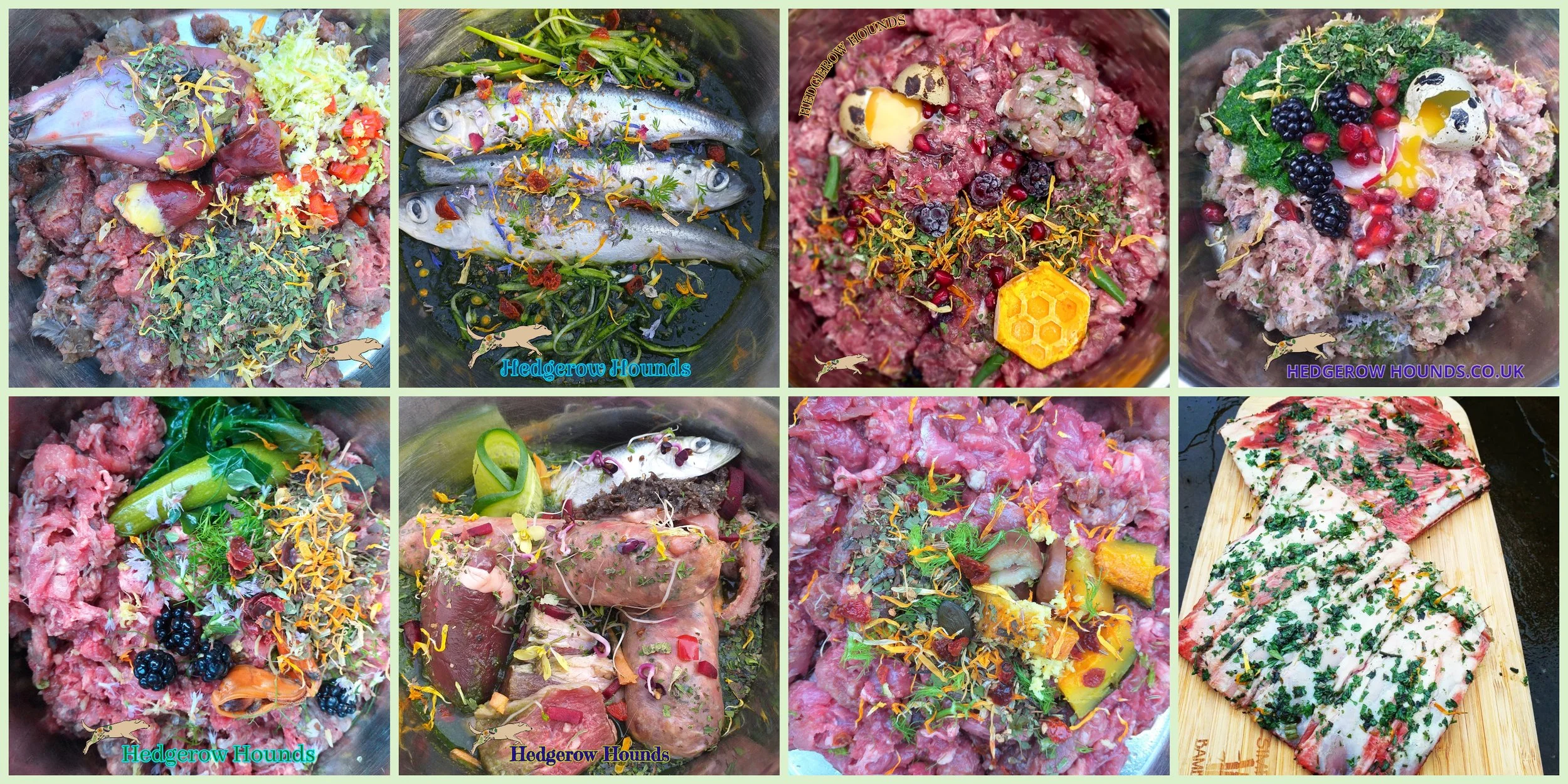
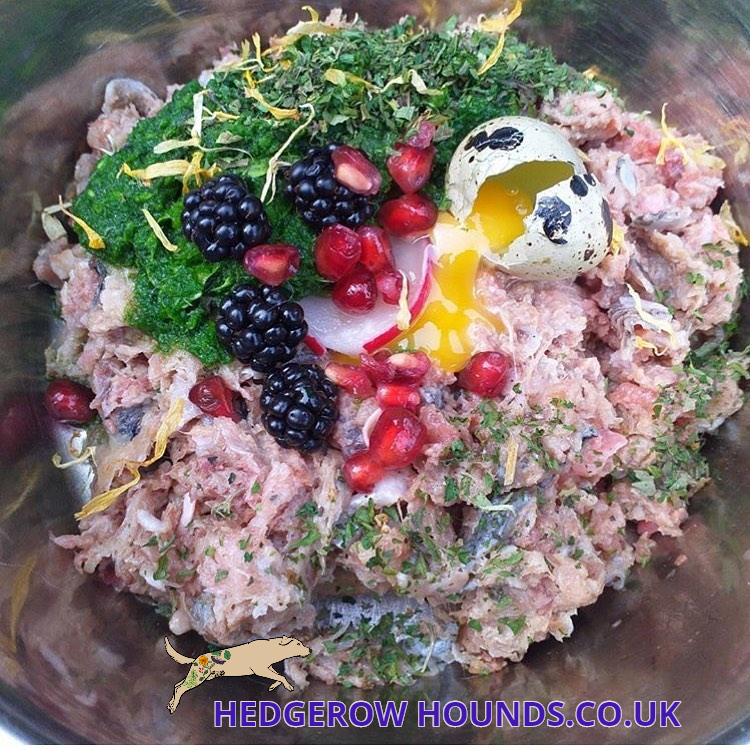
If you have been feeding raw complete minces for a while and want to start including some DIY meals, it is important to provide a variety of proteins in order to offer a broad range of nutrients and prevent any deficiencies.
Feeding a selection of fresh food and making full use of seasonal variation means that each meal is an opportunity to add nourishment, support good health, build immunity and increase vitality in our dogs.
Muscle meat
The majority of a raw diet is made up of muscle meat, and depending on which type of model you feed it could be as much as 80% as in the 80-10-10 (80% muscle meat,10% offal & 10% raw bone) or, in the Barf model 70%, allowing for the addition of vegetables.
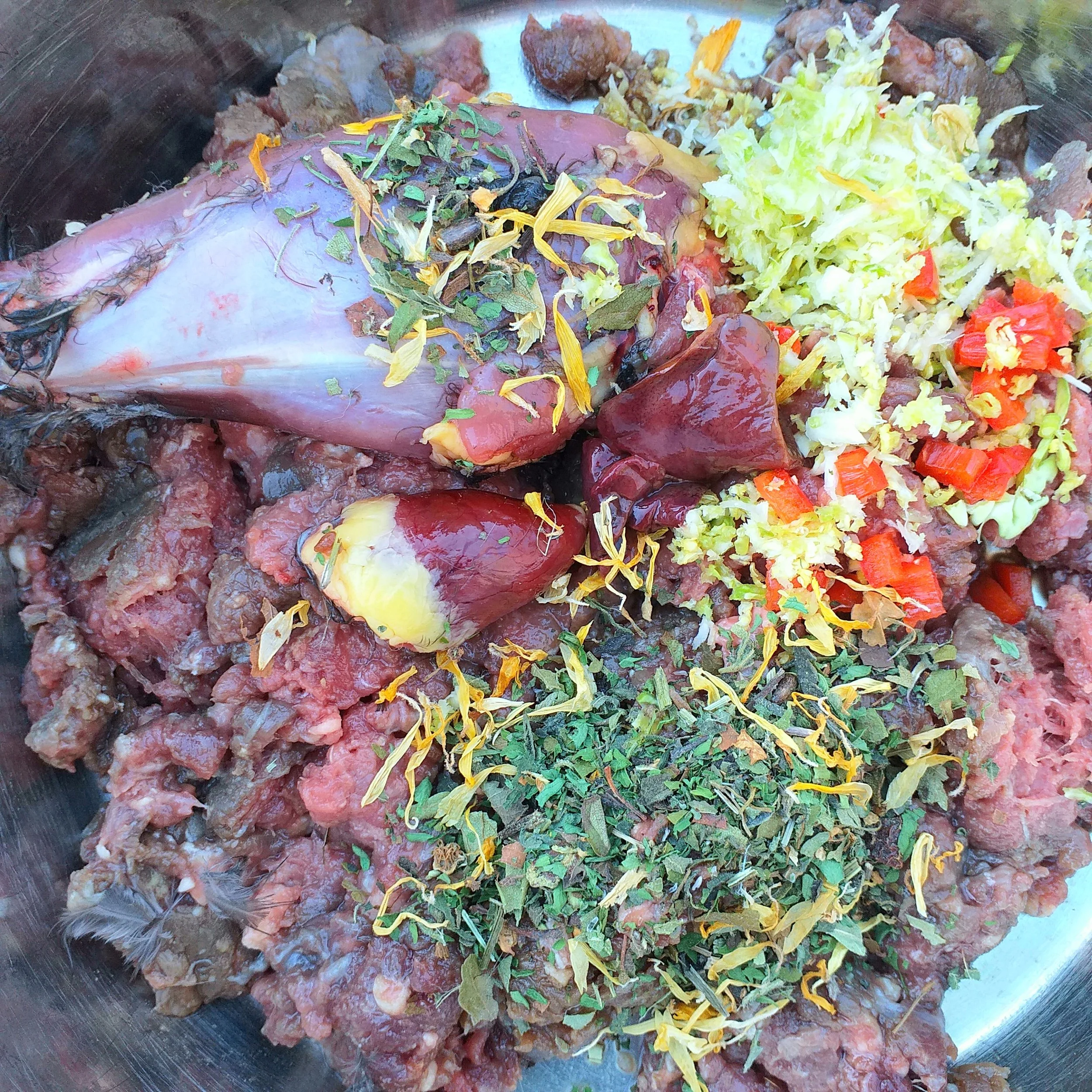
Try and offer a selection of meat from different species, ideally 4 or 5 over a month if you can, plus an oily fish. This can include beef, chicken, turkey, pork, buffalo, venison, rabbit, tripe, guinea fowl, goat and lamb, etc.
Rotate white and red meat from different species but also vary the cuts within the same species. So, for example include chicken thighs rather than just feeding breast meat.
Replace some of the proteins with wild game when it is in season, such as pheasant, partridge, duck and venison.
If free range or grass-fed proteins can be introduced, even in small quantities, there is higher nutritional value, particularly with levels of Omega 3 fatty acids.
When making DIY meals for your dog it is important to establish the difference between what is fed as muscle meat and what is offal, that way you can calculate the 10% offal ration (5% liver, 5% other offal) into your meal plan.
Heart
Although the heart is an internal organ it is often confused as being offal when actually it is a muscle, and a very hard working muscle at that!
Where it does have its similarities is the amount in which it is fed.
It is a rich meat, high in blood content, which like liver can cause diarrhoea if fed in large amounts.
Introduce slowly and work up to between 5% and 10% until your dog can tolerate it. It is not required in large amounts or on a daily basis, but you can incorporate it into the diet within your monthly food balance plan. It is a nutrient dense addition and generally it is cheap to buy, having fallen out of fashion in our own diets over the years.
Heart is high in taurine, iron, folate, carnitine, thiamine, conjugated linoleic acid (CLA), gamma linolenic acid (GLA) selenium and B vitamins.
It is particularly high in Coenzyme Q10 (CoQ10) which is needed to optimize heart rhythm. As CoQ10 levels decrease with age, it is a valuable addition to your senior dog`s diet. Trials show that heart failure patients have low levels, and supplementation can help to stabilise the disease.
With twice as much collagen and elastin as other muscle meat it is a perfect dietary addition for working or competition dogs to prevent fatigue, as well as providing added support for the musculoskeletal system.
Tongue
This is another protein that’s regarded as muscle meat which can be a little high in fat, so is one to limit if your dog has a pancreas issue or is on a strict weight loss plan.
Gizzards
Chicken, duck and turkey gizzards have goods levels of iron, selenium, zinc, riboflavin, niacin, choline, copper and vitamin B12. Gizzards are fed as muscle meat.
Lungs
Lungs, also referred to as “lights,” have some muscle meat and some organ content, so don`t really fit into one specific category.
It can cause loose stools if fed in large amounts or if fed alongside offal, so although a worthwhile addition it is best to limit the amount fed in a single meal and not to exceed 15%.
Trachea
Great as a natural chew to clean the teeth, and particularly helpful for senior dogs who can no longer handle bones due to missing teeth or gum problems. Trachea is naturally high in glucosamine and chondroitin so supportive to joints. Lamb tracheas are better for small dogs and beef tracheas are suitable for medium to large dogs.
Offal
Offal makes up 10% of the diet, 5% of which should be liver and the other 5% made up of kidney, spleen, pancreas, testicles and brain. Offal is different from muscle meat in that they are internal organs which secrete.
The inclusion of offal in the raw or home cooked diet provides an abundance of vitamins and minerals. Just introduce into the diet very gradually and adjust to what your dog’s system can cope with to avoid stomach upsets.
Liver
Liver is the most nutrient dense of the internal organs and makes up 5% of the offal requirement in your dog’s diet.
If you are buying complete meals, you will see on the label that it states 5% liver and 5% other offal.
It provides an abundance of vitamin A, copper, vitamin D, vitamin K, vitamin C, vitamin E, folic acid, choline, vitamin B6, B12, magnesium, iron, thiamine, riboflavin, niacin, folate, selenium, biotin, calcium and phosphorous.
Some people feed liver just twice a week and others, due to the dog’s sensitivity to larger amounts, just add a small amount every day.
Kidneys
Kidney would be added to make up the other 5% of the offal requirement, possibly mixed with one of the others on the offal list.
It is a good source of vitamin B12, B6, riboflavin, carnitine, iron and folate.
Pancreas (sweetbreads or thymus)
Pancreas is not always easy to get hold of, but you can ask your butcher or food supplier to source some for you.
It contains a rich supply of digestive enzymes and is a worthwhile addition to any dog’s diet but is particularly good if you’re feeding a dog with a pancreatic insufficiency.
Spleen
Spleen is another organ that can be difficult to find but can be ordered from a butcher, or you can ask your food supplier if it is included in any of their offal mixes.
It provides good levels of iron, niacin, riboflavin, vitamins B12 & B6, selenium, zinc, and a broad range of amino acids.
Fish and Shellfish
Most modern-day diets, for ourselves and our dogs, are too high in Omega 6 and 9 due to processed grains, cereals and vegetable oils, which can lead to inflammation, faster aging and can predispose the body to disease.
In contrast, Omega 3 fatty acids offer a wealth of health benefits including anti- inflammatory properties, healthy skin & coat, normal metabolism, joint health and slowing the ageing process as well as supporting brain and cognitive function.
As you can see, this is an important addition to the diet of dogs with skin issues, joint pain, and is an essential for senior dogs in particular.
Feeding the actual fish has far more benefits than fish oil, which can quickly go rancid, causing the inflammation we were trying to prevent.
Pollution is also a consideration when choosing fish. The cleanest are:
· Sardines, mackerel, pilchards, herring, sprats, halibut, anchovies, whitebait and trout.
· Mussels and green lipped mussels are good for joint health.
Other forms of Omega 3 are hemp oil, chia seeds, flax seed oil, seaweed, eggs, pumpkin seeds and phytoplankton.
Should your dog hate raw fish and completely refuse to eat it, then the tinned sardines, pilchards or mackerel are a good substitute in either spring water or tomato juice which can be gently rinsed off or drained.
Try and include an oily fish into your dog’s diet two to three times a week.
Eggs
Eggs provide a high quality, complete source of amino acids which are the building blocks of protein.
A good source of vitamin A, vitamin B12, riboflavin, iron, folate, zinc, selenium, fatty acids, choline, fat soluble vitamin E, D and K.
Just one egg will provide 13 essential vitamins and minerals, including lutein which is essential for eye health.
Free range eggs offer far greater levels of nutrition as the birds would have benefited from a natural lifestyle of foraging and have had sunlight on their backs.
Duck eggs have a larger yolk to white ratio and are higher in protein, fat and contain more Omega 3.
Quail have larger amounts of vitamin B1 and 5 times as much iron and potassium as hen’s eggs. Their protein value is 13% compared to 11% in hen’s eggs. Quail eggs rarely cause allergies, so certainly worth a try if your dog can`t usually tolerate hens’ eggs.
Bones
Raw edible bones will make up on average 10% of your dog’s meals but sometimes as much as 30% and are an important requirement of the diet.
Bones provide calcium, phosphorous, magnesium, potassium and, depending on the type of bone fed, a supply of fat, cartilage and collagen.
They are also needed in the diet to keep the stools firm, and while most dogs will be fine with 10% bone, occasionally you will come across dogs who require more to keep their faeces firm, and others who will always need offal or vegetables in their diets in order to cope with 10% or they become constipated. Therefore, it is important to feed each dog as an individual.
Raw bones are regarded as either edible, which add to the calcium quota, or recreational, which provide very little calcium but give mental stimulation and teeth cleaning benefits.
Edible bones are raw bones that are completely consumed, usually in one sitting. Examples would be chicken and duck wings, lamb ribs, chicken backs, chicken and duck feet, chicken necks and pigs trotters.
Vegetables and Berries
The inclusion of vegetables, herbs and berries in the diet provide, phytonutrients which are compounds found in plants with health giving properties, anti-oxidants which protect cells from free radicals and dietary fibre that acts as a prebiotic to stimulate the growth of beneficial gut bacteria.
Look to add some vibrant leafy green to your dog’s meals, such as kale, spinach, parsley, broccoli, chard, dandelion leaves and red and purple berries including raspberry, blueberry and blackberry.
Start off with a small amount and build up to approximately 10-15% of the meal, if this suits your dog. Vegetables need to be either lightly steamed or feed raw and put into a blender to make a thick puree, this will break down the tough cellular wall in the vegetables and make them more digestible.
Caroline Hearn - Hedgerow Hounds
www.hedgerowhounds.co.uk