Your Dogs Dental Health
Keeping your dogs’ teeth clean and in good health is so important for their overall health and long-term wellbeing.

Keeping your dogs’ teeth clean and in good health is so important for their overall health and long-term wellbeing.
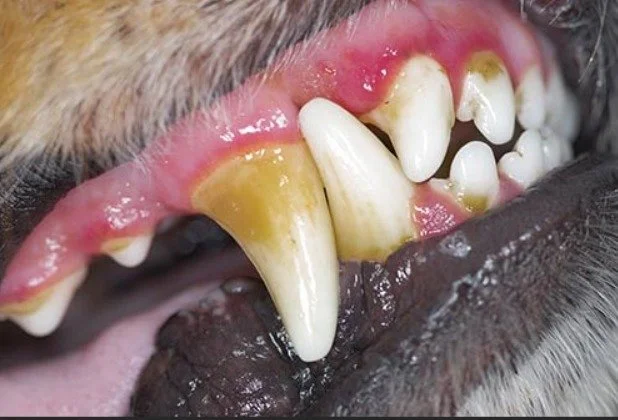
What is the difference between Plaque & Tartar? Plaque is a build-up of saliva, food, and bacteria that forms on the teeth, eventually turning into a brown hard substance, known as tartar. Tartar causes damage to the teeth and gums and can lead to gingivitis. The resulting bacteria can enter the bloodstream and damage the kidneys, liver, and heart.
Health dangers of a build-up of plaque, tartare, and gum disease. The bacteria that`s formed in an unhealthy mouth can travel via the bloodstream to the heart and circulatory system. This bacteria can cause heart and bowel disease and affect the immune system. There is also the added risk and expense of dogs having to receive a general anaesthetic for teeth cleaning, which is something we want to avoid if possible, particularly when caring for elderly dogs or those with other underlying health complications.
The Dental Hygiene blend has been made to improve oral health, loosen hardened tartar, prevent or greatly slow down the build-up of tartar and plaque, and assist in the maintenance of teeth and gums which is particularly useful in elderly dogs, that perhaps can no longer have a general anaesthetic.
The link to buy Hedgerow Hounds Dental Hygiene Blend is https://www.hedgerowhounds.co.uk/products/dental-hygiene
There is also a blog all about dental hygiene blend here https://www.hedgerowhounds.co.uk/news/dental-hygiene-formula
Other ways to speed up tartar removal and prevent further build-up.
Feeding abrasive size-appropriate recreational raw bones and natural chews.
Toothbrushing or cleaning with a lint cloth
Signs of tooth pain, gum disease, or mouth infection:
Eating less, hesitancy to eat, favouring soft food over hard, dropping food and much slower eating than normal.
Bad breath, red swollen gums, discoloured teeth.
Inability or reluctance to open their mouth.
Blood on gums, bedding, or toys.
Scratching at their face or swelling and heat along the tooth line.
70% of dogs over 3 years of age have some form of dental disease. Small breeds such as toy Poodles, Cavalier King Charles, Schnauzers, and the Brachycephalic breeds are particularly prone and in larger breeds, the Greyhound is predisposed to tooth and gum disease.
Hedgerow Hounds makes veterinary-formulated supplements for dogs. The company was founded and is owned by a qualified holistic canine therapist with 30 years of experience in holistic dog care and nutrition.
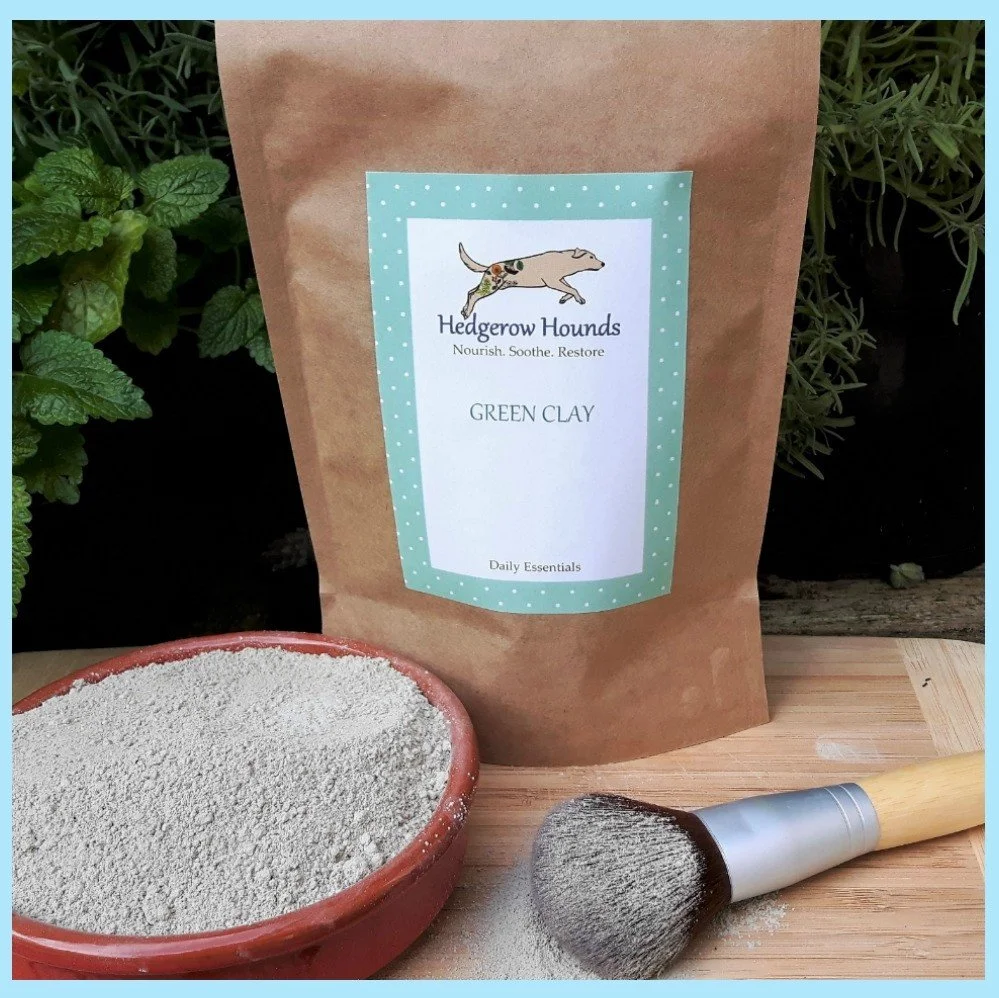
GREEN CLAY Powder - For Pets
There are so many uses for pure Green Clay. Used wet or dry, it is an absolute essential in my natural first aid kit for all the family, both four and two legged!

Our high-quality, pure Green Clay is a must-have for your natural first aid kit. Now available in a 250g bag or 650g bags for multiple dog households, horses & livestock.
Green Clay has excellent drawing properties, so it can be used for drying up wet eczema and hot spots and helping control infection in wounds and abscesses. Green Clay is so versatile and can be used for dogs, cats, horses, sheep, and other livestock. It forms a protective layer over injuries and also naturally repels insects. I have found that when treating horses and livestock that are troubled by flies, a drop of tea tree or lavender essential oil into the wet clay can further aid in repelling flies from the treated area.
It has a calming and soothing effect on a dog’s itchy or traumatized skin, breaking the itch-scratch cycle. It is completely safe if your dog accidentally licks or consumes it. The clay’s perfect partner in dealing with wounds, sores, and fragile skin is Leucillin; they complement each other brilliantly.
Green clay can be made into a thick paste with a little water and spread onto the affected area. This acts as a protective barrier for sore or fragile wounds and as the clay dries, moisture is drawn away from any wet areas of skin.

Perfect for all livestock and can be used wet or dry. A persistent wound which refused to heal, mostly caused by fly annoyance, was kept clean and protected by using the clay as a thick paste.
If used dry, it can be applied with a clean cotton ball and dusted onto the area or with a small, clean brush. This is particularly useful for instantly calming an inflamed area or itchy rash. Click here to view it on our product page: https://www.hedgerowhounds.co.uk/products/green-clay
For infected areas or those that are oozing the area should be cleaned in between applications. An excellent product for this is Leucillin antiseptic spray or dropper bottle.
This product should not replace veterinary treatment if it is needed or if a serious infection is present in a wound.

Gut Health, Immunity and Microbiome
At first glance the digestive system appears to have a very simple task of taking in food, digesting it, absorbing nutrients, and then excreting the waste, and while everything is in good working order, we never even give it a second thought.
At first glance the digestive system appears to have a very simple task of taking in food, digesting it, absorbing nutrients, and then excreting the waste, and while everything is in good working order, we never even give it a second thought.
It is in fact an incredibly complex structure with a vast number of tasks to undertake. The more the gut is studied the more we realise the vital role it plays in achieving optimum health, disease prevention, and stabilising our emotional state.
Although the teeth are needed to some extent to bite, crush and tear off food the actual process of digestion doesn`t start until it reaches the stomach. With no digestive enzymes in the saliva to kick start it off, the food needs to quickly get where the real work begins, which is in the stomach.
Oesophagus:
Is a long muscular tube that runs down the neck, passes through the diaphragm and uses strong contractions to push food directly into the stomach.
Stomach:
The stomach lies at the front of the abdominal cavity, tucked just behind the liver and acts like a big mixing bowl.
Any incoming food is first subjected to an acid bath of around ph1, this immediately gets to work breaking down protein and also killing any harmful bacteria.
The walls of the stomach are lined with a thick mucous which provides protection from the strong acid as well as stopping the stomach from literally digesting itself.
As the stomach expands with food, a peptide hormone called gastrin is released, which in turn triggers more hydrochloric acid and digestive enzyme production.
To aid digestion even further the surface of the stomach is a mass of wrinkles and folds which expand and contract to grab food particles and perform a churning or chewing-like action.
At this point, the thick soup-like constancy of partly digested food and secretions is known as chyme.
The food has now been in the dogs stomach for anywhere between five and ten hours and its next destination is the duodenum, the first section of the small intestine.
Pancreas
The pancreas is a small gland, which sits next to the stomach and is attached to the small intestine, here it transports digestive enzymes through two excretory ducts into the duodenum.
The enzymes it produces are amylase to help digest starch, lipase to digest fats and trypsin and chymotrypsin to deal with the protein.
Enzymes are needed to break down food into tiny molecules and allow the absorption of nutrients into the cells of the intestines which then go on to be released into the bloodstream.
It also produces and secretes the hormones insulin and glucagon that regulate blood sugar levels. The higher the concentration of sugar in the diet the more insulin is secreted into the bloodstream and the harder the pancreas has to work.
Liver
The liver is the largest gland in the body and the only organ that has the potential to regenerate after disease or injury.
Its many crucial jobs include producing bile to assist the small intestine in breaking down and absorbing fats and to process the nutrients that are absorbed by the small intestine.
Its other roles include storing vitamins and minerals, acting as a filter for toxins in the bloodstream and as a glycogen store for when extra energy is needed.
Small intestine
The small intestine is made up of three sections, Duodenum, Jejunum (longest) and the ileum (shortest)
On receiving the nutrient-rich chyme from the stomach, it is joined by secretions from the liver, gallbladder and pancreas to further assist in the digestion process.
The small intestine is lined with millions of tiny finger like projections called the Villi, these act to increase the surface area in order to trap and absorb as many nutrients as possible.
Most of the absorption of nutrients takes place in the small intestine, which are then released into the bloodstream to travel throughout the body to be utilised by the cells.
The final and shortest part of the small intestine is called the Ileum, here the food gets broken down even further in preparation to enter the cecum, the first section of the large intestine.
Large intestine :
The large intestine is made up of the cecum, colon and rectum.
Its purpose is to remove water from the faeces, keep electrolytes in balance and to prepare and temporarily store any indigestible matter for excretion.
But there is much more activity going on in the colon than just that and although not a very glamorous area of interest, it does deserve our full care and attention.
The large intestine has a high concentration of bacteria referred to as the
Microbiome.
This is a collection of microbes made up of bacteria, viruses and fungi that we all have in our gut for efficient digestion, absorption of vital nutrients and to build a strong immune system.
Our dogs would have acquired their unique bugs from their mother at birth and developed others depending on the environment they lived in and the food they ate.
The delicate balance of the microbiome can easily be disrupted by medication such as antibiotics, periods of stress and anxiety and a poor, unsuitable diet.
When everything is in balance these good bugs work hard to extract as much nutrition as possible out of the food that is consumed and to ensure the smooth running of the whole gastrointestinal tract.
The bacteria are also responsible for assisting in hormone production such as serotonin, which occurs in the highest concentration thorough out the lining of the gut.
A thriving, balanced microbiome is absolutely essential for the dogs ability to resist or fight disease, control inflammation in the body and for a positive influence on their mental wellbeing.
Rectum and anal glands.
The faeces are then ready to be expelled along with the indigestible matter and dead red blood cells that it contains.
Ideally, the dogs stool will be quite firm, which will press on the anal glands as it is passed, causing the glands to naturally empty.
All disease begins in the gut - Hippocrates
Immunity and the gut
The gut forms between 70 - 80% of the immune system and has a vital role in regulating immunity, protecting our bodies from invaders such as allergens and pathogens and controlling inflammation.
The food we chose for our dogs and the lifestyle choices we make for them will have either a negative or positive effect on their overall gut health, ability to utilise the nutrients in the food they eat, the essential fuel to grow and repair their body and to thrive well into their senior years.
Caroline Hearn - Canine Holistic Therapist
Feeding Vegetables to Dogs
There is a lot of conflicting advice about feeding dogs vegetables. Here we will explore which are suitable and what to avoid or keep to a minimum.

Should I add vegetables or not? If so which type?
So should we bother feeding vegetables to our dogs and will it even benefit them?
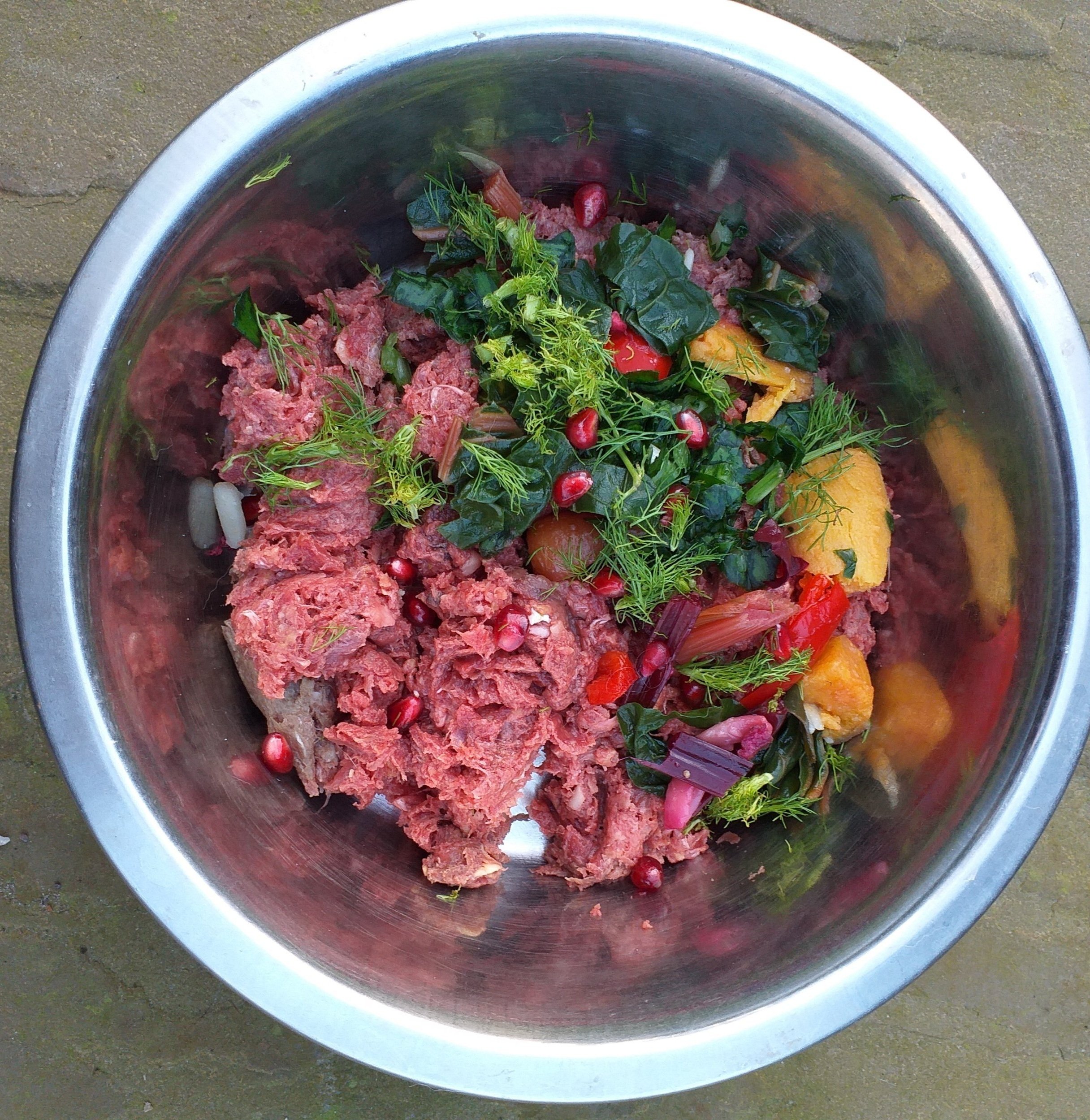
There are many benefits to including some fresh vegetables to our dogs diet. It is important that they are prepared in a way that our dogs can digest them either through cooking, steaming or blitzing to a smoothie. We should all be including more veg in our diets so maybe the easiest way is just to prepare a bit extra when you are preparing your own meals and then set it aside for your dog.
Phytonutrients
The term ‘phytonutrients’ is a name for a variety of compounds only found in plants that have a vast array of health-giving properties. They are covered in far greater detail in the vegetable and fruit section and are a useful way to provide additional micronutrients and antioxidants to your dog’s diet. If the inclusion of fruit, vegetables and seeds is a new experience for your dog, then start off by incorporating tiny amounts until his system adapts and you find the ingredients that suit your particular dog.
Probably the best known of the phytonutrients are carotenoids and flavonoids.
Carotenoids are plant pigments responsible for the vibrant red, yellow, orange and green hues found in vegetables, fruits and plants that can play an important role in protecting cells against harmful effects of light, air and pollution. Beta-carotene, lycopene and lutein are all different types of carotenoid that can easily be included in the diet. They act as anti-oxidants which protect cells from free radicals, which are substances that work to destroy cell membranes and DNA.
Foods that are rich in carotenoids are:
· Lutein: collard greens, Swiss chard, lettuce, spinach, kale and dandelion greens.
· Lycopene: red/orange bell peppers, watermelon, pomegranate, apples, mint and blackberries.
· Beta-carotene: carrots, sweet potato, broccoli and romaine lettuce.
· Flavonoids: These give berries their red, blue and purple colour and can be included in the diet in the form of blueberries, blackberries, raspberries and bilberries.
So, what does the inclusion of veg and fruit have offer to our dogs?
They provide a wealth of vitamins, minerals, anti-oxidants and fibre, including vitamins A, B, C, E and K, and minerals such as calcium, potassium and magnesium.
Anti-oxidants protect against many diseases due to the aging process, and for a degenerative condition such as progressive retinal atrophy a diet rich in anti-oxidants is the only known way to slow down the deterioration of this eye disease.
Fresh vegetables also encourage enzyme production and offer a gentle cleansing and balancing effect on the ph. levels of the body.
Depending on the type of vegetable, they provide soluble and insoluble fibre, which benefit the gut bacteria, and can bind to and remove certain toxins as well as adding bulk and moisture to the faeces.
With intensively farmed animals and soil depletion becoming a concern, our food is lacking in the level of nutrients that it provided many years ago, so the addition of vegetables, herbs, berries and some grains is a way to try and fill any nutritional gaps. The more variety we can add into our dog’s diet the less we will have to rely on dietary supplements.
An ideal herbal supplement in the Hedgerow Hounds range is Nature’s Boost, which combines vegetables, herbs, seeds & superfoods.
How to prepare and feed.
Due to the fact that dogs cannot digest the cellulose in vegetables, the best way to serve is to blend in a food processor to break down the plant’s tough cell wall, until they resemble a thick smoothie consistency, which also mimics the partly digested contents of a prey animal’s stomach.
Other options would be to lightly steam them or finely grate them into the food.
If you want to make larger batches up or you are lucky enough to grow your own veg and have a glut in the summer, then the pureed, pulped veg can be frozen into ice cube trays or pots for convenience.
If they are served whole many dogs just lift pieces of veg out, eat around them in the bowl, or pass them out the other end undigested, to make full use of the nutrients they need to be broken down.
A good feeding guideline would be 7% vegetables and 3% berries, although if you are looking to reduce the overall cost of home-prepared food, or if the dog needs to lose weight, then more veg can be added to make up a quarter of the meal.
The addition of vegetables will change the overall percentages, so subtract from the muscle meat and not the bone or offal which provides the calcium and vitamins. So, for instance a usual 80-10-10 ratio would become 70% (meat) 10% (bone) 10% offal and 10% vegetables.
Start off with a small amount and then monitor how your dog is handling the inclusion of vegetables in his diet.
It is not essential to feed vegetables every day, but even three times a week will be beneficial, rotating different types and changing with the seasons where possible
