Natural Digestive Support for Dogs
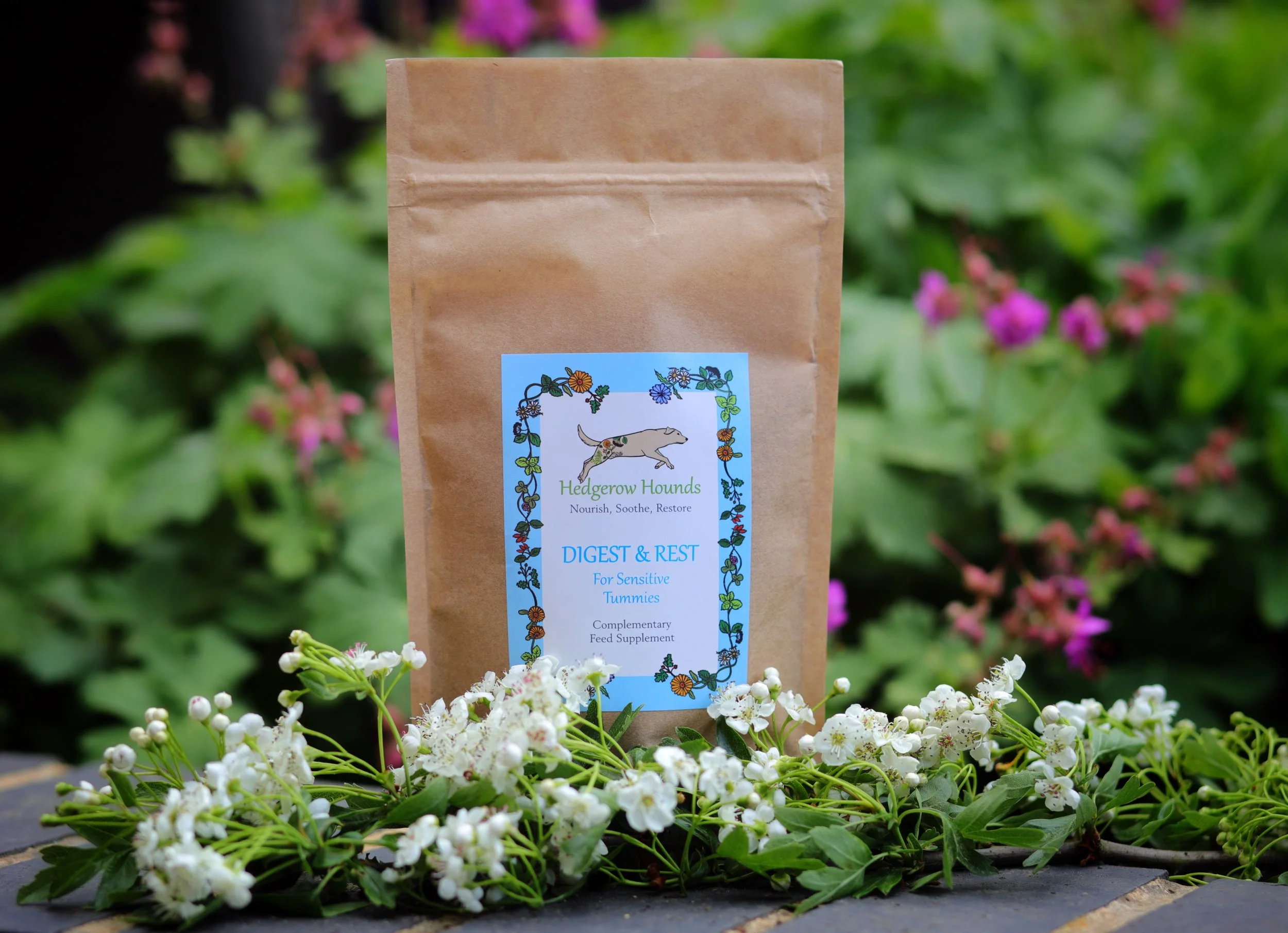
Digest & Rest is the perfect blend for tummy troubles, managing reflux and to aid in anal gland issues.

What does Digest & Rest help with? Digest & Rest was created to help dogs that suffer from digestive upset, constipation, and nausea. It is also ideal for managing anal gland problems. If your dog has a very sensitive digestion, then this blend is ideal if you are intending to make any changes to the diet and will make any transitions much smoother.
It has a very neutral taste and smell, so it will not be off-putting to even the fussiest dog and can be “hidden” in tasty food for the really suspicious, picky eater.
Here are a list of some of the ingredients in Digest & Rest and why they were specially chosen.
Marshmallow - Marshmallow root contains around 35% mucilage, which is a slippery substance to ease irritation of the mucous membranes. This makes it ideal to soothe an irritated throat, gut discomfort or tummy troubles. It is also invaluable for managing reflux and hunger nausea, which can occur just after eating or in the early hours of the morning when the dog’s stomach is empty. Marshmallows’ strongest affinities are with the digestive system, respiratory and urinary tracts.
Chamomile - Chamomile is chosen for its antispasmodic properties as well stimulating digestion as it is quite bitter tasting. Chamomile is also relaxing, so helps if the upset tummy is caused by an anxious, excitable, stressed mind.
Slippery Elm - Slippery elm has been used for centuries to ease digestive upset and soothe the whole digestive tract due to its mucilage properties once it becomes wet.
Fennel - Fennel is useful for expelling intestinal gas and helping to ease stomach cramps.
Psyllium husks - Psyllium are husks from the Plantago ovata species. They provide a form of soluble fibre which when in contact with water, forms a soothing gel which passes through the digestive tract. The husks add bulk to the stools and help with constipation, diarrhoea and aids in the correct emptying of anal glands. Psyllium is also a useful prebiotic to encourage good gut bacteria.
How to use:
Digest & Rest is a very versatile blend to use and you can adapt it to suit your specific dog’s needs. The measured amount can be added to wet food and stirred in, and for dried food, it is recommended that you add a splash of water to the powder and stir it into a paste before incorporating it into the food.
For supporting nausea. If your main reason for choosing this blend is to support reflux or perhaps your dog is recovering from a cough, there are several ways to use this blend for maximum effect. If the powder is made into a thick paste with a little warm water, this starts to release the mucilage, which will coat the mouth and oesophagus as it is consumed. You can try adding this paste to the food, or alternatively, some dogs benefit from a tiny meal or snack with Digest & Rest shortly before the main meal is given, so experiment with this to see what most benefits your dog. Small snacks could include a raw egg, plain cottage cheese, natural live yoghurt or a splash of goats’ milk.
For support with hunger pukes. Some dogs can experience hunger nausea in the early hours of the morning and may bring up some frothy, slimy vomit or start to retch as they experience an uncomfortable nausea. As long as they are well in themselves and have no other symptoms to suggest something more serious is going on, then feeding a very small meal or snack in the evening, which contains the Digest & Rest, can often ease these symptoms overnight and into the early hours. Small snacks can be those listed above or a tiny portion of their main meal set aside for this purpose.
Happy Customer Review
“Our French bulldog now sleeps all night, without the constant air licking, coughing, retching and regurgitation. I never want to be without Digest & Rest” Happy dog and happy owner.
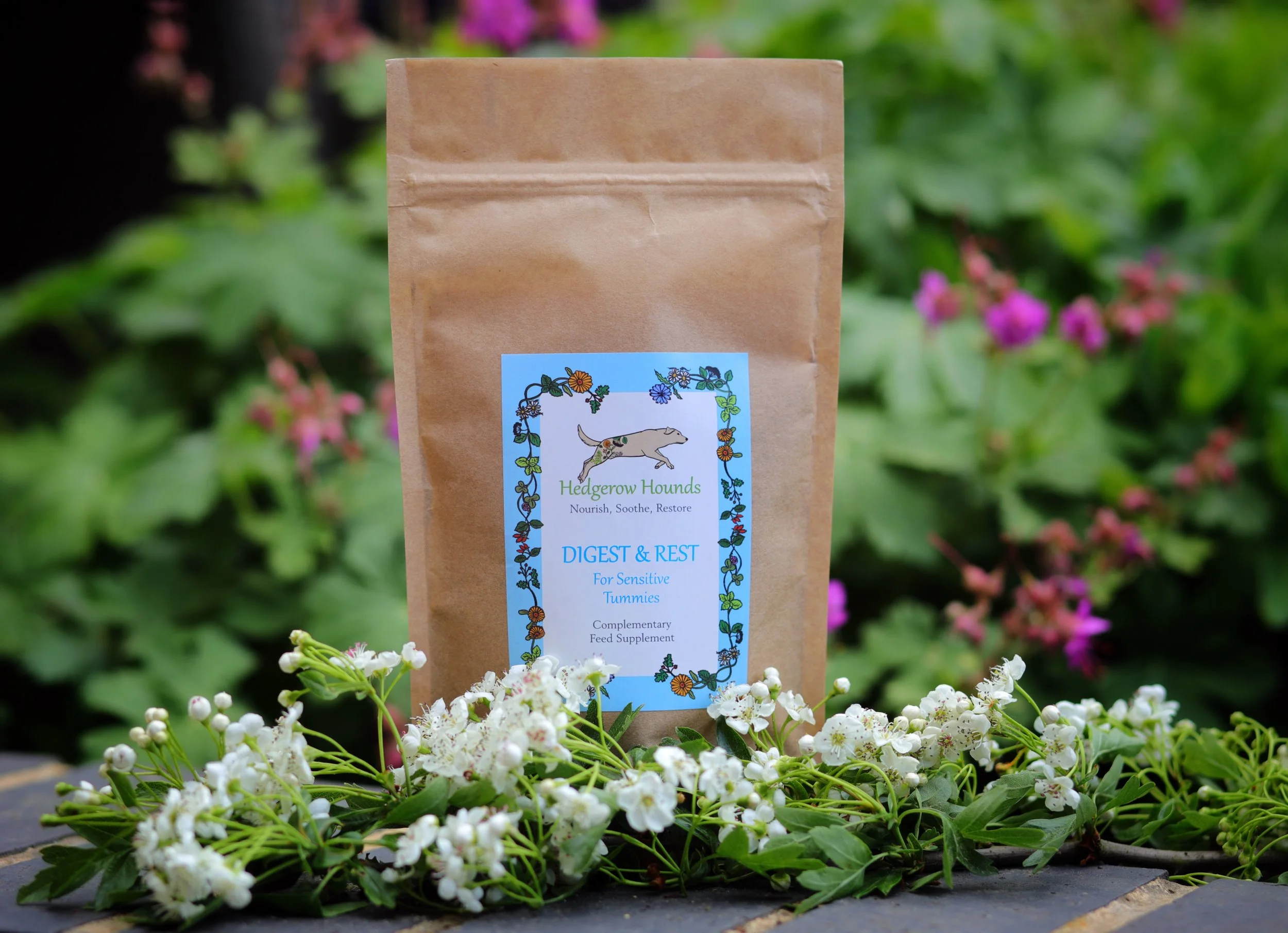
A beautiful blend of herbs, roots, and seeds specifically to soothe the gut, aid digestion, and help anal gland issues.

All our products are veterinary formulated, but should not be used instead of consulting your vet should your dog have a health problem.
Hedgerow Hounds is owned by a qualified holistic canine therapist with 30 years of experience in healthcare and nutrition, and the blends are formulated by a veterinarian.
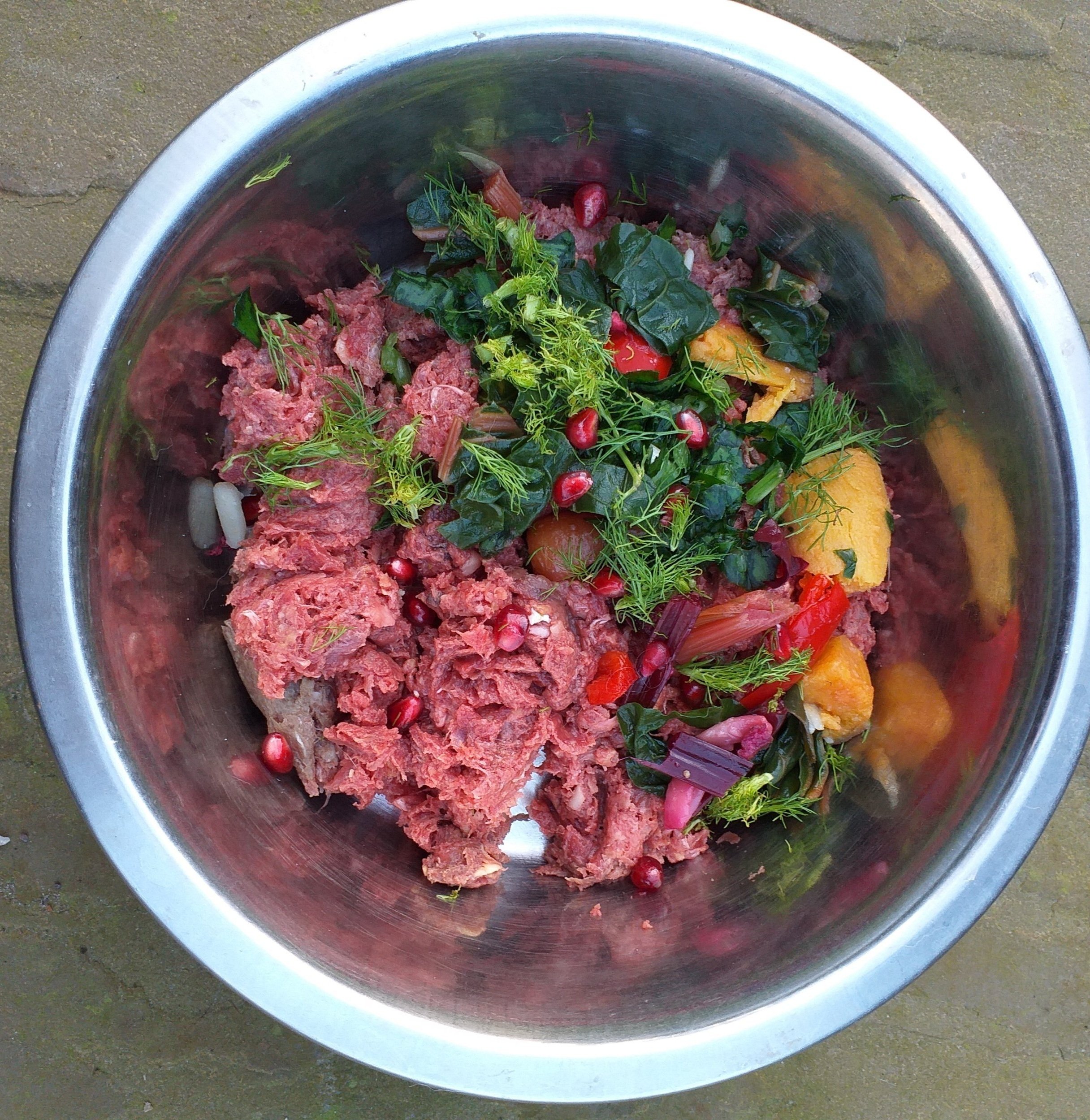
Feeding Vegetables to Dogs
There is a lot of conflicting advice about feeding dogs vegetables. Here we will explore which are suitable and what to avoid or keep to a minimum.

Should I add vegetables or not? If so which type?
So should we bother feeding vegetables to our dogs and will it even benefit them?
There are many benefits to including some fresh vegetables to our dogs diet. It is important that they are prepared in a way that our dogs can digest them either through cooking, steaming or blitzing to a smoothie. We should all be including more veg in our diets so maybe the easiest way is just to prepare a bit extra when you are preparing your own meals and then set it aside for your dog.
Phytonutrients
The term ‘phytonutrients’ is a name for a variety of compounds only found in plants that have a vast array of health-giving properties. They are covered in far greater detail in the vegetable and fruit section and are a useful way to provide additional micronutrients and antioxidants to your dog’s diet. If the inclusion of fruit, vegetables and seeds is a new experience for your dog, then start off by incorporating tiny amounts until his system adapts and you find the ingredients that suit your particular dog.
Probably the best known of the phytonutrients are carotenoids and flavonoids.
Carotenoids are plant pigments responsible for the vibrant red, yellow, orange and green hues found in vegetables, fruits and plants that can play an important role in protecting cells against harmful effects of light, air and pollution. Beta-carotene, lycopene and lutein are all different types of carotenoid that can easily be included in the diet. They act as anti-oxidants which protect cells from free radicals, which are substances that work to destroy cell membranes and DNA.
Foods that are rich in carotenoids are:
· Lutein: collard greens, Swiss chard, lettuce, spinach, kale and dandelion greens.
· Lycopene: red/orange bell peppers, watermelon, pomegranate, apples, mint and blackberries.
· Beta-carotene: carrots, sweet potato, broccoli and romaine lettuce.
· Flavonoids: These give berries their red, blue and purple colour and can be included in the diet in the form of blueberries, blackberries, raspberries and bilberries.
So, what does the inclusion of veg and fruit have offer to our dogs?
They provide a wealth of vitamins, minerals, anti-oxidants and fibre, including vitamins A, B, C, E and K, and minerals such as calcium, potassium and magnesium.
Anti-oxidants protect against many diseases due to the aging process, and for a degenerative condition such as progressive retinal atrophy a diet rich in anti-oxidants is the only known way to slow down the deterioration of this eye disease.
Fresh vegetables also encourage enzyme production and offer a gentle cleansing and balancing effect on the ph. levels of the body.
Depending on the type of vegetable, they provide soluble and insoluble fibre, which benefit the gut bacteria, and can bind to and remove certain toxins as well as adding bulk and moisture to the faeces.
With intensively farmed animals and soil depletion becoming a concern, our food is lacking in the level of nutrients that it provided many years ago, so the addition of vegetables, herbs, berries and some grains is a way to try and fill any nutritional gaps. The more variety we can add into our dog’s diet the less we will have to rely on dietary supplements.
An ideal herbal supplement in the Hedgerow Hounds range is Nature’s Boost, which combines vegetables, herbs, seeds & superfoods.
How to prepare and feed.
Due to the fact that dogs cannot digest the cellulose in vegetables, the best way to serve is to blend in a food processor to break down the plant’s tough cell wall, until they resemble a thick smoothie consistency, which also mimics the partly digested contents of a prey animal’s stomach.
Other options would be to lightly steam them or finely grate them into the food.
If you want to make larger batches up or you are lucky enough to grow your own veg and have a glut in the summer, then the pureed, pulped veg can be frozen into ice cube trays or pots for convenience.
If they are served whole many dogs just lift pieces of veg out, eat around them in the bowl, or pass them out the other end undigested, to make full use of the nutrients they need to be broken down.
A good feeding guideline would be 7% vegetables and 3% berries, although if you are looking to reduce the overall cost of home-prepared food, or if the dog needs to lose weight, then more veg can be added to make up a quarter of the meal.
The addition of vegetables will change the overall percentages, so subtract from the muscle meat and not the bone or offal which provides the calcium and vitamins. So, for instance a usual 80-10-10 ratio would become 70% (meat) 10% (bone) 10% offal and 10% vegetables.
Start off with a small amount and then monitor how your dog is handling the inclusion of vegetables in his diet.
It is not essential to feed vegetables every day, but even three times a week will be beneficial, rotating different types and changing with the seasons where possible

www.hedgerowhounds.co.uk

Herbal Dog Tea

A beautiful & fragrant blend of Nettle, Lemon Balm, Chamomile, Mint, Rosehips, Passion flower, Calendula, Rose, Cornflower, Fennel seed
Why the ingredients were specifically chosen for this tea:
Nettle- rich in minerals and contains natural antihistamine properties
Lemon Balm – relaxing & calming
Mint – Refreshing and uplifting and digestive stimulant
Chamomile – calming to body and mind
Rosehips – rich in antioxidants and vitamin C
Calendula – soothing for the skin and has anti-inflammatory effects
Fennel seed – very good for the digestive system
A few ideas of how to use:
The herbs can be used to make a tea which when cool, offered as a refreshing drink.
Make a strong brew and when cool, transfer into shaped moulds and place in the freezer
Add the tea directly into your dogs meals
If you feed vegetables, add to your dogs veg or blend with raw vegetables and freeze in ice cube trays for later use.
Stir some of the tea and a sprinkling of the herbs into natural yoghurt, place into a shallow tray, level out and then pop in the freezer for a couple of hours. You`ll then have a dog friendly ice cream treat for a hot, sunny day.
Once the tea has been made, the remaining herbs, which are now rehydrated, can be placed into your dogs meals or used in treat recipes

Here`s to many relaxing, balmy days in the garden with our beloved dogs.
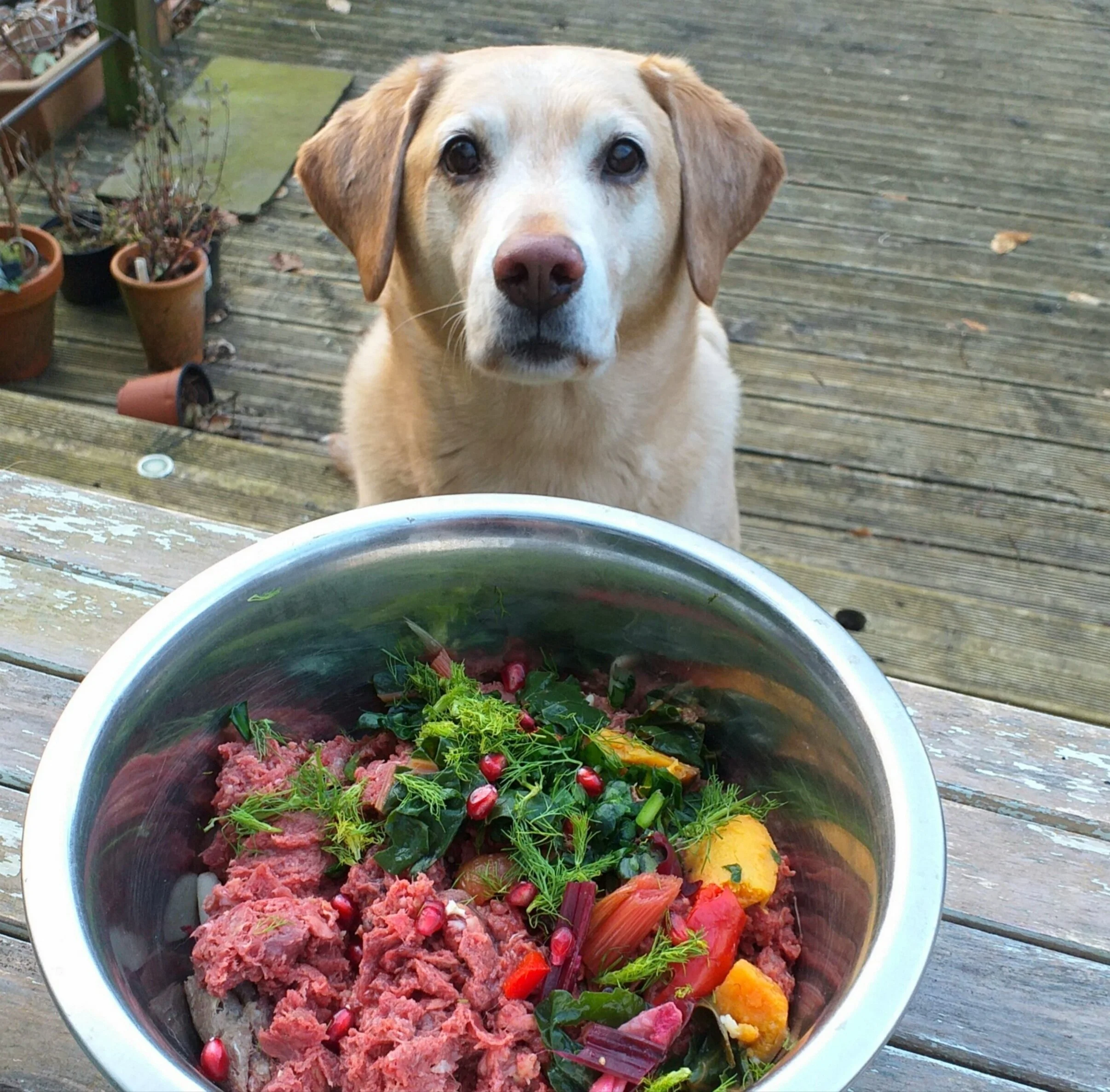
Styles of Raw Feeding
There are a number of ways to feed your dog a raw food diet. Here we explore the different styles and what will suit your dog and your own lifestyle.

There are several different ways to feed your dog a raw diet.
For some people it is personal preference, what suits their individual dog or what can be fed due to the availability of certain ingredients.
BARF
The most popular way to feed a raw diet is the BARF method which stands for Biologically Appropriate Raw Food or Bones and Raw Food.
Many barf complete meals add seasonal vegetables and include supplements so be mindful if you are also adding supplementation to these meals that you are not giving an excessive amount or doubling up on one particular supplement.
They tend to follow the percentage of 70% muscle meat, 10% raw minced bone, 10% offal (5% of which is liver) and 10% vegetables although there are variations within the brands some of which omit offal altogether and others will include 20% vegetables.
It may be a case of trial and error until you find a brand that suits your dog. Most of the raw manufacturers now offer a large range of proteins making it easy to rotate the type of meat and offer a good variety.
Barf meals are usually packaged in convenient tubs or tubes and are simply defrosted and served. This is a good way to feed if the owner is hesitant to handle raw meat or alternatively there are raw meals provided in the form of sausages which are simply lifted out with a fork directly into the bowl.
80-10-10: You can buy ready made complete meals with an 80-10-10 ratio in which 80% is muscle meat, 10% raw minced bone and 10% offal.
80-10-10 is a good choice it you want to either omit vegetables or have the flexibility to add your own.
Prey Model Raw (PMR) or Whole Prey: Prey model feeders try to replicate a very natural diet and will often not add any vegetable matter. Typically, the diet follows 80% muscle meat, 10% whole raw bone, 10% offal (5% of which is liver) The muscle meat tends to be offered in large whole pieces rather than a mince. When using the whole prey method an entire prey animal is fed such as a rabbit, quail, fish, pigeon or chicken etc which has the fur and feather left on to add to the ration. It can be difficult to source many different types of whole prey in order to add variation and not every dog will eat this way.
DIY: This can be the cheapest way to feed a raw diet but it does require additional research in order to get the correct ratio of meat, bone and offal plus a reliable source of ingredients in order to rotate the proteins and provide a broad range of nutrients. Making up your own meals gives flexibility and can be useful for dogs that need certain proteins omitting from their diet due to intolerance and sensitivities, but it is important to seek advice in order to provide all the essential nutrients that your dog needs to thrive.
Caroline Hearn ISCP.Dip.Canine.Raw.Nutrition, Dip ICAT