BODY WRAPS & PRESSURE VESTS
Pressure vests and elasticated body wraps have been in use for many years to assist anxious and fearful dogs and to aid recovery after surgery, injury and neurological conditions.

Caroline Hearn – MICHT. Dip ICAT Dip MLD
Sports, Remedial & Holistic Massage Therapist
Pressure vests and elasticated body wraps have been in use for many years to assist anxious and fearful dogs and to aid recovery after surgery, injury and neurological conditions.
The effects of the body wraps and the vests work in slightly different ways depending on their purpose of use and what results we are aiming for.
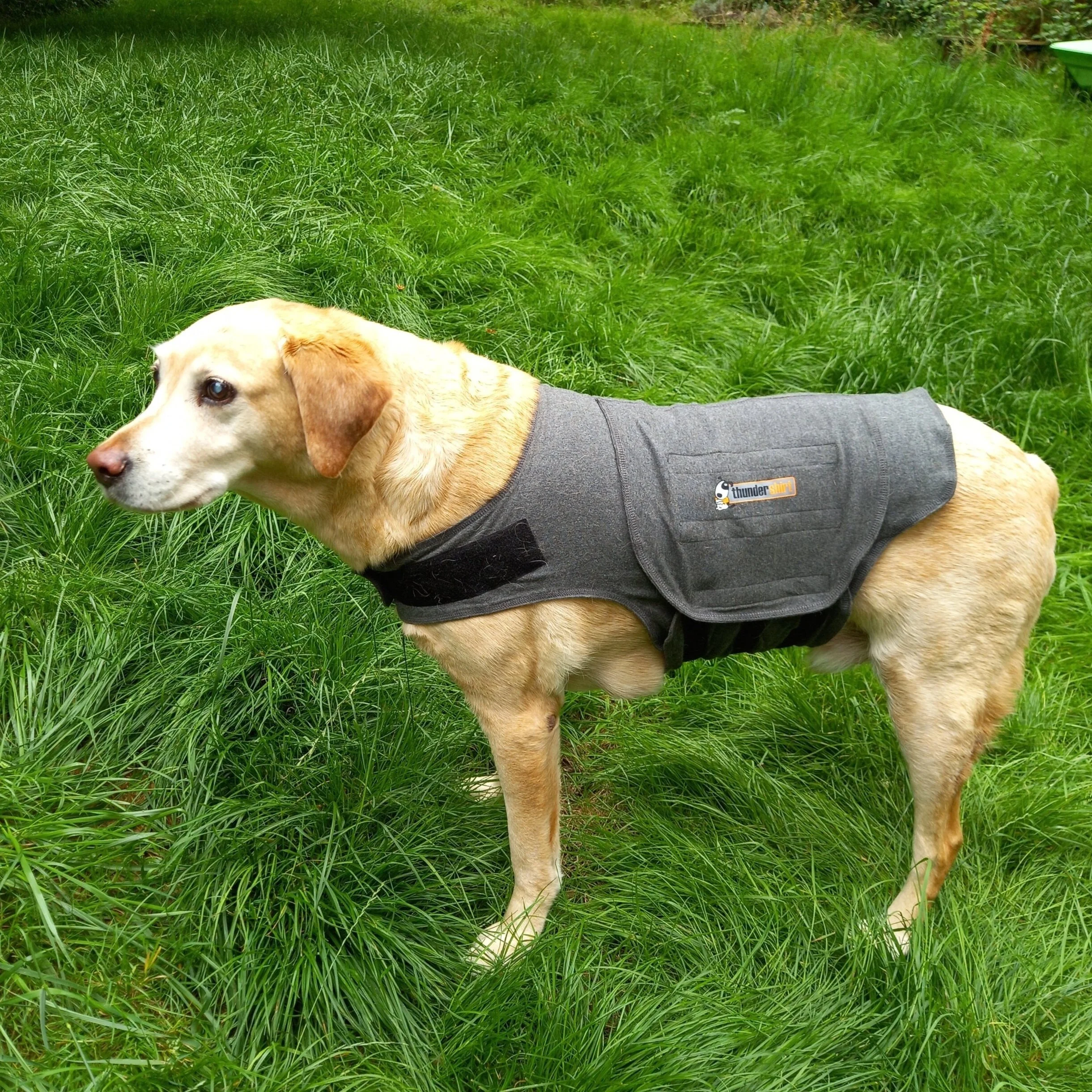
Pressure Vest (Thundershirt etc).
Probably the best known of all the pressure vests is the “Thundershirt” although there are many more on the market today that work on the same principal.
They are predominately used for dogs that are anxious, reactive and fearful of a known source such as thunder, fireworks, loud noises, travelling or separation anxiety.
The reasoning behind the vests is similar to the way that swaddling an infant can bring about comfort and reassurance.
Light compression activates the parasympathetic nervous system to help create a feeling of relaxation.
Once this system is stimulated, hormones such as endorphins, serotonin and dopamine are released bringing a feeling of calm, a reduction in anxiety and a lowered heart rate.
It is important to buy the right size of pressure vest. For it to be effective, it will need to be a snug fit. The aim is to provide light pressure that is in constant contact with the body but not so tight that it restricts movement.
For the best results, it is vital not only to prepare your dog for wearing one but also to use the vest in a positive way for a period of time before the actual stressful event takes place. Each dog is an individual, so proceed at a pace they are comfortable with. Some dogs, however gently and slowly they are introduced to the vest will not respond well and will become stressed and anxious whilst wearing it, so other things will have to be put in place to help them cope (see the whole fireworks series of blogs)
Wearing the vest should be an enjoyable, stress-free event that the dog associates with pleasant experiences. That could involve a few high-value treats, light massage techniques, a feeling of security, and spending quality time with their owner. Avoid activities that are too stimulating or increase adrenaline, as we are aiming to encourage a feeling of contentment and calm associated with wearing the vest.
The effects of the pressure vest accumulate over time so it is important to carry out the initial introductions when your dog is relaxed and in a state of mind that they can process it as a positive experience. It is also advisable for your dog to wear the vest from time to time to reinforce the feel-good factor when they have it on.
As with the wrap bandages, they should not be left on unattended or for long periods of time, without a break.
If you have a male dog make sure that the wide under-belly strap does not cause discomfort near his genitals, as some of the fastenings do extend a long way back in the abdominal area.
Be aware that the Velcro can be noisy when you unfasten the chest and belly straps, so a noise-reactive dog will need to be carefully introduced so they are not startled by it.
Body Wrap Bandages:
The use of wide, elasticated bandages such as the “Ace” bandage, can be used as a method to reassure a nervous dog or more often as a useful “tool” in the rehabilitation after surgery or where there has been long periods of immobilisation or recovery from a neurological condition.
They are also useful for preparing a dog to wear a harness or coat, touch sensitive dogs, those that pull hard when walking on a lead and for dogs that lack confidence.
The wraps are commonly used in a figure-of-eight configuration, making contact with the chest, crossing diagonally over the back and finishing either near the groin or incorporating the hindquarters.
They do need to be fitted correctly so not to cause harm or discomfort and one of the best guides on applying them can be found on the Tellington T-Touch website.
If they are being used for rehabilitation after surgery or illness then it is essential that your vet, physio or canine massage therapist shows you exactly how to apply them according to your individual dogs’ condition.
It is important that the bandage is elasticated, as the sensation of the pressure against the body which expands and contracts with movement, brings about a heightened sense of awareness on just how the dog is using their body.
The self-adherent bandage that you use for first aid is not suitable for this purpose as it can pull on the hairs and is not quick to remove, should your dog become distressed.
The correct use of body wraps works on the proprioceptive system. This is why they are so useful in rehabilitation and re-training of the body, for example, after a long period of compensatory movement due to pain or a previous injury.
Proprioception, meaning “one`s own” is a sense of relative position of neighbouring body parts and the strength needed for movement.
Proprioception plays a large role in co-ordination, posture and body awareness.
We receive proprioceptive input from the sensory receptors in our skin, muscles and joints. When these receptors are stimulated, through touch or pressure, the brain is provided with the information about our body positioning, movement and speed.
The wraps are often used when performing different activities such as walking and trotting over poles placed on the ground and travelling over varying terrain, this gives an awareness of the dogs limb positions, how they are placing them on the ground and the energy that is propelling them forwards.
It can also become apparent that the dog is favouring to push off more on one hind limb or much happier and free moving in one direction over the other. In these cases, it is important to take regular breaks after 5-10 minutes of work with the wraps on as muscles will become fatigued and sore when adapting to a new movement pattern.
Both the pressure vests and body wraps are a great addition to the holistic wellbeing of your dog. However, they do not replace the expertise of a qualified behaviourist or a canine therapist should your dog need additional help in certain areas.

Making a Den for Your Dog
It can be very useful to build a den or safe space for your dog to retreat too if they are particularly anxious in certain situations or around firework time. Give your dog time to get used to their den and feel like it is a safe and restful space to retreat to. Here are a few tips to get you started.

It can be very useful to build a den or safe space for your dog to retreat too if they are particularly anxious in certain situations or around firework time. Give your dog time to get used to their den and feel like it is a safe and restful space to retreat to. Here are a few tips to get you started.
Now is the time to start observing where your dog always chooses to relax or perhaps when they have been stressed or spooked in the past they always retreat to the same area? This could be under your bed, tucked behind the sofa, or on a landing that has no windows.
I had a Lab that insisted the only place he wanted to be when fireworks were going off, was in the under stairs cupboard, so it was made cosy and the door propped open a little so he could leave when he wanted. It was central in the house, had no windows and the sofa and TV were alongside it, so it does make sense.
Dogs generally like to be near their people, so it will be the case of organising things so you can be next to or near to your dog.
Use this time to create positive, calming experiences in that area and they have good memories of being there. Play the gentle music you have chosen so it's familiar, although on the night it will no doubt have to be turned up much louder.
You can offer treats and chews in the den on the days that lead up to the event, but if your dog is stressed during fireworks the last thing they'll do is eat and you want to avoid anything that may cause an upset tummy and sudden dashes into the garden.
If they are happy in a crate then cover with a heavy rug or thick blankets, but it is essential the door is kept open and not obstructed, a dog in a blind panic to flee, but is trapped, can cause themselves serious injury.
Please read the other blogs re: Anxious dogs and Firework fear which will also help.
Your Anxious Dog
If you share your life with an anxious dog, you will know that there are many challenges to overcome and situations in everyday life that can act as a trigger resulting in fearful, frantic behaviour, reactivity towards dogs and people, excessive barking and gut issues to name a few. It can seem a lonely road to travel and that you take two steps forward one day followed by three steps back the next.
If you share your life with an anxious dog, you will know that there are many challenges to overcome and situations in everyday life that can act as a trigger resulting in fearful, frantic behaviour, reactivity towards dogs and people, excessive barking and gut issues to name a few. It can seem a lonely road to travel and that you take two steps forward one day followed by three steps back the next.
So here are a few hints, tips and links for further advice that I hope will help you and your anxious dog.
It is not just our dogs stress levels we should be mindful of! Dogs can read us like a book and are extremely sensitive to our emotions, our energy and the environment they are living in. It is important for our own health to manage stress and make some time to rewind from the stresses and strains of everyday life.
Taking even 10 minutes a day to concentrate on bringing your stress level down will have a knock on effect to your dog. Simple practises such as gentle breath work and meditation, preferably with your dog by your side, really do help. There is a free 12 minute guided meditation which is particularly lovely by Holly Husler. It can be found at the top of her page on this link FREE OFFERINGS — Holly Husler Sit somewhere quiet with your dog, slow your breath and completely unwind with your best friend.
Diet. Feeding a more natural, minimally processed diet, without excess carbohydrates and sugars will help in creating a more even temperament and put them in a mindset where it is easier to learn a better way of living. Here is a blog to help get you started introducing fresh food into your dogs diet https://www.hedgerowhounds.co.uk/news/improve-your-dogs-diet
Dogs love to sniff, lick & chew. Giving your dog something suitable to chew has huge psychological benefits as chewing releases serotonin, dopamine and oxytocin which are all calming and feel good hormones. If raw bones aren`t suitable for your dog then there are lots of healthy, natural chews available as well as providing Kongs and tracheas stuffed with tasty ingredients.
Allowing your dog to sniff when out on a walk or perhaps setting up an area in the garden where they can freely explore is incredibly beneficial to anxious dogs. Dogs are natural seekers of food so both the house and garden provides lots of opportunity to introduce scent games and hide and seek their favourite treats.
Dogs need to move and be in a safe place to unwind to process the stress they are feeling. They need to ground themselves on the earth, not carpet, laminate, concrete or synthetic lawn but actually on the earth itself. Creating a peaceful environment in your garden is a perfect place to do this and it`s somewhere to relax with your dog too. Just as pottering around the garden is very relaxing for us it is equally valuable to your dog.
Using snuffle and Lick-it mats, and interactive toys can be used in the house and handy to have when the weather limits time outside or maybe your dog is particularly stressed and needs some time away from the triggers of being outside. We have some gorgeous snuffle balls available here: https://www.hedgerowhounds.co.uk/products/snuffle-balls
Read the Snuffle Mat Blog here: https://www.hedgerowhounds.co.uk/news/snuffle-mats-and-balls
Calming herbs can also help, plus concentrating on easing any gut discomfort which undoubtedly goes hand in hand with a stressed, anxious mind. There is a link below with a few suggested products that could help. Both the Tranquil blend and Digest & Rest are particularly valuable in these situations.
Time to chill. Having time out or chill out days can be very beneficial to anxious, reactive or even very active dogs, to bring them back into some sort of balance and down from their constantly stimulated state of mind.
A dog that is in a heightened state of fear, stress, panic and self preservation will not physically be able to process and learn what is being asked of them. So by bringing down their stress levels they will be in a better frame of mind to learn new skills, cope with their stress and grow in confidence to make better decisions that are not fuelled by fear.
When dogs are over excited, anxious or constantly alert to potential dangers their autonomic nervous system releases the fight or flight chemical adrenaline into the bloodstream, over time this becomes very damaging to the whole body and the gut in particular. The other subdivision of the autonomic nervous system is the parasympathetic which is sometimes called the “rest and digest system” and creates calm, relaxation and a happy gut and this is what we are hoping to nurture on these quiet, restful days.
Finding a trainer or behaviourist that has experience with nervous dogs is invaluable. They will help you and your dog to learn skills at home which will help them cope with stressful situations when they arise in the future.
The old advice of just keep talking your dog out and they will get used to it” just doesn`t work and you will find that each outing will just top up the stress levels, adding fuel to the situation. Having as many chillout days as the dog needs, where there are no triggers or unnecessary demands made on the dog, is often a necessary step forward.
If you are looking for a private enclosed field to exercise or train in then there is a website where you can search for one in your area. https://www.dogwalkingfields.co.uk
There is a particularly good Facebook group that offers support, set up by Niki French called Pup Talk and she has recently released a book called Stop Walking Your Dog which has invaluable advice to help with anxious dogs. https://www.puptalk.co.uk
Sleep: Adult dogs require 16-18 hours of sleep a day, so it is important that your anxious dog gets enough rest and has a quiet space where they feel safe. This could be a crate with the door left open, a comfortable bed in an area where they are not disturbed by other dogs or people passing or observing where they always choose to sleep and make a cosy bed there.
Anxiety can present itself in many ways, here are a few to look out for:
• Digestion problems - IBS, Diarrhoea
• Over excitability
• Reactive behaviour (aggression)
• Excessive barking
• Noise sensitivities
• Humping
• Resource guarding
• Chewing or scratching the body
• Inappropriate toileting in the house
• Excessive licking
• Ball obsession
• Pacing
There are a number of products on the shop to help relax and support nervous, anxious and reactive dogs
Tranquil is a herbal blend created specifically with the nervous, anxious, reactive & stressed dog in mind https://www.hedgerowhounds.co.uk/products/tranquil-relax-calm
Digest & Rest https://www.hedgerowhounds.co.uk/products/digest-and-rest
Gentle massage and body work such as Tellington Touch can be really helpful but do be mindful that for some dogs, touch is not a positive experience. If they are fearful of hands they may be happy with a soft brush or cloth initially.
Body wraps and pressure vests such as the Thundershirt can be very useful for comforting an anxious and stressed dog, read the following blog which covers the topic in detail https://www.hedgerowhounds.co.uk/news/body-wraps-pressure-vests
Walking anxious & reactive dogs: Walking anxious, fearful and reactive dogs can be incredibly difficult and stressful for both dog and owner. I can clearly remember a daily walk at 5am for many months on the arrival of a particularly reactive rescue dog and having to drive to areas that were very quiet in order to keep their stress levels down.
Rehabilitating an anxious dog can be a long process, so as well as getting support from a compassionate trainer I would suggest joining a group on Facebook that supports anxious dogs and their owners and also looking up Sarah who started her business My Anxious Dog after her Spaniel became very stressed and reactive around other dogs and discovered just how difficult it was to inform others that her dog wasn`t nasty but just frightened and it would help if they just gave her space.
So, Sarah from My Anxious Dog has created a national #dogsinyellow day on the 20th March 2022 to raise awareness and to really educate others to understand the meaning of dogs wearing yellow. So please spread the word!
Sara says “Yellow warning or yellow space awareness products are used when walking an anxious, nervous or reactive dog.
Walking reactive or anxious dogs in public is challenging, especially when strangers and dogs walk over to say “Hi” to your fearful dog. Sometimes avoiding scary triggers is impossible, so we use yellow dog warning products or yellow space awareness products to let people know that our dogs need space or to be ignored”.
You can download your free awareness pack, shop for the fantastic products and make contact with Sarah via the website http://www.myanxiousdog.co.uk
www.hedgerowhounds.co.uk
Caroline Hearn MICHT. Dip.ICAT. MIAAT

Pumpkin Chicken Mash
A soothing and comforting meal for when tummy trouble strikes!
A soothing and comforting meal for when tummy trouble strikes!

You will need:
1 Small skinless chicken breast or Cod/Coley portion if your dog is sensitive to chicken.
Pumpkin or Butternut Squash peeled & diced around 400g
1 Small celery stick, finely chopped
A quarter teaspoon of fennel seeds, lightly crushed
How to:
Place the diced squash into a saucepan, cover with boiling water, and simmer for approximately 20 minutes or until soft.
Put the skinless chicken breast into another pan of boiling water along with the chopped celery and the crushed fennel seeds and simmer for around 15 minutes.
Drain the squash in a colander and allow to sit for 5 minutes to remove excess moisture then mash with the back of a fork or use a potato ricer.
Drain the chicken and celery.
Thinly slice or cube the chicken breast and stir into the pumpkin mash.
Serve slightly warm or at room temperature.
This recipe is not a complete and balanced meal, but it is extremely useful to feed in small portions if your dog has a sudden tummy upset or is a little off-colour. It is light, easily digested, and tempting for fussy or shy eaters.
If you have the Digest & Rest blend, then a little stirred into the mash will be very soothing to the gut, https://www.hedgerowhounds.co.uk/products/digest-and-rest
The chicken and pumpkin mash will keep in the fridge for up to five days or can be frozen in small individual pots for later use.
Caroline Hearn- Hedgerow Hounds
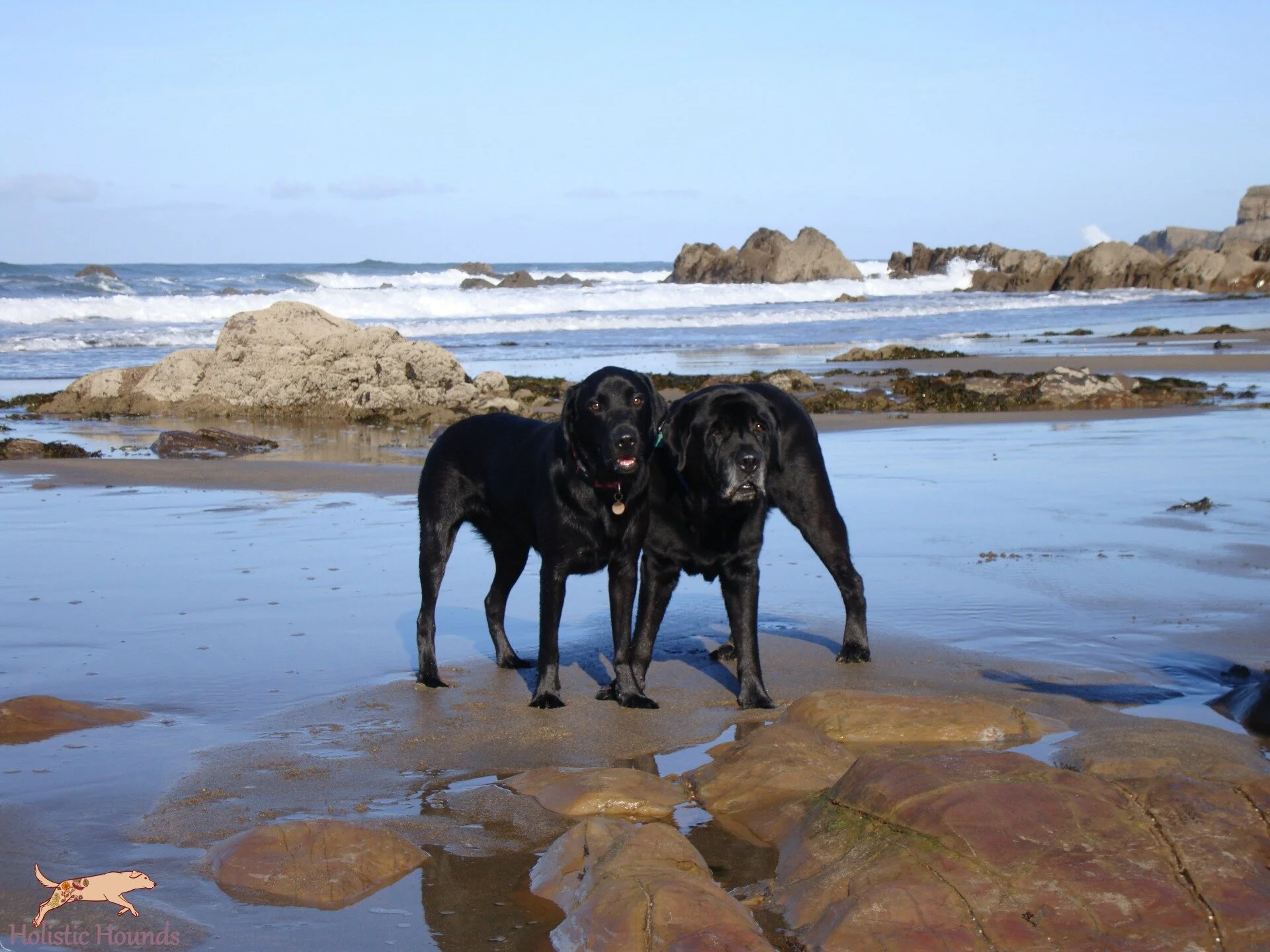
Taking your Dog on Holiday
Hints and tips to make a holiday with your dog run smoothly.

Ready for the off!!
Years ago, taking our dogs on holiday involved trawling through magazines and endless phone calls to try and find somewhere that was suitable and happy to take dogs. Today there are so many options for time away with our pets from camping to country cottages, there is something to suit us all.
There are however several things to consider to make the time away safe and enjoyable for you and your dog.
Here are a few hints and tips so the vacation runs smoothly.
Try to quickly establish some sort of routine for toileting, exercise, mealtimes, and bed. Using the dogs’ usual bed or at least a familiar blanket will help them to settle.
Although possibly not at the forefront of our minds, it is always better to be prepared should your dog become ill or injured. Getting the details of the local vets, including an out-of-hours service and establishing the location of the surgery should be done immediately on arrival or with some homework online before you head off to your holiday destination.
Take a well-stocked first aid kit that can be used by all the family, including the dog. Check the use by dates on any wound cleaners, eye washes, gels and wipes and make sure you have a tick removing tool.
It is possible to view the interior of most holiday lets online and laminate and tiled flooring is often chosen for hygiene and ease of cleaning. This however can be very hazardous, particularly for the senior, less mobile pet or the dog that is terrified of slipping, so refuses to walk on it. The very thin, rubber-backed mats and runners are essential in this instance. They roll up neatly and take up limited room in the car.
Check the garden thoroughly and ensure the fencing is sound and that any gates can be securely closed.
Some dogs are very fussy about their drinking water, which can be a potential problem in hot weather. If this is the case, then it will help to take a water container from home with their usual drinking water as their main water source for a couple of days, gradually topping up with the new supply of water.
Check your dog’s microchip details are up to date and that there is a tag attached to their collar with contact details clearly shown, adding a temporary form of ID tag with current location is also a good idea.
In unfamiliar surroundings, it is often wise to keep your dog on a lead or longline for the first few days.
If you need to give your dog a short walk after dark, then a LED collar or clip on collar light is really useful for added visibility, particularly if you have to use an unlit country lane.
A selection of old towels and even a towelling drying coat can come in very handy for limiting the amount of mud, sand and general debris that is brought into the accommodation after a busy day exploring the sights.
While we welcome a change of scenery and new experiences, for the more sensitive or nervous dog, it can be a stressful time. Having some natural remedies at hand can help to settle their emotions.
If you have a sensitive dog or know that they are likely to be upset initially by the different surroundings, then using a natural calming supplement with the addition of relaxing sprays put onto a cloth and placed near the dog to settle the nerves is worthwhile. It is important to introduce any calming supplement, rescue remedy, pressure vests or body wraps for at least 3-4 weeks before your holiday to gain maximum benefits.
If your dog is used to having a radio on, then a small portable radio can be useful day and night to give them a feeling of security and familiarity.
Catering for Raw Fed Dogs or those on a Home Cooked Diet.
For the dogs on a raw or home-cooked diet, it does involve some forward planning to ensure you have enough food to last for the duration of your holiday.
If you can only take a limited amount of raw food with you, or maybe taking raw meat is out of the question, then there are a few alternatives.
If you know that you will have to resort to feeding something else, it is crucial that you feed your dog the alternative food for a period of time at home beforehand to confirm that it suits your pet and to prevent any upset stomachs while you are away.
Many holiday lets are so well equipped the chances are there is enough freezer space for a few tubs of frozen food, or the very least a fridge and ice cube compartment where you can freeze a few ice blocks to keep topping up your cool box. Homemade meals can be measured out into individual portions and frozen, remembering to take one out each evening to defrost for the following day. In hot weather the food needs to be defrosted in the fridge or your cool box.
Packs of frozen raw food
Many of the frozen complete meals come in 1 kilo tubs, and when tightly packed together in a cool box with the addition of a few ice blocks, will take around 4 days to completely defrost.
By using the completes you do not have to worry about taking additional edible bones or vegetables with you.
Some good alternatives…
Freeze-dried food is made by quickly freezing fresh food at temperatures as low as -50C in pressurized chambers over 18 hours to gently draw away the moisture and retain as many nutrients as possible. It is a matter of just adding warm water to rehydrate before feeding.
Cold-pressed food is manufactured at low temperatures, around 50C, so fewer nutrients are destroyed in the process, unlike the very high temperatures needed to make extruded kibble. It does require some warm water to rehydrate it, and the recommended feeding is for every 100g of food, 125ml of warm water is added and left to stand for 5 minutes before feeding.
Just check the ingredients before purchase, as some contain rice and grains which may not suit your dog’s particular needs.
Dehydrated food is made by blowing warm air across the ingredients to remove moisture. It has a good shelf life and once warm water is added to rehydrate, you store and feed as you would raw food. As with freeze-dried food, it is light in weight and not as bulky to store as other dried or tinned food.
If your dog is fine on tinned food or the steamed “chub” rolls then this is another option.
The downside with tins is that they are bulky and heavy, and you will have to dispose of them somewhere once empty.
Tinned sardines or pilchards in spring water or tomato juice are extremely useful to take plus they seem to be sold in every corner shop across the country, even in the most remote of village stores. They are a good emergency measure should you run out of food or as an addition once or twice a week.
If you are near a farm shop or village store they will undoubtedly have free-range eggs for sale which again are a healthy, protein-rich way to make meals go a little further and can be fed raw or lightly cooked.
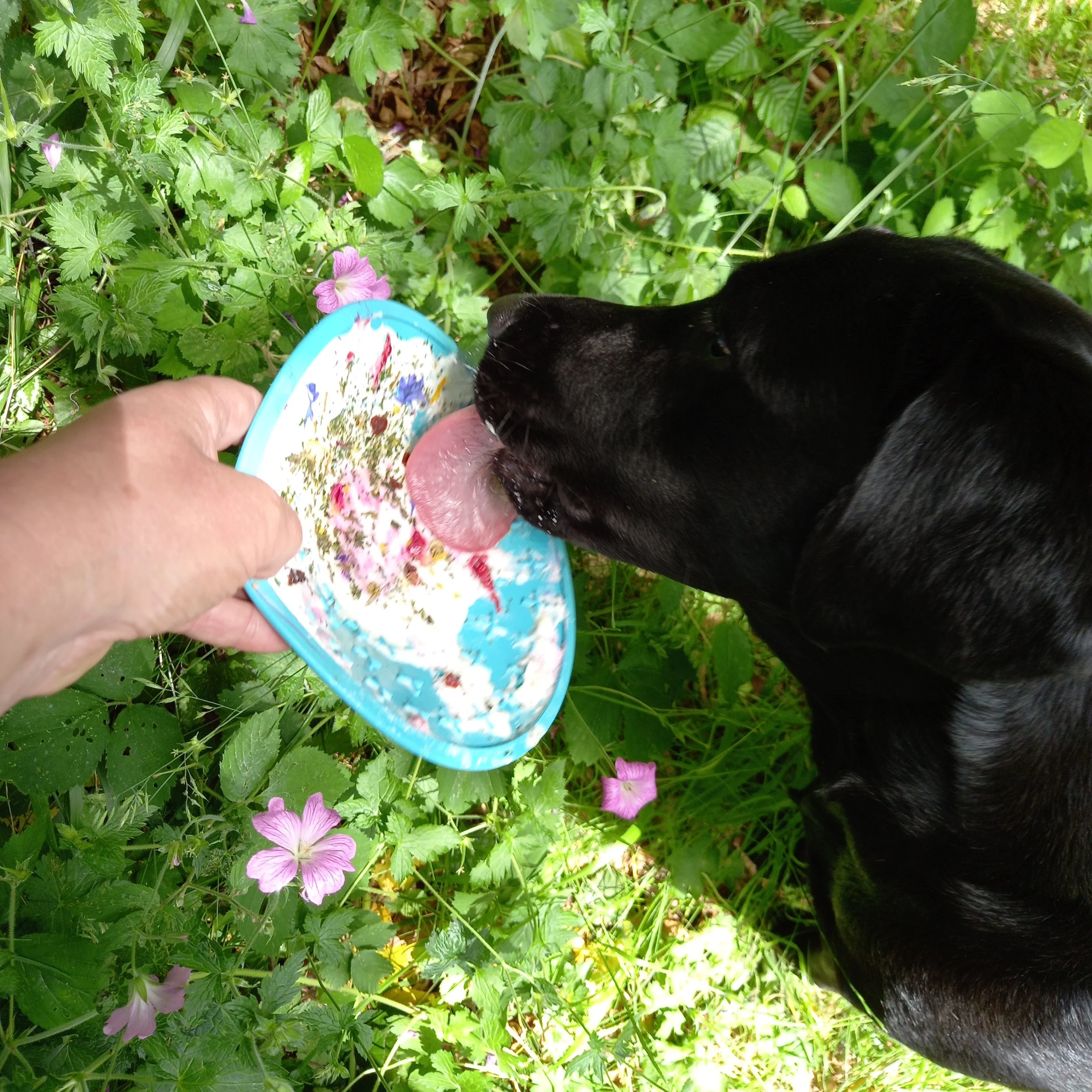
Cool Treats for a Hot Day!
When the weather is heating up, it is nice to offer your dog a healthy cooling treat to help bring their temperature down.
You`ll need suitable containers or moulds which are freezer-friendly

When the weather is heating up, it is nice to offer your dog a healthy cooling treat to help bring their temperature down.
You`ll need suitable containers or moulds which are freezer-friendly
You can use the following to make a cooling snack:
Natural full-fat yoghurt (goat or sheep are the best options, if you can find them) add mashed banana, or perhaps a little almond nut butter.
Bone Broth frozen into plastic trays or moulds. Add a sprinkling of a Hedgerow Hounds herbal blend and a couple of blueberries.
Kefir can be frozen into shaped moulds or onto a lick-it mat or bowl and placed in the freezer for an hour or so. Dust with fish skin sprinkles or a little bee pollen.
Kongs are great for stuffing with numerous toppings and they freeze really well. They`re useful for greedy dogs that rush their food or raw bones.
Use a mould or container that makes a treat that is a suitable size for your dog.
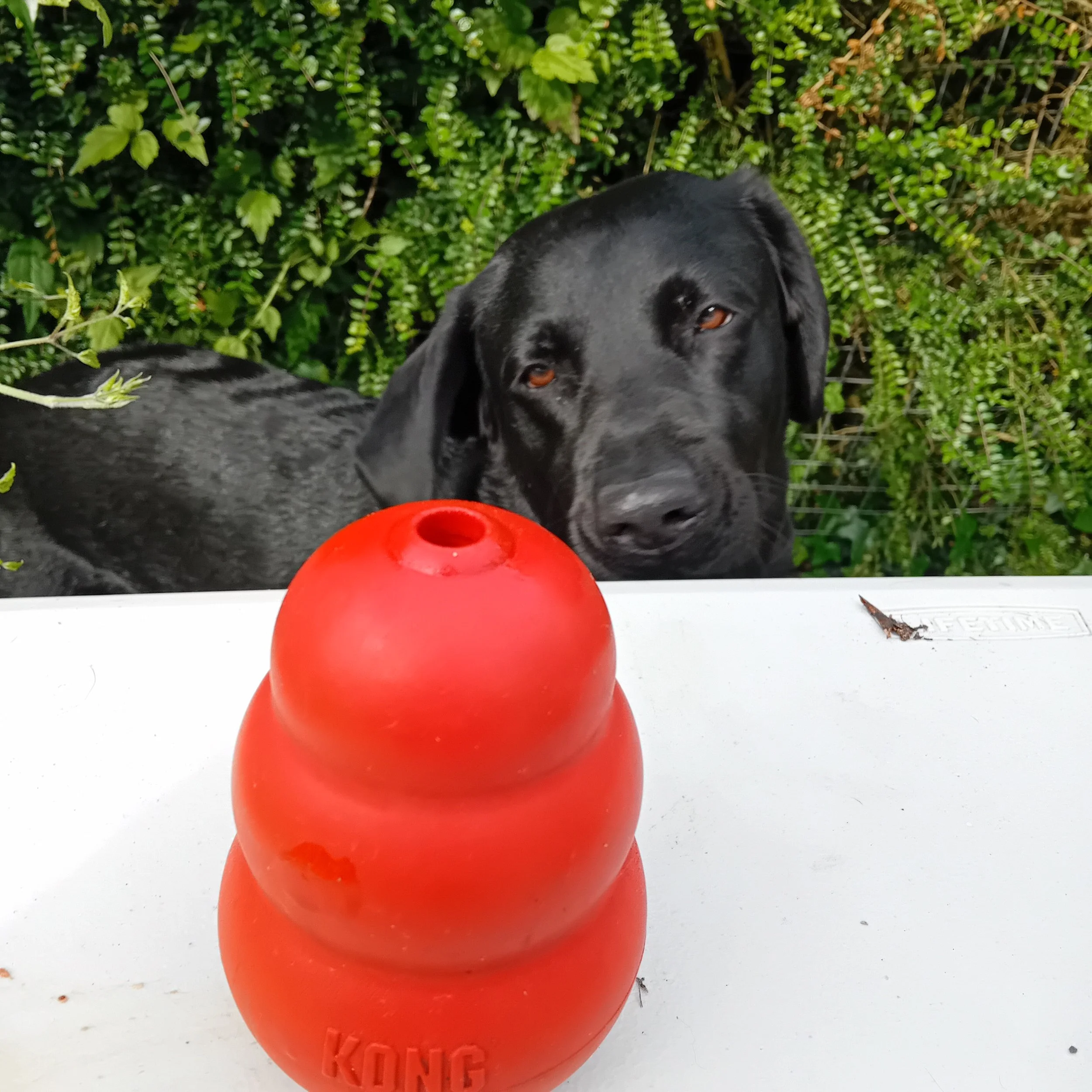
Kong Recipe
Interactive food dispensing toys such as a Kong and various puzzle games can be filled with tasty treats and tempting ingredients to provide mental stimulation and carry out natural behaviour such as chewing, licking, and a desire to seek and find.
Interactive food dispensing toys such as a Kong and various puzzle games can be filled with tasty treats and tempting ingredients to provide mental stimulation and carry out natural behaviour such as chewing, licking, and a desire to seek and find.
When choosing an interactive toy make sure it is of an appropriate size for your dog and if you have a very powerful chewer, that the product is robust enough to withstand the forces that are going to be put upon it. The design of a Kong is ideal for filling with ingredients as it is very strong, easily cleaned, freezer friendly, comes in a variety of sizes, and crucially has a hole at both ends.
To add further interest, layer the ingredients used and experiment with different textures from crunchy fish skin cubes to soft blueberries. You can also hide the food dispenser in the garden to encourage your dog to follow the scent and claim their prize. As dogs are natural scavengers this adds to the overall enrichment experience.
If your dog needs to shed a few pounds, then taking some of their daily food ration and placing it into the Kong maybe with a few fresh steamed vegetables can keep them occupied for longer and give them a bit of a workout at the same time.
Added to raw, kibble, or cooked meat you could include ingredients such as pumpkin, sweet potato, pear, banana, natural goats’ yogurt, bone broth, pumpkin seeds, papaya, quinoa, or some of their favorite healthy treats.
Consider some of the following ingredients and add them in layers for a taste sensation.
Grated courgette and carrot,
Complete raw meal (meat, bone & offal) or cooked boneless meat of choice.
Squashed blueberries, raspberries or blackberries
Pizzle or tripe stick.
How to:
Stir the courgette, and carrot, into the raw meat and then spoon into the Kong until 2/3rds full. Insert the pizzle stick then pack the remaining wet ingredients around it. It can be served fresh or frozen.
For a Fishy treat try:
Sprats (dried or fresh)
Small tin of drained pilchards in spring water
Half a teaspoon of Coconut oil
Tablespoon of Soaked chia seeds.
Blackberries or Blueberries
Cooked Green Beans
How to:
Chop up the ingredients and stir to incorporate. Squish the ingredients into your Kong and add a few whole sprats so they are poking out of the end for added interest.
This can be placed in the freezer for 1-2 hours for long-lasting enrichment.
Caroline Hearn
www.hedgerowhounds.co.uk