
Winter Bone Broth
As we approach the coldest months of the year we turn to foods which offer comfort and warmth.
We can also provide our dogs with a seasonal variation on the usual bone broth recipe by adding ingredients which are traditionally used to support joint health and immunity.
As game is currently in season, try and find bones from venison, duck, pheasant or partridge. Duck and chicken feet are a good source of glucosamine, chondroitin and gelatine and after many hours of cooking will dissolve into the broth.
Avoid bones with a large amount of fat, skin and central marrow, which will just produce a very fatty and oily broth. Either remove the fat and marrow or chose a different type of bone. If your dog is prone to pancreatitis it is very important to select lean bones, remove any visible fat before cooking and skim off any that comes to the surface during cooking.
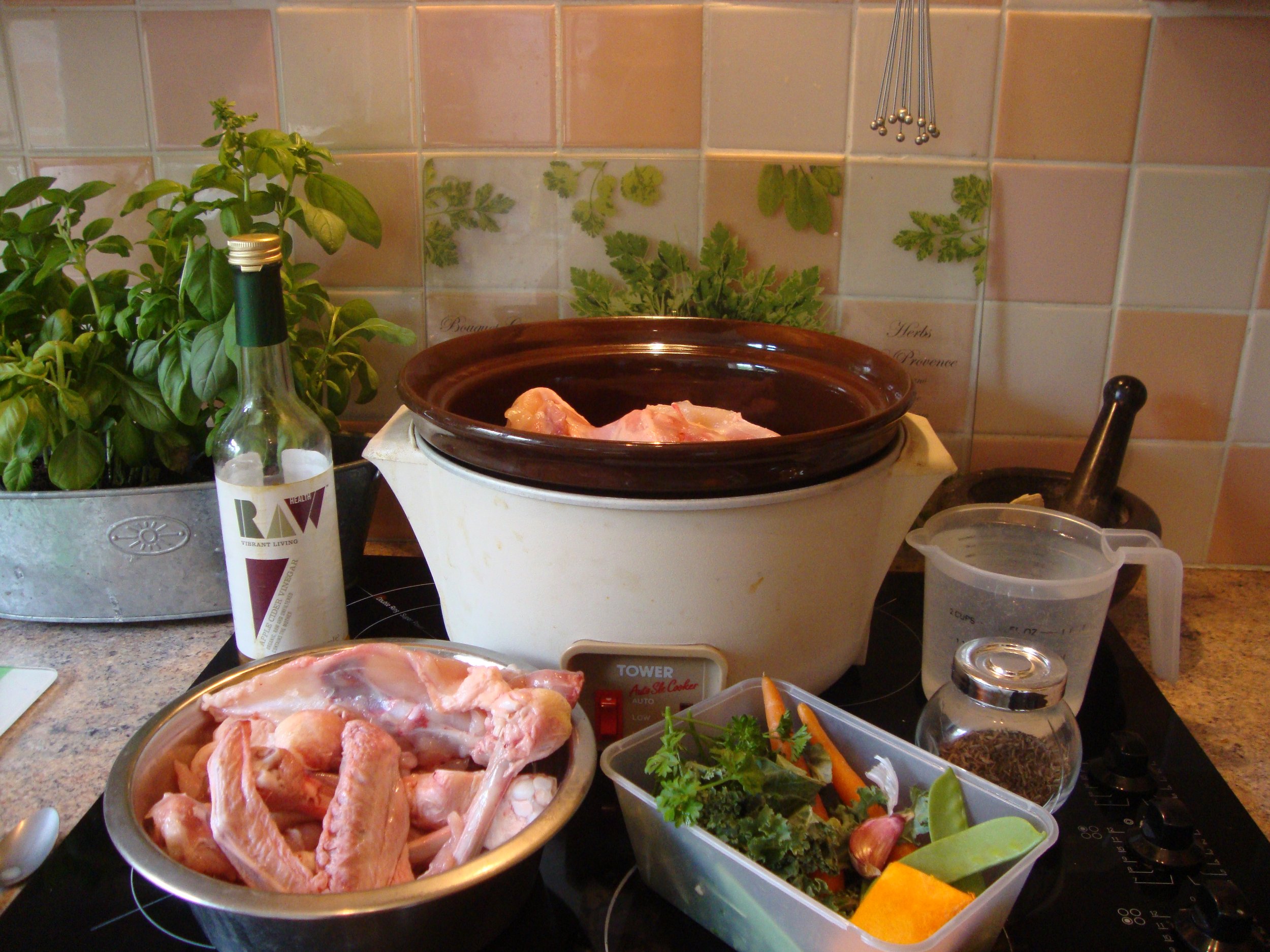
You will need approximately 4 - 5 pounds of bones of varying types and size to make a good broth. Some bones, such as ribs will completely break down into the broth, whereas harder bones will be lifted out in large pieces.
You will need:
A slow cooker or large stock pot with a lid
Bones such as duck, venison, pheasant, partridge, chicken, turkey, ox tail, beef, lamb ribs etc.
Enough water to just cover the bones when they are placed in the cooking pot.
1 stick of celery roughly chopped
Cider apple vinegar - 2 tablespoons
Ginger – 1 thumbnail size piece of fresh or half a teaspoon of powered
Turmeric 1 teaspoon (fresh or dried)
Cinnamon - quarter of a teaspoon
Shiitake mushrooms- quarter of a cup (dried or fresh)
1 level tablespoon Autumn Harvest herbal blend
2 grinds of black pepper
How to make:
Place your chosen bones into the pot and pour on the water so they are just covered. Add the cider apple vinegar and black pepper. The slow cooker is used on its lowest setting or a stock pot placed over a very low heat for anywhere between 24 – 30 hours, although some people prefer to leave the broth cooking gently for nearer to 36 hours .You may need to top up with water if the levels are getting very low.
In the remaining 2 hours of cooking add the spices, mushrooms and vegetables.
When complete, turn off the heat and carefully remove the bones with a slotted spoon plus skim off any excess fat that may be on the surface.
As the resulting broth starts to cool, transfer into ice cube trays or suitable sized pots to place in the fridge or freezer for later use. If you want your broth as a set jelly then you could stir in a level tablespoon of gelatine powder.
Store in the fridge and use within 1 week or keep in the freezer and use within 4 months.
Add the defrosted broth to meals, any recipes you make or gently warm through to provide a warm, comforting treat on a very chilly day.
**It is essential to remove the bones and dispose of them safely and under no circumstances should they be fed **

LAMENESS AND REPETITIVE STRAIN IN DOGS
While supplements can be a big help in supporting joint health and controlling inflammation they will be of limited benefit unless there are positive exercise & lifestyle changes.
Caroline Hearn MICHT. MIAAT. Dip.ICAT Dip MLD Dip. Myofascial Release.
Human, Equine & Canine Sports & Holistic Therapist
As a canine massage therapist I see many dogs with injuries and lameness caused by repetitive strain, which can easily be avoided or kept to a minimum with some lifestyle changes. The main causes seem to crop up time and time again so here are the most common factors and ways to avoid injury to your dog.
Ball and Frisbee throwing:
Constant chasing after a ball or combined with leaping in the air to catch a frisbee is probably one of the main causes of injuries, lameness and strain that I see. The action of a burst of energy followed by a sudden stop, a skid then a rapid turn will put huge strain on the dogs shoulders, forelegs, neck, pelvis and spine.
Like us, dogs will favour one side of their body so will always prefer to turn in the same direction causing over use of muscles and joints. This repetitive action is very unnatural for a dog and if left to chase and hunt in the wild they would never continuously sprint with a sudden halt afterwards.
Also ball throwing for some dogs can mean they are on a constant adrenaline high so causing emotional as well as physical stress. This sort of exercise can cause micro trauma often not shown by the dog at the time of chasing as the sheer thrill they get can often mask any discomfort. But with time the dog will compensate for the discomfort elsewhere in their body and become lame. Instead, encourage hunting for a hidden ball or a treat in some undergrowth and reward with either giving the dog the ball to carry or a single retrieve of a ball placed ahead. Keep it to an absolute minimum and find other ways to interact with your dog . Always warm your dogs muscles up with at least 5 minutes on the lead before letting them off to run at speed.
2. Jumping out of cars, off furniture and down stairs:
All these activities put a lot of strain on your dogs shoulders and forelegs. The added problem with jumping out of the boot of cars is that your dogs muscles will be cold and it is often from a great height onto a hard surface, usually followed by immediately running off to start a walk. Teaching your dog to use a ramp will save so much strain on their body. Read our blog https://www.hedgerowhounds.co.uk/news/teaching-your-dog-to-use-a-car-ramp for more advice
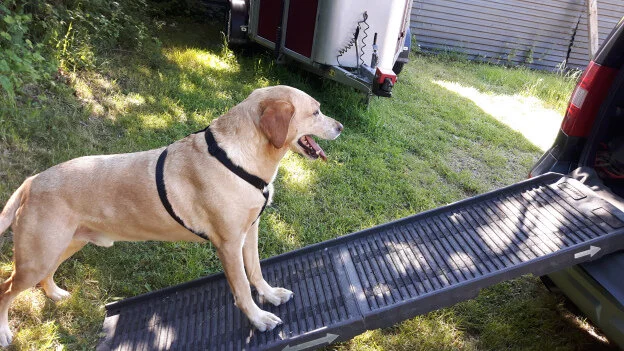
Teaching your dog to calmly go up and down a car ramp is so important. Invaluable for young dogs, elderly or frail dogs or those recovering from injury or surgery. Saves a lot of strain on your own back too if you are currently lifting them in and out of the boot!
Stair gates are really useful for preventing dogs running up and down stairs and providing a comfortable and supportive bed for them near to you to encourage them not to lay on the furniture. Small dogs can be lifted off the sofa or a ramp used for larger dogs.
3. Slippery Flooring :
Dogs falling and slipping on laminate or tiled floors can cause so many injuries and really make an older dog lose their confidence. Use non slip mats and rugs in the areas that the dog uses and also around their bedding and in particular food and water bowls. Dogs with arthritis or mobility problems are better eating and drinking from raised bowls and make sure they are on a non slip mat. They find lowering their head difficult so often splay their legs in order to reach, this can cause really nasty falls and make them nervous at feed times.

Raised bowls for water and food can be made cheaply by stacking bowls together until you reach the ideal height for your dog. Always place on a non slip surface.
4. Inappropriate Exercise:
Problems can occur when dogs exceed their fitness levels or are taken beyond their capability due to age or mobility.
Some dogs have to make do with a quick stroll round the block in the week but are taken out for hours at the weekend and become exhausted making them more susceptible to injury such as cruciate ligament strain or tears.
Puppies and young dogs should be exercised very carefully as their bones, joints and growth plates are prone to injury causing lifelong issues.
Senior dogs should not be forced to walk but allowed to go at a pace that they are comfortable with and which improves their mobility. It is so upsetting to see old dogs being made to walk beyond their comfort zone and it causes pain, crushes their spirit and is detrimental to their long term welfare.
Dogs that pull hard on the lead and lean right over to one side almost scrabbling along are heading for joint and muscular damage. Use a harness and teach your dog to walk calmly at heel or enlist the help of a reputable trainer or behaviourist . It will be money well spent and save a fortune in vets fees long term.
Adapting your dogs routine will ensure many years of injury free activity and ease of movement in their senior years. There are some good supplements available to help support joint pain and inflammation and used in conjunction with long term lifestyle changes they can be really beneficial. Although the use of supplements can be helpful, they have limited value unless they are used in conjunction with lifestyle changes and there has been an accurate diagnosis as to the source of the pain and mobility problem.
