LAMENESS AND REPETITIVE STRAIN IN DOGS
While supplements can be a big help in supporting joint health and controlling inflammation they will be of limited benefit unless there are positive exercise & lifestyle changes.
Caroline Hearn MICHT. MIAAT. Dip.ICAT Dip MLD Dip. Myofascial Release.
Human, Equine & Canine Sports & Holistic Therapist
As a canine massage therapist I see many dogs with injuries and lameness caused by repetitive strain, which can easily be avoided or kept to a minimum with some lifestyle changes. The main causes seem to crop up time and time again so here are the most common factors and ways to avoid injury to your dog.
Ball and Frisbee throwing:
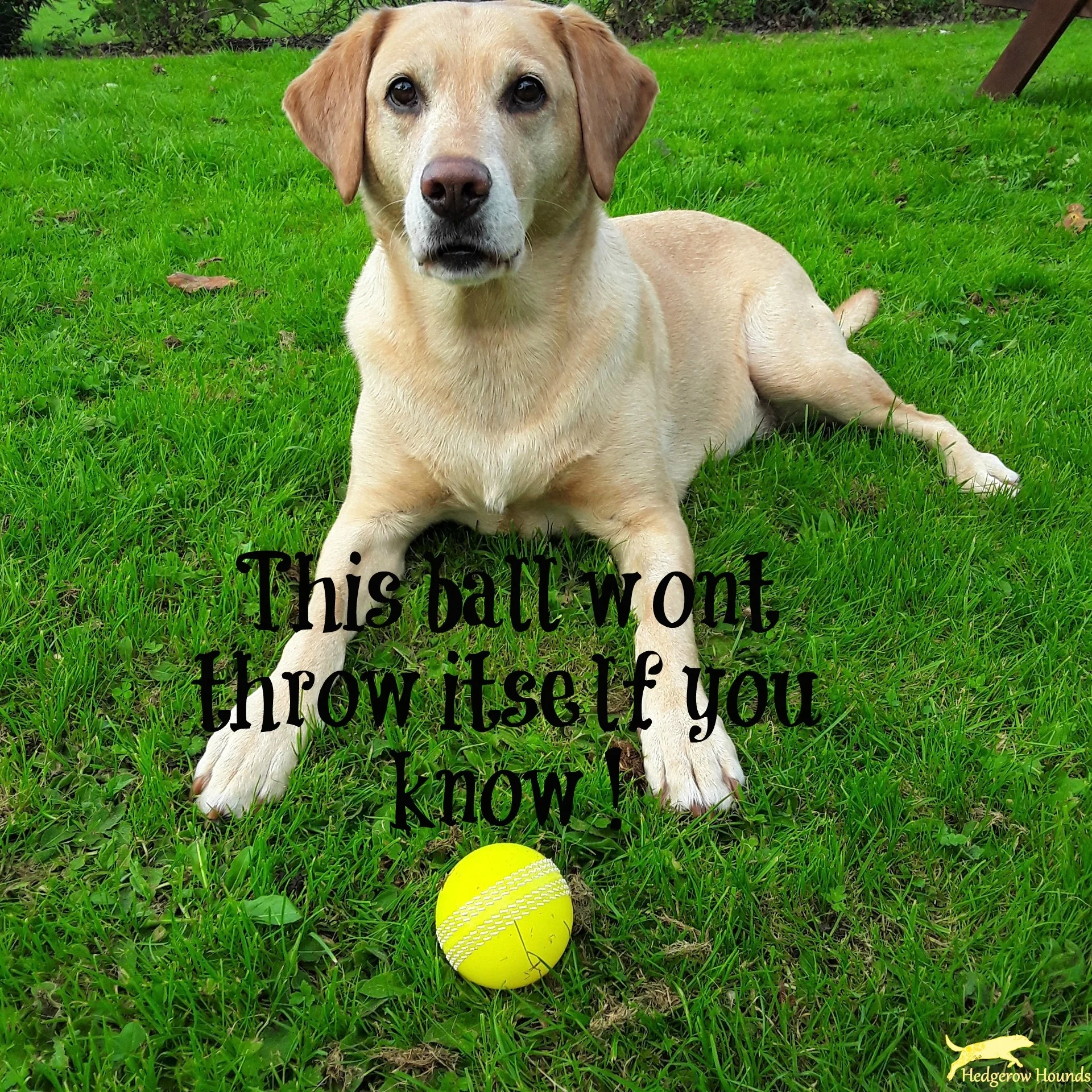
Constant chasing after a ball or combined with leaping in the air to catch a frisbee is probably one of the main causes of injuries, lameness and strain that I see. The action of a burst of energy followed by a sudden stop, a skid then a rapid turn will put huge strain on the dogs shoulders, forelegs, neck, pelvis and spine.
Like us, dogs will favour one side of their body so will always prefer to turn in the same direction causing over use of muscles and joints. This repetitive action is very unnatural for a dog and if left to chase and hunt in the wild they would never continuously sprint with a sudden halt afterwards.
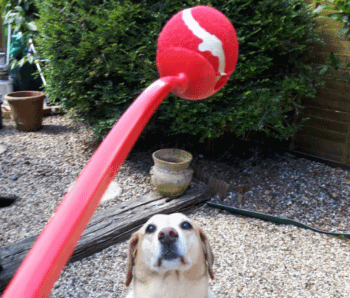
Also ball throwing for some dogs can mean they are on a constant adrenaline high so causing emotional as well as physical stress. This sort of exercise can cause micro trauma often not shown by the dog at the time of chasing as the sheer thrill they get can often mask any discomfort. But with time the dog will compensate for the discomfort elsewhere in their body and become lame. Instead, encourage hunting for a hidden ball or a treat in some undergrowth and reward with either giving the dog the ball to carry or a single retrieve of a ball placed ahead. Keep it to an absolute minimum and find other ways to interact with your dog . Always warm your dogs muscles up with at least 5 minutes on the lead before letting them off to run at speed.
2. Jumping out of cars, off furniture and down stairs:
All these activities put a lot of strain on your dogs shoulders and forelegs. The added problem with jumping out of the boot of cars is that your dogs muscles will be cold and it is often from a great height onto a hard surface, usually followed by immediately running off to start a walk. Teaching your dog to use a ramp will save so much strain on their body. Read our blog https://www.hedgerowhounds.co.uk/news/teaching-your-dog-to-use-a-car-ramp for more advice
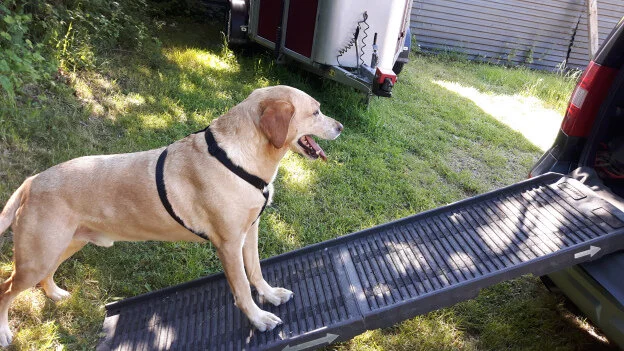
Teaching your dog to calmly go up and down a car ramp is so important. Invaluable for young dogs, elderly or frail dogs or those recovering from injury or surgery. Saves a lot of strain on your own back too if you are currently lifting them in and out of the boot!
Stair gates are really useful for preventing dogs running up and down stairs and providing a comfortable and supportive bed for them near to you to encourage them not to lay on the furniture. Small dogs can be lifted off the sofa or a ramp used for larger dogs.
3. Slippery Flooring :
Dogs falling and slipping on laminate or tiled floors can cause so many injuries and really make an older dog lose their confidence. Use non slip mats and rugs in the areas that the dog uses and also around their bedding and in particular food and water bowls. Dogs with arthritis or mobility problems are better eating and drinking from raised bowls and make sure they are on a non slip mat. They find lowering their head difficult so often splay their legs in order to reach, this can cause really nasty falls and make them nervous at feed times.

Raised bowls for water and food can be made cheaply by stacking bowls together until you reach the ideal height for your dog. Always place on a non slip surface.
4. Inappropriate Exercise:
Problems can occur when dogs exceed their fitness levels or are taken beyond their capability due to age or mobility.
Some dogs have to make do with a quick stroll round the block in the week but are taken out for hours at the weekend and become exhausted making them more susceptible to injury such as cruciate ligament strain or tears.
Puppies and young dogs should be exercised very carefully as their bones, joints and growth plates are prone to injury causing lifelong issues.
Senior dogs should not be forced to walk but allowed to go at a pace that they are comfortable with and which improves their mobility. It is so upsetting to see old dogs being made to walk beyond their comfort zone and it causes pain, crushes their spirit and is detrimental to their long term welfare.
Dogs that pull hard on the lead and lean right over to one side almost scrabbling along are heading for joint and muscular damage. Use a harness and teach your dog to walk calmly at heel or enlist the help of a reputable trainer or behaviourist . It will be money well spent and save a fortune in vets fees long term.
Adapting your dogs routine will ensure many years of injury free activity and ease of movement in their senior years. There are some good supplements available to help support joint pain and inflammation and used in conjunction with long term lifestyle changes they can be really beneficial. Although the use of supplements can be helpful, they have limited value unless they are used in conjunction with lifestyle changes and there has been an accurate diagnosis as to the source of the pain and mobility problem.

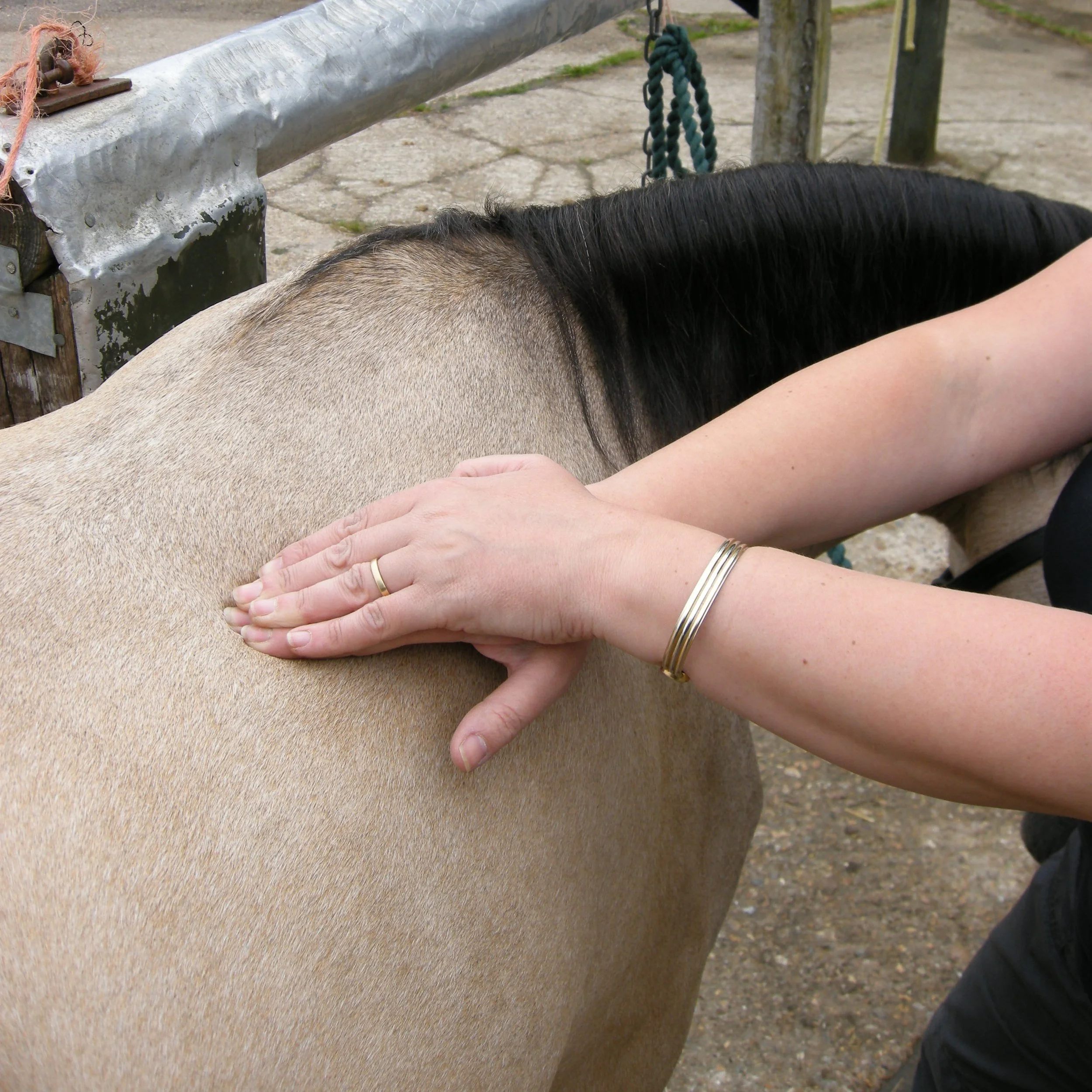
Fascia- What is it and why is it so important?
All body parts are interconnected by this continuous, vast silken web like structure, and we could travel from any chosen place in the body to another without ever leaving the fascia.

Fascinating Fascia
Within the therapeutic massage and bodywork industry fascia is becoming the hottest of topics and with so many discoveries as to its influence on the whole body, it is a therapy that can bring about huge benefits to those experiencing pain and loss of mobility.
Brief History:
The early discoveries of myofascial techniques started in the 1920s with connective tissue massage (CTM) developed by Elizabeth Dicke.
In the 1960s a technique called Rolfing was developed by Ida Rolfe. Rolfing seeks to re-establish vertical alignment in the body by manipulating the tissues to encourage the fascia to elongate and slide rather than to adhere.
The 1980s brought the term Myofascial Release (MFR), which was used by the therapist John Barnes. His method aimed to free any restrictions in the fascial system in order to relieve pain, restore function and mobility and to release emotional trauma.
In 2001 Thomas Myers released a book called Anatomy Trains, showing how the muscles are functionally linked in “myofascial meridians” throughout the body. This is still regarded by many therapists as the bible of myofascial work.
Dr. Pischinger book (2004) The Extracellular Matrix, is based on his 30-year study of fascia, where he states that fascia is the largest single organ in the body.
When I started my training as a massage therapist in 2000 there was little mention of the fascial system and it was regarded as of minor importance. Thankfully it is now a recognised treatment and fast becoming very popular in treating canine and equine patients who benefit from it in just the same way as we do.
So, what is Fascia?
The fascia is the tough, fibrous, sticky connective tissue that literally holds us together.
If we were able to magically dissolve all our muscles and bones, leaving the fascia intact, we would still have a complete three-dimensional representation of our bodily form, a little like wearing a 3D mesh body suit that would show off our bad postural habits in all their glory!
All body parts are interconnected by this continuous, vast silken web like structure, and we could travel from any chosen place in the body to another without ever leaving the fascia.
Fascia envelopes each and every structure of the body, from the tiniest nerve with its own fascial sheath, all our organs, muscles and bone and even the brain. So, you can see the potential for an injury or restriction in one part of the body to greatly impact on others.
Fascia is composed of two types of fibres called elastin and collagen. Elastin has the ability to stretch and has a “memory” ie: the tissues go back to its original state after stretching. Collagen fibres give strength but have no “memory” ie: they are unable to spring back after stretching.
A key role of fascia is to enable the gliding of adjacent tissues over each other, any restriction and loss of the gliding capability will resort in pain and loss of the range of movement. The musculoskeletal system is basically a system of pulleys and levers with the muscles and fascia pulling on the bones to produce movement.
Because fascia is a continuous fibrous sheet, restrictions and pain can be referred to other parts of the body. If you can imagine fascia as wearing a loose knit jumper and pulling one corner of it down, you will see that the snag in the jumper will distort the overall shape and travel to other areas, in this case as far as the neck area of the jumper, and this is how fascia responds and reacts. If one area is tight or injured, it will have a direct influence on the tissues around it.
The fascia is the richest sensory organ in the body with 10 times more sensory nerve receptors than muscle, the brain communicates far more with fascia than it does muscles. It also holds patterns of past emotional stresses and trauma and is considered as the second nervous system.
Many people report an emotional release and initially feeling very tearful after a session of myofascial release, so it must be something to be mindful of when treating animals also, especially those that have a history of emotional stress and trauma and be aware that they may require extra support after early treatments.
Superficial fascia lies directly under the skin, and you may have noticed this slightly opaque slippery substance when preparing raw meat such as chicken or in between separate muscles on a large joint of meat, such as a leg of lamb.
The deep fascia stabilizes, supports and maintains the dog’s posture during movement and is particularly important when travelling at speed and over uneven terrain. It is essential that working or competing dogs are kept adequately hydrated as dehydration can cause the fascia to become tight and inflexible, therefore making injury more likely. When injured, fascia can form adhesions, become inflamed and painful and with a poorer blood supply than many other tissues, this can lead to slow healing.
With the advancement of ultrasound imaging, Langevin et al (2011) showed that patients with long term low back pain have marked thickening and less sliding capabilities of the fascia in the lumbar area, so this would also apply to our dogs.
What symptoms of fascial pain might we see in our dogs?
Skin twitching, juddering or flinching, even with the lightest touch.
Subtle or marked changes in the coat direction such as the appearance of new swirls, waves and flicks.
Noticeable hot and cold areas on the body
Developing strange postures when lying down in order to get comfortable. This can be suddenly choosing to lay upside down or twisting in unnatural positions.
What appears as arthritic pain but does not respond to normal pain relief for arthritis such as anti- inflammatory medication, may instead be myofascial pain.
Triggers points, which are painful areas within a muscle that can often cause pain in seemingly unrelated parts of the body. This is known as referred pain.
Myofascial Release treatment (MFR)
Fascia displays a special characteristic called thixotrophy. This means that it has the ability to change from a solid to a more liquid gel like consistency, therefore becoming more pliable with movement and temperature. This is something a trained therapist can use to their advantage when carrying out a treatment through massage techniques, application of heat and therapeutic exercises.
Myofascial work can be deeper than the traditional therapeutic massage techniques so it is important to find a therapist that is qualified in this particular area and can adapt the treatment accordingly. This is essential if your dog has a painful medical condition, as overzealous manipulation of tissues can aggravate an existing problem.
Caroline Hearn MICHT. Dip ICAT. MIAAT.
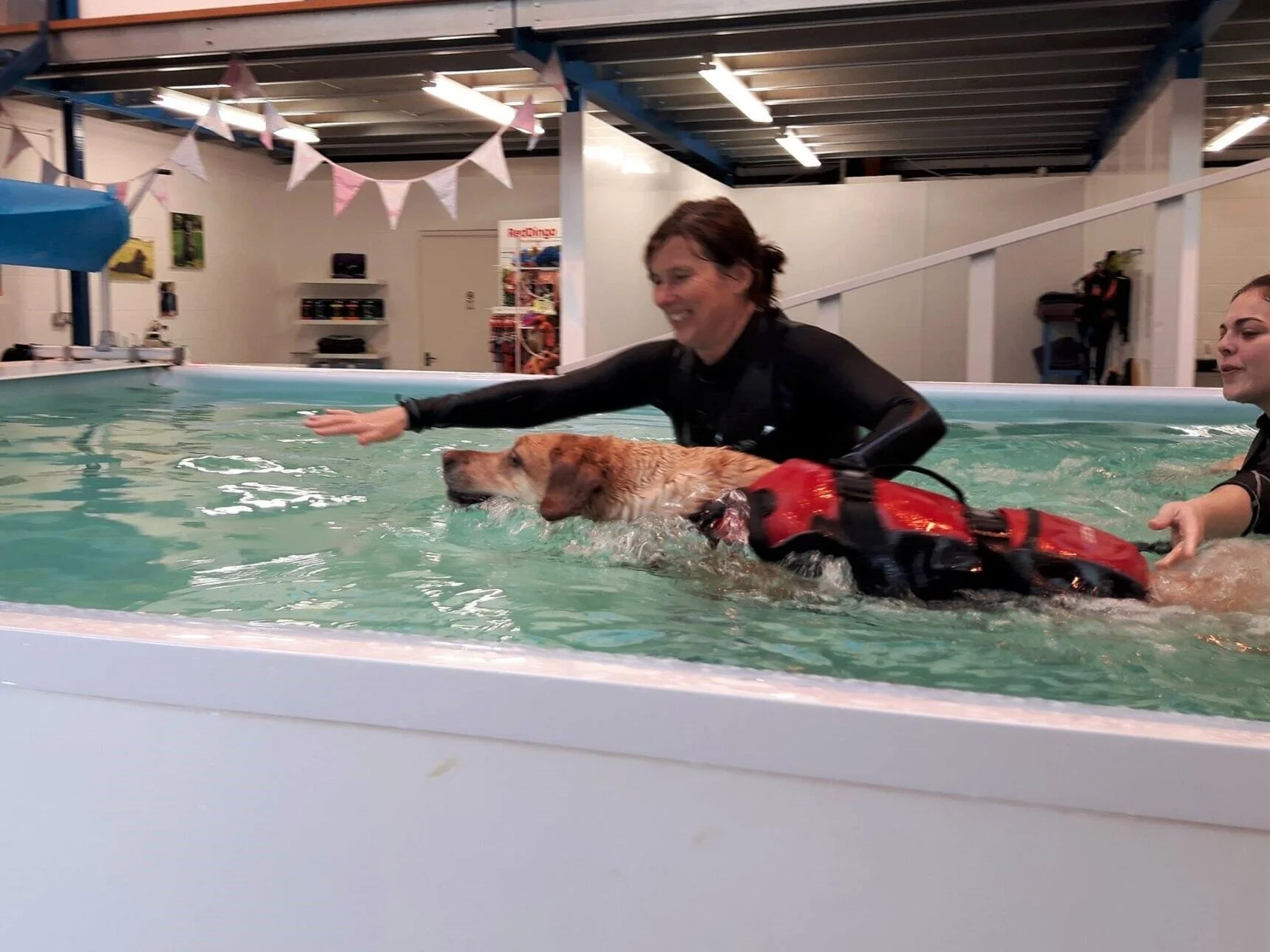
Canine Hydrotherapy, Underwater Treadmill verses Swimming
Hydrotherapy for Dogs
What is Hydrotherapy?
Hydrotherapy is a water-based therapy that provides prescriptive exercise which is functional without being painful. It can be used as a means of supporting dogs in a non weight bearing or partially weight bearing environment to allow movements that would not be possible on land, perhaps because of weakness or injury. To facilitate rehabilitation and conditioning, hydrotherapy uses key water properties, including:
Buoyancy: reduces the weight and concussion going through the limbs and makes movement easier
Hydrostatic Pressure: increases circulation and reduces inflammation, swelling and pain
Resistance: assists in restoring muscle strength, endurance, and cardiovascular fitness
Turbulence: the movement of the water which can create a more challenging environment – ideal for fitness patients.
Specific gravity: The ratio of body weight compared to the ratio of water; this helps with buoyancy.
Temperature: The warmth of the water helps in reducing swelling, inflammation, and pain, increasing blood flow, reducing muscle tension and spasms, increasing tissue extensibility, and promoting relaxation.
Underwater Treadmill Versus Swimming
Hydrotherapy typically involves either swimming in a pool or exercising on an underwater treadmill (UWTM). Both of which can be effective for increasing strength, joint range of motion, muscular endurance, cardiovascular endurance, and flexibility as well as reducing pain and effusion, and promoting psychological well-being. The decision about whether an UWTM or pool is most suitable for your dog is an important one that should be made on a case-by-case basis by a qualified Veterinary Physiotherapist or Hydrotherapist. Here are a few reasons why we may recommend one over the other:

Advantages: Underwater Treadmill
· Allows for earlier rehabilitation following injury or surgery
· Ideal for gait training and speeding up gait retraining – particularly useful for neurological patients to help with gait patterning with the support of the water. Interestingly, many neurological patients walk in water before they do on land.
· Improved balance whilst walking
· More suitable for certain clinical conditions and injuries that require more controlled movement versus swimming.
· Ideal for dogs that are nervous about swimming – dogs often feel more relaxed when they can touch the floor so are less likely to panic
· More natural gait pattern
· Joint extension is more complete compared to swimming. This can be helpful in conditions such as hip dysplasia or hip arthritis whereby limb extension is often difficult for the dog.
· Encourages equal weight bearing
· Functional carry over to land is often quicker
· The water height can be adjusted to decrease/increase weight bearing and achieve movements and muscle activation that we are targeting
· Based on Wolf’s Law, weight bearing on the UWTM may encourage increased bone strength over swimming alone.
· Allows observation from all sides
· We can be more hands on to aid the dog’s gait and movement patterns
· Speed, incline, and duration can be adjusted to suit the dog
· More targeted muscle development
Disadvantages: Underwater Treadmill
· Can strengthen gait abnormalities if not properly corrected by the Hydrotherapist
· Not as suitable for amputees
· Some dogs may be unsure about the movement of the belt or being confined in a smallish space
· The retraction of the belt may cause too much strain on certain tissues if the Hydrotherapist does not provide appropriate support

Advantages: Swimming
· Enables the dog to be completely non weight bearing - this removes all the forces and concussion through the joints which is useful when weight bearing is painful.
· Great for core strengthening
· Greater cardiovascular strengthening, weight loss and increasing overall fitness
· Potentially more suitable for amputees and dogs unable to bear any weight of their own
Disadvantages: Swimming
· Not suitable for fearful or nervous swimmers
· Unsuitable for many injuries in the early stages of rehabilitation. For example, in dogs who have recently had surgery for a cranial cruciate ligament injury, swimming could place too much twisting, torque and pressure through the joint and potentially lead to further damage.
· Not as effective for improving joint extension
· Can cause dogs to hollow through the neck and back causing too much strain on these areas

Most dogs will benefit greatly from hydrotherapy; however, remember it is not a stand-alone treatment and should always be combined with physiotherapy and lifestyle/environmental changes. Lastly, always get advice from your Veterinary Surgeon before taking your animal for treatment.
Danielle Everett, PgD, BSc
Veterinary Physiotherapist & Canine Hydrotherapist
Member of NAVP, NARCH & AHPR Tel: 01932 574300 Mobile: 07824552033
Email: physiohydro@wearecoa.com Web: www.companyofanimals.com
Company of Animals Pet Centre
Ruxbury Farm, St Ann’s Hill Road, Chertsey, Surrey, KT16 9NL
