
Canine Enrichment Herb Garden
Everything is covered to help you easily build your enrichment garden. Important topics include the choice of herbs, adding interactive items such as snuffle mats, choosing planters and pots, soil health, the importance of a chemical-free lawn, and ways to embrace nature with your dog throughout the seasons.
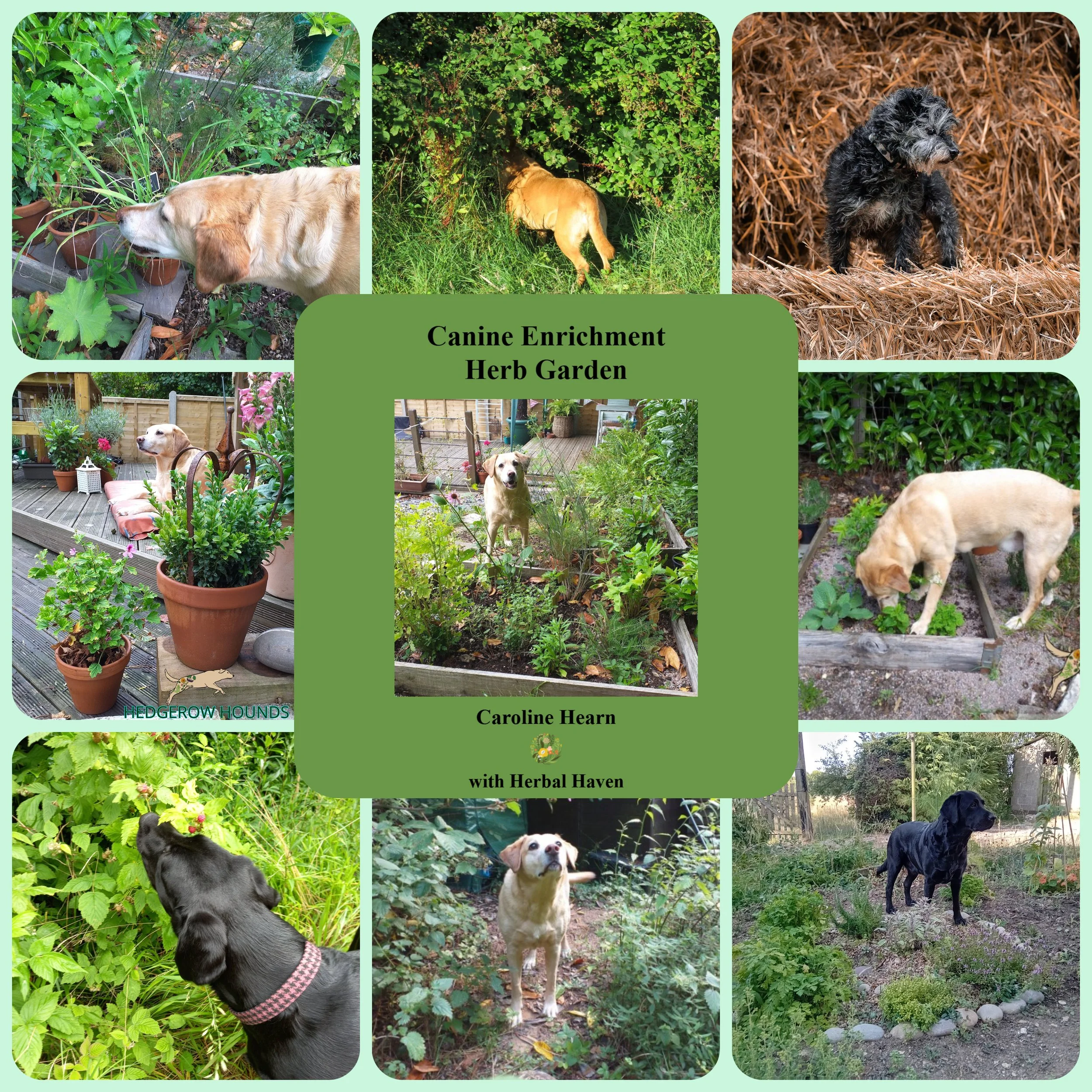
A book celebrating the love of dogs, the beauty of herbs, and the wonders of nature.
My first book is about a topic I am deeply passionate about and that has been an interest of mine for many years. It is written from a holistic approach to creating an enrichment space, using knowledge gained over the past 35 years and given to me by my greatest teachers: the dogs themselves.
So, what exactly is an enrichment garden, and why should we create one?
An enrichment garden offers dogs the freedom to move and explore at their own pace, without human interference or direction. This can be a dedicated space or incorporated into our existing garden. It encourages natural behaviours and curiosity, rather than learned responses, allowing dogs to be themselves without pressure to respond to our expectations of what they should be doing. The space will include herbs, textures underfoot, and aromas for the dog to interact with, as well as to move their body in a therapeutic way to calm the nervous system and improve mobility.
There is a section on providing enrichment for dogs with specific needs, such as the elderly, blind, or disabled dogs, as well as puppies.
Importantly, there is a chapter on ways we can benefit from this beautiful space, too.
The area we are going to create for our dogs can provide the following:
An outlet for instinctual behaviours such as sniffing, foraging, grazing, problem solving, digging, and exploring; all fantastic for reducing stress, frustration, and lowering anxiety.
Mental stimulation with scent from the environment and additional items such as snuffle mats and interactive toys.
A sensory experience with scent, sound, and texture underfoot. The garden will constantly change because of plant growth, weather conditions, seasonal changes, and what wildlife has visited the garden. Every day will offer something a little different.
Encouragement of natural movement without our influence or expectations.
Building confidence in themselves as the effects of sniffing and exploring lower the stress hormones and make the world seem a less scary place.
By going through a natural range of movements over varying textures and terrains, we are encouraging the dog to work all their body systems.
Enhanced well-being and quality of life.
A space that is appealing to look at, and that we enjoy spending time in with our dog.

We explore the many herbs that are suitable and safe for the herb garden, whether you choose to plant them in pots or directly into the ground.
With so many dog-friendly herbs to choose from, there is an extensive list in the book, as well as plants to avoid. Many are hardy and evergreen, so will provide interest all year round. If you have a small space and want to create an enrichment area in pots, then that is covered too.
Providing texture and varying terrain is also important, and how the dog’s body adapts and processes the information that is being fed back to them as they travel over hard and soft ground, slopes, and step over small obstacles.

Adding in texture, such as shingle, wood chippings, moss, mat-forming herbs, textured pathways, and sand, all add to the sensory experience.
Everything is covered to help you easily build your own enrichment garden. Important topics such as the choice of herbs, adding interactive items like snuffle mats, choosing planters and pots, soil health, the importance of a chemical-free lawn, and ways to embrace nature with your dog throughout the seasons.

Learn how simple adaptations in your garden can provide a sensory experience as well as therapeutic movement.
The book is available on Amazon as an e-Book or paperback on the link below: Here is the link https://www.amazon.co.uk/dp/B0FHKYK5T9
Or there are often paperbacks on the shop to buy. https://www.hedgerowhounds.co.uk/products/canine-enrichment-herb-garden-book
If you are looking for more help in creating your own enrichment garden for your dog or perhaps your dog has specific needs then I do offer a consultation to support and advise you. Here is the link: https://www.hedgerowhounds.co.uk/products/p/canine-enrichment-garden
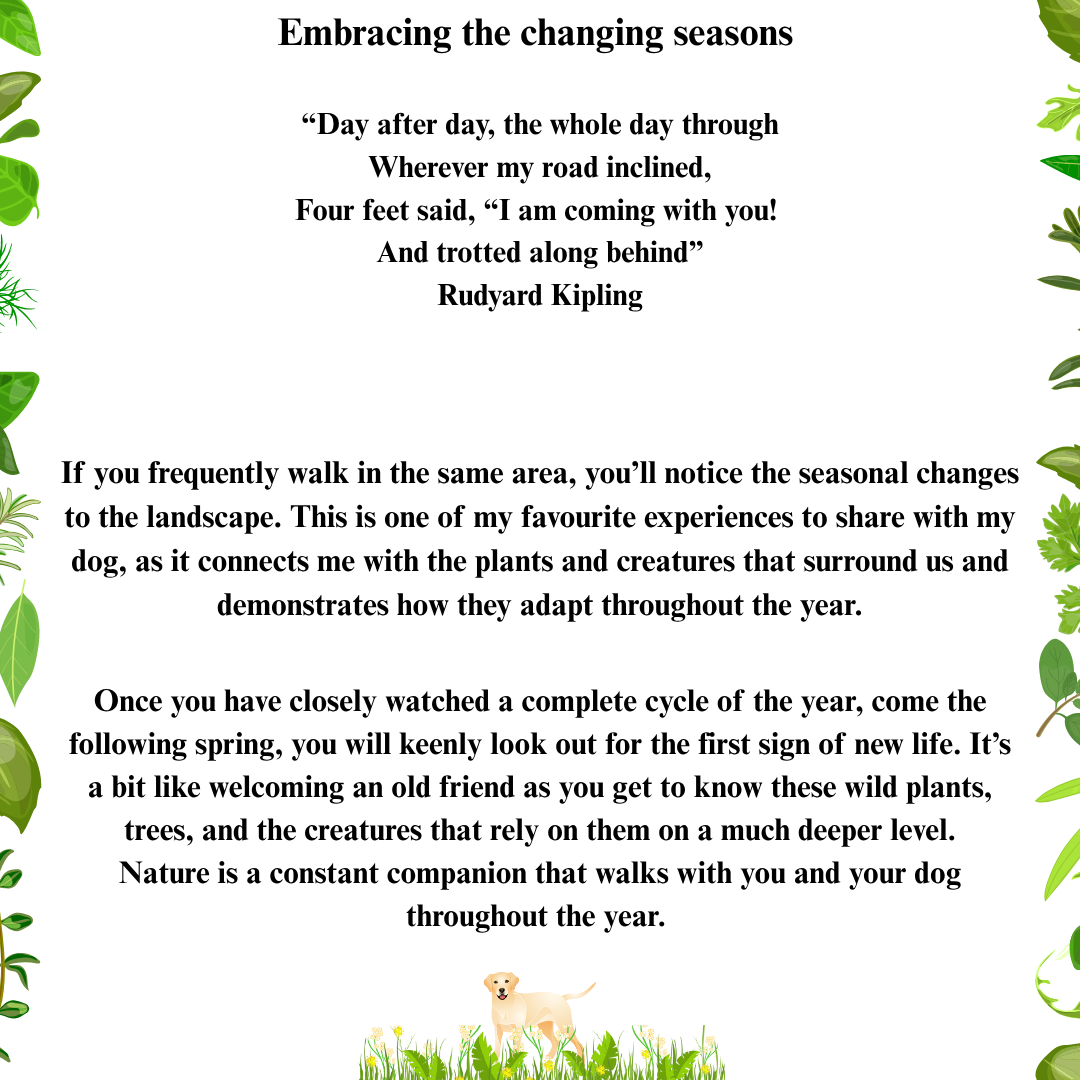
The book also talks about enjoying the changing seasons and appreciating the way nature adapts throughout the year.
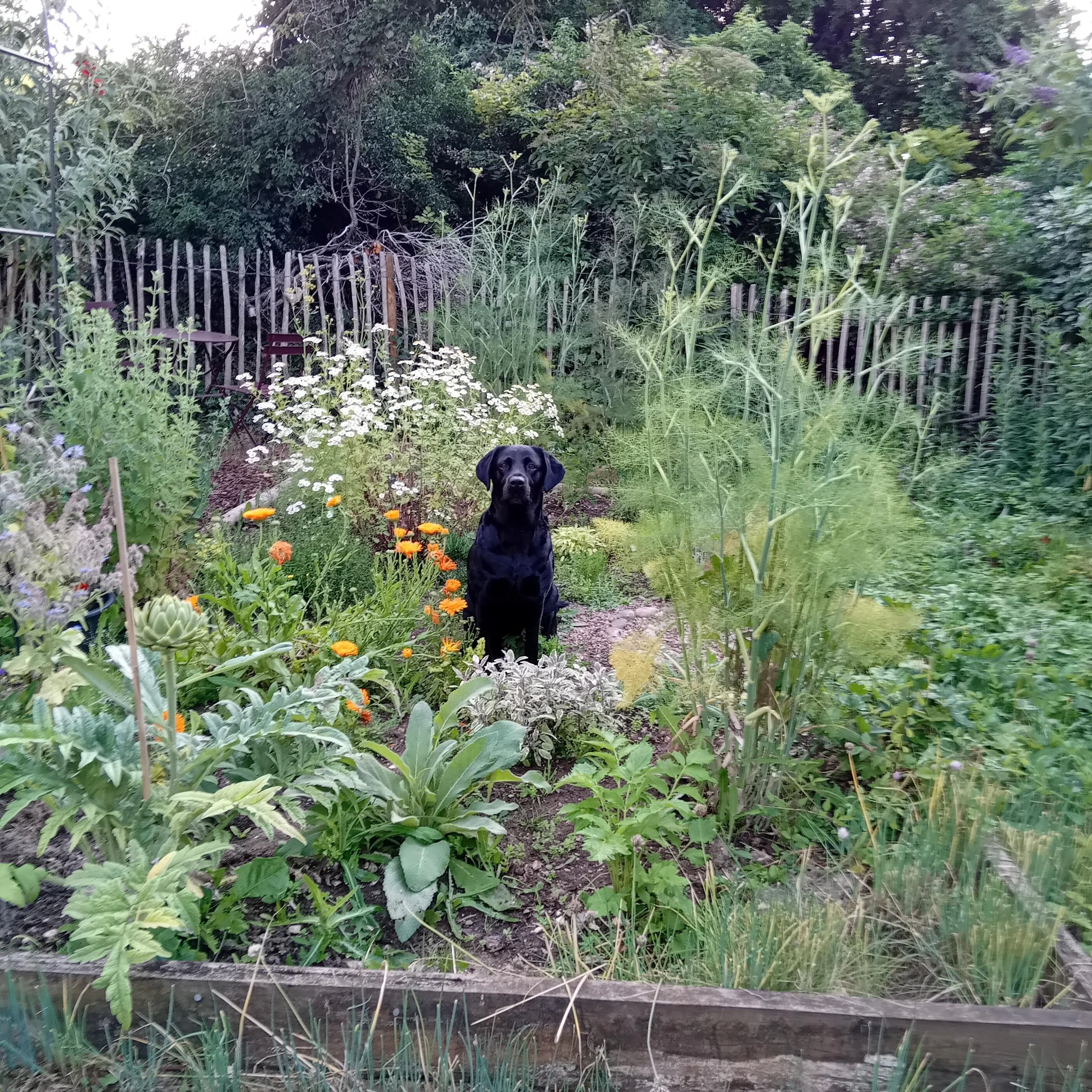
Which herbs are suitable for a dog friendly garden?
Would you love to create a dog friendly enriching outdoor space for your dog? This blog will explore which dog friendly herbs you can grow either in a herb garden or in pots.
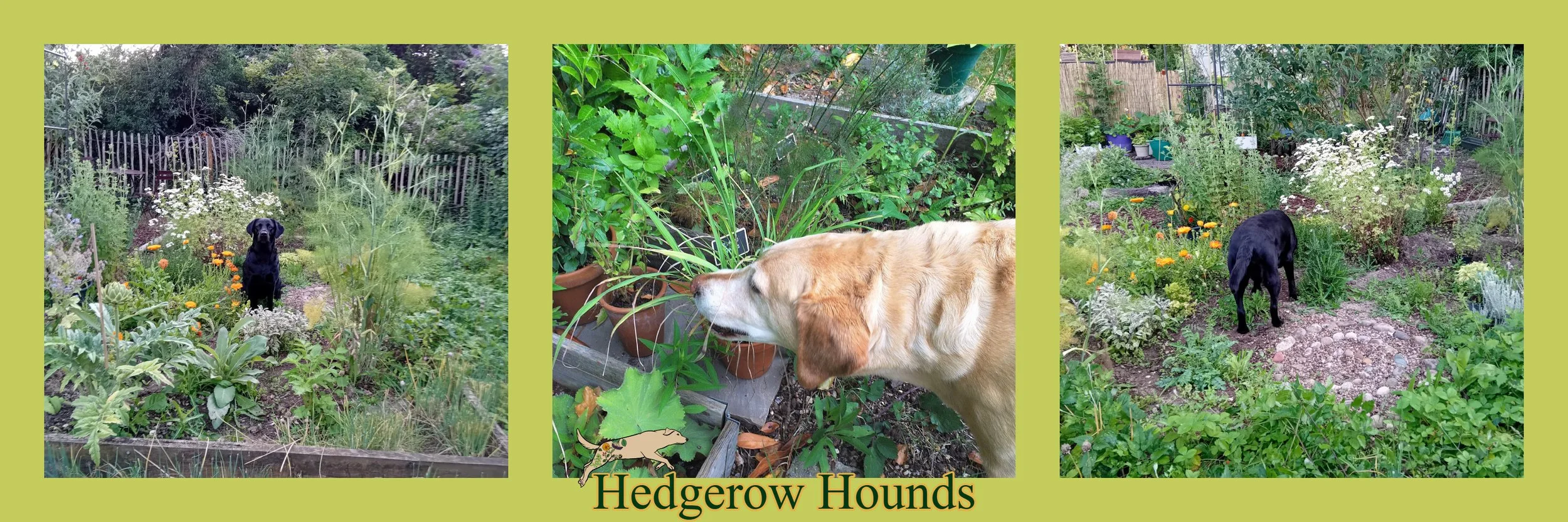
Making the most of your outdoor space and creating a sensory area to enrich the life of your dog.
If you want to learn more about planting a herb garden which will be safe for your dog to explore, sniff, wander through, walk over or even possibly nibble on then here are a few great herbs to get you started. These can be grown in the ground, troughs or pots.
These are some of my favourites:
Barley grass (Hordeum vulgare )
Barley grass is easy to grow in pots, and your dog may well eat the fresh shoots as they appear. It can be quickly grown from seed, and you will find it at most garden centres. It is often called “cat grass”. I usually rotate the grass I grow with wheatgrass, oat grass and lemongrass.
Calendula (Calendula officinalis)
Calendula, also known as pot marigold, is a hardy annual, with the most glorious orange daisy-like flowers that last well into the autumn months. Not to be confused with the summer bedding plant Tagetes, it makes a very effective balm or cream to ease and soothe many skin complaints. Regularly deadhead after flowering to prolong the flowering season.
Catmint (Nepeta cataria)
Nepeta is a hardy perennial with highly aromatic foliage and pretty mauve flowers. It is a huge hit with cats who will often nibble on the leaves and roll on the plant. Catmint is a good choice to plant as edging and looks beautiful spilling out onto a pathway.
Chamomile
Chamomile is a delicate and aromatic herb traditionally used for calming the digestion and nervous system. It can easily be grown in pots or planted into the soil. It will release a beautiful calming scent when your dog sniffs or walks through its leaves and flowers.
Fennel (Foeniculum vulgare)
Fennel is a fabulous herb. The vibrant green and bronze varieties are great if you want to create some height in your herb garden and perhaps disguise an unsightly fence. Fennel grows between 3-5 feet in height and forms long feathery plumes followed by umbels of yellow flowers in the summer and autumn. Every part of this herb smells and tastes of aniseed. It is a nice one for your dog to brush by or walk between if you plant two side by side.
I will often pick some and finely chop it before adding a sprinkle into my dog’s food. You can harvest and dry the seeds at the end of summer for winter use.
Lavender (Lavandula angustifolia)
There are so many varieties of lavender to choose from; the smaller English lavender has a very good aroma, while the flamboyant French lavender with the cute “rabbit ears” petals popping out of the top is very lovely too. There isn’t much difference in terms of scent between them all, so pick whichever variety makes you happy.
Lavender has so much to offer in the enrichment garden as it is evergreen, very fragrant, has a calming aroma, and is beautiful while being a huge hit with pollinators.
Lemon Balm (Melissa officinalis)
Lemon balm has a citrus taste and smell and is traditionally used for calming the mind and gut. Like its cousin, mint, it is very invasive, so ideally needs to be contained in a pot, or it will spread everywhere.
Lemon grass (Cymbopogan citratus)
You can grow lemon grass in pots for the summer, but it is unlikely to survive winter, so you will need to bring it inside. I have known a couple of my dogs to eat the young shoots of lemon grass, which are more tender and have a stronger citrus taste than the older leaves, which can become tough and fibrous as the plant ages.
I usually have wheat grass, oat grass and lemon grass together in pots, should the dogs want to help themselves to the moist shoots.
Mint (Mentha piperita)
There are so many species of mint to choose from, so go with the one you like, but don’t be tempted to plant it directly in the soil, as it will soon invade your entire herb bed. Instead, plant it in a large pot or trough and pick regularly to stop it from becoming tall and leggy.
Marjoram (Origanum marjorana)
Marjoram is such a great but underrated herb. It has a fantastic, strong aroma with pretty leaves, and the variegated variety is particularly nice. It has a dense growing habit and grows fairly low to the ground, a maximum of 50cm tall, which makes it robust enough to withstand paws walking over the top of it.
Parsley (Petroselinium crispum)
Parsley is a must-have in the garden as it’s so versatile. There are flat leaf and curly leaf to choose from, and the flavour is very similar, so stick to the one you prefer. I will often go into the garden and pick parsley, finely chop it and add it to the dog’s meals.
Rosemary (Rosmarius offininalis)
What a joy Rosemary is, with an aroma that cannot fail to lift the spirits. Can you walk past a rosemary bush without running your hands through the leaves and inhaling the scent? I certainly can’t!
It is evergreen, hardy, and has beautiful flowers that pollinators adore. In recent studies, rosemary has also been shown to improve memory. It will grow happily in a large pot or planted in well-drained soil, and there is also a trailing rosemary if you want to use it more as a ground cover plant.
Sage (Salvia officinalis)
Sage is another must-have for the garden. The leaves are soft but also somewhat leathery to the touch, which makes them tough enough to withstand a dog walking over them and survive to tell the tale. There are varieties with blue-green, dark purple, and variegated leaves, adding a bit of colour throughout the autumn and winter months as well. It has a wonderful pungent smell and strong flavour.
Thyme (Thymus vulgaris)
Thyme is a hardy perennial that loves the sun and is tough as old boots. It is another one which only grows to around 60cm in height and provides good ground cover. There are many varieties on sale, and the lemon and orange thymes have a fantastic smell and taste, with the golden thyme adding a splash of colour. Thyme is also another herb that is robust enough to survive dogs walking through it.
Want to learn more?
To learn more about which herbs to plant in your dog friendly garden and enrichment space then my book Canine Enrichment Garden will guide you on how to make a fantastic space for your dog to enrich all their senses.
Or there are paperbacks on the shop to buy. https://www.hedgerowhounds.co.uk/products/canine-enrichment-herb-garden-book
If you prefer an eBook then pop over to Amazon The book is available on Amazon as an e-Book or paperback on the link below: Here is the link https://www.amazon.co.uk/dp/B0FHKYK5T9
Another blog all about the book is here to explore further: https://www.hedgerowhounds.co.uk/blog/canine-enrichment-herb-garden
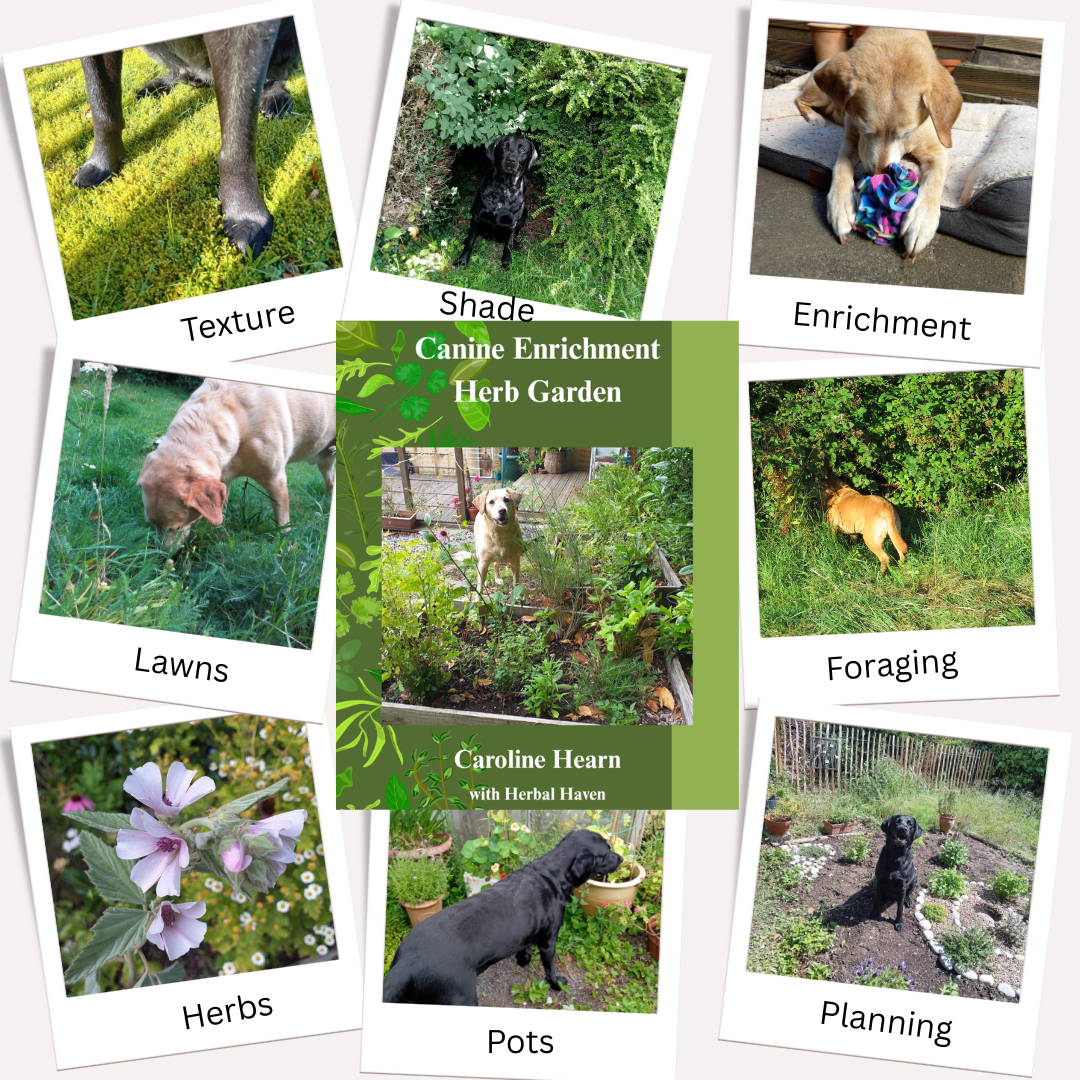
Some of the topics covered within the book.
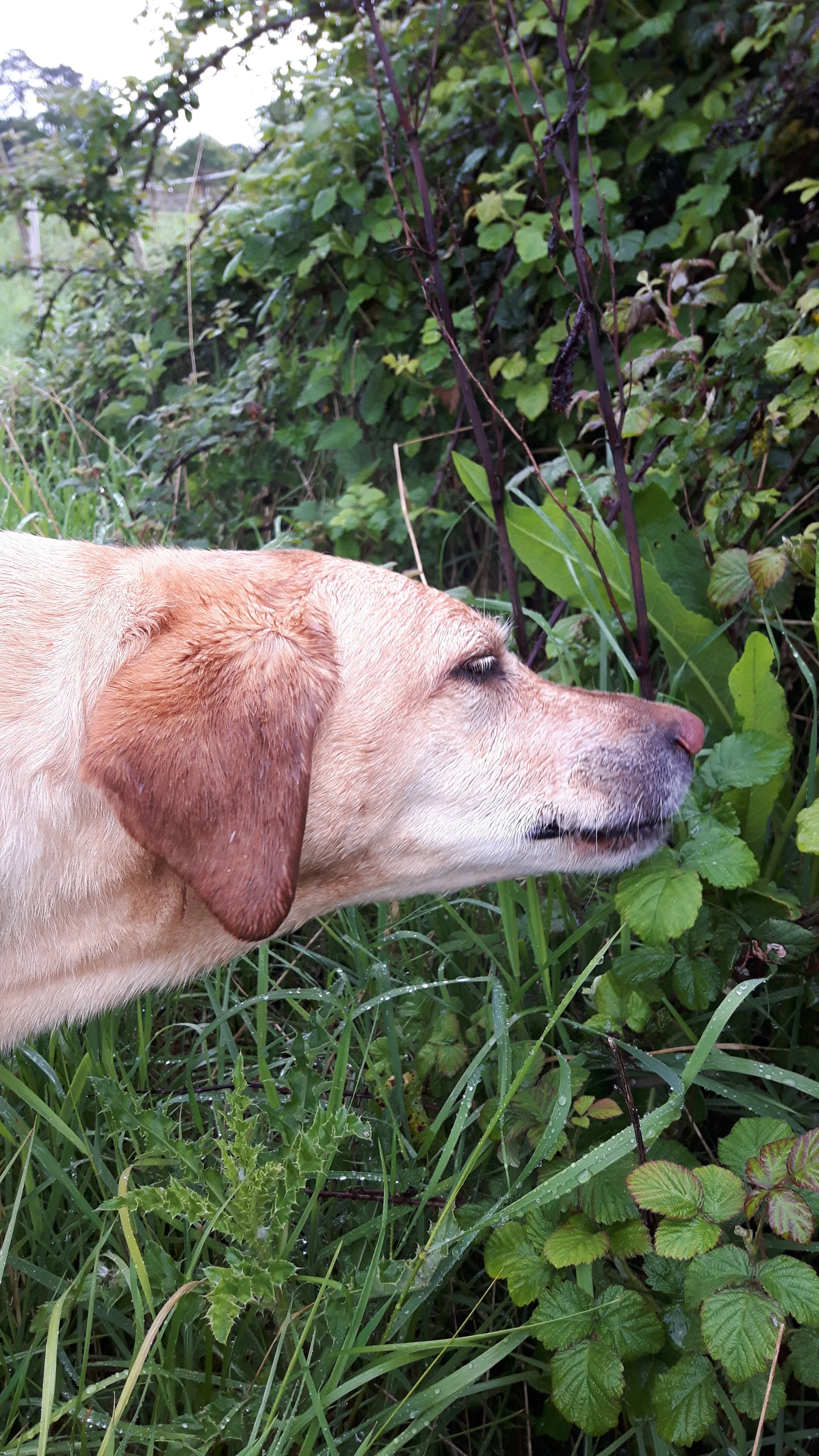
Why does my dog eat grass?
Why do they do it, and what might our dogs be getting out of eating their daily helping of “Dr Green” - and most importantly, should it be something we discourage?
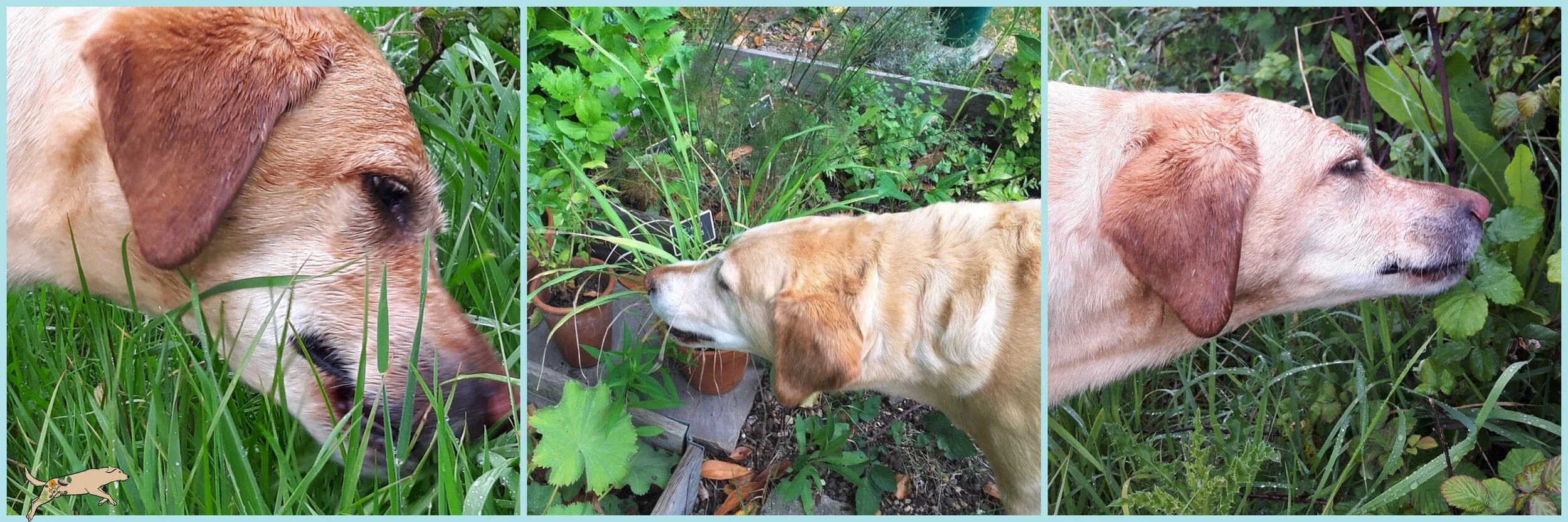
Dogs eating grass is something I am asked about on a regular basis and it can cause concern for owners as they presume that their dog must be ill or lacking in nutrients of some kind. So what might our dogs be getting out of eating their daily helping of “Dr Green” and should it be something we discourage?
The most popular grass our dogs seek out is Elymus Repens commonly known as Couch grass or funnily enough Dog Grass!
The new shoots in the spring are tender, moist and sweet with natural occurring sugars but as the grass matures it can become rough with tiny barbs which you can feel if you run your fingers down the middle and outer edges. This may be relevant when the dog chooses a certain patch of grass for a specific purpose. Other herbs selected in the early months are cleavers and dandelion leaves, these are an effective spring tonic for the liver, urinary and lymphatic system, which can become sluggish over the winter months.
Some dogs, particularly those on a dry food diet may be seeking out additional water from the leaves and roots or even the dew that lays on the top of the shoots. I have observed that dogs will rush to nip out the tops of grass first thing in the morning but show very little interest in the same patch in the afternoon.
Fibre:
Vegetables and fresh grass are abundant in a variety of dietary fibres which are needed to keep the gut and the beneficial gut microbes within it functioning effectively. There is now evidence to show how the balance of our gut microbiome impacts on our mental and physical health, this also applies to our dogs. Encouraging a healthy population of good microbes means there is far less space for the bad microbes to take up residence.
I expect most of us have seen our dogs take immense delight in consuming the droppings of animals such as cows and horses which is basically just pre-digested grass which once passed through a herbivore contains digestive enzyme and probiotic qualities.
If you feel your dog is eating too much grass or may need more fibre in their diet then try adding a few steamed vegetables or blitzing raw veg in a blender and adding it to their meals. This can include broccoli, spinach, courgette, kale, parsley, dandelion greens or even some spirulina to see if they reduce their intake. This can often stop the desire to consume large quantities of grass within a few days. A really useful supplement with is rich in chlorophyll and green vegetables is the Greens, Seeds & Superfoods blend which can be found on this link: https://www.hedgerowhounds.co.uk/products/greens-seeds
Nutrients:
Grasses do not offer a large amount of nutrients to our dogs, but they do provide a certain amount of vitamin A, B, iron, fibre and silica as well as astringent properties and chlorophyll which dogs really seem to crave at certain times of the year.
There is a theory that our dogs still have some of the traits of their distant ancestors. Wolves and wild canines would hunt and kill herbivores or possibly scavenge from the carcass and consume some of the contents of the preys stomach which contain partly digested grasses, herbs and other roughage. This provides welcome moisture, fibre and enzymes to help in the process of digesting a heavy, meat rich meal.
When to investigate further:
The majority of dogs will eat grass most days and seem to thoroughly enjoy the experience. They will do this despite having a good balanced diet which includes fibre from vegetables and never have any adverse effects such as vomiting afterwards.
However, there are circumstances where further investigation is necessary. There is no doubt that some dogs will actively seek out certain grasses to induce vomiting. You may notice your dog drooling, licking their lips, swallowing hard and rushing outside to eat grass. This tends to be a rapid, frantic, grabbing at grass rather than the slow, selective grazing usually seen. After vomiting has occurred this may give temporary relief of nausea, reflux or easing of stomach irritation. Most of us would have seen our own dogs or those of others do this and they seem to be totally unaffected afterwards and back to their normal self within minutes.
If your dog is regularly eating large volumes of grass particularly after their meals and then vomiting, there could be an underlying health issue that needs investigating by your vet. Dogs may induce vomiting in order to eat the regurgitated food immediately afterwards as they have an inability to absorb nutrients and need to re-ingest the stomach contents to make it more digestible, this will also require a visit to your vet for further tests.
Eating a large amount of course grass which cannot be digested will cause stomach irritation and add volume and bulk to the stools as well as being passed out the other end almost intact. Dogs can exhibit this behavior if they are carrying a worm burden as it encourages elimination of parasites. To rule out this possibility it is important to carry out a fecal worm count to establish if this is the actual cause.
Where to take additional care:
Often the only access dogs have to grass is from the lawn, footpaths that run alongside arable fields or from eating young shoots of barley or wheat growing in fields. All these areas are very likely to have been treated with chemicals of one form or another. We should avoid using artificial fertilisers or chemical treatments on our lawns as dogs will ingest them and also absorb the chemicals through the skin on their pads. Special care is needed to avoid arable fields at certain times of the year or at the very least keep dogs on a lead if you have no choice but to walk alongside them.
If you want to provide a clean source of fresh grass or greenery then it is easy to grow couch, barley or wheat grass in individual pots for your dog to help themselves as and when they desire. You could also make a small area in the garden where your dog can be free to sniff, explore and have access to grasses and herbs which are pollutant and chemical free.
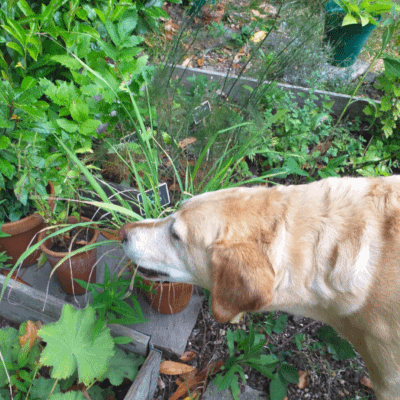
Grass can be grown in pots for the dogs to pick at if they wish. This pot has Lemon Grass in but Wheat and Barley grass are also easy to grow and well received.
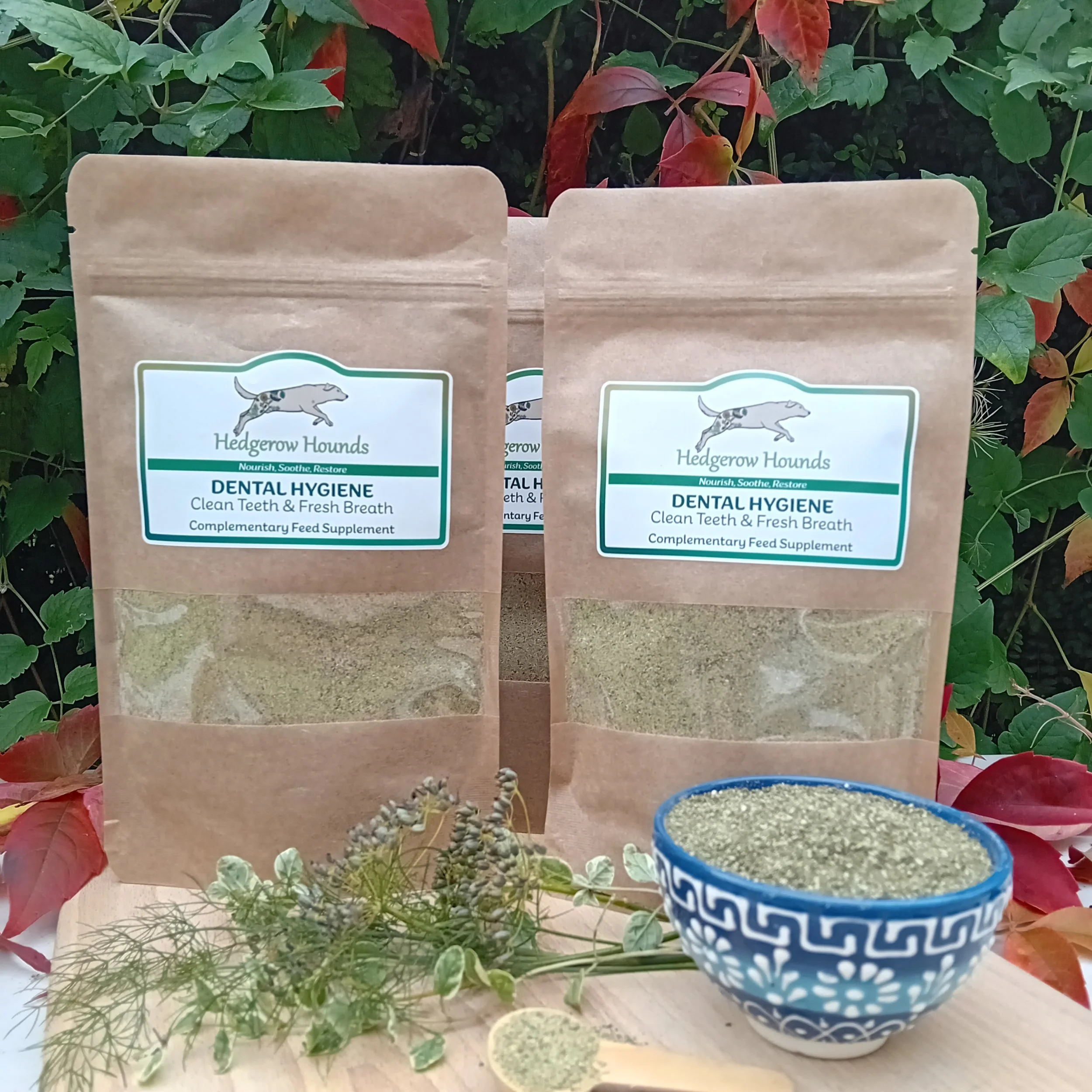
Dental Hygiene Formula
The dental hygiene formula for dogs has been created to clean tartar and plaque from the teeth and to improve the overall health and hygiene of the mouth and gums. Although this blend’s main aim is to improve oral health there are so many benefits to feeding this supplement for improving all aspects of health and optimal wellbeing.

The dental hygiene formula for dogs has been created to clean tartar and plaque from the teeth and to improve the overall health and hygiene of the mouth and gums. Although this blend’s main aim is to improve oral health there are so many benefits to feeding this supplement for improving all aspects of health and optimal wellbeing.
The blend is made up of ingredients of the highest human-grade food quality.
The Seaweed used is a certified Organic Fucus vesiculosus Seaweed. It is traceable to the precise location of harvest, from remote areas of the British Isles and Nordic region, so you can thoroughly trust the purity and source.
High quality, pollution-free seaweed is highly nutritious and offers your dog the following benefits:
An effective prebiotic, high in antioxidants.
High levels of vitamins, minerals, trace elements, amino acids, antioxidants & omega fatty acids.
Iodine for optimum thyroid function.
Improves skin, coat, and nail health and loss of pigmentation.
Improved oral health by preventing or aiding in the removal of tartar and plaque formation. Seaweed has antibacterial properties to act against harmful bacteria in the mouth and alongside the other ingredients used greatly aid in disease prevention of teeth and gums.
Fennel is added for its ability to inhibit the build-up of plaque due to its high levels of polyphenols. Fennel can also reduce the growth of harmful bacteria and yeast. It has good levels of manganese, magnesium, Iron, calcium, and fibre. It also helps ease any intestinal gas and aids in digestion.
Oregano has powerful anti-inflammatory, antimicrobial, and antibacterial actions. All these properties assist in creating good oral health and helping to ease issues such as gingivitis. Due to Oregano’s high levels of antioxidants, it is also effective at balancing the gut bacteria.
What is it good for? This dental hygiene for dogs has been specifically created with oral health in mind. It can help remove the build-up of plaque and tartar, and create a healthier environment in the mouth so issues are less likely to occur. If your dog has a serious dental issue that requires veterinary intervention the blend can be used afterwards to aid in the prevention of further disease and hopefully eliminate the need for another tooth clean under anaesthetic, which is particularly important when caring for senior dogs or those with other health problems.
How to use: There are several options for using this dental blend depending on the current health of your dogs mouth and the amount of tartar you are aiming to reduce.
As with any new supplement, it is recommended that you gradually introduce the blend over 5 days. If your dog has a visible build-up of tartare, stained teeth, bad breath, and inflamed gums then it is suggested that the suggested amount is fed over the space of approximately 15 weeks, although you may see a marked improvement well before then. All the amounts to feed are dependent on your dog’s body weight and are stated on the labelling of the product.
If your dog already has clean teeth and good oral health and you would like to keep it that way as they age, then the initial “loading” amount over several weeks isn`t necessary. It is suggested that you feed the full amount for 6 weeks and then drop down to half that amount for maintenance. As an example, a 35kg Labrador would have half a teaspoon (approx. 2g of the powder) daily for 6 weeks, after this time the amount given can be halved if required to a quarter teaspoon (1g) for 5-7 days a week.
If at any time you see discolouring of the teeth, the amount can then of course be increased again to the maximum amount of half a teaspoon for that particular body weight. Each dog is an individual and the rate of plaque formation will vary depending on breed, age, diet and lifestyle so initially it may take a little while to find the exact amount that is suited to your dog.
Can I speed up the removal of hard tartar? Yes, you can speed up the process if there is hard tartare or a build-up in certain areas. Abrasive natural chews or size-appropriate recreational raw bones will help lift the tartar. Teeth cleaning with a toothbrush or lint cloth to ease any loosening tartar away. You may find there is often a stained area at the very top of the canine tooth nearest to the gum line which bones and chews can`t reach. This can be removed with a lint cloth or toothbrush once the supplement has been used for a couple of months.
Important message for certain health concerns:
Due to seaweed’s naturally occurring iodine content, it is not suitable for dogs that are undergoing veterinary treatment for hyperthyroidism or on thyroid medication. Also, avoid feeding this blend to pregnant and lactating females until the litter is weaned.
Hedgerow Hounds makes veterinary-formulated supplements for dogs. The company was founded and is owned by a qualified holistic canine therapist with 30 years of experience in holistic dog care and nutrition.
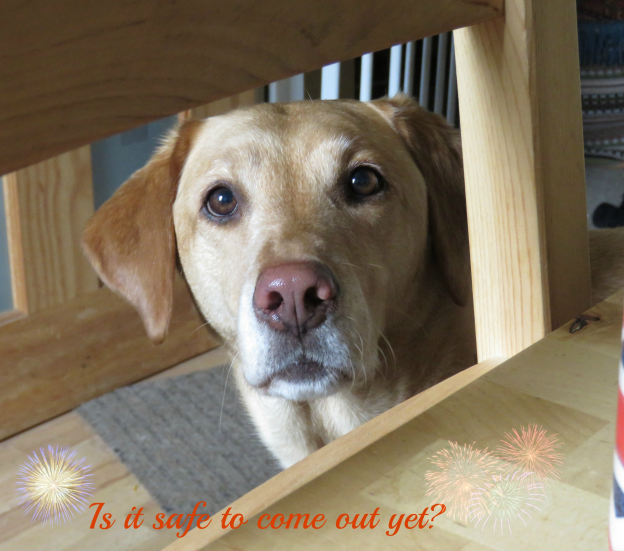
Helping your Dog Cope with the Firework Season.
What was traditionally on November 5th now seems to drag on well into the new year and can make life a misery for many dogs and their guardians.
Dogs can show their fear through obvious signs such as shaking and whining but often they also exhibit behaviours including digging and tearing at carpets and doors, excessive panting and drooling as well as vomiting and diarrhoea.

What was traditionally on November 5th now seems to drag on well into the new year and can make life a misery for many dogs and their guardians.
Dogs can show their fear through obvious signs such as shaking and whining but often they also exhibit behaviours including digging and tearing at carpets and doors, excessive panting and drooling as well as vomiting and diarrhoea.
There are a number of ways of helping your dog to cope with the stresses of fireworks and early preparation is the key to success.
Here are a few ideas to help your dog cope with firework night and beyond.
Build a Den: Many dogs like to hide away when they are frightened. This can be behind the sofa, under the bed, or in tight places. As long as it is a safe place for your dog, then adapt the area to make them feel secure and comfortable.
This can be anything from placing a heavy blanket over a table, dragging the sofa out from against the wall, or covering the dogs usual crate with a thick blanket. Build the den where your dog chooses to go and not where you think it should be. It is really important that the dog is not trapped so he must be able to move away from the den or exit the crate should he wish to.
Change of routine: You will probably have to change your dogs routine so they are taken out for a walk and fed earlier than usual. It may mean a longer walk in the morning and just a toilet break in the afternoon as fireworks can often start before it even gets dark. If you have to go out make sure your dog is kept on the lead and as a precaution use a harness in case he panics and tries to get away, you will have more control and your dog is unlikely to get loose.
If your dog is very fearful then try interactive or scent games in the house and garden instead of walking. “Nose” work can be tiring as well as giving them a sense of fulfilment and stress relief.
When in the house, close the curtains to help block out some of the noise and the flashing lights. Turn up the radio and TV a little louder than usual but try to act as if nothing is wrong or your dog will pick up on it.
Dogs sense our emotions, energy and stress levels very quickly, so It is vital to be there for your dog in a supportive and upbeat manner, keeping your own energy and stress levels down to create an atmosphere where they feel safe and protected.
Natural remedies: For dogs that suffer with anxiety, a combination of natural remedies plus adaptations to lifestyle will be necessary in order to provide comfort to the dog.
Calming herbs can be very useful, although for full effect it is advisable to start a number of weeks before a stressful event. The Hedgerow Hounds Tranquil blend, has helped many dogs that suffer with stress, nervousness and anxiety. I have also had success with the homeopathic remedy called Aconite so that is worth looking into as well.
Other remedies to try include flower remedies such as Bach or those specifically for animals including Creature Comforters.
There are also the calming sprays and diffusers which contain essential oils to promote relaxation. It must be remembered that dogs have the most extraordinary sense of smell, so it is important not to overwhelm the dog by using too much or liberally applying it onto their coat. If they cant move away from the aroma this in itself can be stressful. Instead I favour putting the spray or drops onto a piece of cloth or in an area where they can chose to inhale or move away from should they wish to. The Pet Remedy, sprays and wipes are an excellent range and available on the shop. https://www.hedgerowhounds.co.uk/products/pet-remedy-calming wipes https://www.hedgerowhounds.co.uk/products/tranquil-relax-sooth
The Thundershirt can be useful for some dogs, but again it needs preparation before there is a stressful situation in place. Pressure vests work on the principle of compression, similar to the way an infant feels comfort when wrapped in swaddling. Pressure vests and correctly applied body wraps need to be used regularly before the actual event they are needed for. They have an accumulative effect and it is important that when they are worn initially that it is a very positive, calming and comforting experience. Take time to measure your dog according to the manufacturers guidelines, for a correct fit. It needs to be a snug fit but not so tight that the dog feels stressed and uncomfortable. For more detailed information on the use of pressure vests please read the blog https://www.hedgerowhounds.co.uk/news/body-wraps-pressure-vests
I asked Tom Bysouth BSc (CBT) a force-free dog trainer and behaviourist from Progressive Dogs, for some advise around firework season.
“ As the firework season draws nearer it is not too late to plan how to help your dog through this potentially stressful period. One thing that is important to remember is that you cannot make your dogs fear of fireworks worse by comforting and supporting them. If you have a puppy or young dog you can start to create positive associations around sudden, loud or unfamiliar noises. This can be done with playing a recording of fireworks at a very low volume while your dog plays a search game, eats their food or receives fuss from you. Through repetition, and the very gradual progression of raising the volume this can help teach your dog to associate these sounds with positive experiences.”
Tom can be found at www.progressivedogs.co.uk or email tom@progressivedogs.co.uk
More information on natural ways to help your dog overcome their fears can be found at:
@HedgerowHounds or our website www.hedgerowhounds.co.uk

Tranquil is a blend of herbs, roots and seeds specifically chosen to calm sensitive emotions and associated tummy upsets.

A natural, tried and tested range of products to relax body and mind and bring comfort to stressed, nervous and anxious dogs.
SEASONAL FEEDING - Making the Most of Fresh Ingredients
The majority of people have lost their connection with the land, nature and the changing seasons.
Natures larder provides us with a huge variety of produce at the perfect time when it will be of most benefit to us nutritionally. With a few small changes we can all benefit from eating seasonally which is better for us, our dogs and the environment.

Spring, Summer, Autumn and Winter, seasonal feeding at its freshest and finest. Featuring Hedgerow Hounds seasonal herbal blends.
The majority of people have lost their connection with the land, nature and the changing seasons.
Natures larder provides us with a huge variety of produce at the perfect time when it will be of most benefit to us nutritionally. With a few small changes we can all benefit from eating seasonally which is better for us, our dogs and the environment.
We can utilise herbs and vegetables in the Spring, which are a perfect cleansing tonic to gently ease us out of the long winter months, where we have no doubt been overindulging and less active.
To the cooling and hydrating bounty of Summer, followed by the real bumper harvest of Autumn, which gives us all the foods we need to help boost our immunity and general health in preparation for the cold Winter months ahead.
Here at Hedgerow Hounds, we are passionate about seasonal ingredients, and if you really want to embrace seasonality, then we have a seasonal range of handmade herbal blends.
What`s so special about seasonal food?
Eating more seasonally ourselves and by including some of these foods in our dogs’ diet, we can benefit in so many ways.
. We can reconnect with the cycles of nature and really appreciate the food that is available for a short period of time.
. It is better value for money as well as kinder to the environment, to buy ingredients when they are in abundance locally and haven’t travelled halfway round the world before they even get to our kitchen.
. We can support the local communities, such as small producers, farmers’ markets, organic growers, and game dealers.
. The produce is fresher and therefore more nutritious as it is harvested when ripe or at its best, and has minimal travelling time before we can purchase it.
Could we survive without sugar snap peas from Egypt, asparagus from Peru, and eating Strawberries in January? These have travelled thousands of miles, are harvested unripe, and sprayed with chemicals, gas, or wax to stop them from deteriorating in transit.
Or could we wait until they are ready to eat locally and benefit from much more flavour and far higher nutritional value, while enjoying so many other foods in the meantime?
How does incorporating seasonal food benefit our dogs?
If you feed raw or home-cooked food to your dog, then it is important to offer a good variety of foods over the coming months. If you feed dried or tinned food, it is also possible to start incorporating a small amount of fresh ingredients into the bowl at feed times.
By offering variety, you can ensure your dog gets a broad range of nutrients and avoid the intolerances that can occur if the same protein and carbohydrate are fed continuously.
A wide spectrum of fresh ingredients, either animal proteins or of plant origin, nurtures a healthy gut microbiome, which is vital for a healthy immune system and overall optimal health. The more diverse the diet, the less you will have to rely on supplementation.
By feeding what is in season, you are providing food at its very best. This often means that you don’t need a large amount to benefit from the superior nutritional value.
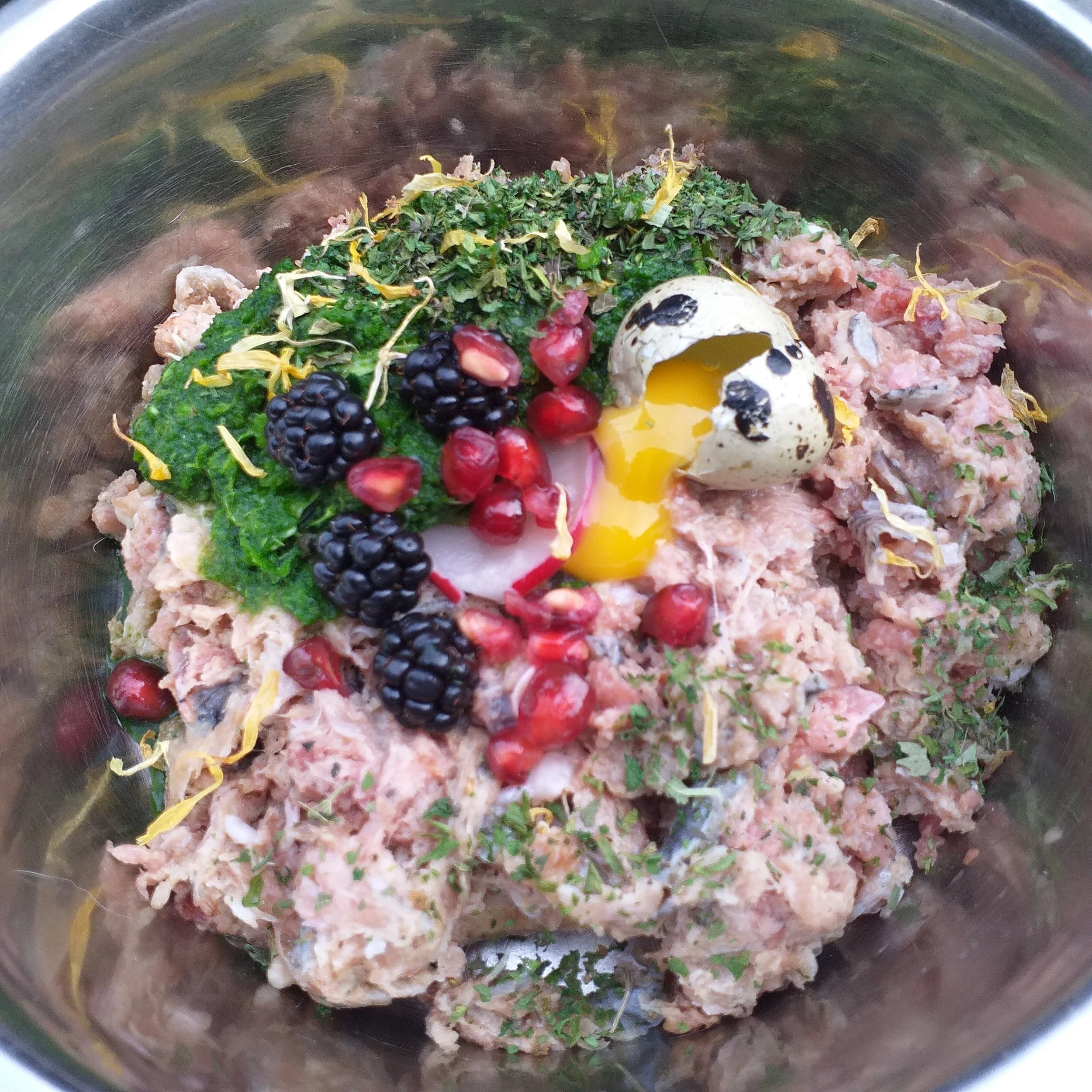
A few local, handpicked ripe blackberries added to the food will be far superior to a larger number of blueberries that have covered many air miles. Including some free-range, wild, or organic meat whenever you can will also provide your dog with superior-quality ingredients.
Depending on your location, there is generally a good range of proteins available from Spring to Summer, but when Autumn comes, there is suddenly a whole new larder available to the raw feeder or home cook.
The game season varies by the species, but generally partridge and pheasant are available from September until February. Venison is dependent on breed, but around November to March, and Duck from September until January.
If you have been relying on beef, lamb, chicken, and fish from March until August, then this addition of free-range, often organic and minimally farmed protein is a huge bonus. You can either use in addition or temporarily replace the proteins you regularly use until the availability ends.
Putting a small amount of vegetables aside for your dog when preparing your own is a good practice. It will soon become second nature to save a broccoli stalk, steam a little extra courgette, cut off a small slice of pear or apple, or lift out the couple of squashed raspberries that are in the bottom of the punnet for your dog’s supper. You will also start to look out for seasonal bargains at the butchers’ or farmers’ market.
If you can forage for ingredients such as blackberries, dandelion leaves, cleavers, and either keep a few hens or find a local organic supplier of eggs, then that is a big win.
Adding a little fresh, local, and seasonal produce even two or three times a week will help to gradually improve your dog’s overall diet. If your dog is new to fresh ingredients, start off with very small amounts and include one new addition at a time, until they adjust to a different way of eating.
As a rule, although each dog is an individual, the majority of the meal is made up of animal protein, with anything from 5% to 15% being provided by vegetables and berries that are suitable for your dog.
Spring
Spring ingredients offer a gentle tonic to cleanse and wake up the system after less active months and a diet of heavier, warming meals. Many of these ingredients that come into their own now offer support for the kidneys, liver, and lymphatic system that can often get sluggish over the Winter months. You may observe that your dog seeks out the fresh grass shoots as they appear, which are full of energy, sweetness, and moisture.
The Nature’s Skin Tonic is perfect for a gentle Spring cleanse after the long winter months and also great for dogs that are itchy and suffer from seasonal allergies at this time of year.
Incorporate some of the following into your dog’s meals:
Spring nettle tops, Cleavers, Dandelion leaf and root, Asparagus, Watercress, Milk Thistle, Spring Greens, New season Lamb, Rabbit & Free range eggs.
Summer
Summer ingredients are cooling, hydrating, and uplifting, and we are spoilt for choice at the range of produce available. If you can grow a few vegetables yourself, such as courgette, cucumber, spinach, salad greens, chard, and parsley, then these will be bursting with flavour and goodness, and you can add a little of these freshly picked ingredients to your dog’s food. If you grow blackberries and raspberries, you will find that the dogs often help themselves to the fruit from the lower branches.
Nature’s Bounty appears on the shop in February and covers the Summer months until early November. It is a nutritious blend that contains an organic seaweed, and Bounty’s main task is to naturally repel fleas and ticks, which it has successfully done for many years.
Incorporate small amounts of the following:
Fennel, Melon, Spinach, Celery, Blueberries, Bilberries, Raspberries, Dandelion, Seaweed, Sorrel, Courgettes, Mint, Parsley, Calendula, Cucumber, Green beans, Carrot tops, Lettuce, Rabbit, Free range eggs.
Autumn
Autumn provides nourishing produce to prepare for the colder months and are typically rich in antioxidants and high in vitamin C. Many of these vegetables, fruits, and berries also lend themselves to preserving by the process of dry storage, freezing, and fermentation, which would traditionally be used to ensure a supply of nutritious foods through the lean months of Winter that lie ahead:
Incorporate small amounts of the following:
Squash, Blackberries, Rosehips, Beetroot, Pumpkin, Apples, Pear, Burdock root, Chicory, Nettle seeds, Fennel and Dill seeds, Almonds, Pumpkin seeds.
Game meat to include: Partridge, Pheasant, Grouse, Pigeon, Guinea fowl, Quail, Venison, and Duck.
Fish, including Pollack, Mackerel, Coley, and Haddock.
Winter
Winter provides us with comforting food for warmth and sustenance.
Incorporate small amounts of the following:
Ginger root, Turmeric, Kale, Celeriac, Thyme, Ruby Chard, Brussels sprouts, Winter Squash, Jerusalem artichoke, Pear, Russet apple, Turkey, Duck, Venison, Mussels.
Caroline Hearn MICHT, Dip ICAT. MIAAT
Equine and Canine Sports Massage Therapist and Canine Holistic Health Specialist
Find out more at www.hedgerowhounds.co.uk
Instagram hedgerow_hounds Facebook @HedgerowHounds
Gut Health, Immunity and Microbiome
At first glance the digestive system appears to have a very simple task of taking in food, digesting it, absorbing nutrients, and then excreting the waste, and while everything is in good working order, we never even give it a second thought.
At first glance the digestive system appears to have a very simple task of taking in food, digesting it, absorbing nutrients, and then excreting the waste, and while everything is in good working order, we never even give it a second thought.
It is in fact an incredibly complex structure with a vast number of tasks to undertake. The more the gut is studied the more we realise the vital role it plays in achieving optimum health, disease prevention, and stabilising our emotional state.
Although the teeth are needed to some extent to bite, crush and tear off food the actual process of digestion doesn`t start until it reaches the stomach. With no digestive enzymes in the saliva to kick start it off, the food needs to quickly get where the real work begins, which is in the stomach.
Oesophagus:
Is a long muscular tube that runs down the neck, passes through the diaphragm and uses strong contractions to push food directly into the stomach.
Stomach:
The stomach lies at the front of the abdominal cavity, tucked just behind the liver and acts like a big mixing bowl.
Any incoming food is first subjected to an acid bath of around ph1, this immediately gets to work breaking down protein and also killing any harmful bacteria.
The walls of the stomach are lined with a thick mucous which provides protection from the strong acid as well as stopping the stomach from literally digesting itself.
As the stomach expands with food, a peptide hormone called gastrin is released, which in turn triggers more hydrochloric acid and digestive enzyme production.
To aid digestion even further the surface of the stomach is a mass of wrinkles and folds which expand and contract to grab food particles and perform a churning or chewing-like action.
At this point, the thick soup-like constancy of partly digested food and secretions is known as chyme.
The food has now been in the dogs stomach for anywhere between five and ten hours and its next destination is the duodenum, the first section of the small intestine.
Pancreas
The pancreas is a small gland, which sits next to the stomach and is attached to the small intestine, here it transports digestive enzymes through two excretory ducts into the duodenum.
The enzymes it produces are amylase to help digest starch, lipase to digest fats and trypsin and chymotrypsin to deal with the protein.
Enzymes are needed to break down food into tiny molecules and allow the absorption of nutrients into the cells of the intestines which then go on to be released into the bloodstream.
It also produces and secretes the hormones insulin and glucagon that regulate blood sugar levels. The higher the concentration of sugar in the diet the more insulin is secreted into the bloodstream and the harder the pancreas has to work.
Liver
The liver is the largest gland in the body and the only organ that has the potential to regenerate after disease or injury.
Its many crucial jobs include producing bile to assist the small intestine in breaking down and absorbing fats and to process the nutrients that are absorbed by the small intestine.
Its other roles include storing vitamins and minerals, acting as a filter for toxins in the bloodstream and as a glycogen store for when extra energy is needed.
Small intestine
The small intestine is made up of three sections, Duodenum, Jejunum (longest) and the ileum (shortest)
On receiving the nutrient-rich chyme from the stomach, it is joined by secretions from the liver, gallbladder and pancreas to further assist in the digestion process.
The small intestine is lined with millions of tiny finger like projections called the Villi, these act to increase the surface area in order to trap and absorb as many nutrients as possible.
Most of the absorption of nutrients takes place in the small intestine, which are then released into the bloodstream to travel throughout the body to be utilised by the cells.
The final and shortest part of the small intestine is called the Ileum, here the food gets broken down even further in preparation to enter the cecum, the first section of the large intestine.
Large intestine :
The large intestine is made up of the cecum, colon and rectum.
Its purpose is to remove water from the faeces, keep electrolytes in balance and to prepare and temporarily store any indigestible matter for excretion.
But there is much more activity going on in the colon than just that and although not a very glamorous area of interest, it does deserve our full care and attention.
The large intestine has a high concentration of bacteria referred to as the
Microbiome.
This is a collection of microbes made up of bacteria, viruses and fungi that we all have in our gut for efficient digestion, absorption of vital nutrients and to build a strong immune system.
Our dogs would have acquired their unique bugs from their mother at birth and developed others depending on the environment they lived in and the food they ate.
The delicate balance of the microbiome can easily be disrupted by medication such as antibiotics, periods of stress and anxiety and a poor, unsuitable diet.
When everything is in balance these good bugs work hard to extract as much nutrition as possible out of the food that is consumed and to ensure the smooth running of the whole gastrointestinal tract.
The bacteria are also responsible for assisting in hormone production such as serotonin, which occurs in the highest concentration thorough out the lining of the gut.
A thriving, balanced microbiome is absolutely essential for the dogs ability to resist or fight disease, control inflammation in the body and for a positive influence on their mental wellbeing.
Rectum and anal glands.
The faeces are then ready to be expelled along with the indigestible matter and dead red blood cells that it contains.
Ideally, the dogs stool will be quite firm, which will press on the anal glands as it is passed, causing the glands to naturally empty.
All disease begins in the gut - Hippocrates
Immunity and the gut
The gut forms between 70 - 80% of the immune system and has a vital role in regulating immunity, protecting our bodies from invaders such as allergens and pathogens and controlling inflammation.
The food we chose for our dogs and the lifestyle choices we make for them will have either a negative or positive effect on their overall gut health, ability to utilise the nutrients in the food they eat, the essential fuel to grow and repair their body and to thrive well into their senior years.
Caroline Hearn - Canine Holistic Therapist