
Elderberry Recipes
If you only make one home remedy for yourself this Autumn, it should be either Elderberry cordial or syrup. Elderberry is packed full of vitamin C, powerful antioxidants and well known for it`s anti-viral, immune boosting properties. I always have a cordial or syrup at hand over the winter months and it is very effective at nipping colds & flu in the bud at the very first signs of a sore throat, cough or sniffle.
This recipe is just for YOU and not one to share with your dogs. Elderberries must be cooked before consuming and discard the leaves, stems, and any unripe green berries before cooking.

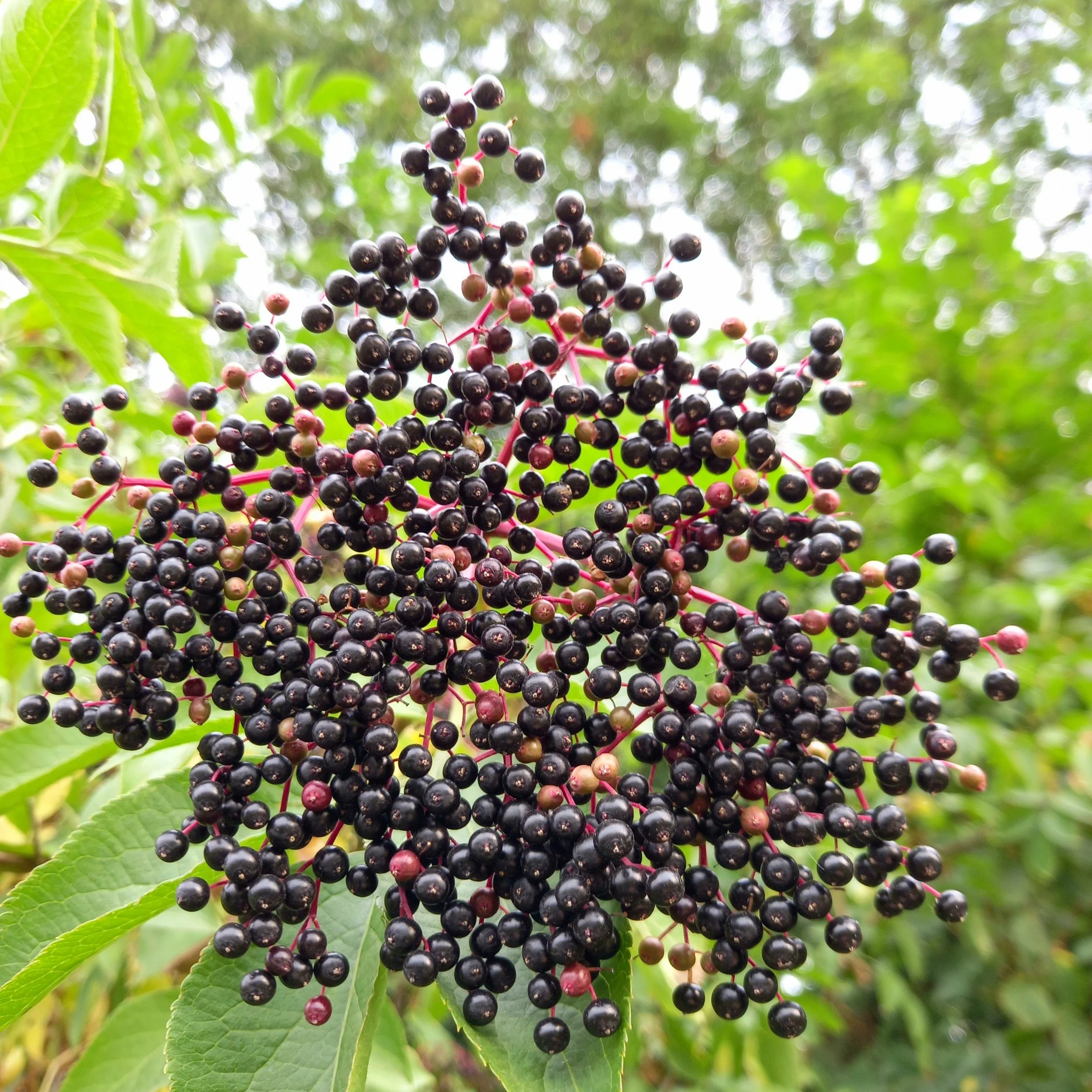
Sambucus nigra - Common Elder
If you only make one home remedy for yourself this Autumn, it should be either Elderberry cordial or syrup. Elderberry is packed full of vitamin C, powerful antioxidants, well known for its anti-viral, immune boosting properties. I always have a cordial or syrup at hand over the winter months, and it is very effective at nipping colds & flu in the bud at the very first signs of a sore throat, cough, or sniffle.
This recipe is just for YOU and NOT one to share with your dogs. Elderberries must be cooked before consuming, and discard the leaves, stems, and any unripe green berries before cooking.
Elderberry syrup
You will need:
500g ripe berries (discard those that are unripe, especially green ones.) A handful of Blackberries is a nice addition and are ripe at the same time.
500g water
Rind of 1 lemon plus 1 tablespoon of the juice
350g of dark sugar or 170g of honey
Optional - cinnamon stick, 4 cloves, a piece of stem ginger, a stick of liquorice, and if you only want one spice, then choose Star Anise for its natural anti-viral properties or pop in a mulled spice bag.
How to make:
The easiest way to pick elderberries is to leave the berries on the stem until you get home, then run a fork down the stems until the berries fall off into a colander. Rinse gently with water and then remove any unripe green berries & bits of stem. Alternatively, pop them in a bag and place them in the freezer; the berries usually break away from the stalks very easily when frozen.
Place the berries, water, lemon rind, and chosen spices into a medium/large saucepan and bring to a boil, simmer gently for 20 minutes, squashing the berries with a spoon to extract as much juice as possible. Allow to cool slightly, then drain through a fine sieve placed over a bowl or ideally through a muslin cloth/ cotton t-towel so you can thoroughly squeeze all the juice out of the berries.
Rinse out the saucepan and return the juice into the pan, add the sugar, and warm through until it melts into the juice.
Store: Pour into a sterilised bottle, place in a fridge, and use within one month or better still, pop into ice cube trays or small freezer-friendly pots so you can have some handy throughout the depths of winter.
Take a tablespoon a day neat off the spoon, drizzle onto live yogurt, place an elderberry cube into a mug of hot water, or add to your favourite tipple to enjoy on a cold, wintery evening.
You can also use the cordial as a base to make gelatine gummies or mix it with balsamic to make a delicious glaze for meat, fish, or vegetables.
Taking your Dog on Holiday
Hints and tips to make a holiday with your dog run smoothly.

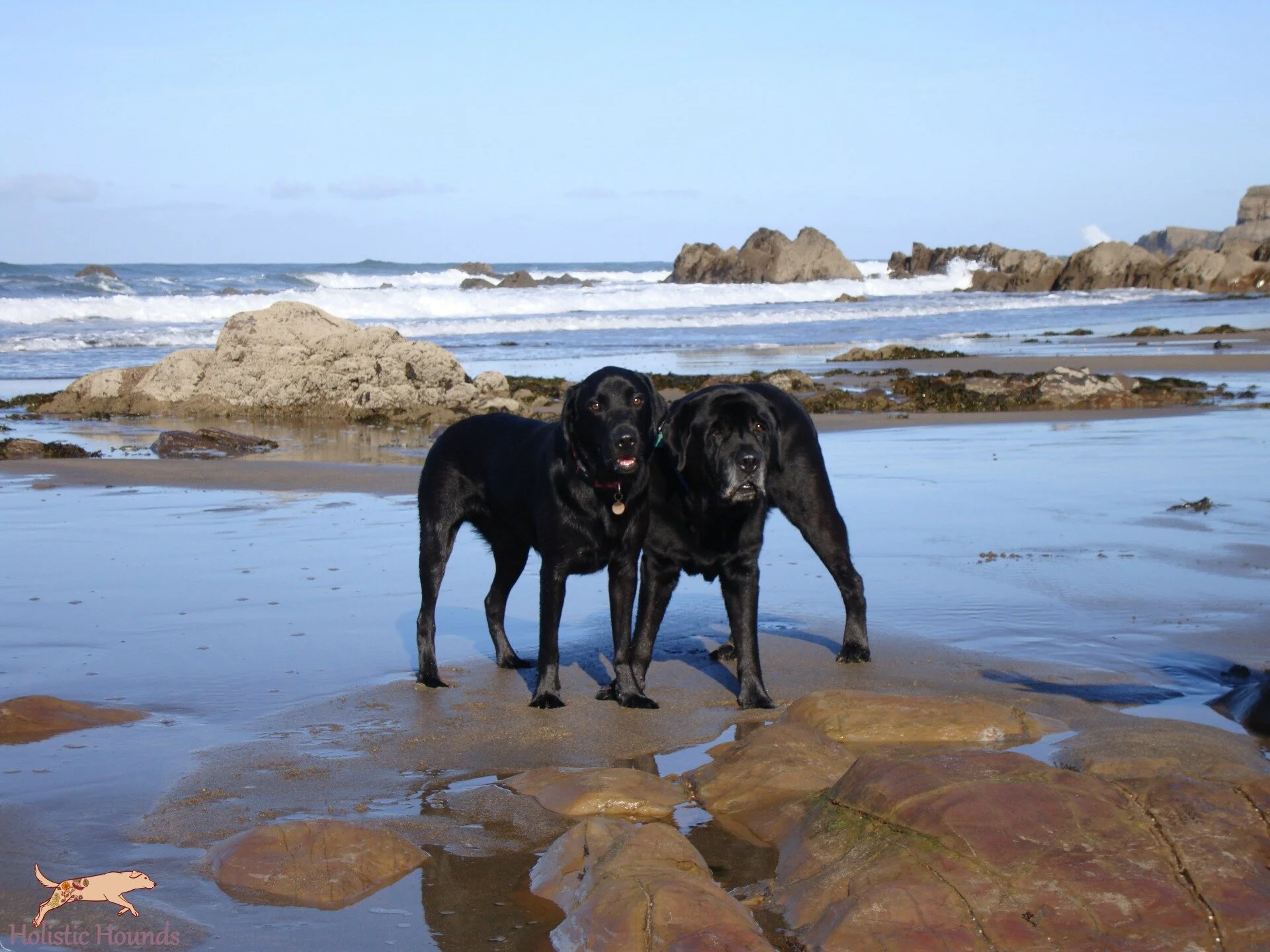
Ready for the off!!
Years ago, taking our dogs on holiday involved trawling through magazines and endless phone calls to try and find somewhere that was suitable and happy to take dogs. Today there are so many options for time away with our pets from camping to country cottages, there is something to suit us all.
There are however several things to consider to make the time away safe and enjoyable for you and your dog.
Here are a few hints and tips so the vacation runs smoothly.
Try to quickly establish some sort of routine for toileting, exercise, mealtimes, and bed. Using the dogs’ usual bed or at least a familiar blanket will help them to settle.
Although possibly not at the forefront of our minds, it is always better to be prepared should your dog become ill or injured. Getting the details of the local vets, including an out-of-hours service and establishing the location of the surgery should be done immediately on arrival or with some homework online before you head off to your holiday destination.
Take a well-stocked first aid kit that can be used by all the family, including the dog. Check the use by dates on any wound cleaners, eye washes, gels and wipes and make sure you have a tick removing tool.
It is possible to view the interior of most holiday lets online and laminate and tiled flooring is often chosen for hygiene and ease of cleaning. This however can be very hazardous, particularly for the senior, less mobile pet or the dog that is terrified of slipping, so refuses to walk on it. The very thin, rubber-backed mats and runners are essential in this instance. They roll up neatly and take up limited room in the car.
Check the garden thoroughly and ensure the fencing is sound and that any gates can be securely closed.
Some dogs are very fussy about their drinking water, which can be a potential problem in hot weather. If this is the case, then it will help to take a water container from home with their usual drinking water as their main water source for a couple of days, gradually topping up with the new supply of water.
Check your dog’s microchip details are up to date and that there is a tag attached to their collar with contact details clearly shown, adding a temporary form of ID tag with current location is also a good idea.
In unfamiliar surroundings, it is often wise to keep your dog on a lead or longline for the first few days.
If you need to give your dog a short walk after dark, then a LED collar or clip on collar light is really useful for added visibility, particularly if you have to use an unlit country lane.
A selection of old towels and even a towelling drying coat can come in very handy for limiting the amount of mud, sand and general debris that is brought into the accommodation after a busy day exploring the sights.
While we welcome a change of scenery and new experiences, for the more sensitive or nervous dog, it can be a stressful time. Having some natural remedies at hand can help to settle their emotions.
If you have a sensitive dog or know that they are likely to be upset initially by the different surroundings, then using a natural calming supplement with the addition of relaxing sprays put onto a cloth and placed near the dog to settle the nerves is worthwhile. It is important to introduce any calming supplement, rescue remedy, pressure vests or body wraps for at least 3-4 weeks before your holiday to gain maximum benefits.
If your dog is used to having a radio on, then a small portable radio can be useful day and night to give them a feeling of security and familiarity.
Catering for Raw Fed Dogs or those on a Home Cooked Diet.
For the dogs on a raw or home-cooked diet, it does involve some forward planning to ensure you have enough food to last for the duration of your holiday.
If you can only take a limited amount of raw food with you, or maybe taking raw meat is out of the question, then there are a few alternatives.
If you know that you will have to resort to feeding something else, it is crucial that you feed your dog the alternative food for a period of time at home beforehand to confirm that it suits your pet and to prevent any upset stomachs while you are away.
Many holiday lets are so well equipped the chances are there is enough freezer space for a few tubs of frozen food, or the very least a fridge and ice cube compartment where you can freeze a few ice blocks to keep topping up your cool box. Homemade meals can be measured out into individual portions and frozen, remembering to take one out each evening to defrost for the following day. In hot weather the food needs to be defrosted in the fridge or your cool box.
Packs of frozen raw food
Many of the frozen complete meals come in 1 kilo tubs, and when tightly packed together in a cool box with the addition of a few ice blocks, will take around 4 days to completely defrost.
By using the completes you do not have to worry about taking additional edible bones or vegetables with you.
Some good alternatives…
Freeze-dried food is made by quickly freezing fresh food at temperatures as low as -50C in pressurized chambers over 18 hours to gently draw away the moisture and retain as many nutrients as possible. It is a matter of just adding warm water to rehydrate before feeding.
Cold-pressed food is manufactured at low temperatures, around 50C, so fewer nutrients are destroyed in the process, unlike the very high temperatures needed to make extruded kibble. It does require some warm water to rehydrate it, and the recommended feeding is for every 100g of food, 125ml of warm water is added and left to stand for 5 minutes before feeding.
Just check the ingredients before purchase, as some contain rice and grains which may not suit your dog’s particular needs.
Dehydrated food is made by blowing warm air across the ingredients to remove moisture. It has a good shelf life and once warm water is added to rehydrate, you store and feed as you would raw food. As with freeze-dried food, it is light in weight and not as bulky to store as other dried or tinned food.
If your dog is fine on tinned food or the steamed “chub” rolls then this is another option.
The downside with tins is that they are bulky and heavy, and you will have to dispose of them somewhere once empty.
Tinned sardines or pilchards in spring water or tomato juice are extremely useful to take plus they seem to be sold in every corner shop across the country, even in the most remote of village stores. They are a good emergency measure should you run out of food or as an addition once or twice a week.
If you are near a farm shop or village store they will undoubtedly have free-range eggs for sale which again are a healthy, protein-rich way to make meals go a little further and can be fed raw or lightly cooked.
Cool Treats for a Hot Day!
When the weather is heating up, it is nice to offer your dog a healthy cooling treat to help bring their temperature down.
You`ll need suitable containers or moulds which are freezer-friendly

When the weather is heating up, it is nice to offer your dog a healthy cooling treat to help bring their temperature down.
You`ll need suitable containers or moulds which are freezer-friendly
You can use the following to make a cooling snack:
Natural full-fat yoghurt (goat or sheep are the best options, if you can find them) add mashed banana, or perhaps a little almond nut butter.
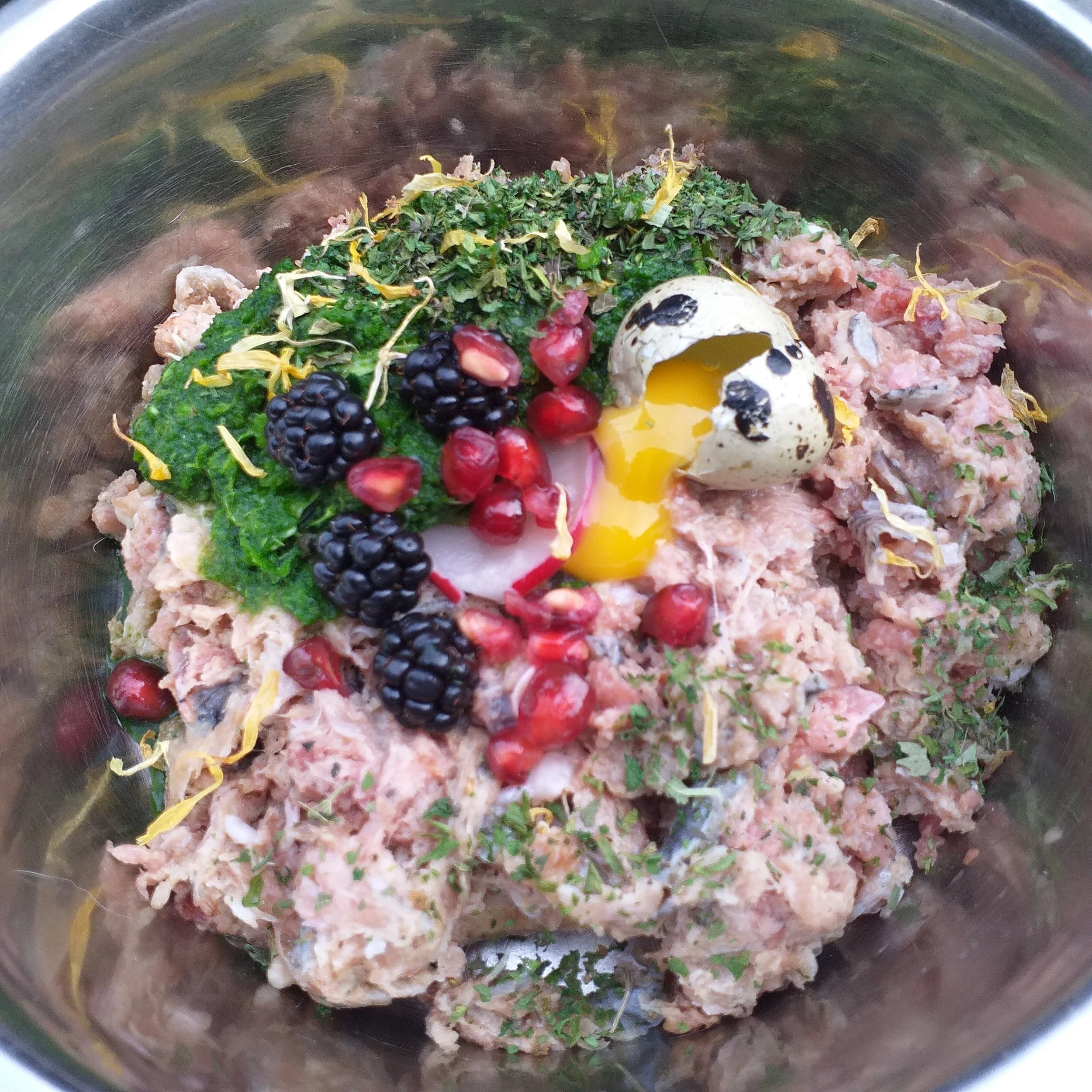
Bone Broth frozen into plastic trays or moulds. Add a sprinkling of a Hedgerow Hounds herbal blend and a couple of blueberries.
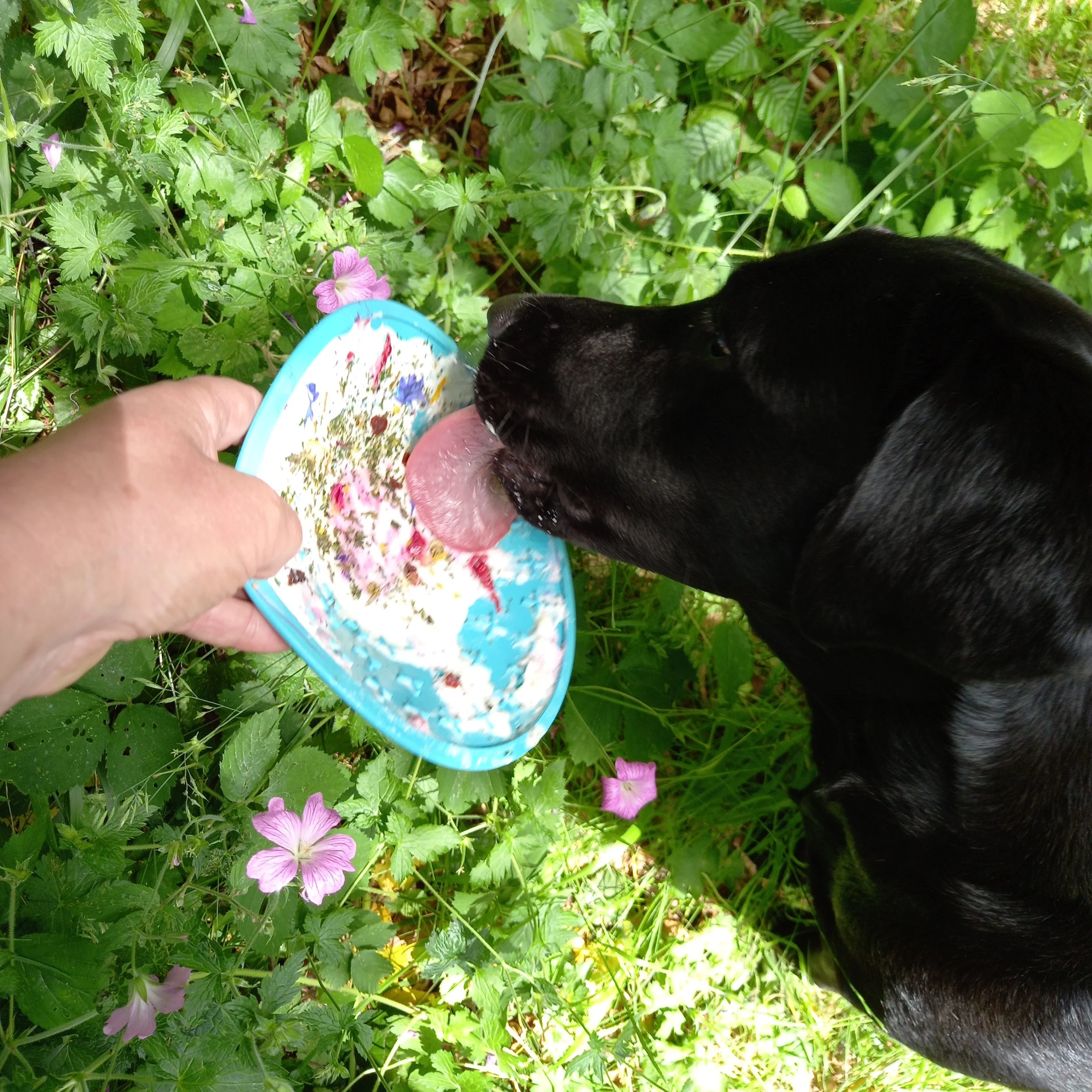
Kefir can be frozen into shaped moulds or onto a lick-it mat or bowl and placed in the freezer for an hour or so. Dust with fish skin sprinkles or a little bee pollen.
Kongs are great for stuffing with numerous toppings and they freeze really well. They`re useful for greedy dogs that rush their food or raw bones.
Use a mould or container that makes a treat that is a suitable size for your dog.
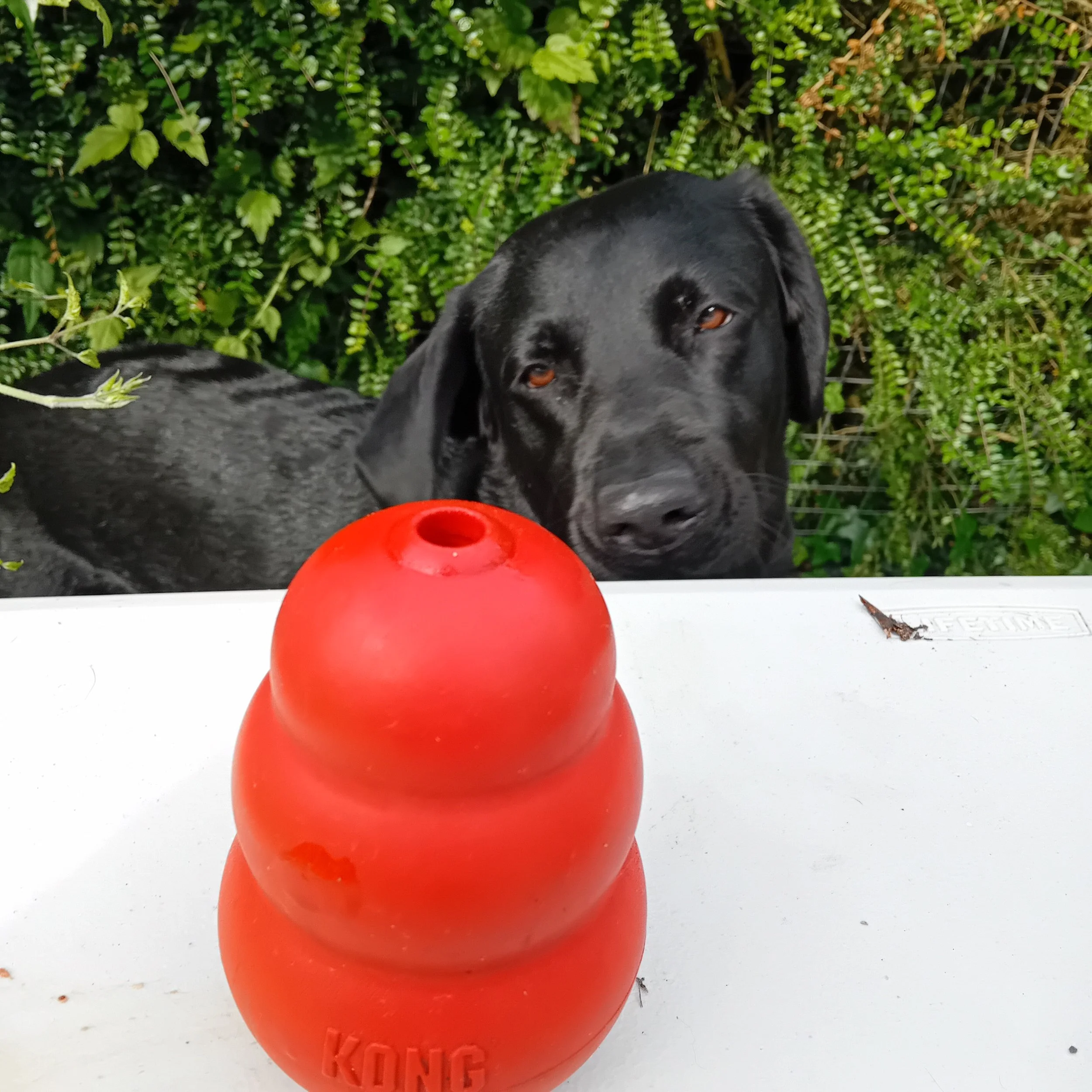
Kong Recipe
Interactive food dispensing toys such as a Kong and various puzzle games can be filled with tasty treats and tempting ingredients to provide mental stimulation and carry out natural behaviour such as chewing, licking, and a desire to seek and find.
Interactive food dispensing toys such as a Kong and various puzzle games can be filled with tasty treats and tempting ingredients to provide mental stimulation and carry out natural behaviour such as chewing, licking, and a desire to seek and find.
When choosing an interactive toy make sure it is of an appropriate size for your dog and if you have a very powerful chewer, that the product is robust enough to withstand the forces that are going to be put upon it. The design of a Kong is ideal for filling with ingredients as it is very strong, easily cleaned, freezer friendly, comes in a variety of sizes, and crucially has a hole at both ends.
To add further interest, layer the ingredients used and experiment with different textures from crunchy fish skin cubes to soft blueberries. You can also hide the food dispenser in the garden to encourage your dog to follow the scent and claim their prize. As dogs are natural scavengers this adds to the overall enrichment experience.
If your dog needs to shed a few pounds, then taking some of their daily food ration and placing it into the Kong maybe with a few fresh steamed vegetables can keep them occupied for longer and give them a bit of a workout at the same time.
Added to raw, kibble, or cooked meat you could include ingredients such as pumpkin, sweet potato, pear, banana, natural goats’ yogurt, bone broth, pumpkin seeds, papaya, quinoa, or some of their favorite healthy treats.
Consider some of the following ingredients and add them in layers for a taste sensation.
Grated courgette and carrot,
Complete raw meal (meat, bone & offal) or cooked boneless meat of choice.
Squashed blueberries, raspberries or blackberries
Pizzle or tripe stick.
How to:
Stir the courgette, and carrot, into the raw meat and then spoon into the Kong until 2/3rds full. Insert the pizzle stick then pack the remaining wet ingredients around it. It can be served fresh or frozen.
For a Fishy treat try:
Sprats (dried or fresh)
Small tin of drained pilchards in spring water
Half a teaspoon of Coconut oil
Tablespoon of Soaked chia seeds.
Blackberries or Blueberries
Cooked Green Beans
How to:
Chop up the ingredients and stir to incorporate. Squish the ingredients into your Kong and add a few whole sprats so they are poking out of the end for added interest.
This can be placed in the freezer for 1-2 hours for long-lasting enrichment.
Caroline Hearn
www.hedgerowhounds.co.uk
SEASONAL FEEDING - Making the Most of Fresh Ingredients
The majority of people have lost their connection with the land, nature and the changing seasons.
Natures larder provides us with a huge variety of produce at the perfect time when it will be of most benefit to us nutritionally. With a few small changes we can all benefit from eating seasonally which is better for us, our dogs and the environment.

Spring, Summer, Autumn and Winter, seasonal feeding at its freshest and finest. Featuring Hedgerow Hounds seasonal herbal blends.
The majority of people have lost their connection with the land, nature and the changing seasons.
Natures larder provides us with a huge variety of produce at the perfect time when it will be of most benefit to us nutritionally. With a few small changes we can all benefit from eating seasonally which is better for us, our dogs and the environment.
We can utilise herbs and vegetables in the Spring, which are a perfect cleansing tonic to gently ease us out of the long winter months, where we have no doubt been overindulging and less active.
To the cooling and hydrating bounty of Summer, followed by the real bumper harvest of Autumn, which gives us all the foods we need to help boost our immunity and general health in preparation for the cold Winter months ahead.
Here at Hedgerow Hounds, we are passionate about seasonal ingredients, and if you really want to embrace seasonality, then we have a seasonal range of handmade herbal blends.
What`s so special about seasonal food?
Eating more seasonally ourselves and by including some of these foods in our dogs’ diet, we can benefit in so many ways.
. We can reconnect with the cycles of nature and really appreciate the food that is available for a short period of time.
. It is better value for money as well as kinder to the environment, to buy ingredients when they are in abundance locally and haven’t travelled halfway round the world before they even get to our kitchen.
. We can support the local communities, such as small producers, farmers’ markets, organic growers, and game dealers.
. The produce is fresher and therefore more nutritious as it is harvested when ripe or at its best, and has minimal travelling time before we can purchase it.
Could we survive without sugar snap peas from Egypt, asparagus from Peru, and eating Strawberries in January? These have travelled thousands of miles, are harvested unripe, and sprayed with chemicals, gas, or wax to stop them from deteriorating in transit.
Or could we wait until they are ready to eat locally and benefit from much more flavour and far higher nutritional value, while enjoying so many other foods in the meantime?
How does incorporating seasonal food benefit our dogs?
If you feed raw or home-cooked food to your dog, then it is important to offer a good variety of foods over the coming months. If you feed dried or tinned food, it is also possible to start incorporating a small amount of fresh ingredients into the bowl at feed times.
By offering variety, you can ensure your dog gets a broad range of nutrients and avoid the intolerances that can occur if the same protein and carbohydrate are fed continuously.
A wide spectrum of fresh ingredients, either animal proteins or of plant origin, nurtures a healthy gut microbiome, which is vital for a healthy immune system and overall optimal health. The more diverse the diet, the less you will have to rely on supplementation.
By feeding what is in season, you are providing food at its very best. This often means that you don’t need a large amount to benefit from the superior nutritional value.
A few local, handpicked ripe blackberries added to the food will be far superior to a larger number of blueberries that have covered many air miles. Including some free-range, wild, or organic meat whenever you can will also provide your dog with superior-quality ingredients.
Depending on your location, there is generally a good range of proteins available from Spring to Summer, but when Autumn comes, there is suddenly a whole new larder available to the raw feeder or home cook.
The game season varies by the species, but generally partridge and pheasant are available from September until February. Venison is dependent on breed, but around November to March, and Duck from September until January.
If you have been relying on beef, lamb, chicken, and fish from March until August, then this addition of free-range, often organic and minimally farmed protein is a huge bonus. You can either use in addition or temporarily replace the proteins you regularly use until the availability ends.
Putting a small amount of vegetables aside for your dog when preparing your own is a good practice. It will soon become second nature to save a broccoli stalk, steam a little extra courgette, cut off a small slice of pear or apple, or lift out the couple of squashed raspberries that are in the bottom of the punnet for your dog’s supper. You will also start to look out for seasonal bargains at the butchers’ or farmers’ market.
If you can forage for ingredients such as blackberries, dandelion leaves, cleavers, and either keep a few hens or find a local organic supplier of eggs, then that is a big win.
Adding a little fresh, local, and seasonal produce even two or three times a week will help to gradually improve your dog’s overall diet. If your dog is new to fresh ingredients, start off with very small amounts and include one new addition at a time, until they adjust to a different way of eating.
As a rule, although each dog is an individual, the majority of the meal is made up of animal protein, with anything from 5% to 15% being provided by vegetables and berries that are suitable for your dog.
Spring
Spring ingredients offer a gentle tonic to cleanse and wake up the system after less active months and a diet of heavier, warming meals. Many of these ingredients that come into their own now offer support for the kidneys, liver, and lymphatic system that can often get sluggish over the Winter months. You may observe that your dog seeks out the fresh grass shoots as they appear, which are full of energy, sweetness, and moisture.
The Nature’s Skin Tonic is perfect for a gentle Spring cleanse after the long winter months and also great for dogs that are itchy and suffer from seasonal allergies at this time of year.
Incorporate some of the following into your dog’s meals:
Spring nettle tops, Cleavers, Dandelion leaf and root, Asparagus, Watercress, Milk Thistle, Spring Greens, New season Lamb, Rabbit & Free range eggs.
Summer
Summer ingredients are cooling, hydrating, and uplifting, and we are spoilt for choice at the range of produce available. If you can grow a few vegetables yourself, such as courgette, cucumber, spinach, salad greens, chard, and parsley, then these will be bursting with flavour and goodness, and you can add a little of these freshly picked ingredients to your dog’s food. If you grow blackberries and raspberries, you will find that the dogs often help themselves to the fruit from the lower branches.
Nature’s Bounty appears on the shop in February and covers the Summer months until early November. It is a nutritious blend that contains an organic seaweed, and Bounty’s main task is to naturally repel fleas and ticks, which it has successfully done for many years.
Incorporate small amounts of the following:
Fennel, Melon, Spinach, Celery, Blueberries, Bilberries, Raspberries, Dandelion, Seaweed, Sorrel, Courgettes, Mint, Parsley, Calendula, Cucumber, Green beans, Carrot tops, Lettuce, Rabbit, Free range eggs.
Autumn
Autumn provides nourishing produce to prepare for the colder months and are typically rich in antioxidants and high in vitamin C. Many of these vegetables, fruits, and berries also lend themselves to preserving by the process of dry storage, freezing, and fermentation, which would traditionally be used to ensure a supply of nutritious foods through the lean months of Winter that lie ahead:
Incorporate small amounts of the following:
Squash, Blackberries, Rosehips, Beetroot, Pumpkin, Apples, Pear, Burdock root, Chicory, Nettle seeds, Fennel and Dill seeds, Almonds, Pumpkin seeds.
Game meat to include: Partridge, Pheasant, Grouse, Pigeon, Guinea fowl, Quail, Venison, and Duck.
Fish, including Pollack, Mackerel, Coley, and Haddock.
Winter
Winter provides us with comforting food for warmth and sustenance.
Incorporate small amounts of the following:
Ginger root, Turmeric, Kale, Celeriac, Thyme, Ruby Chard, Brussels sprouts, Winter Squash, Jerusalem artichoke, Pear, Russet apple, Turkey, Duck, Venison, Mussels.
Caroline Hearn MICHT, Dip ICAT. MIAAT
Equine and Canine Sports Massage Therapist and Canine Holistic Health Specialist
Find out more at www.hedgerowhounds.co.uk
Instagram hedgerow_hounds Facebook @HedgerowHounds

Your Reactive Dog
Dog-dog reactivity is a very common behaviour difficulty dog professionals are contacted for help about. We often see it as a problem if our dog doesn’t get on with every dog they see – but did you know this is ENTIRELY NORMAL?
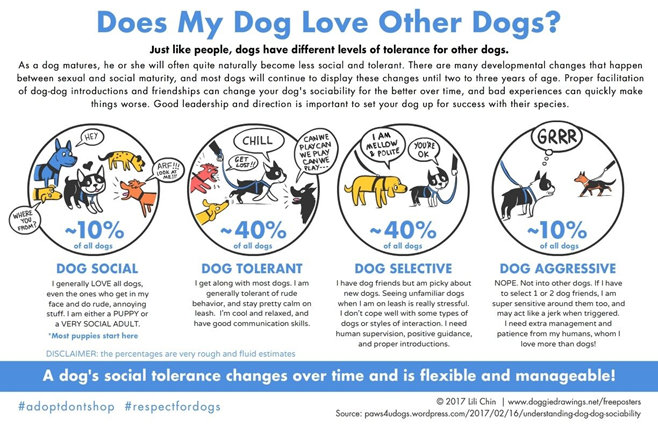
Dog-dog reactivity is a very common behaviour difficulty dog professionals are contacted for help about. We often see it as a problem if our dog doesn’t get on with every dog they see – but did you know this is ENTIRELY NORMAL?
The problem dogs have is that we guardians expect our dogs to do what we do not: accept and embrace everybody we come across in a friendly and unconditional manner. If we are honest with ourselves, we cannot hold ourselves to that standard of perfection – yet we so adamantly hold our dogs to it!
Yes, dogs are social beings but typically this means they like to have friendships with other dogs well matched for their play style and activity choices. This does not automatically mean they like to be thrown into a dog park with 30 other dogs all clumsily communicating to each other in a heightened state of excitement. If you have a dog that can enjoy situations involving a lot of stranger dogs then YOU are in the minority! Most people find their dogs, especially once matured past puppyhood, are more picky and reserved.
Furthermore, “reactive” is a very vague unhelpful label in that a “reactive” dog may be struggling with a variety of things. Their behaviours may look the same: growling, barking, lunging, snapping and so on but the underlying cause of these behaviours can differ.
Perhaps they are easily aroused and get over stimulated at the sight of other dogs because they just want to go say hello and play. Dogs can really struggle with their on-lead behaviour as a result of this overstimulation.
Perhaps they are very immature in social skills due to a “not good enough” socialisation period
Perhaps they have had a traumatic experience with a number of dogs, or just one, and are now highly anxious about interacting with others
Perhaps they struggle to read certain dog breeds and that makes them feel defensive; for example, brachycephalic dogs or those covered with an abundance of curly fluff.
Perhaps they are mature now and tolerating rude/bolshy young dogs is no longer possible for them.
Perhaps they are struggling with pain in their hips/back/neck and are very sensitive to other beings in their personal space for fear an interaction may make the pain worse.
And more…!

There can be a hundred and one different reasons why your unique dog before you is showing reactive behaviours at the sight of/whilst in interaction with another dog. This is why there is no blanket answer for dog reactivity and no quick fix. How it can be remedied depends on what is the underlying motivation for the reactivity – in short – is it to get the trigger to go away? Or is it to get closer to the stimuli? What if I also add that it is rare for the dog to be feeling ONE emotion! I often see dogs who come across as struggling with frustration because they just want to go over to that dog as soon as possible to play, but are actually highly anxious in their interactions with other dogs as well, further compounding their initial reactivity. Dogs are complex beings just as we are, and we need to appreciate this when dealing with their reactivity.
Typically, every dog I see for “reactivity” training and behaviour modification I recommend goes on a calming supplement such as Hedgerow Hounds Tranquil Blend. Alongside looking at the dog’s diet, their daily activities, the quality of their walks outside of the home and more, the calming supplement helps to put the dog in the best position to learn that the world doesn’t have to be as scary or frustrating (or both!) as they currently believe it to be.
It is highly important to get the right behaviour help though for your dog as some interventions can be truly harmful. If your chosen professional is recommending you “correct” the dog through various methods such as a flick of the wrist with a slip lead, shaking a can of pennies at them, or other aversive tools such as vibration collars, choke chains, prong collars and even shock collars, please be aware there is significant fallout of relying on these corrective methods to alleviate your dogs’ problem behaviour. In the same way children in schools are not punished for getting things wrong, dogs are emotional beings who also can be negatively affected by punishment-based interventions.

Studies have shown that positive based training is more effective and does not cause any unwanted fallouts like corrective training does (1)(2)(3)(4). If you are reading this then you are concerned about your dogs’ emotional welfare and that is the concern of all good behaviour professionals as well. The important part of a reactive dog’s journey isn’t their behaviour, it’s their emotional world! Emotions cannot be corrected; only recognised, understood, and soothed.
Most importantly, oftentimes living with a reactive dog involves compromise. It involves respecting their genuine likes/dislikes with regards to other dogs (some dogs genuinely don’t want to play, or are too little to want to be around large breeds and so on), so they can learn to be less over-reactive on exposure to dogs in general. We often place high expectations on our dogs and when these can’t be fulfilled we blame the dog, when really we need to ask ourselves “is this expectation fair?”
(1) Vieira de Castro AC, Fuchs D, Morello GM, Pastur S, de Sousa L, Olsson IAS. Does training method matter? Evidence for the negative impact of aversive-based methods on companion dog welfare. PLoS One. 2020 Dec 16;15(12):e0225023. doi: 10.1371/journal.pone.0225023. PMID: 33326450; PMCID: PMC7743949.
(2) Blackwell, E.J., Bolster, C., Richards, G. et al. The use of electronic collars for training domestic dogs: estimated prevalence, reasons and risk factors for use, and owner perceived success as compared to other training methods. BMC Vet Res 8, 93 (2012). https://doi.org/10.1186/1746-6148-8-93
(3) Ziv, Gal. (2017). The Effects of Using Aversive Training Methods in Dogs – A Review. Journal of Veterinary Behavior: Clinical Applications and Research. 19. 10.1016/j.jveb.2017.02.004.#
(4) Cooper JJ, Cracknell N, Hardiman J, Wright H, Mills D (2014) The Welfare Consequences and Efficacy of Training Pet Dogs with Remote Electronic Training Collars in Comparison to Reward Based Training. PLoS ONE 9(9): e102722. https://doi.org/10.1371/journal.pone.0102722

Jen Leslie is a canine behaviour specialist based in Buckinghamshire. Originally completing a psychology degree to work with people, she moved across to dealing with the emotional worlds of dogs instead following a period of volunteering at a dog rescue with the dogs hard to rehome due to behaviour difficulties.
Jen has four dogs of her own, ranging from her 3kg chorkies to her 30kg Doberman/shepherd cross. She advocates primarily for little dogs and their misunderstood experience in this big world.
You can read more from Jen at her website www.calvertcanines.com and on her facebook page www.facebook.com/CalvertCanines
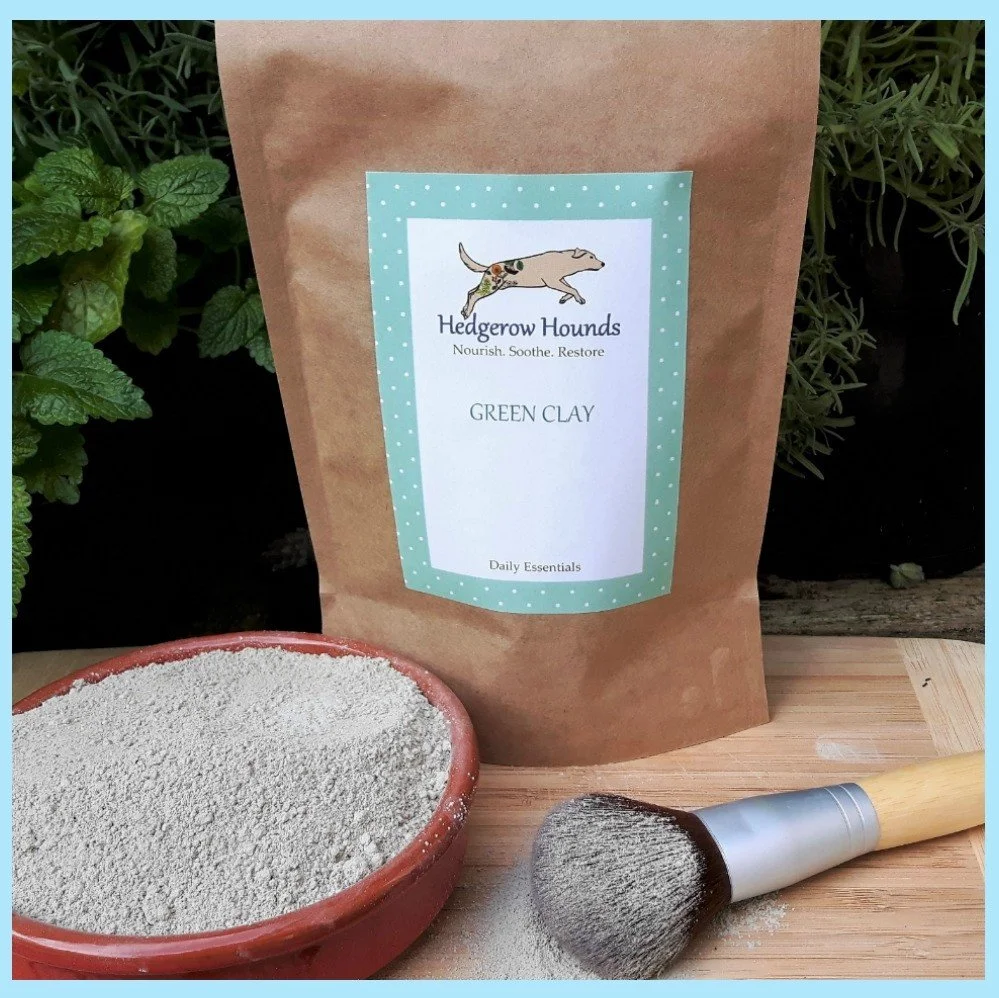
GREEN CLAY Powder - For Pets
There are so many uses for pure Green Clay. Used wet or dry, it is an absolute essential in my natural first aid kit for all the family, both four and two legged!

Our high-quality, pure Green Clay is a must-have for your natural first aid kit. Now available in a 250g bag or 650g bags for multiple dog households, horses & livestock.
Green Clay has excellent drawing properties, so it can be used for drying up wet eczema and hot spots and helping control infection in wounds and abscesses. Green Clay is so versatile and can be used for dogs, cats, horses, sheep, and other livestock. It forms a protective layer over injuries and also naturally repels insects. I have found that when treating horses and livestock that are troubled by flies, a drop of tea tree or lavender essential oil into the wet clay can further aid in repelling flies from the treated area.
It has a calming and soothing effect on a dog’s itchy or traumatized skin, breaking the itch-scratch cycle. It is completely safe if your dog accidentally licks or consumes it. The clay’s perfect partner in dealing with wounds, sores, and fragile skin is Leucillin; they complement each other brilliantly.
Green clay can be made into a thick paste with a little water and spread onto the affected area. This acts as a protective barrier for sore or fragile wounds and as the clay dries, moisture is drawn away from any wet areas of skin.

Perfect for all livestock and can be used wet or dry. A persistent wound which refused to heal, mostly caused by fly annoyance, was kept clean and protected by using the clay as a thick paste.
If used dry, it can be applied with a clean cotton ball and dusted onto the area or with a small, clean brush. This is particularly useful for instantly calming an inflamed area or itchy rash. Click here to view it on our product page: https://www.hedgerowhounds.co.uk/products/green-clay
For infected areas or those that are oozing the area should be cleaned in between applications. An excellent product for this is Leucillin antiseptic spray or dropper bottle.
This product should not replace veterinary treatment if it is needed or if a serious infection is present in a wound.
