Turmeric Golden Paste Recipe
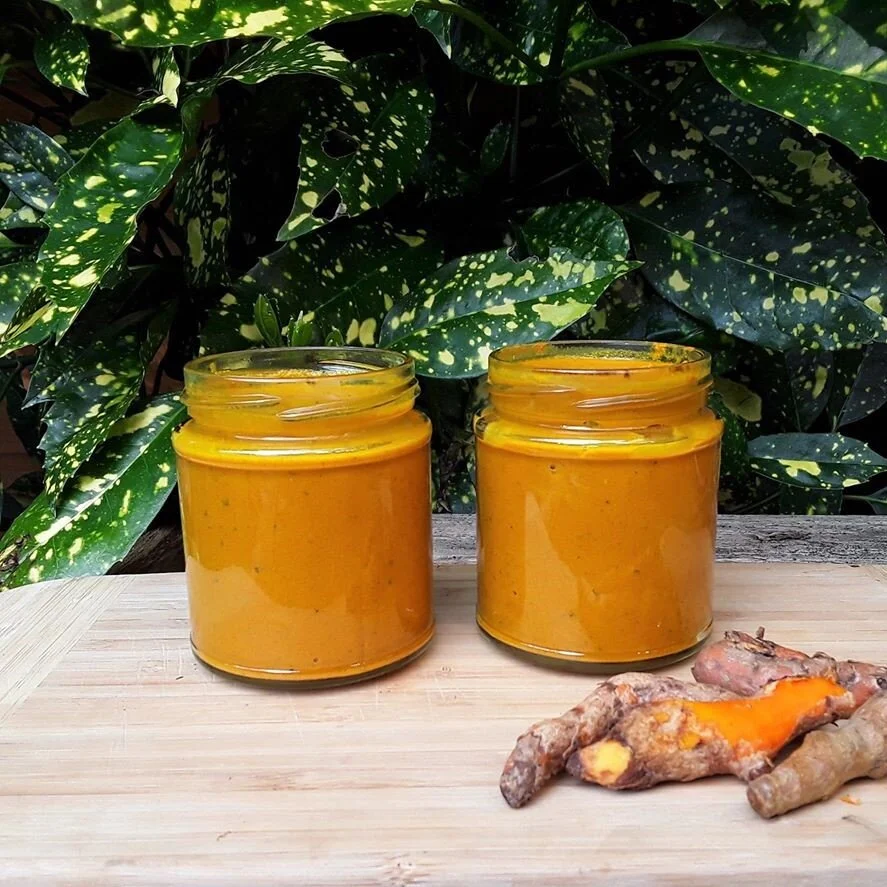
Turmeric is well known for its powerful antioxidant and anti-inflammatory properties. It is important to choose your turmeric wisely and a good supplier will be able to tell you the curcumin percentage which ideally should between 3-5%. The two other important ingredients are coconut oil for better absorption and freshly ground black pepper which contains a substance called Piperine. Studies show that the inclusion of piperine increases the uptake of curcumin.

Turmeric is well known for its powerful antioxidant and anti-inflammatory properties. It is important to choose your turmeric wisely and a good supplier will be able to tell you the curcumin percentage which ideally should between 3-5%. The two other important ingredients are coconut oil for better absorption and freshly ground black pepper which contains a substance called Piperine. Studies show that the inclusion of piperine increases the uptake of curcumin.
A blog on choosing turmeric powder can be found here : https://hedgerowhounds.co.uk/news/turmeric-how-to-choose-wisely
You will need:
Half a cup (65g) turmeric powder
One cup water
Quarter cup (30g) Coconut oil
Quarter teaspoon of freshly ground black pepper
Saucepan
Clean glass jar
How to:
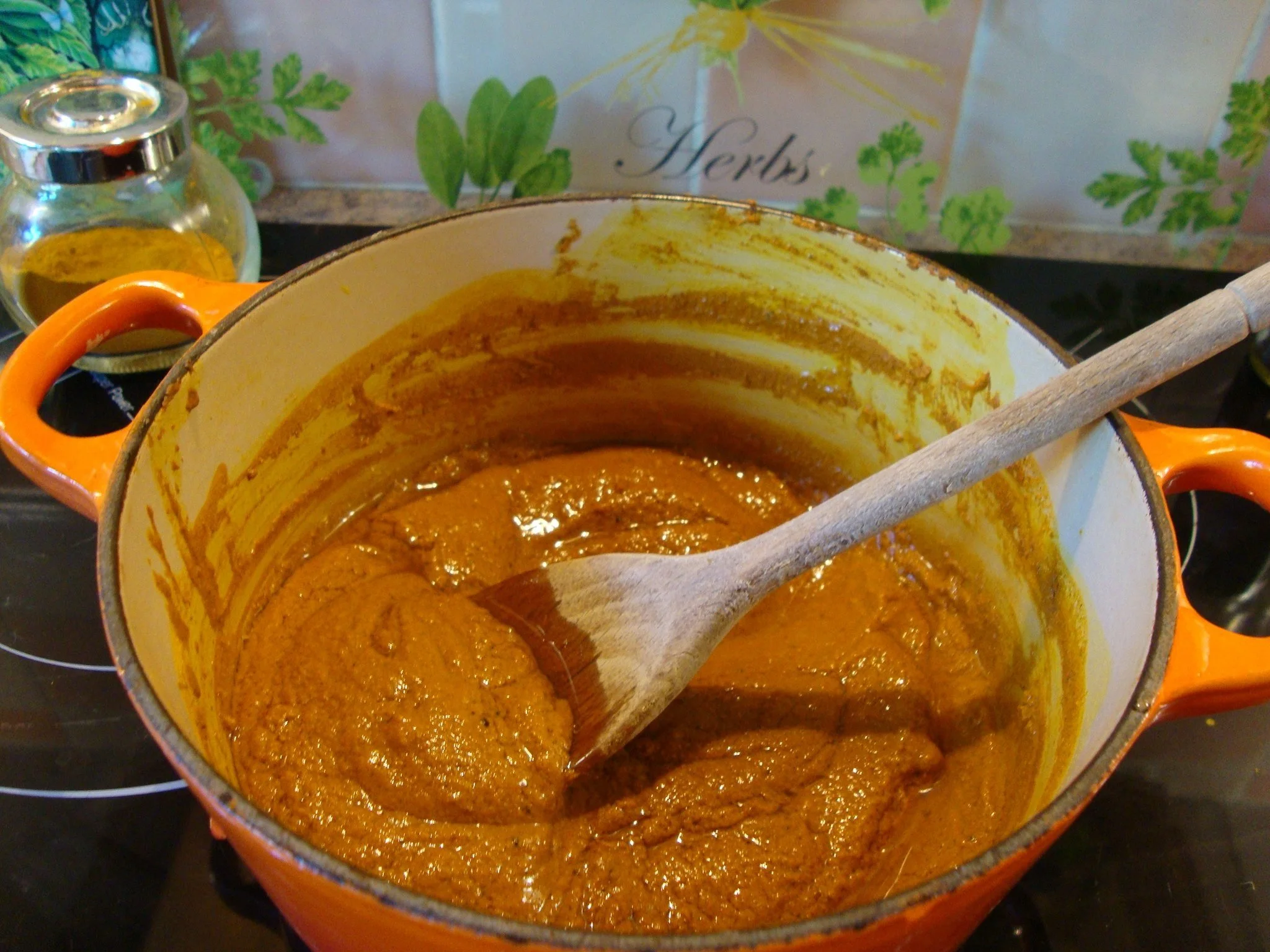
Place half a cup of turmeric powder into a saucepan and add one cup of water. Gently stir over a low heat for approximately 5 minutes until it forms a paste. Adding more water if necessary.
Take off the heat and add the coconut oil and freshly ground black pepper, stirring to combine the ingredients.
When cool, pour into a clean glass jar with a lid, store in the fridge, and use within 2-3 weeks or it will deteriorate.
Amount to feed:
Start with a small amount stirred into the food or offered from a spoon, then over a few days build up to a suggested dose of half a teaspoon a day per 10kg of bodyweight. It is possible to reduce the dosage over time and also recommended that it is not fed every day long term but rotated with other natural remedies.
Caution:
Consult a veterinary surgeon if your dog is on medication and remove from the diet 3 weeks before and one week after any surgical procedures as turmeric can affect blood clotting.
Come and join us on Facebook @HedgerowHounds or Instagram hedgerow_hounds for more recipes and holistic healthcare advice.
Natural Digestive Support for Dogs
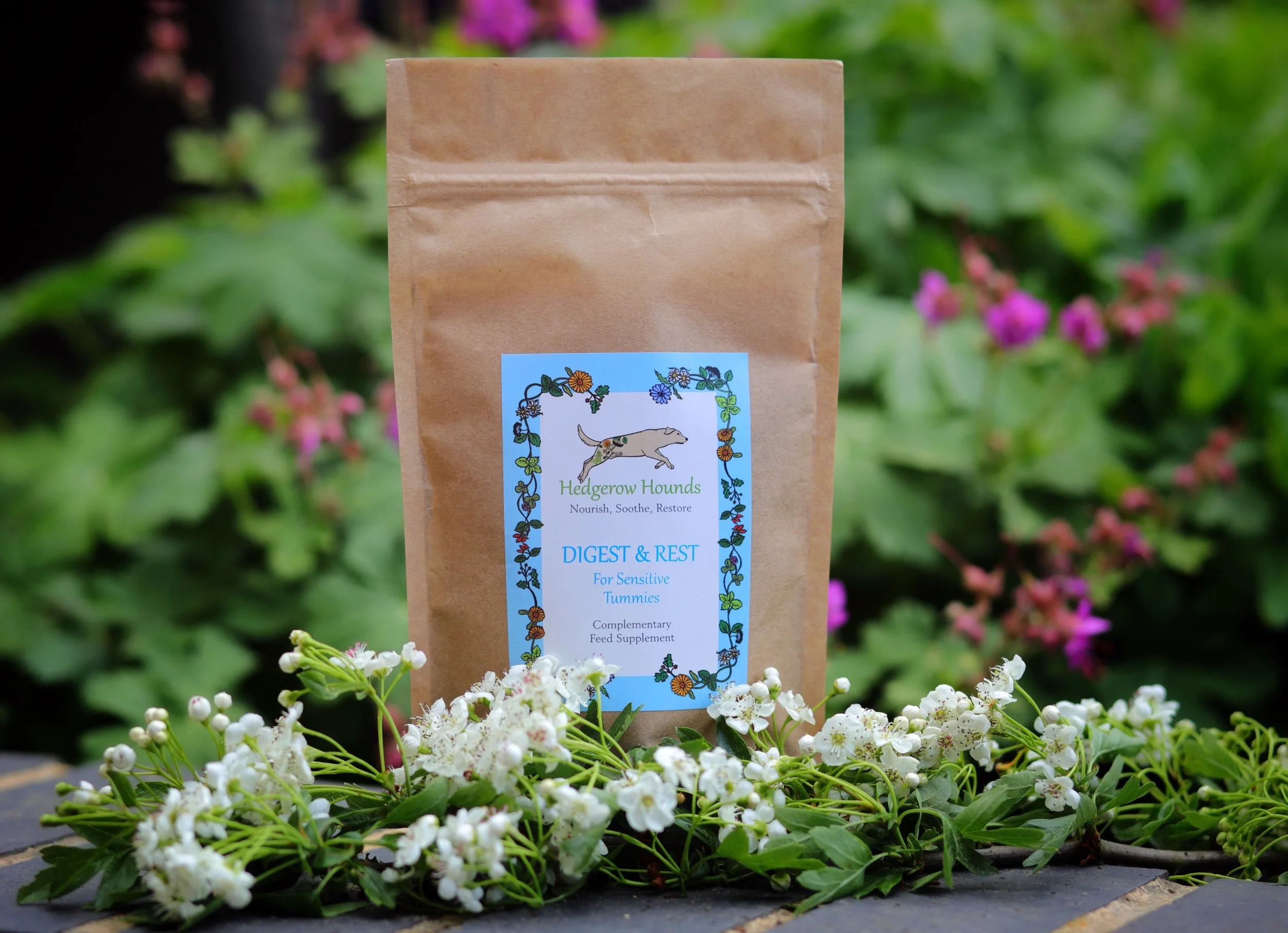
Digest & Rest is the perfect blend for tummy troubles, managing reflux and to aid in anal gland issues.

What does Digest & Rest help with? Digest & Rest was created to help dogs that suffer from digestive upset, constipation, and nausea. It is also ideal for managing anal gland problems. If your dog has a very sensitive digestion, then this blend is ideal if you are intending to make any changes to the diet and will make any transitions much smoother.
It has a very neutral taste and smell, so it will not be off-putting to even the fussiest dog and can be “hidden” in tasty food for the really suspicious, picky eater.
Here are a list of some of the ingredients in Digest & Rest and why they were specially chosen.
Marshmallow - Marshmallow root contains around 35% mucilage, which is a slippery substance to ease irritation of the mucous membranes. This makes it ideal to soothe an irritated throat, gut discomfort or tummy troubles. It is also invaluable for managing reflux and hunger nausea, which can occur just after eating or in the early hours of the morning when the dog’s stomach is empty. Marshmallows’ strongest affinities are with the digestive system, respiratory and urinary tracts.
Chamomile - Chamomile is chosen for its antispasmodic properties as well stimulating digestion as it is quite bitter tasting. Chamomile is also relaxing, so helps if the upset tummy is caused by an anxious, excitable, stressed mind.
Slippery Elm - Slippery elm has been used for centuries to ease digestive upset and soothe the whole digestive tract due to its mucilage properties once it becomes wet.
Fennel - Fennel is useful for expelling intestinal gas and helping to ease stomach cramps.
Psyllium husks - Psyllium are husks from the Plantago ovata species. They provide a form of soluble fibre which when in contact with water, forms a soothing gel which passes through the digestive tract. The husks add bulk to the stools and help with constipation, diarrhoea and aids in the correct emptying of anal glands. Psyllium is also a useful prebiotic to encourage good gut bacteria.
How to use:
Digest & Rest is a very versatile blend to use and you can adapt it to suit your specific dog’s needs. The measured amount can be added to wet food and stirred in, and for dried food, it is recommended that you add a splash of water to the powder and stir it into a paste before incorporating it into the food.
For supporting nausea. If your main reason for choosing this blend is to support reflux or perhaps your dog is recovering from a cough, there are several ways to use this blend for maximum effect. If the powder is made into a thick paste with a little warm water, this starts to release the mucilage, which will coat the mouth and oesophagus as it is consumed. You can try adding this paste to the food, or alternatively, some dogs benefit from a tiny meal or snack with Digest & Rest shortly before the main meal is given, so experiment with this to see what most benefits your dog. Small snacks could include a raw egg, plain cottage cheese, natural live yoghurt or a splash of goats’ milk.
For support with hunger pukes. Some dogs can experience hunger nausea in the early hours of the morning and may bring up some frothy, slimy vomit or start to retch as they experience an uncomfortable nausea. As long as they are well in themselves and have no other symptoms to suggest something more serious is going on, then feeding a very small meal or snack in the evening, which contains the Digest & Rest, can often ease these symptoms overnight and into the early hours. Small snacks can be those listed above or a tiny portion of their main meal set aside for this purpose.
Happy Customer Review
“Our French bulldog now sleeps all night, without the constant air licking, coughing, retching and regurgitation. I never want to be without Digest & Rest” Happy dog and happy owner.
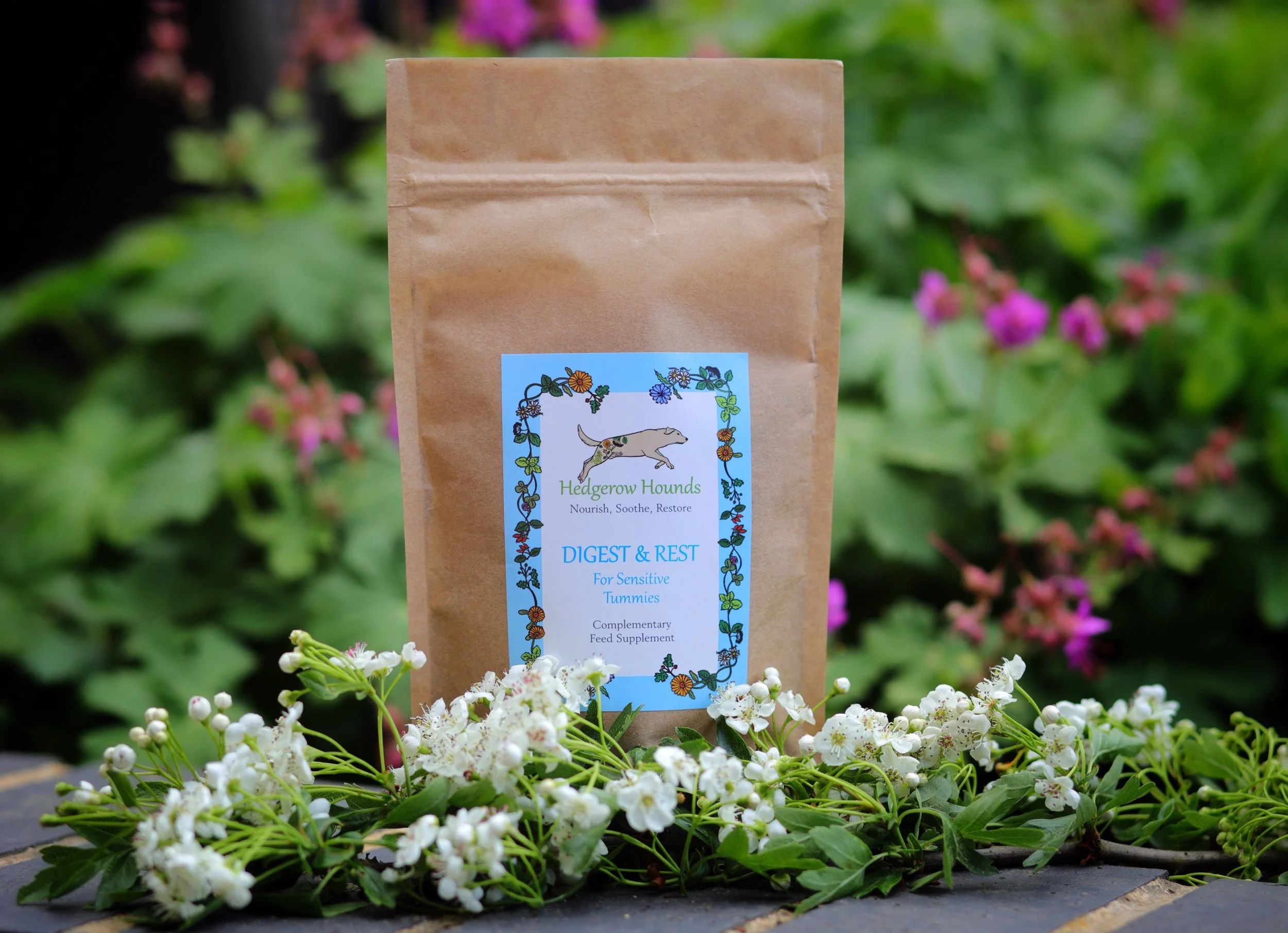
A beautiful blend of herbs, roots, and seeds specifically to soothe the gut, aid digestion, and help anal gland issues.

All our products are veterinary formulated, but should not be used instead of consulting your vet should your dog have a health problem.
Hedgerow Hounds is owned by a qualified holistic canine therapist with 30 years of experience in healthcare and nutrition, and the blends are formulated by a veterinarian.
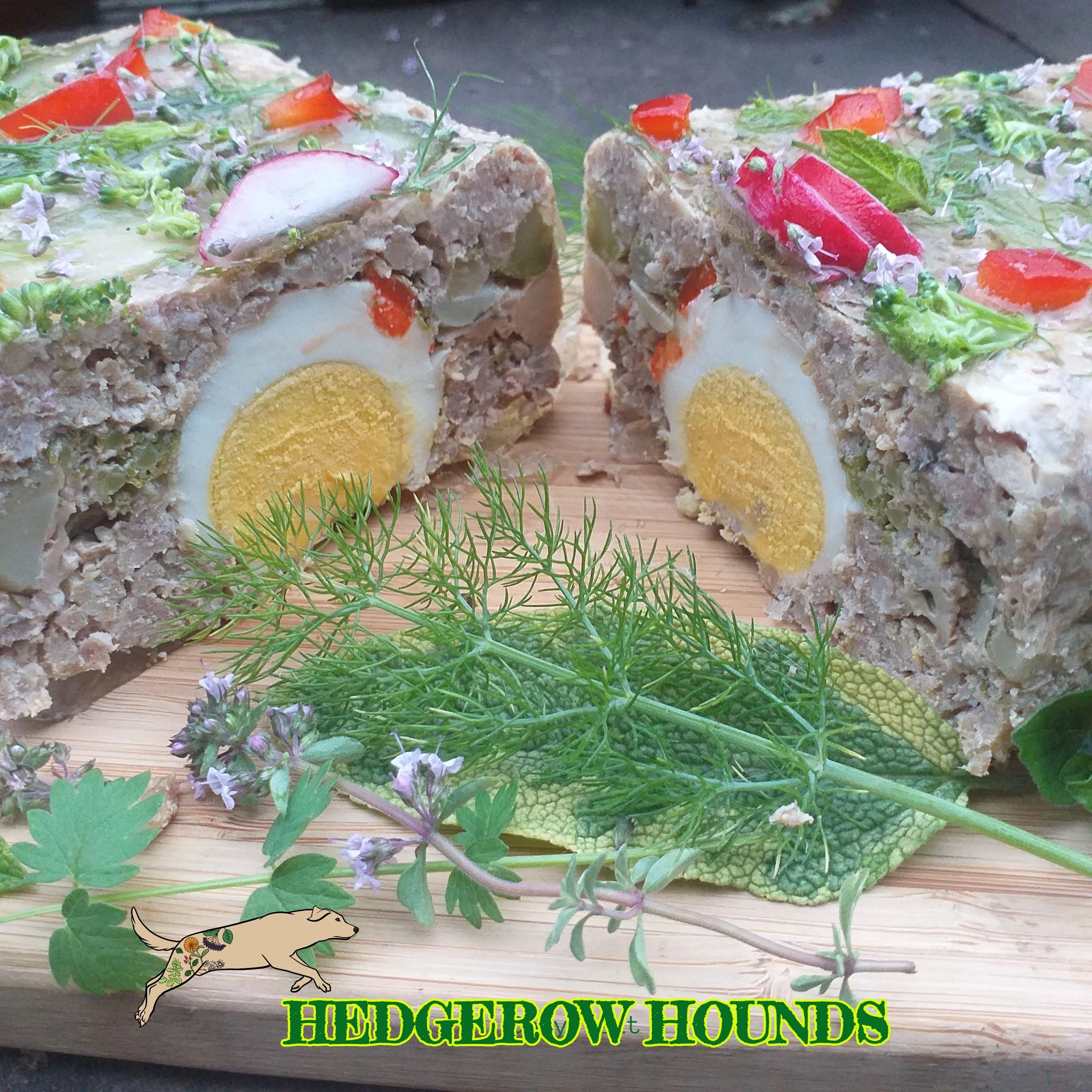
TURKEY TERRINE
A recipe that can be used as a celebratory treat for your dog on Christmas day.
Choose lean meat, as any fats will be released whilst cooking and make the terrine oily and only cook with a bone-free mince.

This recipe can be made as a raw or cooked terrine.
A recipe that can be used as a celebratory treat for your dog on Christmas day.
Choose lean meat, as any fats will be released whilst cooking and make the terrine oily and only cook with a bone-free mince.
Ingredients
1lb raw minced bone free turkey or free range chicken.
2 free range eggs, beaten
200g of cooked, well drained, seasonal vegetables (parsnip, carrot, broccoli, kale etc)
50g of boiled, sweet potato (mashed or thinly sliced)
1 tablespoon of Hedgerow Hounds herbal blend.
Optional- 150g of chopped chicken livers
How to make
Line a loaf tin with baking parchment or lightly grease with coconut oil.
Transfer the meat and optional liver into a large mixing bowl and stir in the beaten eggs to combine.
Pour half the mixture into the tin, levelling off and pressing down firmly with the back of a large spoon. Place a layer of chopped vegetables, then pour in the remaining meat mix, firming down as before.
Bake in the centre of a preheated oven at 180c for approximately 45 minutes.
Remove from the oven and leave for a few minutes. While still warm, gently drain off any excess oil that may be trapped in the tin. Set aside for 30 minutes until cool. It is easier to divide into individual portions if the loaf is placed in the fridge before slicing.
The loaf will keep in the fridge for 5-7 days or you could make it in advance, pop it in the freezer and defrost the day before use.
It will provide a nutritious, tasty, moist meal for your dogs to enjoy.
www.hedgerowhounds.co.uk
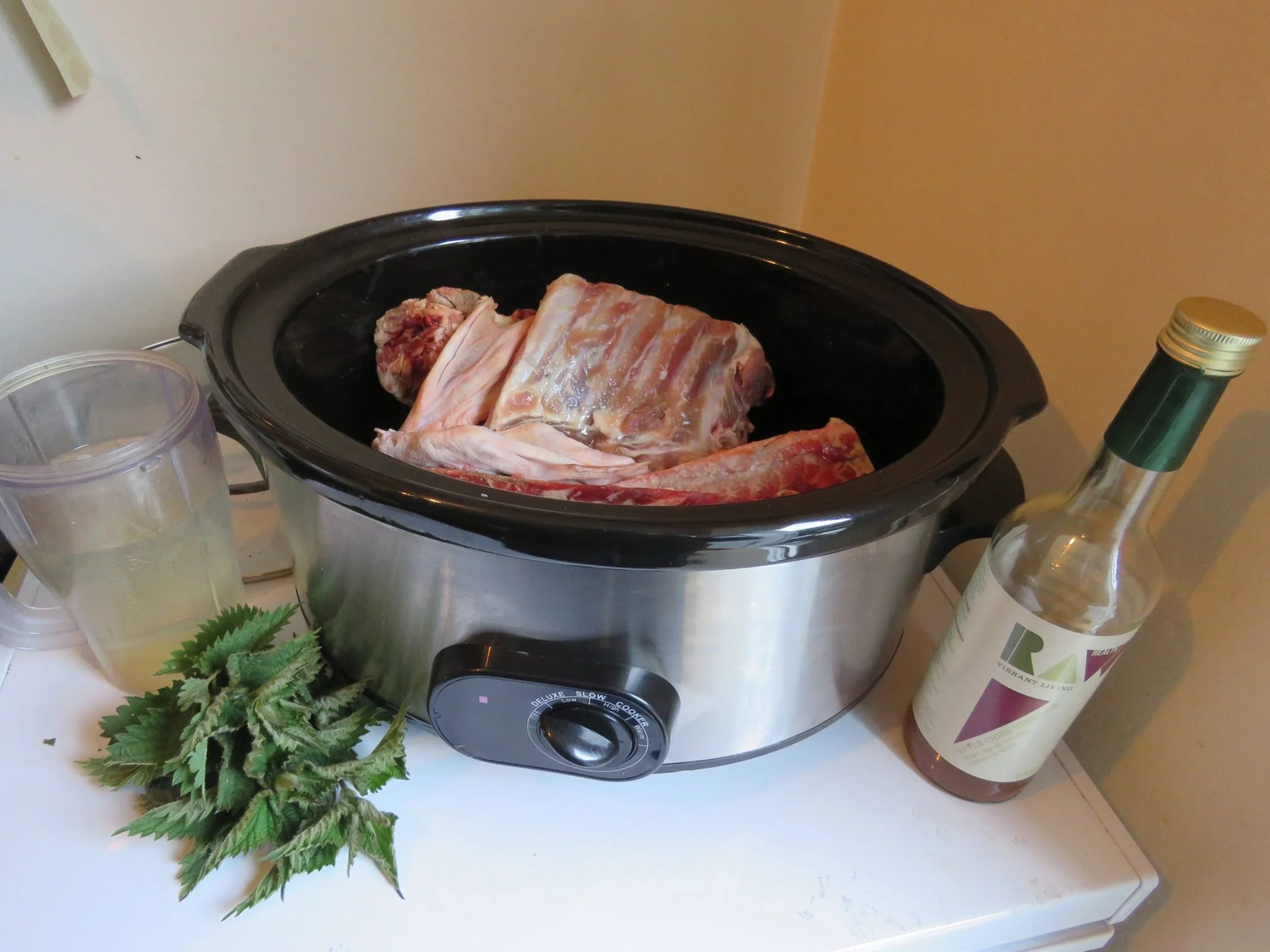
Bone Broth Recipe
Bone Broth is rich in naturally occurring collagen, gelatin, glucosamine, hyaluronic acid and chondroitin so you can see why it is beneficial to joint health and particularly useful for senior dogs.
It is very easy to digest and great as a nourishing pick me up for poorly dogs that are off their food. It is also full of flavor and will tempt even the fussiest eater.
Good bones to use are chicken & duck feet, ribs, chicken backs, beef or lamb ribs, chicken or duck necks, beef knuckles, pig trotter and ox tail. It must be noted that you are NOT going to feed the cooked bones to your dog, only the lovely broth and jelly that remains after the long cooking process.
If you add a marrow bone, remove any central marrow first or it will turn the broth very greasy. Cut off any excess skin or fat from the bones before adding to the pot, this is particularly important if you have a dog that is prone to pancreatitis.
You will need:
A slow cooker or heavy stock pot with a lid, which can be left on a low setting for many hours.
A collection of bones, a mixed variety will produce a better broth.
Enough water to cover the bones and a little set aside should levels drop too low
Apple cider vinegar (2-3 tablespoons) this helps leach the minerals out of the bones and into the broth
Optional small selection of vegetables, but not too much as we don’t want to dilute all the nutritious bone broth !
How to make:
Pre-heat your slow cooker on high for 15 minutes then turn down to its lowest setting. Add your selection of bones plus the water containing the cider vinegar. Place the lid on and leave on low for at least 24 hours although many people leave it for up to 36 hours.
After this time turn off the pot and when the broth has started to cool, thoroughly remove any cooked bones with a slotted spoon and make sure they are safely disposed of and out of the dog’s reach.
The resulting broth can be ladled or poured into suitable ice cube trays or pots and kept in the fridge for 3-4 days or frozen for later use.
**The cooked bones must be disposed of safely and never fed to your dog **.

Walking your Dog in Winter
A few top tips for safe Winter walking
Exercising our dogs in Winter can sometimes be a challenge, here are a few top tips to make life easier and safer for your dog.
A frosty start to the day will mean that your dogs muscles are cold from the fall in temperature and also a little stiff from resting all night so will need to gradually limber up before strenuous exercise.
It is really important to give between five and ten minutes lead walking and even more so for seniors and dogs that have had an injury in the past, before letting them off the lead to run. A warm, lengthened muscle is far more prepared for a faster pace and much less prone to injury.

Old or arthritic dogs will benefit from a comfortable, warm coat to wear, this can always be removed if they start to get too warm once they have had a run around.
Be aware that the ground underfoot can change dramatically with a hard frost. The usual muddy track or gateway can become very treacherous and icy or any rutted ground frozen solid. This can cause damage to your dogs paws, joints and muscles should they run over it at speed. Also be careful when there has been snowfall and you are walking in an unfamiliar place as the snow can conceal many hidden dangers underneath. Snow can also bring out the hidden puppy even in the oldest of dogs so putting them on a long line can allow them some freedom to play without the danger of them overdoing it or injuring themselves.
If you have to walk on pavements and grit has either been laid down or spread across from the gritting lorry, then make sure you wash your dogs paws, legs and undercarriage off immediately with luke warm water on returning home, followed by towel drying as they are less likely to lick their legs if they are dry. When the pads are dry a paw balm can be rubbed in to avoid the pads cracking or becoming sore.
Here are 2 natural products that I wouldn’t be without at any time of the year but are particularly useful in Winter. All can be found on the shop.
https://www.hedgerowhounds.co.uk/products/green-clay
https://www.hedgerowhounds.co.uk/products/adore-the-paw-balm
If you walk your dog in the late afternoon or evening then remember to wear some sort of reflective clothing and also something on your dogs collar or harness. There are discs and collars that contain a battery and can be illuminated at the touch of a button. These are useful if you intend to let your dog off the lead, as you can see where the dog is at all times or if you mistime your walk and suddenly find you are walking back in fading light.
Be extremely vigilant of the dangers of anti-freeze, which can either be spilled or sometimes end up in puddles from a passing vehicle. If you are walking in an area where this could be a possibility then keep the dog on a lead and make sure you have a bottle of water and a travel bowl with you for longer walks to avoid the temptation of them drinking from puddles. If you see your dog lick anti-freeze then they need to be taken to the vet immediately as it is extremely poisonous.
If older or arthritic dogs suddenly stop wanting to go out for walks once the weather turns colder then it could well be that they are uncomfortable somewhere in their body and possibly have joint pain which is made worse by the cold, damp weather. Speak to your vet about any medication they are on and also look into feeding a quality joint supplement to help them feel more comfortable. They may only require a very short walk or just a wander around the garden if the weather turns very cold and miserable.
Snuffle mats, Licki mats and interactive toys are fantastic for less mobile dogs and encourage them up out of their beds and to gently move around, easing stiff joints and muscles.
A blog about using Snuffle Mats is here: https://www.hedgerowhounds.co.uk/blog/snufflmats-and-balls
Other blogs which covers injury prevention and managing senior dogs can be found here: https://www.hedgerowhounds.co.uk/news/repetitive-strain-injuries-in-dogs
https://www.hedgerowhounds.co.uk/news/holistic-care-of-senior-dogs
Caroline Hearn MICHT. Dip ICAT. MIAAT
Human, Canine & Equine Sports & Holistic Therapist
www.hedgerowhounds.co.uk
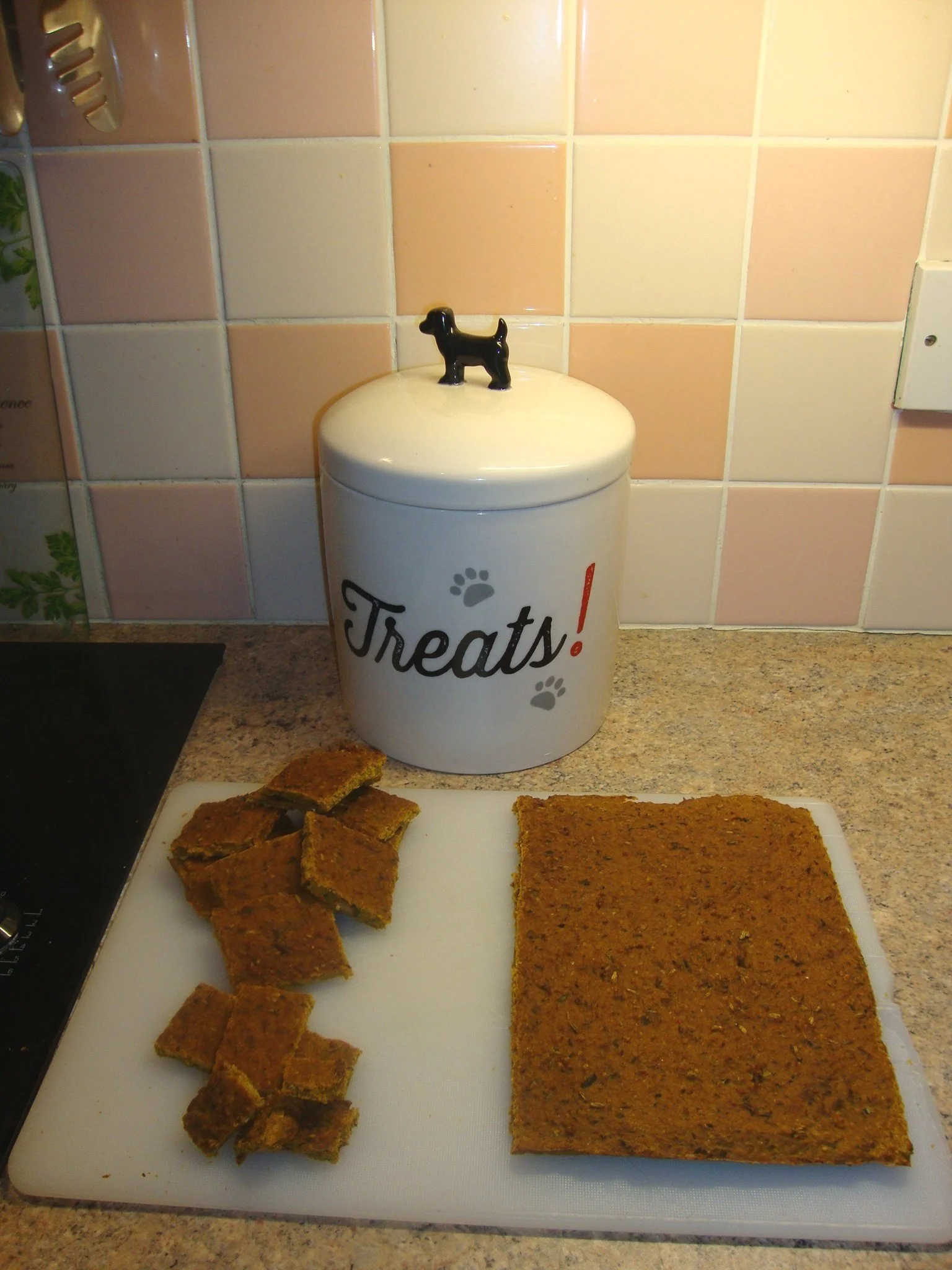
Turmeric and Pilchard Bake
This is a great recipe for senior dogs, those that prefer soft treats or very active dogs that will benefit from the anti-inflammatory effects of turmeric.

This is a great recipe for senior dogs, those that prefer soft treats or very active dogs that will benefit from the anti-inflammatory effects of turmeric.
There is also a recipe on how to make your own golden paste and a blog on what to look for when choosing turmeric.
To make the treats you will need:
Tin Pilchards 420g tin in tomato sauce or spring water (avoid the ones in oil)
Turmeric paste or powder- 1 tablespoon
2 cups Flour of choice (I used a combo of Gram & Buckwheat)
2 free range eggs
Quarter cup of gluten free jumbo oats/oatmeal or cooked Quinoa
Apple cider vinegar 1 teaspoon
Sprinkle of flax or chia seeds
Mix all ingredients in a bowl and add just enough water to make it spreadable in the base of a baking tray, which is best lined with baking paper. Level the ingredients out so it is a consistent thickness to allow for even baking.
Place the tray in a preheated oven at 180c for around 30 mins or until cooked but still springy & soft. Allow to cool slightly and then cut to an appropriate size for you dog.
Once thoroughly cold, store in an airtight container in the fridge and use within 7 days or put in the freezer and take out what you need each day.
Turmeric - Which type?
Turmeric is a rhizome which is closely related to ginger and has traditionally been used for around 4,000 years in cooking, ceremonies and highly valued for its medicinal qualities.
Over the past few years it has become popular with people and their pets as a natural way to help alleviate aches and pains as it has anti-inflammatory and anti-oxidant properties.
It is important to choose your turmeric product wisely and there are a few things to check before purchase to ensure you are getting a quality source of turmeric and that it has a number of other ingredients included to aid better absorption and increase effectiveness.
Turmeric is naturally rich in vitamins and minerals including calcium, magnesium & potassium. Vitamins C, E,K,B6,B12 and folate. Minerals include iron, phosphorus, zinc, thiamine, riboflavin, niacin and beta- carotene.
Turmeric also contains a number of bio-active compounds called Curcuminoids. The most studied and well known of these is called Curcumin. It is important to have a certain level of curcumin present to ensure the best results. Turmeric powder sold in supermarkets for culinary use will usually have the curcumin removed, which is then used in capsules, so just the flavour and colour of the powder remains.
A good turmeric product will state the curcumin level and also give a list of other ingredients which compliment and increase absorption of the curcuminoids. The level of curcumin to look for is between 3-5 %. Other ingredients are an oil, usually coconut or flax seed oil and black pepper. Black pepper contains a substance called Piperine which in recent studies, shows an increase in the uptake of curcumin by 2,000%
There have been thousands of studies and clinical trails carried out on turmeric, curcumin and a variety of other compounds found in this rhizome. Some of these studies can be found at www.ncbi.nlm.nih.gov
Important advice if taking medication:
Any dietary turmeric should be used with caution if you or your dog is on medication as both curcumin and piperine can affect the absorption of medication. Turmeric can also influence blood clotting so remove from the diet two weeks prior to an imminent surgical procedure and for one week after surgery. Turmeric capsules intended for human use can consist of pure curcumin which is too strong for dogs and more likely to interact with medication, unlike the milder paste. If you want to give your dog capsules then ensure they are made for animal use.
Turmeric is a warming spice so it may be unsuitable for all year round use in certain dogs. Try and take a break or reduce the dose at some point in the year. A good time for a short break could be in the warmest of the Summer months when mobility is often eased due to an increase in temperature.
Holistic Healthcare for Much loved Dogs
www.hedgerowhounds.co.uk