Walking your Dog in Winter
A few top tips for safe Winter walking
Exercising our dogs in Winter can sometimes be a challenge, here are a few top tips to make life easier and safer for your dog.
A frosty start to the day will mean that your dogs muscles are cold from the fall in temperature and also a little stiff from resting all night so will need to gradually limber up before strenuous exercise.
It is really important to give between five and ten minutes lead walking and even more so for seniors and dogs that have had an injury in the past, before letting them off the lead to run. A warm, lengthened muscle is far more prepared for a faster pace and much less prone to injury.

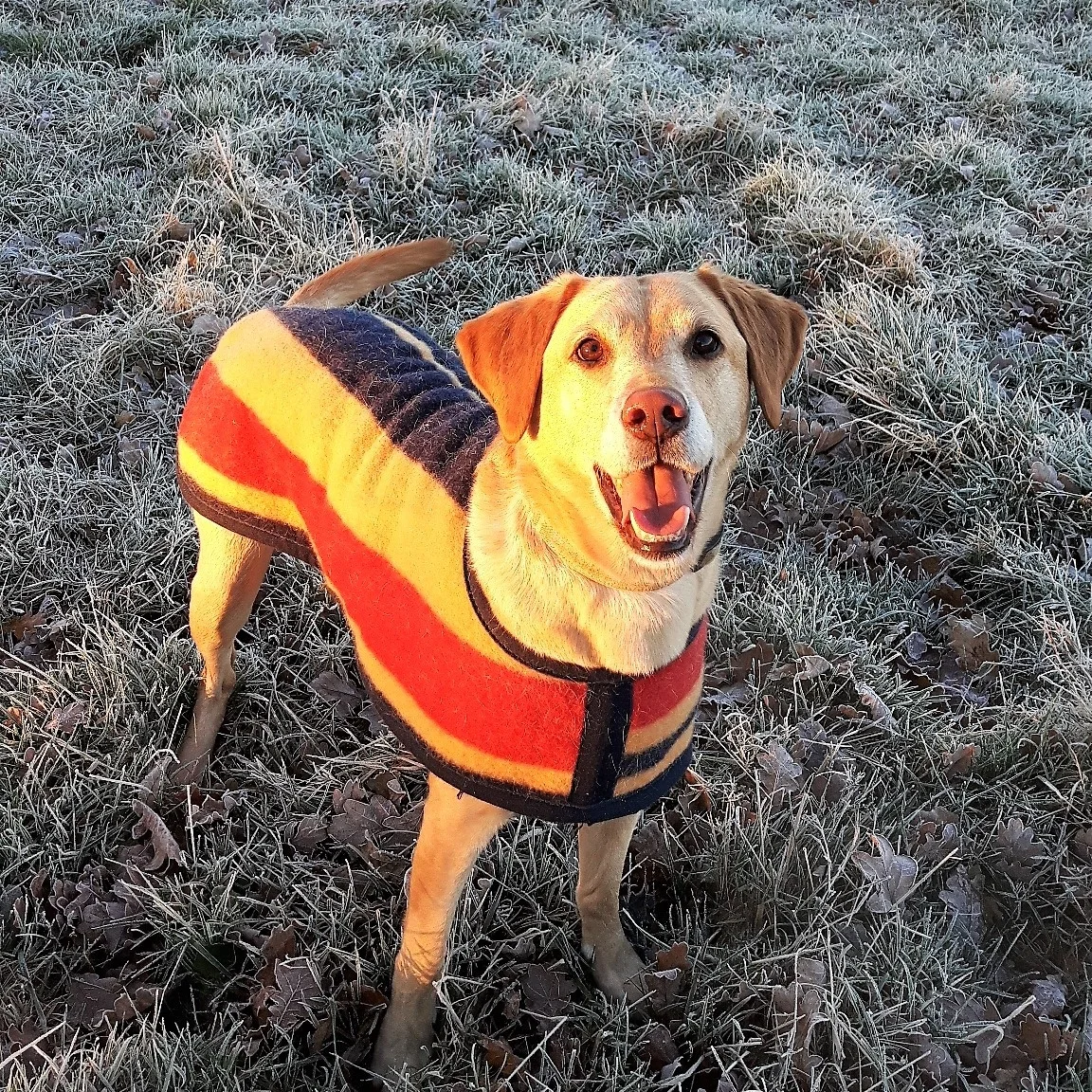
Old or arthritic dogs will benefit from a comfortable, warm coat to wear, this can always be removed if they start to get too warm once they have had a run around.
Be aware that the ground underfoot can change dramatically with a hard frost. The usual muddy track or gateway can become very treacherous and icy or any rutted ground frozen solid. This can cause damage to your dogs paws, joints and muscles should they run over it at speed. Also be careful when there has been snowfall and you are walking in an unfamiliar place as the snow can conceal many hidden dangers underneath. Snow can also bring out the hidden puppy even in the oldest of dogs so putting them on a long line can allow them some freedom to play without the danger of them overdoing it or injuring themselves.
If you have to walk on pavements and grit has either been laid down or spread across from the gritting lorry, then make sure you wash your dogs paws, legs and undercarriage off immediately with luke warm water on returning home, followed by towel drying as they are less likely to lick their legs if they are dry. When the pads are dry a paw balm can be rubbed in to avoid the pads cracking or becoming sore.
Here are 2 natural products that I wouldn’t be without at any time of the year but are particularly useful in Winter. All can be found on the shop.
https://www.hedgerowhounds.co.uk/products/green-clay
https://www.hedgerowhounds.co.uk/products/adore-the-paw-balm
If you walk your dog in the late afternoon or evening then remember to wear some sort of reflective clothing and also something on your dogs collar or harness. There are discs and collars that contain a battery and can be illuminated at the touch of a button. These are useful if you intend to let your dog off the lead, as you can see where the dog is at all times or if you mistime your walk and suddenly find you are walking back in fading light.
Be extremely vigilant of the dangers of anti-freeze, which can either be spilled or sometimes end up in puddles from a passing vehicle. If you are walking in an area where this could be a possibility then keep the dog on a lead and make sure you have a bottle of water and a travel bowl with you for longer walks to avoid the temptation of them drinking from puddles. If you see your dog lick anti-freeze then they need to be taken to the vet immediately as it is extremely poisonous.
If older or arthritic dogs suddenly stop wanting to go out for walks once the weather turns colder then it could well be that they are uncomfortable somewhere in their body and possibly have joint pain which is made worse by the cold, damp weather. Speak to your vet about any medication they are on and also look into feeding a quality joint supplement to help them feel more comfortable. They may only require a very short walk or just a wander around the garden if the weather turns very cold and miserable.
Snuffle mats, Licki mats and interactive toys are fantastic for less mobile dogs and encourage them up out of their beds and to gently move around, easing stiff joints and muscles.
A blog about using Snuffle Mats is here: https://www.hedgerowhounds.co.uk/blog/snufflmats-and-balls
Other blogs which covers injury prevention and managing senior dogs can be found here: https://www.hedgerowhounds.co.uk/news/repetitive-strain-injuries-in-dogs
https://www.hedgerowhounds.co.uk/news/holistic-care-of-senior-dogs
Caroline Hearn MICHT. Dip ICAT. MIAAT
Human, Canine & Equine Sports & Holistic Therapist
www.hedgerowhounds.co.uk
BODY WRAPS & PRESSURE VESTS
Pressure vests and elasticated body wraps have been in use for many years to assist anxious and fearful dogs and to aid recovery after surgery, injury and neurological conditions.

Caroline Hearn – MICHT. Dip ICAT Dip MLD
Sports, Remedial & Holistic Massage Therapist
Pressure vests and elasticated body wraps have been in use for many years to assist anxious and fearful dogs and to aid recovery after surgery, injury and neurological conditions.
The effects of the body wraps and the vests work in slightly different ways depending on their purpose of use and what results we are aiming for.
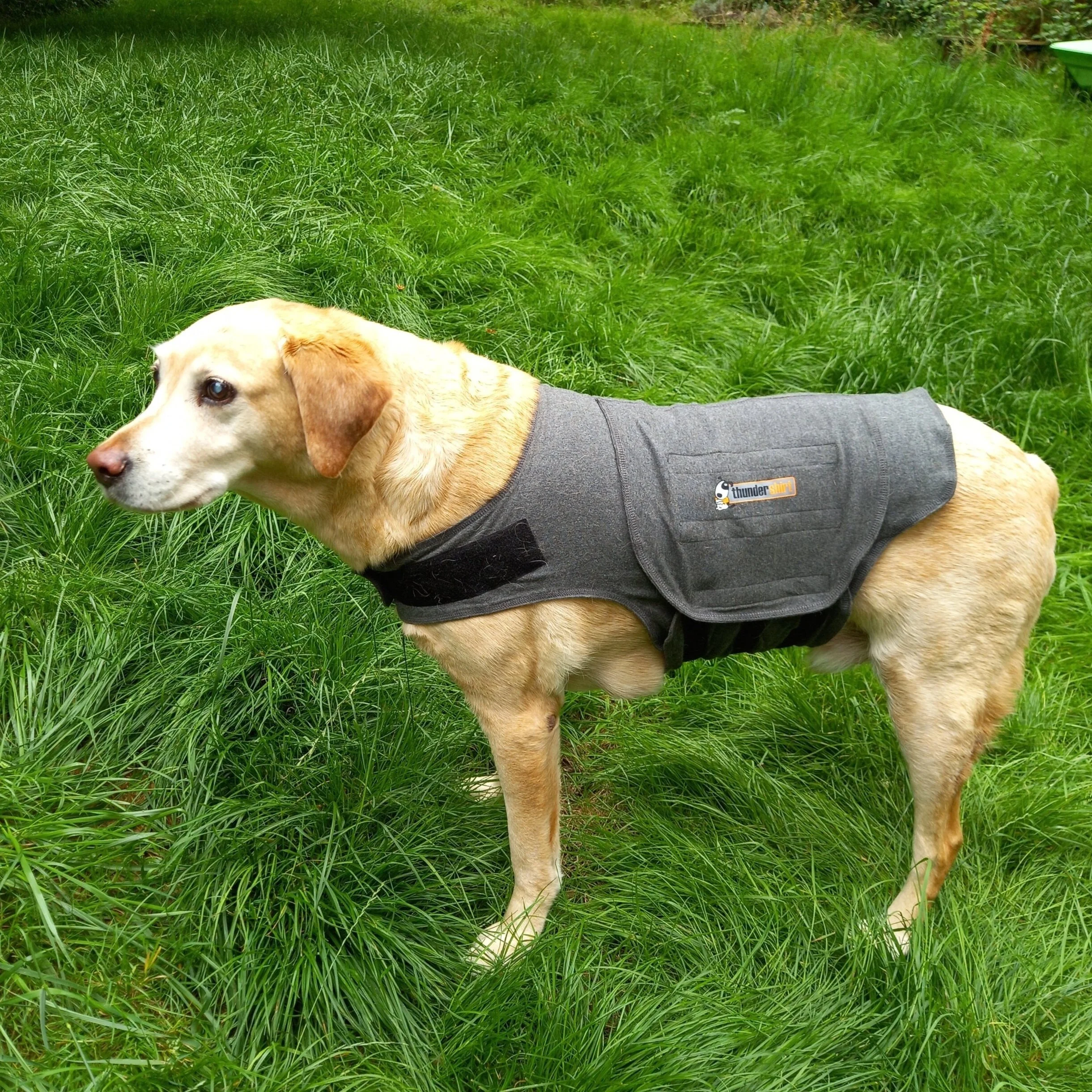
Pressure Vest (Thundershirt etc).
Probably the best known of all the pressure vests is the “Thundershirt” although there are many more on the market today that work on the same principal.
They are predominately used for dogs that are anxious, reactive and fearful of a known source such as thunder, fireworks, loud noises, travelling or separation anxiety.
The reasoning behind the vests is similar to the way that swaddling an infant can bring about comfort and reassurance.
Light compression activates the parasympathetic nervous system to help create a feeling of relaxation.
Once this system is stimulated, hormones such as endorphins, serotonin and dopamine are released bringing a feeling of calm, a reduction in anxiety and a lowered heart rate.
It is important to buy the right size of pressure vest. For it to be effective, it will need to be a snug fit. The aim is to provide light pressure that is in constant contact with the body but not so tight that it restricts movement.
For the best results, it is vital not only to prepare your dog for wearing one but also to use the vest in a positive way for a period of time before the actual stressful event takes place. Each dog is an individual, so proceed at a pace they are comfortable with. Some dogs, however gently and slowly they are introduced to the vest will not respond well and will become stressed and anxious whilst wearing it, so other things will have to be put in place to help them cope (see the whole fireworks series of blogs)
Wearing the vest should be an enjoyable, stress-free event that the dog associates with pleasant experiences. That could involve a few high-value treats, light massage techniques, a feeling of security, and spending quality time with their owner. Avoid activities that are too stimulating or increase adrenaline, as we are aiming to encourage a feeling of contentment and calm associated with wearing the vest.
The effects of the pressure vest accumulate over time so it is important to carry out the initial introductions when your dog is relaxed and in a state of mind that they can process it as a positive experience. It is also advisable for your dog to wear the vest from time to time to reinforce the feel-good factor when they have it on.
As with the wrap bandages, they should not be left on unattended or for long periods of time, without a break.
If you have a male dog make sure that the wide under-belly strap does not cause discomfort near his genitals, as some of the fastenings do extend a long way back in the abdominal area.
Be aware that the Velcro can be noisy when you unfasten the chest and belly straps, so a noise-reactive dog will need to be carefully introduced so they are not startled by it.
Body Wrap Bandages:
The use of wide, elasticated bandages such as the “Ace” bandage, can be used as a method to reassure a nervous dog or more often as a useful “tool” in the rehabilitation after surgery or where there has been long periods of immobilisation or recovery from a neurological condition.
They are also useful for preparing a dog to wear a harness or coat, touch sensitive dogs, those that pull hard when walking on a lead and for dogs that lack confidence.
The wraps are commonly used in a figure-of-eight configuration, making contact with the chest, crossing diagonally over the back and finishing either near the groin or incorporating the hindquarters.
They do need to be fitted correctly so not to cause harm or discomfort and one of the best guides on applying them can be found on the Tellington T-Touch website.
If they are being used for rehabilitation after surgery or illness then it is essential that your vet, physio or canine massage therapist shows you exactly how to apply them according to your individual dogs’ condition.
It is important that the bandage is elasticated, as the sensation of the pressure against the body which expands and contracts with movement, brings about a heightened sense of awareness on just how the dog is using their body.
The self-adherent bandage that you use for first aid is not suitable for this purpose as it can pull on the hairs and is not quick to remove, should your dog become distressed.
The correct use of body wraps works on the proprioceptive system. This is why they are so useful in rehabilitation and re-training of the body, for example, after a long period of compensatory movement due to pain or a previous injury.
Proprioception, meaning “one`s own” is a sense of relative position of neighbouring body parts and the strength needed for movement.
Proprioception plays a large role in co-ordination, posture and body awareness.
We receive proprioceptive input from the sensory receptors in our skin, muscles and joints. When these receptors are stimulated, through touch or pressure, the brain is provided with the information about our body positioning, movement and speed.
The wraps are often used when performing different activities such as walking and trotting over poles placed on the ground and travelling over varying terrain, this gives an awareness of the dogs limb positions, how they are placing them on the ground and the energy that is propelling them forwards.
It can also become apparent that the dog is favouring to push off more on one hind limb or much happier and free moving in one direction over the other. In these cases, it is important to take regular breaks after 5-10 minutes of work with the wraps on as muscles will become fatigued and sore when adapting to a new movement pattern.
Both the pressure vests and body wraps are a great addition to the holistic wellbeing of your dog. However, they do not replace the expertise of a qualified behaviourist or a canine therapist should your dog need additional help in certain areas.

Pumpkin Chicken Mash
A soothing and comforting meal for when tummy trouble strikes!
A soothing and comforting meal for when tummy trouble strikes!

You will need:
1 Small skinless chicken breast or Cod/Coley portion if your dog is sensitive to chicken.
Pumpkin or Butternut Squash peeled & diced around 400g
1 Small celery stick, finely chopped
A quarter teaspoon of fennel seeds, lightly crushed
How to:
Place the diced squash into a saucepan, cover with boiling water, and simmer for approximately 20 minutes or until soft.
Put the skinless chicken breast into another pan of boiling water along with the chopped celery and the crushed fennel seeds and simmer for around 15 minutes.
Drain the squash in a colander and allow to sit for 5 minutes to remove excess moisture then mash with the back of a fork or use a potato ricer.
Drain the chicken and celery.
Thinly slice or cube the chicken breast and stir into the pumpkin mash.
Serve slightly warm or at room temperature.
This recipe is not a complete and balanced meal, but it is extremely useful to feed in small portions if your dog has a sudden tummy upset or is a little off-colour. It is light, easily digested, and tempting for fussy or shy eaters.
If you have the Digest & Rest blend, then a little stirred into the mash will be very soothing to the gut, https://www.hedgerowhounds.co.uk/products/digest-and-rest
The chicken and pumpkin mash will keep in the fridge for up to five days or can be frozen in small individual pots for later use.
Caroline Hearn- Hedgerow Hounds
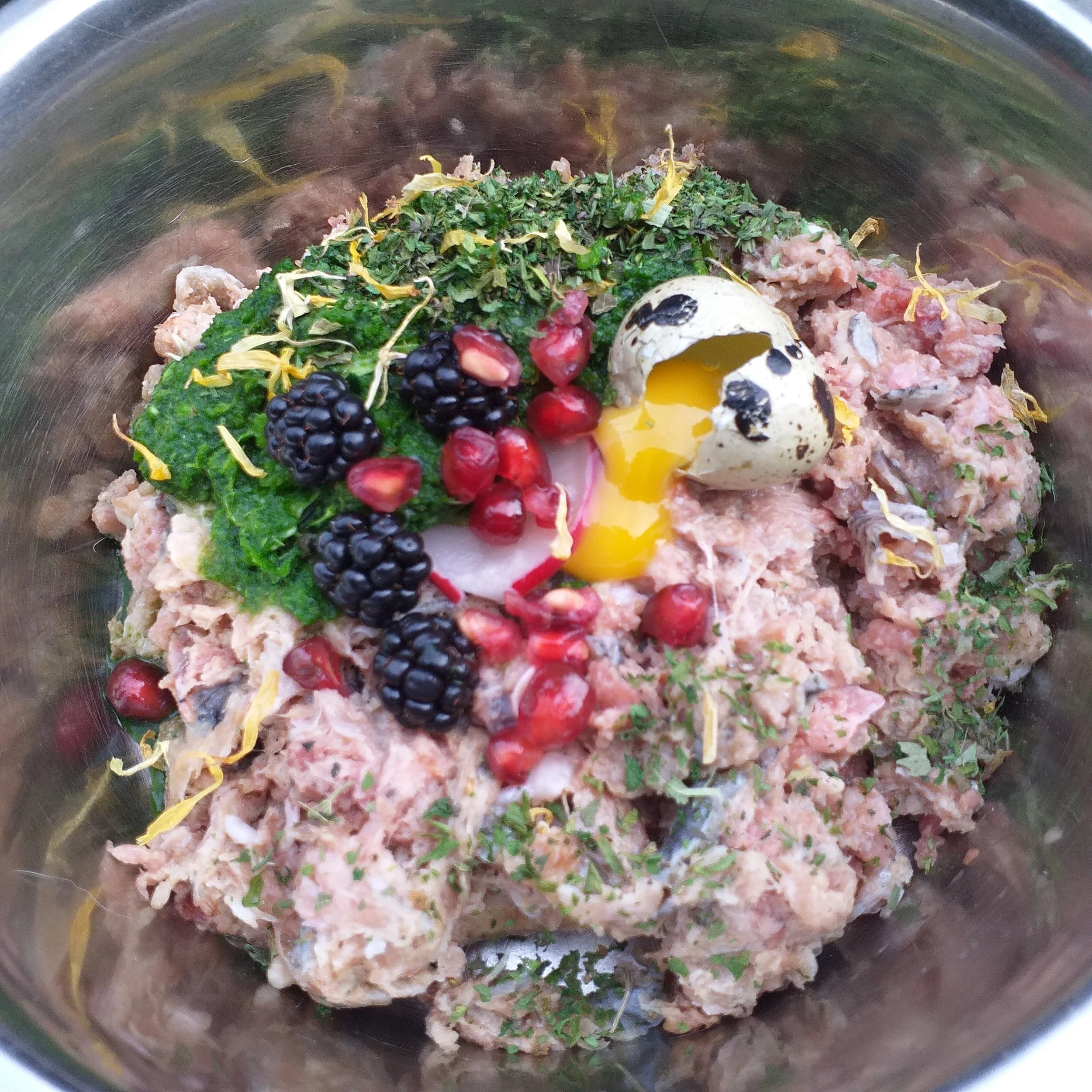
SEASONAL FEEDING - Making the Most of Fresh Ingredients
The majority of people have lost their connection with the land, nature and the changing seasons.
Natures larder provides us with a huge variety of produce at the perfect time when it will be of most benefit to us nutritionally. With a few small changes we can all benefit from eating seasonally which is better for us, our dogs and the environment.

Spring, Summer, Autumn and Winter, seasonal feeding at its freshest and finest. Featuring Hedgerow Hounds seasonal herbal blends.
The majority of people have lost their connection with the land, nature and the changing seasons.
Natures larder provides us with a huge variety of produce at the perfect time when it will be of most benefit to us nutritionally. With a few small changes we can all benefit from eating seasonally which is better for us, our dogs and the environment.
We can utilise herbs and vegetables in the Spring, which are a perfect cleansing tonic to gently ease us out of the long winter months, where we have no doubt been overindulging and less active.
To the cooling and hydrating bounty of Summer, followed by the real bumper harvest of Autumn, which gives us all the foods we need to help boost our immunity and general health in preparation for the cold Winter months ahead.
Here at Hedgerow Hounds, we are passionate about seasonal ingredients, and if you really want to embrace seasonality, then we have a seasonal range of handmade herbal blends.
What`s so special about seasonal food?
Eating more seasonally ourselves and by including some of these foods in our dogs’ diet, we can benefit in so many ways.
. We can reconnect with the cycles of nature and really appreciate the food that is available for a short period of time.
. It is better value for money as well as kinder to the environment, to buy ingredients when they are in abundance locally and haven’t travelled halfway round the world before they even get to our kitchen.
. We can support the local communities, such as small producers, farmers’ markets, organic growers, and game dealers.
. The produce is fresher and therefore more nutritious as it is harvested when ripe or at its best, and has minimal travelling time before we can purchase it.
Could we survive without sugar snap peas from Egypt, asparagus from Peru, and eating Strawberries in January? These have travelled thousands of miles, are harvested unripe, and sprayed with chemicals, gas, or wax to stop them from deteriorating in transit.
Or could we wait until they are ready to eat locally and benefit from much more flavour and far higher nutritional value, while enjoying so many other foods in the meantime?
How does incorporating seasonal food benefit our dogs?
If you feed raw or home-cooked food to your dog, then it is important to offer a good variety of foods over the coming months. If you feed dried or tinned food, it is also possible to start incorporating a small amount of fresh ingredients into the bowl at feed times.
By offering variety, you can ensure your dog gets a broad range of nutrients and avoid the intolerances that can occur if the same protein and carbohydrate are fed continuously.
A wide spectrum of fresh ingredients, either animal proteins or of plant origin, nurtures a healthy gut microbiome, which is vital for a healthy immune system and overall optimal health. The more diverse the diet, the less you will have to rely on supplementation.
By feeding what is in season, you are providing food at its very best. This often means that you don’t need a large amount to benefit from the superior nutritional value.
A few local, handpicked ripe blackberries added to the food will be far superior to a larger number of blueberries that have covered many air miles. Including some free-range, wild, or organic meat whenever you can will also provide your dog with superior-quality ingredients.
Depending on your location, there is generally a good range of proteins available from Spring to Summer, but when Autumn comes, there is suddenly a whole new larder available to the raw feeder or home cook.
The game season varies by the species, but generally partridge and pheasant are available from September until February. Venison is dependent on breed, but around November to March, and Duck from September until January.
If you have been relying on beef, lamb, chicken, and fish from March until August, then this addition of free-range, often organic and minimally farmed protein is a huge bonus. You can either use in addition or temporarily replace the proteins you regularly use until the availability ends.
Putting a small amount of vegetables aside for your dog when preparing your own is a good practice. It will soon become second nature to save a broccoli stalk, steam a little extra courgette, cut off a small slice of pear or apple, or lift out the couple of squashed raspberries that are in the bottom of the punnet for your dog’s supper. You will also start to look out for seasonal bargains at the butchers’ or farmers’ market.
If you can forage for ingredients such as blackberries, dandelion leaves, cleavers, and either keep a few hens or find a local organic supplier of eggs, then that is a big win.
Adding a little fresh, local, and seasonal produce even two or three times a week will help to gradually improve your dog’s overall diet. If your dog is new to fresh ingredients, start off with very small amounts and include one new addition at a time, until they adjust to a different way of eating.
As a rule, although each dog is an individual, the majority of the meal is made up of animal protein, with anything from 5% to 15% being provided by vegetables and berries that are suitable for your dog.
Spring
Spring ingredients offer a gentle tonic to cleanse and wake up the system after less active months and a diet of heavier, warming meals. Many of these ingredients that come into their own now offer support for the kidneys, liver, and lymphatic system that can often get sluggish over the Winter months. You may observe that your dog seeks out the fresh grass shoots as they appear, which are full of energy, sweetness, and moisture.
The Nature’s Skin Tonic is perfect for a gentle Spring cleanse after the long winter months and also great for dogs that are itchy and suffer from seasonal allergies at this time of year.
Incorporate some of the following into your dog’s meals:
Spring nettle tops, Cleavers, Dandelion leaf and root, Asparagus, Watercress, Milk Thistle, Spring Greens, New season Lamb, Rabbit & Free range eggs.
Summer
Summer ingredients are cooling, hydrating, and uplifting, and we are spoilt for choice at the range of produce available. If you can grow a few vegetables yourself, such as courgette, cucumber, spinach, salad greens, chard, and parsley, then these will be bursting with flavour and goodness, and you can add a little of these freshly picked ingredients to your dog’s food. If you grow blackberries and raspberries, you will find that the dogs often help themselves to the fruit from the lower branches.
Nature’s Bounty appears on the shop in February and covers the Summer months until early November. It is a nutritious blend that contains an organic seaweed, and Bounty’s main task is to naturally repel fleas and ticks, which it has successfully done for many years.
Incorporate small amounts of the following:
Fennel, Melon, Spinach, Celery, Blueberries, Bilberries, Raspberries, Dandelion, Seaweed, Sorrel, Courgettes, Mint, Parsley, Calendula, Cucumber, Green beans, Carrot tops, Lettuce, Rabbit, Free range eggs.
Autumn
Autumn provides nourishing produce to prepare for the colder months and are typically rich in antioxidants and high in vitamin C. Many of these vegetables, fruits, and berries also lend themselves to preserving by the process of dry storage, freezing, and fermentation, which would traditionally be used to ensure a supply of nutritious foods through the lean months of Winter that lie ahead:
Incorporate small amounts of the following:
Squash, Blackberries, Rosehips, Beetroot, Pumpkin, Apples, Pear, Burdock root, Chicory, Nettle seeds, Fennel and Dill seeds, Almonds, Pumpkin seeds.
Game meat to include: Partridge, Pheasant, Grouse, Pigeon, Guinea fowl, Quail, Venison, and Duck.
Fish, including Pollack, Mackerel, Coley, and Haddock.
Winter
Winter provides us with comforting food for warmth and sustenance.
Incorporate small amounts of the following:
Ginger root, Turmeric, Kale, Celeriac, Thyme, Ruby Chard, Brussels sprouts, Winter Squash, Jerusalem artichoke, Pear, Russet apple, Turkey, Duck, Venison, Mussels.
Caroline Hearn MICHT, Dip ICAT. MIAAT
Equine and Canine Sports Massage Therapist and Canine Holistic Health Specialist
Find out more at www.hedgerowhounds.co.uk
Instagram hedgerow_hounds Facebook @HedgerowHounds
Gut Health, Immunity and Microbiome
At first glance the digestive system appears to have a very simple task of taking in food, digesting it, absorbing nutrients, and then excreting the waste, and while everything is in good working order, we never even give it a second thought.
At first glance the digestive system appears to have a very simple task of taking in food, digesting it, absorbing nutrients, and then excreting the waste, and while everything is in good working order, we never even give it a second thought.
It is in fact an incredibly complex structure with a vast number of tasks to undertake. The more the gut is studied the more we realise the vital role it plays in achieving optimum health, disease prevention, and stabilising our emotional state.
Although the teeth are needed to some extent to bite, crush and tear off food the actual process of digestion doesn`t start until it reaches the stomach. With no digestive enzymes in the saliva to kick start it off, the food needs to quickly get where the real work begins, which is in the stomach.
Oesophagus:
Is a long muscular tube that runs down the neck, passes through the diaphragm and uses strong contractions to push food directly into the stomach.
Stomach:
The stomach lies at the front of the abdominal cavity, tucked just behind the liver and acts like a big mixing bowl.
Any incoming food is first subjected to an acid bath of around ph1, this immediately gets to work breaking down protein and also killing any harmful bacteria.
The walls of the stomach are lined with a thick mucous which provides protection from the strong acid as well as stopping the stomach from literally digesting itself.
As the stomach expands with food, a peptide hormone called gastrin is released, which in turn triggers more hydrochloric acid and digestive enzyme production.
To aid digestion even further the surface of the stomach is a mass of wrinkles and folds which expand and contract to grab food particles and perform a churning or chewing-like action.
At this point, the thick soup-like constancy of partly digested food and secretions is known as chyme.
The food has now been in the dogs stomach for anywhere between five and ten hours and its next destination is the duodenum, the first section of the small intestine.
Pancreas
The pancreas is a small gland, which sits next to the stomach and is attached to the small intestine, here it transports digestive enzymes through two excretory ducts into the duodenum.
The enzymes it produces are amylase to help digest starch, lipase to digest fats and trypsin and chymotrypsin to deal with the protein.
Enzymes are needed to break down food into tiny molecules and allow the absorption of nutrients into the cells of the intestines which then go on to be released into the bloodstream.
It also produces and secretes the hormones insulin and glucagon that regulate blood sugar levels. The higher the concentration of sugar in the diet the more insulin is secreted into the bloodstream and the harder the pancreas has to work.
Liver
The liver is the largest gland in the body and the only organ that has the potential to regenerate after disease or injury.
Its many crucial jobs include producing bile to assist the small intestine in breaking down and absorbing fats and to process the nutrients that are absorbed by the small intestine.
Its other roles include storing vitamins and minerals, acting as a filter for toxins in the bloodstream and as a glycogen store for when extra energy is needed.
Small intestine
The small intestine is made up of three sections, Duodenum, Jejunum (longest) and the ileum (shortest)
On receiving the nutrient-rich chyme from the stomach, it is joined by secretions from the liver, gallbladder and pancreas to further assist in the digestion process.
The small intestine is lined with millions of tiny finger like projections called the Villi, these act to increase the surface area in order to trap and absorb as many nutrients as possible.
Most of the absorption of nutrients takes place in the small intestine, which are then released into the bloodstream to travel throughout the body to be utilised by the cells.
The final and shortest part of the small intestine is called the Ileum, here the food gets broken down even further in preparation to enter the cecum, the first section of the large intestine.
Large intestine :
The large intestine is made up of the cecum, colon and rectum.
Its purpose is to remove water from the faeces, keep electrolytes in balance and to prepare and temporarily store any indigestible matter for excretion.
But there is much more activity going on in the colon than just that and although not a very glamorous area of interest, it does deserve our full care and attention.
The large intestine has a high concentration of bacteria referred to as the
Microbiome.
This is a collection of microbes made up of bacteria, viruses and fungi that we all have in our gut for efficient digestion, absorption of vital nutrients and to build a strong immune system.
Our dogs would have acquired their unique bugs from their mother at birth and developed others depending on the environment they lived in and the food they ate.
The delicate balance of the microbiome can easily be disrupted by medication such as antibiotics, periods of stress and anxiety and a poor, unsuitable diet.
When everything is in balance these good bugs work hard to extract as much nutrition as possible out of the food that is consumed and to ensure the smooth running of the whole gastrointestinal tract.
The bacteria are also responsible for assisting in hormone production such as serotonin, which occurs in the highest concentration thorough out the lining of the gut.
A thriving, balanced microbiome is absolutely essential for the dogs ability to resist or fight disease, control inflammation in the body and for a positive influence on their mental wellbeing.
Rectum and anal glands.
The faeces are then ready to be expelled along with the indigestible matter and dead red blood cells that it contains.
Ideally, the dogs stool will be quite firm, which will press on the anal glands as it is passed, causing the glands to naturally empty.
All disease begins in the gut - Hippocrates
Immunity and the gut
The gut forms between 70 - 80% of the immune system and has a vital role in regulating immunity, protecting our bodies from invaders such as allergens and pathogens and controlling inflammation.
The food we chose for our dogs and the lifestyle choices we make for them will have either a negative or positive effect on their overall gut health, ability to utilise the nutrients in the food they eat, the essential fuel to grow and repair their body and to thrive well into their senior years.
Caroline Hearn - Canine Holistic Therapist

Emotions and the Gut
The gut is very sensitive to emotions, and I am sure we have all experienced the butterflies in the stomach, stomach cramps, that tight feeling in our guts, or acid indigestion which can come on in a split second when we are nervous, excited, fearful or anticipating a particular event. And our dogs are just the same.
The gut is very sensitive to emotions, and I am sure we have all experienced the butterflies in the stomach, stomach cramps, that tight feeling in our guts, or acid indigestion which can come on in a split second when we are nervous, excited, fearful or anticipating a particular event. And our dogs are just the same.
If this is a brief episode, it is unlikely to have any lasting health effects, if on the other hand, it is a regular occurrence with little respite then the impact on the gut and therefore the health is huge.
There is a major factor in the link between gut health and emotions in the form of the enteric nervous system also referred to as the ENS.
The ENS consists of millions of nerves lining the gut and specialists often call it the “second brain” as it has complex pathways to relay information back and forth from the gut to the brain as they interact.
It is capable of shutting down digestion in times of acute stress such as in a fight or flight situation.
Stress can be caused by many factors such as separation anxiety, excessive ball throwing so the dog is on a constant adrenaline high, inappropriate exercise for the dog’s age or mobility, picking up on the owner’s emotional stress, inability to cope in a noisy or stressful household and pain, illness or disease.
Whilst these are mainly emotionally based reactions that can be witnessed as the dog exhibiting certain behaviours, a poor quality, inappropriate diet, and exposure to toxins or chemicals can also cause the body stress, which may not show any visible signs immediately but develop over time into disease or outwardly noticeable changes in health and behaviour.
A gut that isn`t functioning correctly can manifest as the dog showing anxious, edgy, or reactive behaviour, which in turn triggers the release of stress hormones into the bloodstream such as adrenalin, and in the case of cortisol increases the level of glucose in the blood and will over time adversely affect the adrenal glands.
Time to chill. Having time-out or chill-out days can be very beneficial to anxious, reactive, or even very active dogs, to bring them back into some sort of balance and down from their constantly stimulated state of mind.
A dog that is in a heightened state of fear, stress, panic and self-preservation will not physically be able to process and learn what is being asked of them. So by bringing down their stress levels, they will be in a better frame of mind to learn new skills, cope with their stress, and grow in confidence to make better decisions that are not fuelled by fear.
When dogs are over-excited, anxious or constantly alert to potential dangers their autonomic nervous system releases the fight or flight chemical adrenaline into the bloodstream, over time this becomes very damaging to the whole body and the gut in particular. The other subdivision of the autonomic nervous system is the parasympathetic which is sometimes called the “rest and digest system” and creates calm, relaxation, and a happy gut and this is what we are hoping to nurture on these quiet, restful days.
Anxiety can present itself in many ways, here are a few to look out for:
• Digestion problems - IBS, Diarrhoea
• Over excitability
• Reactive behaviour (aggression)
• Excessive barking
• Noise sensitivities
• Humping
• Resource guarding
• Chewing or scratching the body
• Inappropriate toileting in the house
• Excessive licking
• Ball obsession
• Pacing
There are several products on the shop to help relax and support nervous, anxious, and reactive dogs
Tranquil is an herbal blend created specifically with the nervous, anxious, reactive & stressed dog in mind https://www.hedgerowhounds.co.uk/products/tranquil-relax-calm
Digest & Rest https://www.hedgerowhounds.co.uk/products/digest-and-rest
Other blogs to help stressed and anxious dogs:
https://www.hedgerowhounds.co.uk/news/snuffle-mats-and-balls
https://www.hedgerowhounds.co.uk/news/anxious-dog
https://www.hedgerowhounds.co.uk/news/feeding-raw-bones

Titre Testing Your Dog
A titre test is a blood test which measures the antibody levels to various diseases in your dog. If they have adequate antibody levels present, then this is the best evidence we can get to show proof of immunity.
Vicky Simon BVet Med Vet MF Hom. MRCVS
What is a Titre Test?
A titre test is a blood test which measures the antibody levels to various disease in your dogs' blood. If they have adequate antibody levels present, then this is the best evidence we can get showing proof of immunity. If they already have immunity present, demonstrated by the antibodies, the they do not need a booster vaccination that year. In fact, a titre test is better proof of immunity than vaccinating, as some dogs do not respond to vaccinations, although this is unusual. If you have a non-responder (more common in black & tan breeds) then you could give a vaccine every year and they may never produce antibodies or mount an adequate immune response, and so not be protected at all.
These antibody levels reflect humoral immunity, and allow us to measure this part of the immune system to a degree, although we still do not know how the body will respond in the face of actual disease. We are not able to measure cellular immunity, except by challenge – exposing the body to a disease and seeing if it responds by producing antibodies etc. Cellular immunity involves memory cells in the immune system, which can circulate for years, or a lifetime. These cells effectively ‘remember’ previous diseases that the body has been exposed to, so if they are encountered again, they can quickly ramp things up and get the humoral immune cells pumping out those antibodies again. If you encounter a disease your body has never met before, then the immune system has to start from scratch and so the response is much slower, allowing the disease to take a greater hold in the system.
What Diseases are Tested?
The titre tests we use in dogs measure antibody levels to Parvovirus, Distemper and Hepatits - the 3 core diseases dogs are vaccinated against.
You can titre test for Leptospirosis, but it is considered fairly pointless, as the antibodies for Lepto are known to be very short lived in the system, often no longer being present after as little as 6 months following vaccination. The absence of antibodies, as explained above, does not necessarily mean the absence of immunity.
Titre test are available for cats, but as cats tend to be much less amenable than dogs to having blood taken, they are less popular, and so less frequently stocked by veterinary practices. Bloods can be sent off for cats, for a titre test to be performed externally, if your vet does not stock the test. If sent to a specific lab, then the price does not differ hugely to the in-house test stocked by vets offering this option.
What will Happen on the Day?
All that will happen on the day of a titre test is that your vet will take a blood sample from your dog, and make note of their previous vaccine history. That's it! If the test is run in- house it can take as little as 20-30mins to have the results back, but this obviously depends on availability of staff to run the test. If it is sent off then timing may vary. In-house testing kits give you a score from 0-6. 0 is negative, and 1-6 is positive. The higher the score, the higher the antibody levels in your pets system, but any presence of antibodies gives evidence of immunity.
When Should I do a Titre Test?
Titre tests can be done at any time. However, the best time to do one is shortly before your dog is due their booster vaccination, so you know whether they need it or not. Booster vaccinations for Distemper, Hepatitis & Parvovirus are due every 3 years, after the 1 year booster.
Titres are especially important in young dogs, as if a puppy finishes their vaccine course before 16 weeks then the vaccines may not have been effective, due to maternal antibodies being present, which can block the action of the vaccine. This is why a 1 year booster is given, to catch any that were missed the 1st time around, but if your pups 1st vaccine worked perfectly well, then they shouldn’t be due a booster until 3 years later. A titre test can be performed any time from 1 month after a vaccination.
How Often Should I do a Titre Test?
Titre tests should be performed as often as needed. If you have a strong positive result then it is best to repeat the test every 3 years. If they have any borderline or very low results, then it may be worthwhile repeating the test the following year, especially if it is the Parvovirus result that is low, as this is the most prevalent of the tested diseases in the UK. Your results will be sent out to you by your vet shortly after the blood is taken, with recommendations for when a test will next be due.
Why Should I Titre Test?
Titre tests allow you to avoid over-vaccination of your pet. At each vaccination, there is always a risk of a vaccine reaction, either immediately, or a delayed reaction. There are also various immune mediated diseases that have been linked with vaccination, with evidence suggesting the vaccine can act as a trigger for the disease process. These include immune mediated haemolytic anaemia, immune mediated thrombocytopaenia & immune mediated skin diseases. It has also been observed that some chronic diseases, such as skin conditions, can aggravate following vaccination each time, even if only minimally.
In summary, a titre test is a great way of keeping your pets vaccinations to the minimum required, and so allowing them to be as healthy as possible.
More details of a practise near you that carries out titre testing can be obtained from https://www.vaccicheck.com