Adding Variation to Raw Diets
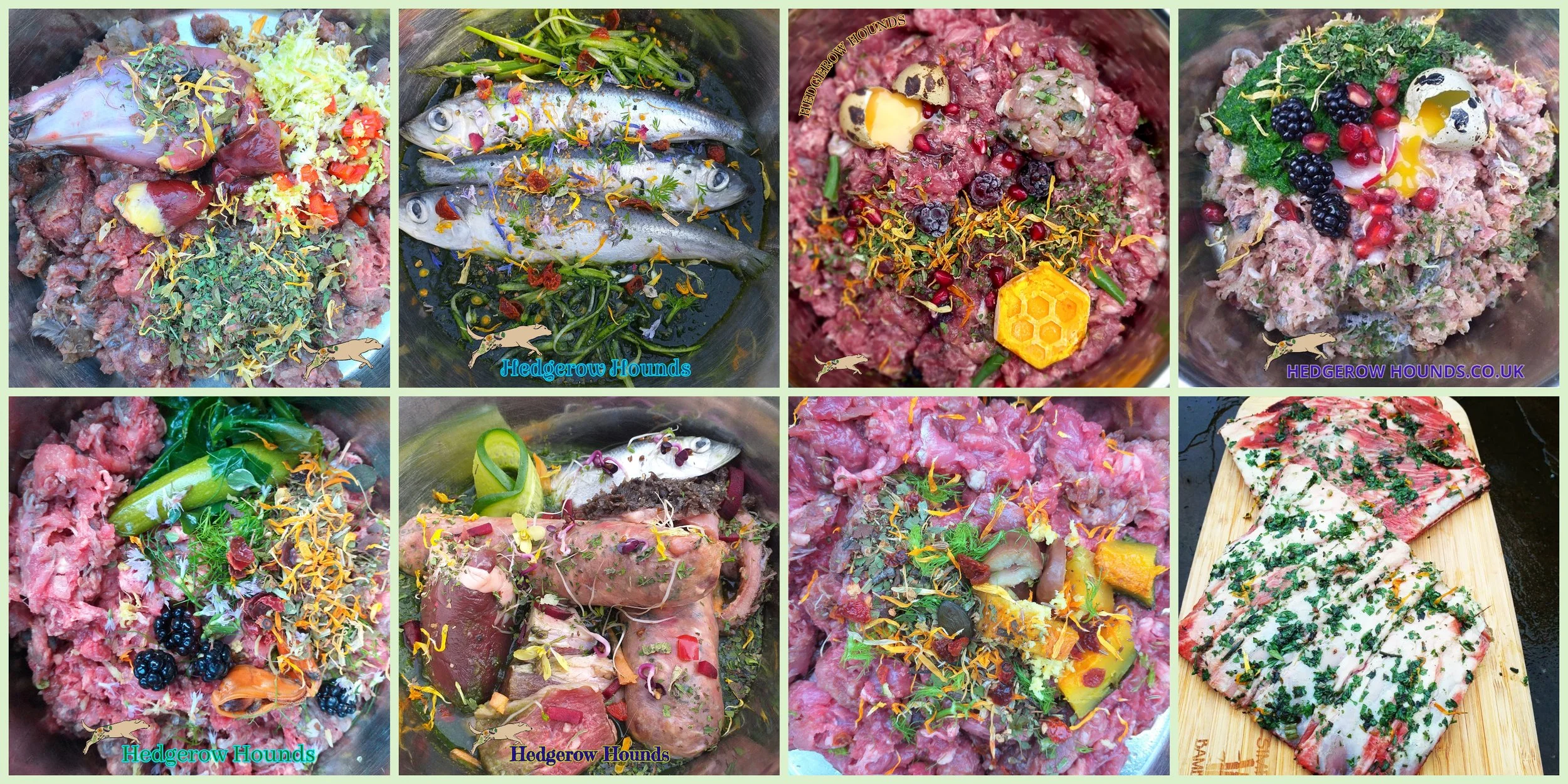
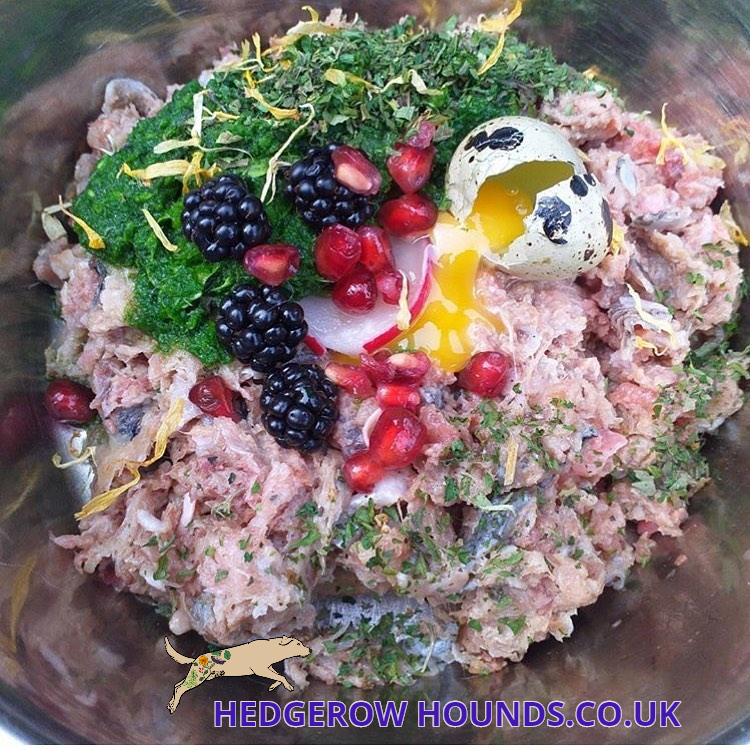
If you have been feeding raw complete minces for a while and want to start including some DIY meals, it is important to provide a variety of proteins in order to offer a broad range of nutrients and prevent any deficiencies.
Feeding a selection of fresh food and making full use of seasonal variation means that each meal is an opportunity to add nourishment, support good health, build immunity and increase vitality in our dogs.
Muscle meat
The majority of a raw diet is made up of muscle meat, and depending on which type of model you feed it could be as much as 80% as in the 80-10-10 (80% muscle meat,10% offal & 10% raw bone) or, in the Barf model 70%, allowing for the addition of vegetables.
Try and offer a selection of meat from different species, ideally 4 or 5 over a month if you can, plus an oily fish. This can include beef, chicken, turkey, pork, buffalo, venison, rabbit, tripe, guinea fowl, goat and lamb, etc.
Rotate white and red meat from different species but also vary the cuts within the same species. So, for example include chicken thighs rather than just feeding breast meat.
Replace some of the proteins with wild game when it is in season, such as pheasant, partridge, duck and venison.
If free range or grass-fed proteins can be introduced, even in small quantities, there is higher nutritional value, particularly with levels of Omega 3 fatty acids.
When making DIY meals for your dog it is important to establish the difference between what is fed as muscle meat and what is offal, that way you can calculate the 10% offal ration (5% liver, 5% other offal) into your meal plan.
Heart
Although the heart is an internal organ it is often confused as being offal when actually it is a muscle, and a very hard working muscle at that!
Where it does have its similarities is the amount in which it is fed.
It is a rich meat, high in blood content, which like liver can cause diarrhoea if fed in large amounts.
Introduce slowly and work up to between 5% and 10% until your dog can tolerate it. It is not required in large amounts or on a daily basis, but you can incorporate it into the diet within your monthly food balance plan. It is a nutrient dense addition and generally it is cheap to buy, having fallen out of fashion in our own diets over the years.
Heart is high in taurine, iron, folate, carnitine, thiamine, conjugated linoleic acid (CLA), gamma linolenic acid (GLA) selenium and B vitamins.
It is particularly high in Coenzyme Q10 (CoQ10) which is needed to optimize heart rhythm. As CoQ10 levels decrease with age, it is a valuable addition to your senior dog`s diet. Trials show that heart failure patients have low levels, and supplementation can help to stabilise the disease.
With twice as much collagen and elastin as other muscle meat it is a perfect dietary addition for working or competition dogs to prevent fatigue, as well as providing added support for the musculoskeletal system.
Tongue
This is another protein that’s regarded as muscle meat which can be a little high in fat, so is one to limit if your dog has a pancreas issue or is on a strict weight loss plan.
Gizzards
Chicken, duck and turkey gizzards have goods levels of iron, selenium, zinc, riboflavin, niacin, choline, copper and vitamin B12. Gizzards are fed as muscle meat.
Lungs
Lungs, also referred to as “lights,” have some muscle meat and some organ content, so don`t really fit into one specific category.
It can cause loose stools if fed in large amounts or if fed alongside offal, so although a worthwhile addition it is best to limit the amount fed in a single meal and not to exceed 15%.
Trachea
Great as a natural chew to clean the teeth, and particularly helpful for senior dogs who can no longer handle bones due to missing teeth or gum problems. Trachea is naturally high in glucosamine and chondroitin so supportive to joints. Lamb tracheas are better for small dogs and beef tracheas are suitable for medium to large dogs.
Offal
Offal makes up 10% of the diet, 5% of which should be liver and the other 5% made up of kidney, spleen, pancreas, testicles and brain. Offal is different from muscle meat in that they are internal organs which secrete.
The inclusion of offal in the raw or home cooked diet provides an abundance of vitamins and minerals. Just introduce into the diet very gradually and adjust to what your dog’s system can cope with to avoid stomach upsets.
Liver
Liver is the most nutrient dense of the internal organs and makes up 5% of the offal requirement in your dog’s diet.
If you are buying complete meals, you will see on the label that it states 5% liver and 5% other offal.
It provides an abundance of vitamin A, copper, vitamin D, vitamin K, vitamin C, vitamin E, folic acid, choline, vitamin B6, B12, magnesium, iron, thiamine, riboflavin, niacin, folate, selenium, biotin, calcium and phosphorous.
Some people feed liver just twice a week and others, due to the dog’s sensitivity to larger amounts, just add a small amount every day.
Kidneys
Kidney would be added to make up the other 5% of the offal requirement, possibly mixed with one of the others on the offal list.
It is a good source of vitamin B12, B6, riboflavin, carnitine, iron and folate.
Pancreas (sweetbreads or thymus)
Pancreas is not always easy to get hold of, but you can ask your butcher or food supplier to source some for you.
It contains a rich supply of digestive enzymes and is a worthwhile addition to any dog’s diet but is particularly good if you’re feeding a dog with a pancreatic insufficiency.
Spleen
Spleen is another organ that can be difficult to find but can be ordered from a butcher, or you can ask your food supplier if it is included in any of their offal mixes.
It provides good levels of iron, niacin, riboflavin, vitamins B12 & B6, selenium, zinc, and a broad range of amino acids.
Fish and Shellfish
Most modern-day diets, for ourselves and our dogs, are too high in Omega 6 and 9 due to processed grains, cereals and vegetable oils, which can lead to inflammation, faster aging and can predispose the body to disease.
In contrast, Omega 3 fatty acids offer a wealth of health benefits including anti- inflammatory properties, healthy skin & coat, normal metabolism, joint health and slowing the ageing process as well as supporting brain and cognitive function.
As you can see, this is an important addition to the diet of dogs with skin issues, joint pain, and is an essential for senior dogs in particular.
Feeding the actual fish has far more benefits than fish oil, which can quickly go rancid, causing the inflammation we were trying to prevent.
Pollution is also a consideration when choosing fish. The cleanest are:
· Sardines, mackerel, pilchards, herring, sprats, halibut, anchovies, whitebait and trout.
· Mussels and green lipped mussels are good for joint health.
Other forms of Omega 3 are hemp oil, chia seeds, flax seed oil, seaweed, eggs, pumpkin seeds and phytoplankton.
Should your dog hate raw fish and completely refuse to eat it, then the tinned sardines, pilchards or mackerel are a good substitute in either spring water or tomato juice which can be gently rinsed off or drained.
Try and include an oily fish into your dog’s diet two to three times a week.
Eggs
Eggs provide a high quality, complete source of amino acids which are the building blocks of protein.
A good source of vitamin A, vitamin B12, riboflavin, iron, folate, zinc, selenium, fatty acids, choline, fat soluble vitamin E, D and K.
Just one egg will provide 13 essential vitamins and minerals, including lutein which is essential for eye health.
Free range eggs offer far greater levels of nutrition as the birds would have benefited from a natural lifestyle of foraging and have had sunlight on their backs.
Duck eggs have a larger yolk to white ratio and are higher in protein, fat and contain more Omega 3.
Quail have larger amounts of vitamin B1 and 5 times as much iron and potassium as hen’s eggs. Their protein value is 13% compared to 11% in hen’s eggs. Quail eggs rarely cause allergies, so certainly worth a try if your dog can`t usually tolerate hens’ eggs.
Bones
Raw edible bones will make up on average 10% of your dog’s meals but sometimes as much as 30% and are an important requirement of the diet.
Bones provide calcium, phosphorous, magnesium, potassium and, depending on the type of bone fed, a supply of fat, cartilage and collagen.
They are also needed in the diet to keep the stools firm, and while most dogs will be fine with 10% bone, occasionally you will come across dogs who require more to keep their faeces firm, and others who will always need offal or vegetables in their diets in order to cope with 10% or they become constipated. Therefore, it is important to feed each dog as an individual.
Raw bones are regarded as either edible, which add to the calcium quota, or recreational, which provide very little calcium but give mental stimulation and teeth cleaning benefits.
Edible bones are raw bones that are completely consumed, usually in one sitting. Examples would be chicken and duck wings, lamb ribs, chicken backs, chicken and duck feet, chicken necks and pigs trotters.
Vegetables and Berries
The inclusion of vegetables, herbs and berries in the diet provide, phytonutrients which are compounds found in plants with health giving properties, anti-oxidants which protect cells from free radicals and dietary fibre that acts as a prebiotic to stimulate the growth of beneficial gut bacteria.
Look to add some vibrant leafy green to your dog’s meals, such as kale, spinach, parsley, broccoli, chard, dandelion leaves and red and purple berries including raspberry, blueberry and blackberry.
Start off with a small amount and build up to approximately 10-15% of the meal, if this suits your dog. Vegetables need to be either lightly steamed or feed raw and put into a blender to make a thick puree, this will break down the tough cellular wall in the vegetables and make them more digestible.
Caroline Hearn - Hedgerow Hounds
www.hedgerowhounds.co.uk
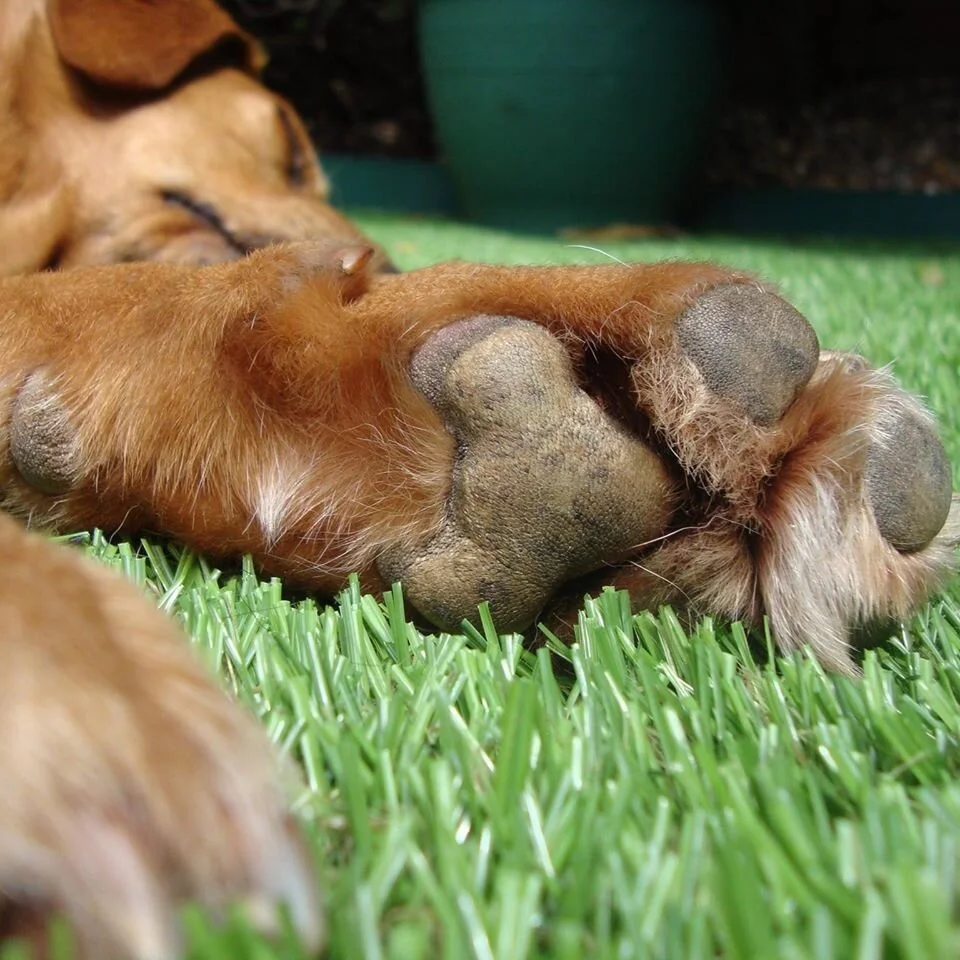
The Importance of Nail & Paw Care in Dogs
Keeping your dogs nails trimmed is important for their wellbeing and an essential when managing mobility problems.
Caroline Hearn - MICHT. Dip. ICAT, Canine & Equine Sports & Holistic Therapist
Over long nails are not only prone to getting caught and torn but there are a number of very important reasons why it is wise to keep your dogs claws fairly short.
Claws which are too long can cause pain in the toes and put additional strain on the tendons and joints. The weight is distributed backwards and causes the pad to flatten so lessening the shock absorbing properties of the pads.
After time the dogs movement is compromised and this can add strain to the shoulder and elbow joints. In normal movement as the paw hits the ground and the metacarpal or palmar pad which is the largest pad touches the ground first, then the weight is rolled forward onto the digital pads of the toes as the foot prepares to leave the ground again. This should be an easy and smooth process causing no strain, but if the dog has over long claws it is usually these that hit the ground first causing discomfort and strain higher up the leg which will eventually cause compensatory movement.
So what can be done about trimming over long claws ?
As the claws grow down so does the sensitive quick contained within so it is something that will take some time to correct. The good news is that if a very small amount of nail is cut or filed away every few days then the quick will have time to recede so you can then start the process of shortening the nails safely.

If you are confident with the clippers and your dog allows you to do it, then take a small amount off maybe once a week either with clippers or a file. Obviously dogs with white nails are easier as you can often see the quick as a guide. With black nails always err on the cautious side and do little and often.
Include the dew claws, which are often forgotten as they are tucked away on the inside of the leg and sometimes hidden by the coat. These claws grow quickly as they are not in contact with the ground and can often curl round and dig into the skin if they are not regularly trimmed. Dew claws are an essential stability aid for active dogs and assist in stabilising the lower limb and while turning at speed.
If you are nervous of cutting the nails or your dog is very difficult then ask if the veterinary nurse can help. Once you are on top of it then you can maintain the length yourself with nail trimmers or the battery powdered nail grinder which is made specifically for gradually shortening dogs claws.
Walking on pavements a couple of times a week should help keep the nails short but also it strengthens the pads, ligaments and tendons within the foot.
It is also important to trim excess long hair from underneath the pads as this hair will cause slipping on flooring and also mat up and form into knocks or clumps of hair, making standing and walking uncomfortable.
Products
There are a number of products which can help keep the pads, paws and nails in excellent condition.
Adore the Paw - Healing and Paw Balm https://www.hedgerowhounds.co.uk/products/adore-the-paw
Green Clay https://www.hedgerowhounds.co.uk/products/green-clay
Leucillin https://www.hedgerowhounds.co.uk/products/leucillin-antiseptic-spray

Feeding Raw Bones
When choosing a raw bone for your dog, take into consideration, their size, feeding style (ie: greedy), behaviour and their experience of eating bones.
Feeding raw bones can be a concern for some owners.
Here we explain the best bones to start off with and what to consider when feeding bones to your individual dog.

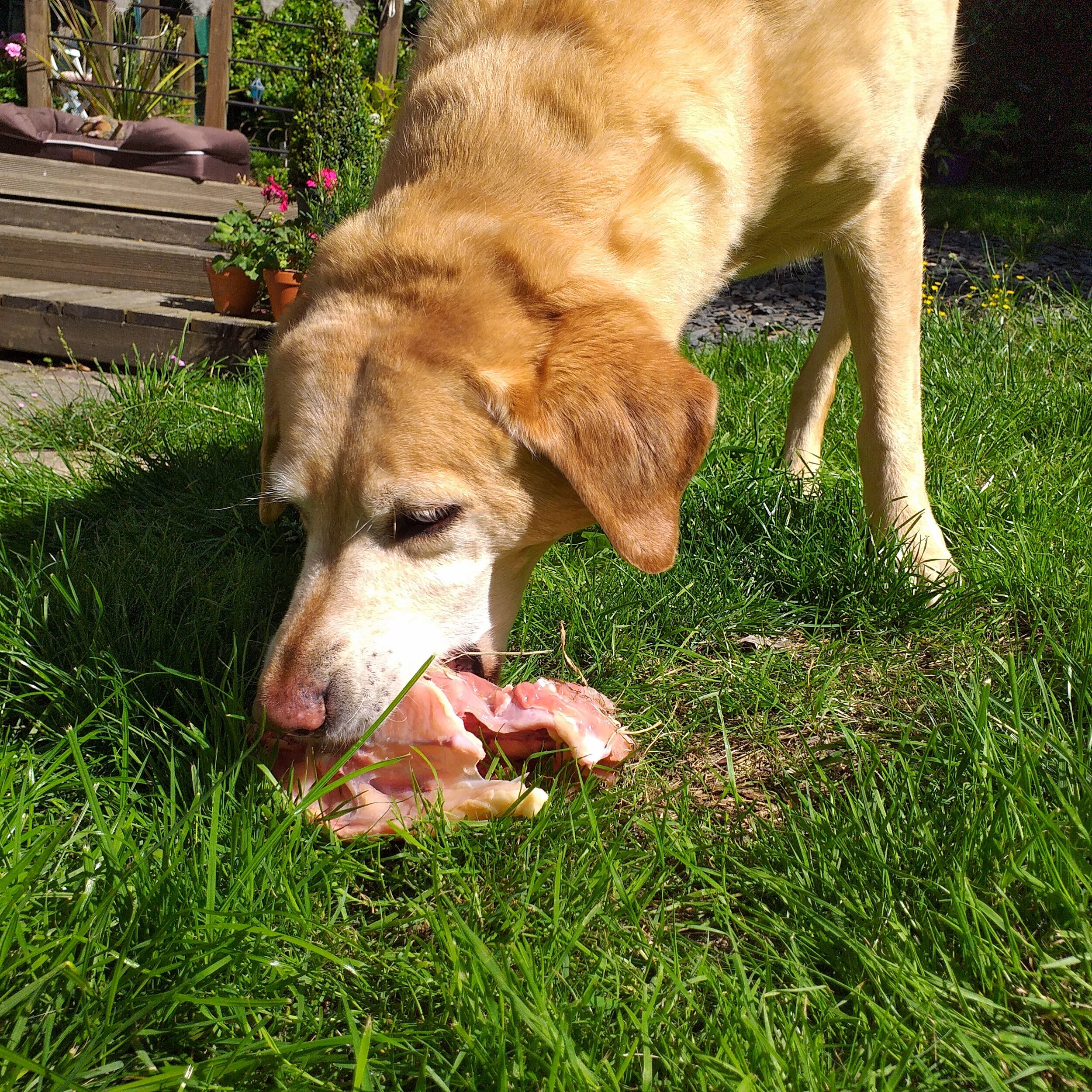
Edible bones, such as this raw chicken carcass, go towards the daily bone ration and are the ideal starter bone for pups, young dogs and beginners. They are soft, flexible and contain a lot of cartilage.
Bone is a very important part of feeding a raw food diet, but it is a subject that can cause worry and concern for the dog owner and often a reason people decide to rule out raw feeding altogether.
The inclusion of raw bone in the diet provides nutrients such as calcium, phosphorous, magnesium, fat soluble vitamins, amino acids and essential fatty acids, all of which are used by the body for blood and bone formation. Calcium is regarded as a macro-mineral and is the most abundant and essential mineral in the body. It isn`t just needed for optimum skeletal growth but also responsible for the correct functioning of muscle and nerve impulses, keeping the immune system healthy and regulating the heartbeat.
Meat contains high levels of phosphorous and very little calcium so feeding a diet of only meat and offal would be extremely deficient in vital minerals as well as giving the dog loose stools.
Our dogs anatomical features:
So what has nature blessed a dog with to make him so efficient at eating and digesting bone?
Just a glimpse inside a dog’s mouth will show a whole range of “tools” to make the job of piercing, tearing and slicing meat and bone an easy task. A pair of specialised teeth for crushing, called the Carnassial are the largest and most jagged of the premolars and you will notice your dog tilting his head on the side in order to bring them into full use.
Unlike ourselves and herbivores, a dogs jaw has no sideways, grinding action, so in order to add lubrication within the mouth and around the food there is a lot of saliva production to assist its transit to the stomach. Once in the stomach there is an incredibly strong stomach acid to not only help kill any bacteria but also to dissolve raw bone.
Edible vs Recreational
Raw bones are split into two categories of edible and recreational bones.
Edible bone is consumed completely in one sitting and adds towards the dog’s dietary calcium requirements. Examples would be chicken necks and wings, duck feet, lamb ribs, pigs trotters, chicken carcass or the finely ground bone within a minced complete meal.
Recreational bones are not completely consumed within one sitting and add little if anything towards the dietary calcium requirements. These would be something like a large beef knuckle bone or a venison neck as an example. The main advantage of these large bones is that they keep the teeth clean and also provide the psychological benefits that come with the chewing action, such as a release of serotonin, dopamine and oxytocin, which are the calming and feel good hormones.

Recreational bones are for teeth cleaning and also release feel good hormones as the dog chews them. They are not included as bone content, as they are not consumed in one sitting.
With 90% of dogs in the UK under 3 years of age having some form of periodontal disease and needing a general anaesthetic to remove a build-up of plaque on an annual basis, kibble despite what we are lead to believe, does not clean teeth. If you watch a dog eat kibble they gulp and swallow, there is certainly no abrasive grinding taking place in order to keep the teeth plaque free.
Potential issues with certain bones:
If ever there is a problem with bones it is generally due to feeding a bone which is too small for your particular dog, leaving the dog unsupervised or giving very rigorous chewers weight bearing bones.
Chicken wings: Better suited for small dogs as medium and large dogs or those that are greedy feeders, can try and swallow them whole and due to the shape of the wings, carry a choke risk.
Marrow bones: The central marrow is extremely high in fat and can cause diarrhoea. They tend to be weight bearing bones so are extremely hard, which in very vigorous chewers can cause tooth fractures. There is the danger of the bone encircling the lower jaw when it has been chewed down into a “ring”, often requiring veterinary assistance. Dispose of the bone long before this risk is a possibility.
Neck bones: Chicken and duck necks are better for smaller dogs unless you can guarantee your larger dog will not swallow them whole. I have seen dogs do this on a number of occasions, with no negative consequences whatsoever as their strong stomach acid made short work of digesting it, but it is better that they chew them first. The necks have a good covering of meat on the bone and turkey and goose necks are ideal for medium to large breeds and provide a meal in themselves.
Vertebral bones: Bones that form the neck and vertebral column in larger animals such as sheep and venison, when eaten right down will become circular and have a higher risk of causing choke. This also applies to ox tail. If your dog has a reliable leave command then you can remove the bone when it starts to become eaten down into smaller sections.
Ribs: If ribs are fed from young animals such as lamb or beef then they are soft and contain a good amount of central red marrow and you will find that dogs can crunch them up with ease. The only potential problem and why it is essential to supervise your dog when they eat bones, is that they can very occasionally become stuck across the roof of the mouth and require assistance to remove them.
Avoid:
There are some pet stores that still sell large baked knuckle bones for dogs. They are often sourced from overseas and are extremely dangerous due to the likelihood of cooked bones splintering and causing perforations to the gut often with fatal consequences. Raw hide chews are also a major choke hazard and are known to cause obstructions in the bowel which require emergency surgery.
Choosing the right bone for your dog:
The main problem area when introducing raw bones to a dog is not offering a bone that is appropriate in size or type for that individual dog. It is always better to feed a bone that is a little too large than too small and also pair the bone with the chewing style of that particular dog.
If you are transitioning a dog onto a raw diet that has previously been eating kibble and you plan to feed edible bones then it is wise to leave 2-3 weeks before introducing whole bones to give the stomach acid time to adjust in order to adequately digest raw bone. Your dog will still be receiving his calcium ration from the complete minces that contain 10% finely ground raw bone.
Raw chicken or duck carcass are good starter bones as they still contain some meat on the bones and plenty of cartilage making them flexible and easy to crunch. They are usually from young birds which mean that the bones are still quite soft.
If your dog is straining to pass a motion or the stool is very white and crumbly then you know that they have too much bone content in their diet and you will need to re-evaluative the percentage. The majority of dogs do well on 10% - 12% bone in their diets with no issues.
If you feed raw mince which contains the standard 10% bone, be mindful when also giving whole edible bones alongside. This will mean that your dog could have too much bone in their system at once causing constipation or gut problems. If you want to feed the occasional whole edible bone then give a mince that has no bone content for that day.
Multiple dog households:
This can certainly be a big challenge for some owners and even the most placid dog can see a raw bone as the highest valued item he has ever been in possession of. If you have a dog that shows strong resource and food guarding behaviour then offering a raw bone of any type could be a tricky situation so unless you are working through this particular type of issue with a qualified behaviourist it is wise not to put the dog in that situation.
Every dog has to be treated as an individual character in order for things to run smoothly. Some will strut around for ages showing everyone their “prize”, others will just take the bone off into the garden and bury it, you may have a dog that becomes very protective of such a precious item and then there are those greedy ones that will chew until their mouths bleed or the nervous dogs whose motto is “if it`s in my stomach then no one else can get to it” and attempt to swallow the bone whole rather than risk it being taken off them by another dog or their owner. Offering the bone or trachea when it is directly out of the freezer can help slow the consumption down.
If you have a number of dogs with very individual ways of tackling a bone then it can prove extremely difficult to manage and the only safe way is for them to be sectioned off in their own safe space where they can relax and enjoy their bone. Edible bones tend to be eaten within minutes, so they are less of an issue than the recreational bone which can be around for days on end.
When whole raw bones are just not an option.
It is really important that you feel confident and happy in providing your dog with nourishing meals. If feeding whole bones, edible or otherwise causes you to panic and worry and is creating friction and tension within your four legged family, then just don’t feed them whole bones.
If you are giving complete meals where muscle meat, offal and ground bone is added for you, then your dog will be getting the calcium they need. If the percentage is not clear on the product label then ask the manufacturer, as it should be between 10-12 % ground bone. The raw bone is finely ground so it is unlikely you will notice it when dishing up and your dog will have no trouble digesting it.
Semi frozen tracheas are a good alternative to bones, especially for seniors or those with missing teeth, large dogs need the beef version while small dogs can manage the lamb.
If recreational bones are not fed and even tracheas cause problems then you will have to resort to other ways of keeping their teeth clean via a toothbrush or micro-fibre cloth and dog friendly toothpaste.
www.hedgerowhounds.co.uk
Gelatine Treats

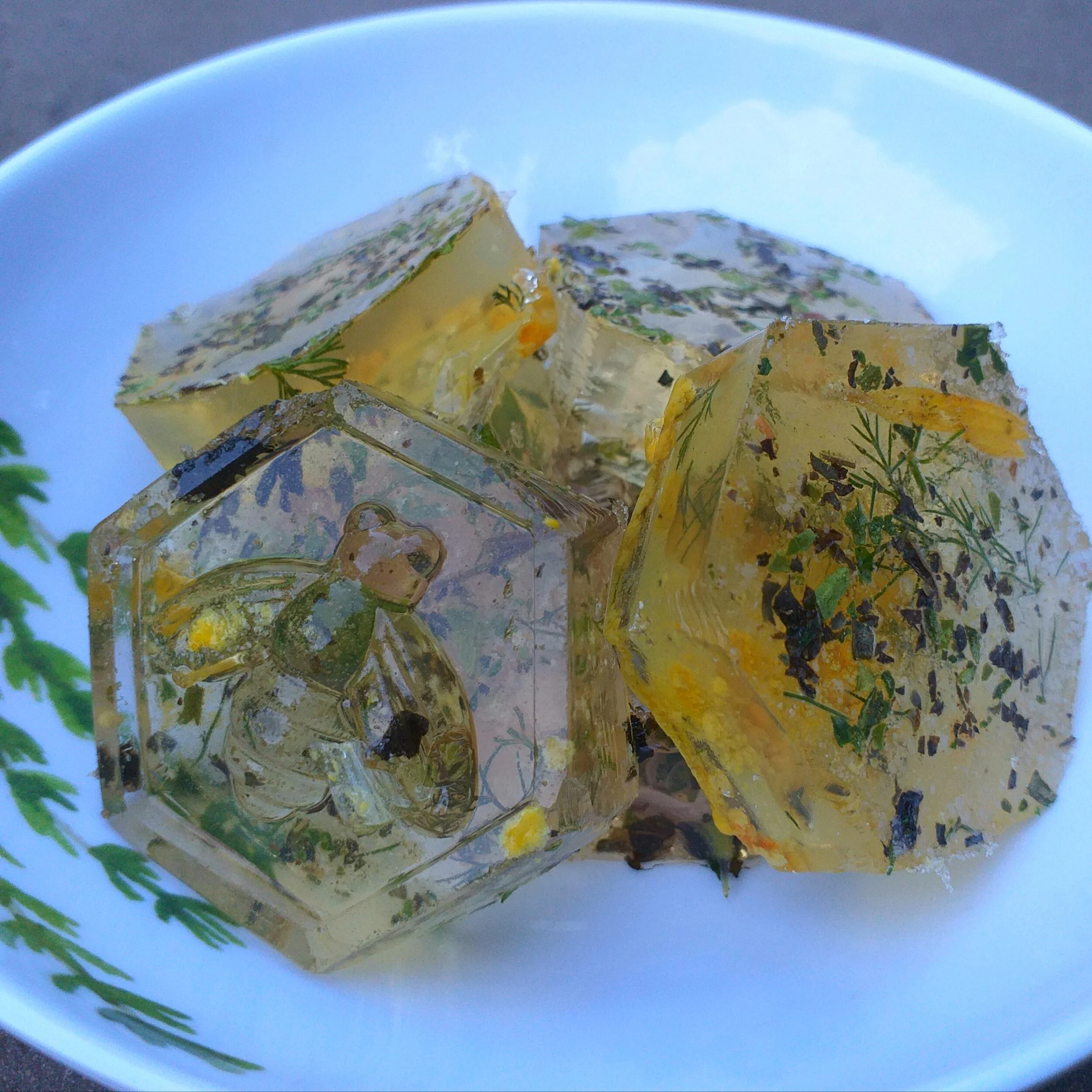
Gelatine is a colourless, flavourless, gelatinous substance derived from collagen, which is a protein found in great abundance in the body.
Gelatine is often used to additionally support arthritic conditions and to ease intestinal complaints. Glycine is an amino acid which occurs in gelatine and helps strengthen the gut lining and reduce inflammation and is believed to assist in the healing of leaky gut.
When using gelatine avoid coloured, flavoured, or sweetened varieties and instead go for the plain, grass fed versions. I used Great Lakes beef collagen but there are other brands available such as Ossa Organic.
You will need:
One 12g sachet of gelatine granules or use 2 heaped tablespoons of loose powder.
550ml Water (you can also use coconut water or bone broth)
7 Tablespoons of hot water
2 measuring jugs
Flexible silicone mould of choice
Optional one level teaspoon of your chosen Hedgerow Hounds blend. Here I used Golden Years in one batch and Greens, Seeds & Superfoods in another.
How to make:
Into a measuring jug add 7 tablespoons of hot water, tip in the gelatine, whisking with a fork until the granules dissolve, then pour on the remaining water and stir well.
*Always add the gelatine to the liquid and not the other way round*
Add your chosen herbs and pour into the silicon moulds.
Chill in the fridge for 3-4 hours and when set, gently remove from the moulds.
These treats can easily be cut to a size which is suitable for your dog and are soft enough for elderly dogs with dental problems to enjoy.
They will keep for up to 7 days in the fridge.
Fresh Breath Treats

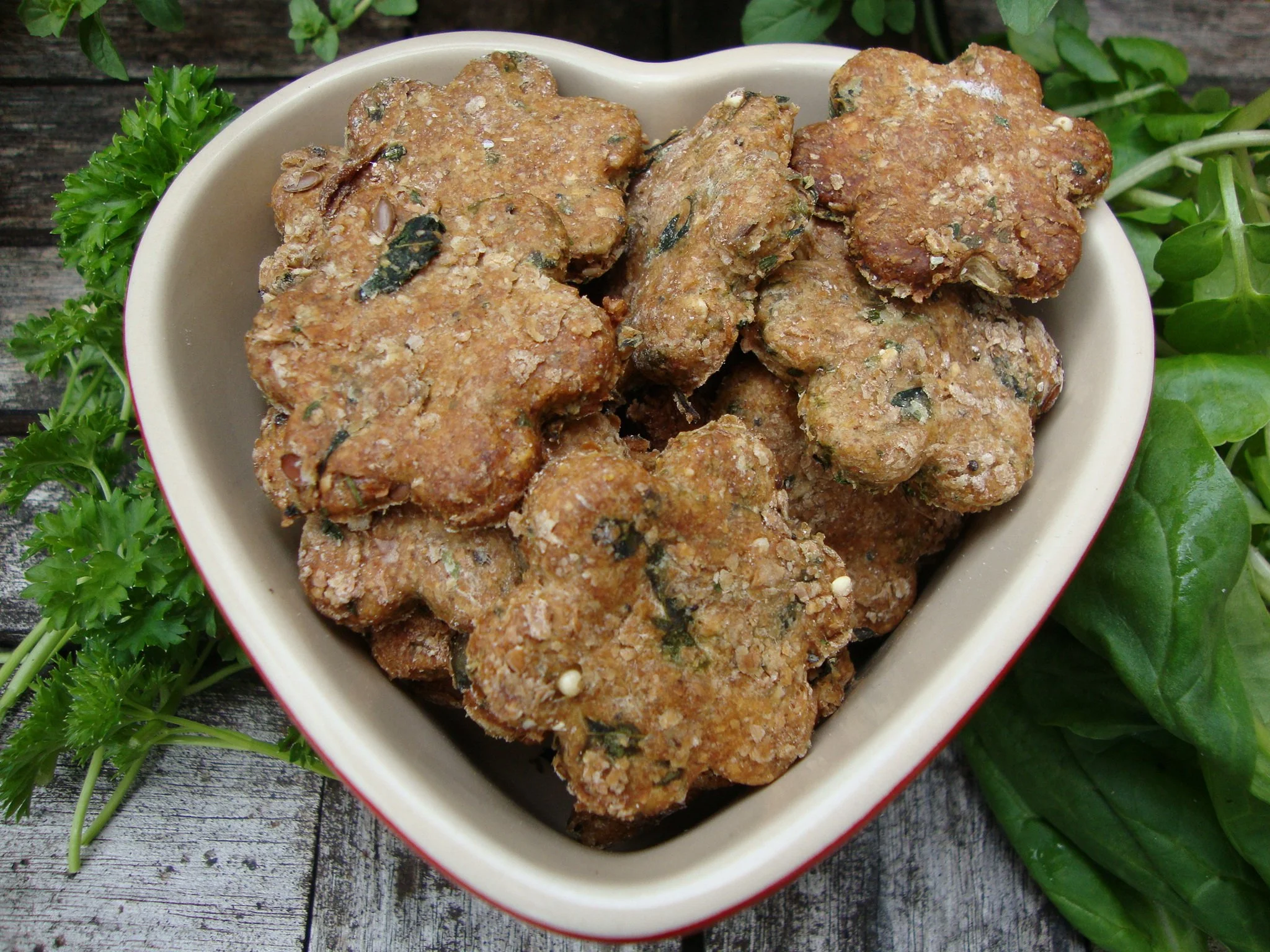
Mint, parsley & fennel are a great choice for this fresh breath treat recipe.
This recipe uses fresh herbs, which hopefully you`ll have growing in the garden. Dried herbs can also be used to replace one or all of the ingredients.
250g Buckwheat or Spelt Flour
Half a dessert spoon of softened coconut oil
If using fresh herbs, they need to be finely chopped before adding to the flour.
Parsley - fresh or dried, approximately 1 dessert spoon
Mint - fresh or dried, approximately 1 dessert spoon
Fennel - fresh or dried, approx. 1 dessert spoon
1 medium free-range egg- beaten
Half a small, grated apple
An optional quarter teaspoon of fennel seeds
50ml water
Baking tray
Rolling pin
A cookie cutter that is appropriate to your dog’s size.
Baking parchment to line the tray
How to:
Pre-heat your oven to 180c/ Fan 160c or Gas 4
Place the flour, seeds (if using), and finely chopped herbs into a large bowl and stir together. Add the softened coconut oil, beaten egg, and grated apple, and stir while slowly adding the water until the mixture forms a dough. Add a little more water if necessary. Knead for 2 minutes, then place the dough on a lightly floured surface.
Roll out to an even thickness, around a quarter of an inch thick. Then cut out with your chosen shaped cutter and put onto a baking tray, which is lined with baking parchment.
Place onto the middle shelf of a preheated oven and bake for around 20 minutes or until lightly golden. Lift out of the oven and leave to cool on a wire rack.
The treats must be completely cold before storing in an airtight container, or they will go mouldy. Use within 2 weeks, or alternatively, freeze and take out what you need each day. Frozen treats will need to be used within 4 months.
Caroline Hearn - Hedgerow Hounds

Herbal Dog Tea

A beautiful & fragrant blend of Nettle, Lemon Balm, Chamomile, Mint, Rosehips, Passion flower, Calendula, Rose, Cornflower, Fennel seed
Why the ingredients were specifically chosen for this tea:
Nettle- rich in minerals and contains natural antihistamine properties
Lemon Balm – relaxing & calming
Mint – Refreshing and uplifting and digestive stimulant
Chamomile – calming to body and mind
Rosehips – rich in antioxidants and vitamin C
Calendula – soothing for the skin and has anti-inflammatory effects
Fennel seed – very good for the digestive system
A few ideas of how to use:
The herbs can be used to make a tea which when cool, offered as a refreshing drink.
Make a strong brew and when cool, transfer into shaped moulds and place in the freezer
Add the tea directly into your dogs meals
If you feed vegetables, add to your dogs veg or blend with raw vegetables and freeze in ice cube trays for later use.
Stir some of the tea and a sprinkling of the herbs into natural yoghurt, place into a shallow tray, level out and then pop in the freezer for a couple of hours. You`ll then have a dog friendly ice cream treat for a hot, sunny day.
Once the tea has been made, the remaining herbs, which are now rehydrated, can be placed into your dogs meals or used in treat recipes

Here`s to many relaxing, balmy days in the garden with our beloved dogs.
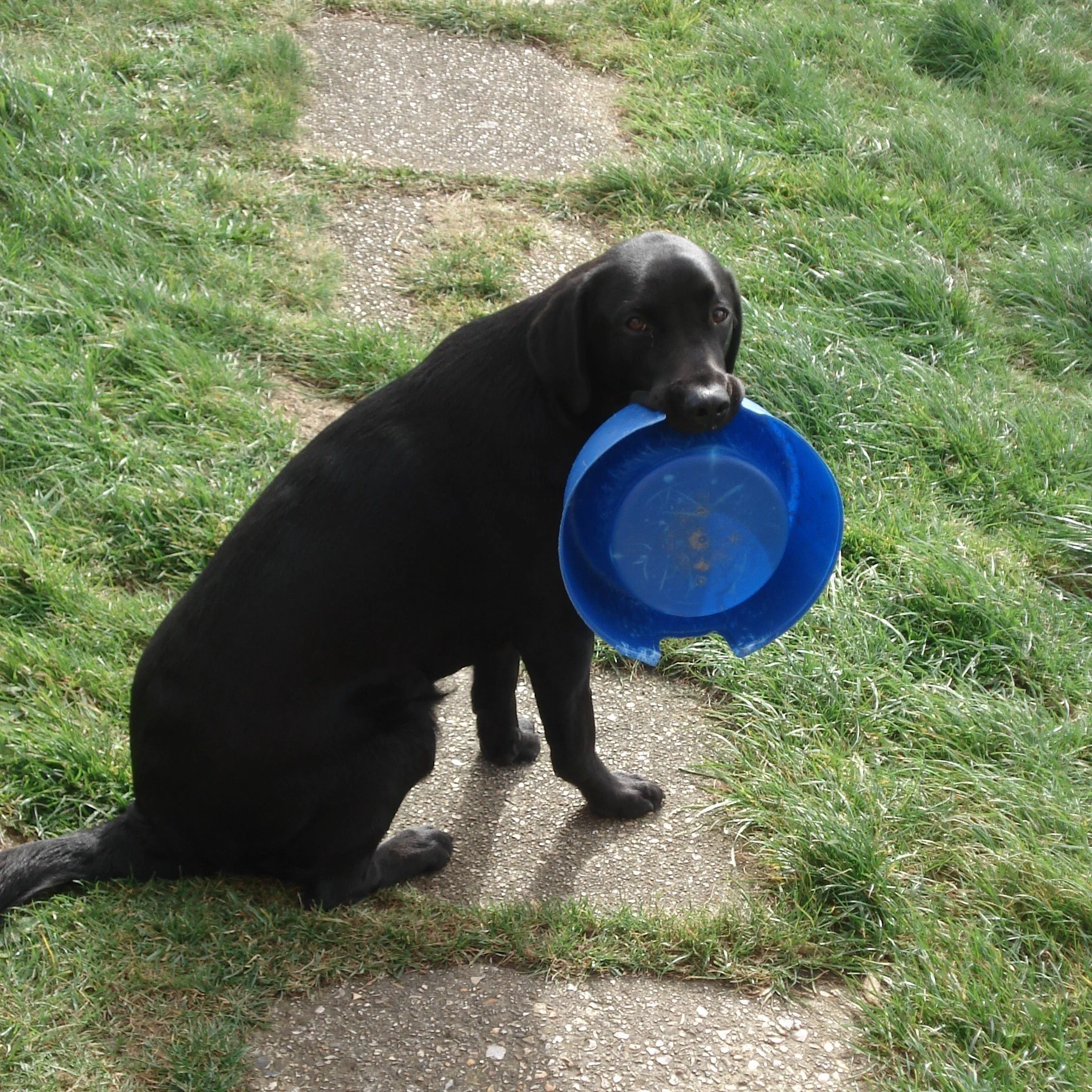
Is Your Dog a Fussy Eater?
For the majority of dogs feeding time is the highlight of the day and they leave their bowls squeaky clean.
However, there are some dogs that find the transition from dried to raw food a bit challenging, as it is such a dramatic change in moisture content, texture, aroma and flavour.
Many kibble and tinned foods have flavour and appetite enhancers added, which can make raw food seem a little bland in comparison and, combined with an unfamiliar texture, a bit off putting for some picky eaters.
There are a number of ways that you can encourage shy or fussy eaters to clean their bowls and look forward to feeding times. This does only apply to genuinely fussy eaters and not dogs that are unwell. Dogs will often fast if they are feeling off colour, so it is important to not force them to eat. If your dog is refusing food, bone broth and more crucially water, after 2 days, then it is important to contact your vet to rule out any serious health issues.
Your dog may also be suffering from reflux immediately after eating which makes them reluctant to eat in anticipation of the discomfort that follows. Some signs include licking front legs, appearing to lick the air, retching or regurgitation, which is usually white and frothy. As well as taking note of what your dogs has just eaten a herbal blend which is very effective to ease reflux is Digest & Rest https://www.hedgerowhounds.co.uk/products/digest-and-rest
Here are a few ideas that may help dogs that are reluctant to eat:
It is important that your dog doesn’t feel pressured or that they are being watched. It can be frustrating as you are literally willing them to eat, but its vital to give them peace and quiet and not rush them.
For dogs new to raw food and that seem hesitant to eat, this could be due to the unfamiliar smell and texture. To release the aroma and flavour in order to tempt them, you can quickly flash fry small pieces of raw food in a pan then add into the meal, and sometimes a tinned pilchard mashed in or a spoon of tinned meat usually does the trick.
Bone broth can also be too tasty to resist. You can serve it warm or defrost bone broth cubes and add to the food.
There is a nutritious blend in the Hedgerow Hounds range that few dogs can resist and will tempt the fussiest of eaters. It can be found on the website under Greens, Seeds & Superfoods https://www.hedgerowhounds.co.uk/products/greens-seeds
For the majority of dogs, but much more so for fussy eaters, It is important to offer raw food at room temperature as they really dislike anything cold or chilled. You can do this by letting the food sit for 15 minutes before use, drizzling a little boiling water over the food and stirring in, just to take the chill off.
Offer tiny meals in bitesize pieces, as presenting a whole bowl of food can be overwhelming and cause a shy dog to back off.
Experiment with different bowls and plates. Some dogs prefer to eat from a plate or shallow bowl and others are fearful of stainless steel due to the noise it makes on a hard floor. Always make sure that both the dog and the bowl are on a non-slip surface and they are not worried by the possibility of slipping and falling.
If you have an elderly dog that has suddenly become a picky eater, have you considered that they may have failing eyesight, tooth pain, experiencing discomfort as they reach down for the bowl, that they are eating on a slippery surface? Raised food and water bowls placed on non-slip mats can be really helpful in these situations. As our dogs reach their senior years their sense of smell and taste decreases, so this could be another reason for losing their pervious excitement at meals times.
Game meats such as duck, venison and pheasant can be a little too strong in taste for the picky feeder so it is best to avoid those when initially transitioning to a raw diet. The same can apply to offal, so if this is the case opt for offal free mince and very gradually add in tiny amounts of liver.
Dogs that refuse raw liver will often be very interested in lightly cooked liver, as cooking changes the texture and releases the aroma.
Caroline Hearn MICHT. Dip ICAT. MIAAT. Dip. ISCP Raw Nutrition
Sports, Remedial & Holistic Massage Therapist
www.hedgerowhounds.co.uk