
Emotions and the Gut
The gut is very sensitive to emotions, and I am sure we have all experienced the butterflies in the stomach, stomach cramps, that tight feeling in our guts, or acid indigestion which can come on in a split second when we are nervous, excited, fearful or anticipating a particular event. And our dogs are just the same.
The gut is very sensitive to emotions, and I am sure we have all experienced the butterflies in the stomach, stomach cramps, that tight feeling in our guts, or acid indigestion which can come on in a split second when we are nervous, excited, fearful or anticipating a particular event. And our dogs are just the same.
If this is a brief episode, it is unlikely to have any lasting health effects, if on the other hand, it is a regular occurrence with little respite then the impact on the gut and therefore the health is huge.
There is a major factor in the link between gut health and emotions in the form of the enteric nervous system also referred to as the ENS.
The ENS consists of millions of nerves lining the gut and specialists often call it the “second brain” as it has complex pathways to relay information back and forth from the gut to the brain as they interact.
It is capable of shutting down digestion in times of acute stress such as in a fight or flight situation.
Stress can be caused by many factors such as separation anxiety, excessive ball throwing so the dog is on a constant adrenaline high, inappropriate exercise for the dog’s age or mobility, picking up on the owner’s emotional stress, inability to cope in a noisy or stressful household and pain, illness or disease.
Whilst these are mainly emotionally based reactions that can be witnessed as the dog exhibiting certain behaviours, a poor quality, inappropriate diet, and exposure to toxins or chemicals can also cause the body stress, which may not show any visible signs immediately but develop over time into disease or outwardly noticeable changes in health and behaviour.
A gut that isn`t functioning correctly can manifest as the dog showing anxious, edgy, or reactive behaviour, which in turn triggers the release of stress hormones into the bloodstream such as adrenalin, and in the case of cortisol increases the level of glucose in the blood and will over time adversely affect the adrenal glands.
Time to chill. Having time-out or chill-out days can be very beneficial to anxious, reactive, or even very active dogs, to bring them back into some sort of balance and down from their constantly stimulated state of mind.
A dog that is in a heightened state of fear, stress, panic and self-preservation will not physically be able to process and learn what is being asked of them. So by bringing down their stress levels, they will be in a better frame of mind to learn new skills, cope with their stress, and grow in confidence to make better decisions that are not fuelled by fear.
When dogs are over-excited, anxious or constantly alert to potential dangers their autonomic nervous system releases the fight or flight chemical adrenaline into the bloodstream, over time this becomes very damaging to the whole body and the gut in particular. The other subdivision of the autonomic nervous system is the parasympathetic which is sometimes called the “rest and digest system” and creates calm, relaxation, and a happy gut and this is what we are hoping to nurture on these quiet, restful days.
Anxiety can present itself in many ways, here are a few to look out for:
• Digestion problems - IBS, Diarrhoea
• Over excitability
• Reactive behaviour (aggression)
• Excessive barking
• Noise sensitivities
• Humping
• Resource guarding
• Chewing or scratching the body
• Inappropriate toileting in the house
• Excessive licking
• Ball obsession
• Pacing
There are several products on the shop to help relax and support nervous, anxious, and reactive dogs
Tranquil is an herbal blend created specifically with the nervous, anxious, reactive & stressed dog in mind https://www.hedgerowhounds.co.uk/products/tranquil-relax-calm
Digest & Rest https://www.hedgerowhounds.co.uk/products/digest-and-rest
Other blogs to help stressed and anxious dogs:
https://www.hedgerowhounds.co.uk/news/snuffle-mats-and-balls
https://www.hedgerowhounds.co.uk/news/anxious-dog
https://www.hedgerowhounds.co.uk/news/feeding-raw-bones
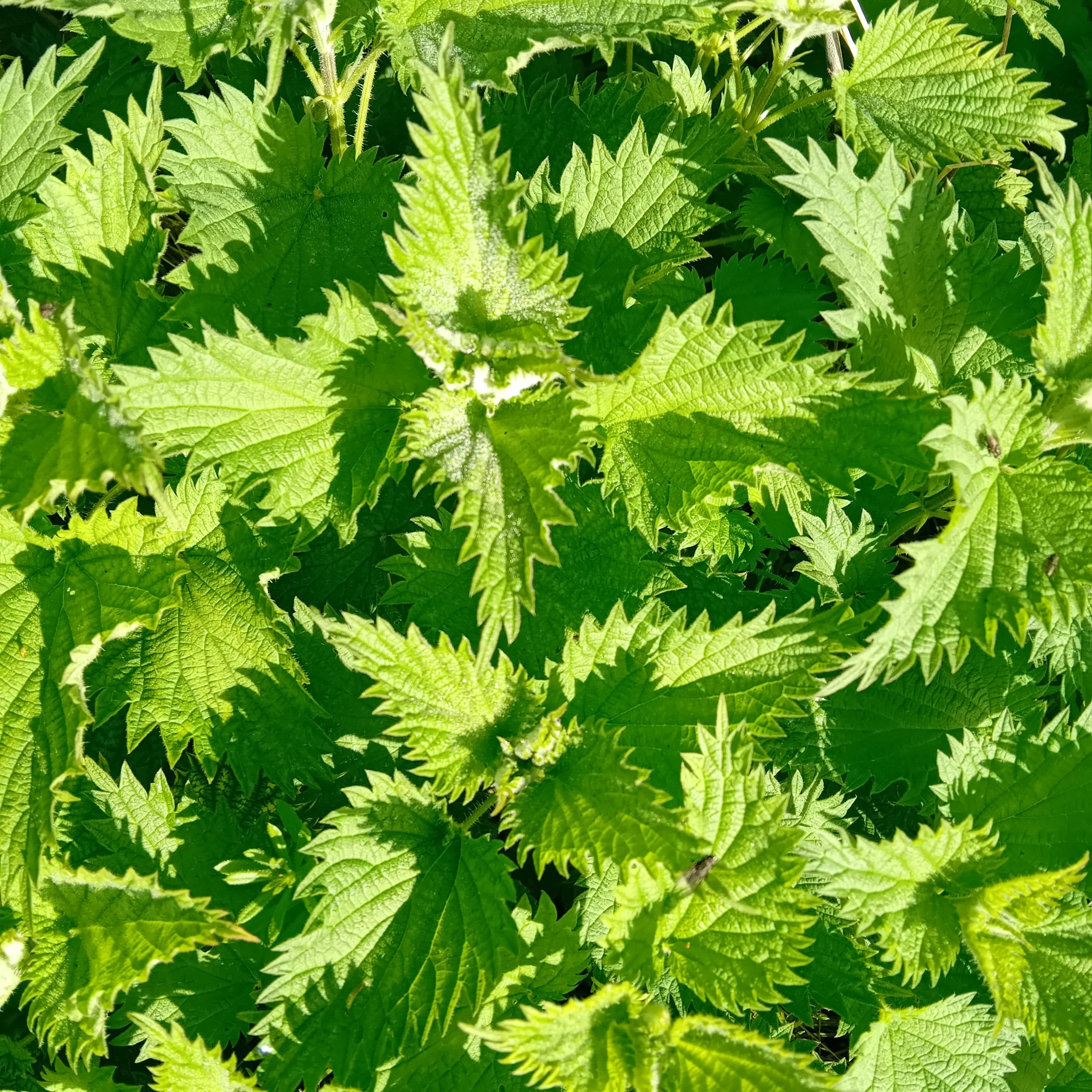
The Stinging Nettle
Once prized as a valuable source of food, medicine & material to make cloth, it is now regarded as a nuisance to be cut down or sprayed.
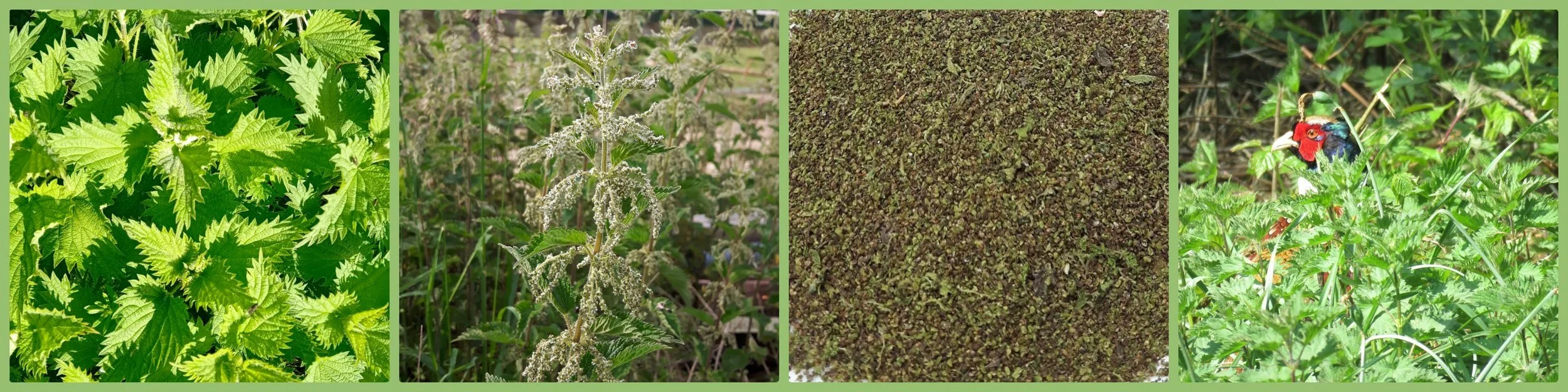
Once prized as a valuable source of food, medicine, and material to make cloth and cord, the nettle (Urtica dioica) is now seen as a troublesome weed to be vigorously cut, strimmed and sprayed to control or kill it.
The humble stinging nettle goes by many names including burn nettle, devil’s plaything, and hoky-poky. Nettle grows abundantly and is probably the first wild plant we learn to identify as children, and once touched it leaves a lasting memory and earns our respect.
The serrated-edged leaves are covered in tiny hollow hairs, sharp enough to penetrate our skin to inject us with their cocktail of chemicals including formic and oxalic acid, histamine, and serotonin, leaving us with an itchy rash and peculiar numb sensation around the area.
Historically, nettle has been used as a food and fabric dye and its strong fibres can be made into clothing and strong cord. During World War 1, when cotton was very scarce, nettle fibres were cultivated on a huge scale to make uniforms for soldiers, and in World War 11 nettles were used to dye any camouflaged fabrics. Being such a hardy and vigorous grower, nettles would have been a welcome substitute for green vegetables in times of rationing, and if the tops are frequently nipped out it can be used as a pick and come again leaf or dried and used as a tea.
Uses: Medicinally, nettle is used (both topically & internally) to treat arthritic joint pain, seasonal allergies, eczema, and anaemia. It is also a great tonic for the hair and scalp. Nettle is best picked from February until early May, as after that time they become coarse and the flower heads start to appear. Older nettle, which is around knee height and beginning to come into seed, is best left alone as it will contain calcium oxalate crystals and cause irritation to the gut and urinary tract. Save these nettles for picking their seeds only.
If you have a patch that you frequently pick or cut back so there is constant new growth you can get another couple of months of use from it but you probably won’t get the benefit of nettle seeds. Maybe have one patch for picking leaves and another for harvesting seeds!
Nutritional value: Stinging nettle is incredibly nutritious with excellent levels of iron, calcium, magnesium, potassium, vitamins A, B, C & K, silica, and Quercetin as well as being high in chlorophyll. Nettle is excellent as a general tonic to boost lethargy and as a vitamin and mineral boost. It works to balance the body, including calming the nervous system.
The seeds can be harvested and dried around July to September, they have a lovely nutty taste and can be sprinkled onto salads or stirred into natural yoghurt or smoothies. The plant puts a lot of energy into making seeds and they are fantastic to eat for an energy boost and also traditionally used to support adrenal fatigue and the feeling of being burnt out. Pick on a sunny day and spread them out to dry on a large baking tray or even an old bed sheet if you are drying a large volume. Stir and turn occasionally so they are thoroughly dry, which may take a whole day in the sun.
Nettles are a tasty alternative to spinach or kale and work well in pasta, lasagne, pesto and even stirred into cake, scone and bread recipes. Just don’t be scared of them, yes you may need gloves to pick them, but once lightly boiled, steamed or blitzed in a blender they lose their sting. Many people overboil nettles, particularly when making soup and the end result is greyish-green and revolting. Think along the lines of preparing spinach, so 4-5 minutes of steaming or a brief stir fry, will preserve the flavour, colour, and those important nutrients.
Wildlife: Nettle is very valuable to wildlife and provides food, shelter, and protection for many species. Butterflies such as the peacock, tortoiseshell, red admiral, and the comma rely heavily on the nettle. Ladybirds will often be found on nettles and they will eat any unfortunate creepy crawlies that land, they are also a big hit with finches especially when the plant goes to seed and the pheasants just love pecking at the drooping seed heads.
Recipe for Nettle Hair Tonic-Rinse
This recipe can be used for us as a final hair rinse to stimulate hair growth or as a coat rinse for your dog to ease itchy skin.
You will need:
A large bunch of freshly picked nettles
Sprig of Rosemary
An optional drop of lavender essential oil or rosemary oil (best avoided in epileptic animals, just to be extra safe)
500ml water
500ml Organic Apple Cider Vinegar
Put the nettles & rosemary sprig into a large pan with the water and cider vinegar and gently simmer for 40 - 50 minutes. Just check it halfway through cooking and top it up with more water if necessary. Take off the heat and set aside to cool before stirring in a drop of essential oil if you choose to do so. Strain through a muslin cloth or fine sieve over a bowl and then bottle. Use as a final rinse after shampooing or as a cooling coat rinse on a hot day.
Store in the fridge and use within 2 weeks. You could also find some suitable small containers to hold liquid and pop a bit extra in the freezer. Just remember to label it so it`s not confused with nettle soup!
Cream of Nettle Soup
This is a simple but very tasty way to cook and serve young nettle tops.
1 colander of washed, young nettle tops
I medium onion or shallot
1 tablespoon of salted butter
1.5 pints of light stock such as chicken or vegetable
Seasoning & grated nutmeg to finish
A quarter pint of milk
I tablespoon flour
1 Tablespoon of sour cream
Pick through the nettles as you wash them, removing any damaged leaves or coarse stalks, and then place them into a saucepan with enough salted water to cover. Gently simmer for 10 minutes and then drain.
Meanwhile, melt the butter in another pan and add the chopped onion to cook until softened, stir in the flour, and then add the stock, stirring all the time until it comes to a boil & starts to thicken. Add the drained nettles, salt and pepper and heat through for 10 minutes. Liquidize the soup in a blender until smooth. Return it to the pan and then add warm milk and stir.
Garnish with a spoon of sour cream, grated nutmeg or a squeeze of lemon juice.
Caroline Hearn ~ Hedgerow Hounds

Titre Testing Your Dog
A titre test is a blood test which measures the antibody levels to various diseases in your dog. If they have adequate antibody levels present, then this is the best evidence we can get to show proof of immunity.
Vicky Simon BVet Med Vet MF Hom. MRCVS
What is a Titre Test?
A titre test is a blood test which measures the antibody levels to various disease in your dogs' blood. If they have adequate antibody levels present, then this is the best evidence we can get showing proof of immunity. If they already have immunity present, demonstrated by the antibodies, the they do not need a booster vaccination that year. In fact, a titre test is better proof of immunity than vaccinating, as some dogs do not respond to vaccinations, although this is unusual. If you have a non-responder (more common in black & tan breeds) then you could give a vaccine every year and they may never produce antibodies or mount an adequate immune response, and so not be protected at all.
These antibody levels reflect humoral immunity, and allow us to measure this part of the immune system to a degree, although we still do not know how the body will respond in the face of actual disease. We are not able to measure cellular immunity, except by challenge – exposing the body to a disease and seeing if it responds by producing antibodies etc. Cellular immunity involves memory cells in the immune system, which can circulate for years, or a lifetime. These cells effectively ‘remember’ previous diseases that the body has been exposed to, so if they are encountered again, they can quickly ramp things up and get the humoral immune cells pumping out those antibodies again. If you encounter a disease your body has never met before, then the immune system has to start from scratch and so the response is much slower, allowing the disease to take a greater hold in the system.
What Diseases are Tested?
The titre tests we use in dogs measure antibody levels to Parvovirus, Distemper and Hepatits - the 3 core diseases dogs are vaccinated against.
You can titre test for Leptospirosis, but it is considered fairly pointless, as the antibodies for Lepto are known to be very short lived in the system, often no longer being present after as little as 6 months following vaccination. The absence of antibodies, as explained above, does not necessarily mean the absence of immunity.
Titre test are available for cats, but as cats tend to be much less amenable than dogs to having blood taken, they are less popular, and so less frequently stocked by veterinary practices. Bloods can be sent off for cats, for a titre test to be performed externally, if your vet does not stock the test. If sent to a specific lab, then the price does not differ hugely to the in-house test stocked by vets offering this option.
What will Happen on the Day?
All that will happen on the day of a titre test is that your vet will take a blood sample from your dog, and make note of their previous vaccine history. That's it! If the test is run in- house it can take as little as 20-30mins to have the results back, but this obviously depends on availability of staff to run the test. If it is sent off then timing may vary. In-house testing kits give you a score from 0-6. 0 is negative, and 1-6 is positive. The higher the score, the higher the antibody levels in your pets system, but any presence of antibodies gives evidence of immunity.
When Should I do a Titre Test?
Titre tests can be done at any time. However, the best time to do one is shortly before your dog is due their booster vaccination, so you know whether they need it or not. Booster vaccinations for Distemper, Hepatitis & Parvovirus are due every 3 years, after the 1 year booster.
Titres are especially important in young dogs, as if a puppy finishes their vaccine course before 16 weeks then the vaccines may not have been effective, due to maternal antibodies being present, which can block the action of the vaccine. This is why a 1 year booster is given, to catch any that were missed the 1st time around, but if your pups 1st vaccine worked perfectly well, then they shouldn’t be due a booster until 3 years later. A titre test can be performed any time from 1 month after a vaccination.
How Often Should I do a Titre Test?
Titre tests should be performed as often as needed. If you have a strong positive result then it is best to repeat the test every 3 years. If they have any borderline or very low results, then it may be worthwhile repeating the test the following year, especially if it is the Parvovirus result that is low, as this is the most prevalent of the tested diseases in the UK. Your results will be sent out to you by your vet shortly after the blood is taken, with recommendations for when a test will next be due.
Why Should I Titre Test?
Titre tests allow you to avoid over-vaccination of your pet. At each vaccination, there is always a risk of a vaccine reaction, either immediately, or a delayed reaction. There are also various immune mediated diseases that have been linked with vaccination, with evidence suggesting the vaccine can act as a trigger for the disease process. These include immune mediated haemolytic anaemia, immune mediated thrombocytopaenia & immune mediated skin diseases. It has also been observed that some chronic diseases, such as skin conditions, can aggravate following vaccination each time, even if only minimally.
In summary, a titre test is a great way of keeping your pets vaccinations to the minimum required, and so allowing them to be as healthy as possible.
More details of a practise near you that carries out titre testing can be obtained from https://www.vaccicheck.com
Vicky Simon BVetMed. Vet MF Hom. MRCVS
www.holisticvetvicky.co.uk
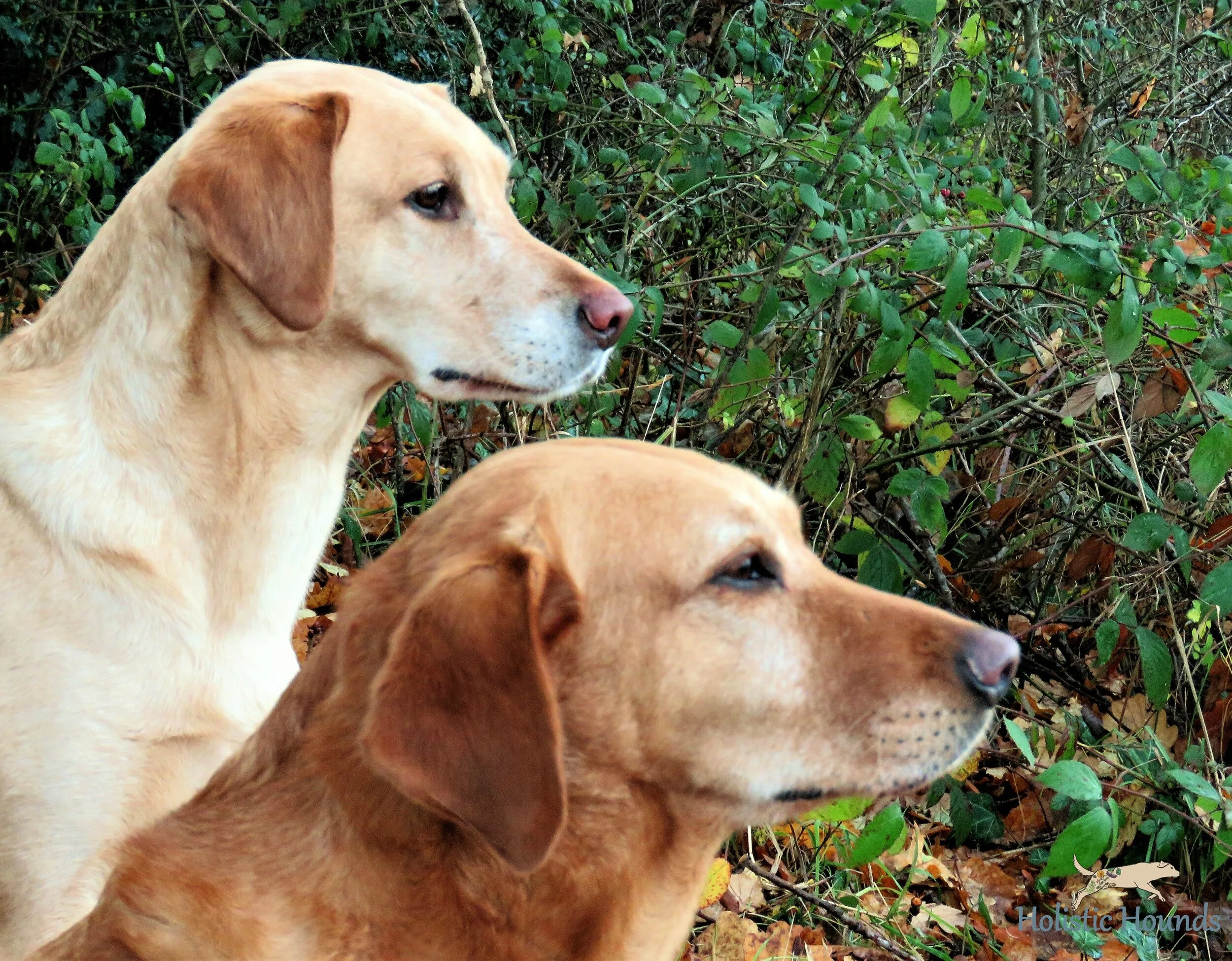
The Holistic Approach to Dog Worming
Talking about worms is not a pleasant subject but it is nevertheless a very important topic to explore in order to keep your dog healthy and those that are in close contact with them safe. There are several internal parasites which can affect our dogs, sometimes with serious health implications and may carry the risk of being passed onto ourselves.
Talking about worms is not a pleasant subject but it is nevertheless a very important topic to explore in order to keep your dog healthy and those that are in close contact with them safe.
There are several internal parasites which can affect our dogs, sometimes with serious health implications and may carry the risk of being passed onto ourselves.
Initially, there are few symptoms that indicate our dog has worms, until there is a growing population when diarrhoea, weight loss, poor condition, irritation of the rectum are noticed. Once these are evident the dog will have reached a high level of infestation, which is something we want to avoid ever happening.
Just the mere thought of our dogs carrying parasites can cause concern for many people and it has become common practise to frequently use drugs, often combined with flea and tick treatments, in order to try and eliminate any parasites.
Anthelmintics is the name given to a group of drugs which are administered specifically to kill or expel parasitic worms. Indiscriminate worming with these drugs every one to three months, when there are no intestinal worms present is costly to your pocket, damaging to the environment and not least counterproductive to the health of your dog and ultimately increases the risk of resistance to wormers.
So what options are available to us if we want to limit the amount of chemicals used but still keep our dogs in good health?
Here we explore the most common worms that dogs can come into contact with and what solutions are available when forming an effective worming programme.
Roundworms:
The most common type of intestinal parasite is the roundworm (Toxocara Canis and Toxascaris leonine). They are white or very light brown in colour and grow up to several inches long.
A large percentage of puppies will be born with round worm larvae in their system which is transferred through the uterus during gestation or via the mother’s milk. Pups with a heavy worm infestation look in poor condition with a distended “pot” belly appearance and will often vomit up large amounts of roundworms which resemble spaghetti. Very heavy worm burdens have the added risk of complications such as an intestinal blockage. Roundworms can easily be passed onto humans and extra hygiene precautions are needed especially when children are handling puppies. It is important to pick up all dog faeces immediately to reduce soil contamination.
Tapeworm:
Tapeworm is the largest of the intestinal worms with multiple segments that attach to the intestinal wall via a sucker on their head piece from which additional segments grow. These segments are regularly shed and appear in the faeces or stuck to the hair under the tail. The tapeworm requires an intermediate host such as a flea or louse, so it is vital to establish a holistic regime where the control of these parasites is also considered.
Hookworms:
Hook worms are particularly unpleasant as they attached themselves to the wall of the small intestine and suck the hosts blood. This can result in severe anaemia which may be fatal in small puppies. Hook worms are transmitted through ingesting contaminated soil and water or via the mother’s milk.
Whip worms:
These are small, thin worms with one enlarged end and if seen in the faeces resemble pieces of string. They live in the large intestine and do not shed eggs continuously, as is the case of roundworm and hookworm. Symptoms include bloody, mucous covered diarrhoea.
Lungworm:
Incidence of Lungworm, such as French heartworm, is on the rise and cases can be found countrywide.
Lungworm needs an intermediate host such as slugs, snails, frogs and foxes but the most common form of lungworm is Crenosoma vulpis (Fox Lungworm) transmitted by the urban fox. If a dog becomes infected with French Heartworm symptoms include exercise intolerance, laboured noisy breathing, coughing and as the condition progresses excessive bleeding even from a tiny wound, weight loss, collapse and seizures. Worryingly some dogs never show any symptoms until they suddenly become extremely ill.
A blog specifically about Lungworn can be found here https://www.hedgerowhounds.co.uk/news/be-lungworm-aware
Giardia:
Puppies as well as adult dogs are often infected with this parasite which can cause severe diarrhoea. It can be present in ponds, streams and puddles which have been contaminated with faeces.
Resistance to chemical worming preparations:
Resistance to chemical wormers has long been recognised as a growing concern in horses, cattle and sheep. According to the British Veterinary Association this is predominately caused by the overuse of wormers as an automatic, preventative method of parasite control. With the overuse of wormers in dogs becoming an issue combined with inaccurate weight measurement therefore affecting the dosage administered, resistance to these drugs is a real possibility in the near future.
Natural preventatives:
Many guardians are keen to take the holistic approach to a worming regime and will incorporate a number of foods or supplements within the dog’s diet. These can be extremely helpful in making the dog more unpalatable to worms and other parasites but should not be relied upon to kill internal parasites should your dog already have a worm burden. Once a clear faecal worm count is achieved then they are a good means of natural prevention. Regular worm counts should still be used to confirm that your chosen natural preventative is working effectively for your particular dog.
Pumpkin seeds:
Ground pumpkin seeds contain an amino acid called Cucurbitacin which is said to immobilise intestinal worms therefore making them easier to pass. As a preventative the dose is one teaspoon of ground seeds per 10lbs of bodyweight once a day. The seeds used can be fresh or dried.
Garlic:
Feeding garlic to dogs always causes concern but it can be useful as a preventative for worms and fleas if given correctly. Freshly crushed garlic that has been allowed to sit for around 10 minutes to active the allicin is more potent, therefore smaller amounts can be fed. It is not advisable to give large amounts of garlic or feed it over long periods of time as this increases the risk of anaemia. It should also be avoided if your dog is on blood thinners and removed from the diet for 2 weeks before and after surgery due to its blood thinning properties. As a general guide a quarter of a clove per 20kg of bodyweight is fed. Due to its very pungent smell and bitter taste it is very unlikely that your dog would eat any more than this small amount in his meals.
Diatomaceous Earth (DE):
Silicon Dioxide, commonly referred to as DE is a dietary supplement fed in powdered form which originates from fossilised water plants called Diatoms. It is believed to act as a natural ‘wormer’ but recent studies suggest that its use is limited. If you use this method, then regular worm counts will confirm if it is effective in your dog. Only use food grade DE and mix with moist food as it can easily be inhaled accidently while your dog is eating.
Herbal “Intestinal Hygiene Control”:
There are a number of companies that offer medicinal herbal products that aim to create an adverse environment in the gut to aid in naturally repelling and assist to expel parasites. They come in the form of a small biscuit type treat or a liquid as provided by Verm-X or in a tincture such as Four Seasons. They are a cost-effective way of natural prevention and are administered as a daily dose for 3 days a week or as with the tincture, one day a month. Higher doses are needed where prevention of Lungworm is concerned.
Faecal Worm Counts:
Using faecal worm counts is an intelligent way of testing which parasites, if any, our dogs are carrying and to what level of infestation. It is also an accurate way to reassure us that our chosen method of worm prevention, be that natural or chemical, is working effectively. We can then make informed choices if in fact our dogs need worming at all, and if so, what product is suited to target that parasite.
A faecal egg count (FEC) is used to count the number of worm eggs in your dogs faeces and the results are shown as “eggs per gram” (epg). This is an indication of how many live adult worms are in the gut.
I have used a faecal worm count service for the last seven years and in that time of sending off regular tests on several dogs, there has only ever been one positive test which was for fox lungworm.
Collecting and sending off a stool sample is easy and does not need a referral from your vet, although some vets do offer an in-house worm count service.
A testing kit can be purchased online and sent to you in the post, you will need a separate kit for each individual dog. You then collect a small sample of your dogs stool into the pot and return in the envelope provided. Results come back very quickly by email or text and you have a printout of the results to keep for your records. All being well there will be “none seen” written in the right-hand column against each parasite tested for. There is also a colour key which ranges from no larvae seen through to high levels noted in the sample.
The Lungworm test is carried out by collecting a small sample of your dogs stools over a period of three days, due to the fact that lungworm intermittently shed larvae. It is essential that in a multi dog household, individual stool samples are kept separate and clearly identified. You need to know which dog produced the sample. This became evident when I tested three of my dogs, who are exercised together in the exact same fields every day and only one tested positive for fox lungworm. Read our blog all about lungworm: https://www.hedgerowhounds.co.uk/news/be-lungworm-aware
Should you get a positive result back and it is decided that a chemical wormer is necessary then it is important to administer a product that targets those specific parasites and that the dog is accurately weighed so the correct dosage is given. Many people guess the weight of their dog and usually under rather than over estimate it. If this happens regularly, then the administered wormer will kill the weak worms leaving the more robust ones to flourish. All vet surgeries and most pet shops have digital scales you can use to establish the accurate weight of your dog.
A company that I have used for many years as they give such a superb service is Wormcount.com.
I asked Michaela Murray from Wormcount.com
How often do you recommend using a faecal worm count test?
It all depends on the risk factors surrounding your dog. If he is an ‘urban’ dog who goes for walks around the streets on a lead and is therefore never more than 3 feet away from you, then you will always know where his nose is! You will know if he has eaten anything such as dog or fox poo or any carrion such as dead birds. These are all carriers of worms. He is a low-risk dog. His worm count interval will largely depend upon previous counts. If he has a clear count, then he may even be able to go as long as 6 months between tests.
If, on the other hand, he is a ‘country, beach or park’ dog who goes ranging off the lead and is therefore into everything, then he is a high-risk dog and you should consider testing him every 2 to 3 months.
It used to depend largely upon where you lived as to how heavy the worm burden was – especially for lungworm species – however, now that more of us take our dogs on holiday with us all over the country, then there is a much greater spread. We have had positive cases of all 5 species of lungworm from all over the UK, even on the islands. There is fox lungworm on the Isle of Wight, The Isle of Man and even Shetland!
Most horse owners are now aware of the problems regarding the resistance to chemical wormers and how important it is to have an appropriate testing and worming programme in place. Have you found a steady increase in dog owners now using the worm count service rather than just automatically worming every 2-3 months or has it been a slow progression?
“When we first started worm counting 20 years ago we worked solely with horse owners. We were asked by them if we tested dogs as many horse owners also own dogs. We had the technology and expertise to test all animals but had been rarely asked to use it. Once we made it known that we would test any animals we were very quickly inundated with all manner of animal poo!”
We do test thousands of dogs every year however, we also have many tortoises, lizards, bunnies, horses, zoo and farm animals as clients.
Many of our owners still conventionally worm and use the screen we offer to check that their programme is working but the vast majority are turning away from automatically worming and are instead worming only when a positive worm screen indicates that it is necessary. They also find the added fat and food screen that we offer within our worm count invaluable for checking that their dogs are digesting their food properly. This is especially important when changing from conventional to raw feeding.
I see that you have added a new kit to test for Giardia, why is this and are faecal samples collected and tested in a different way for this parasite?
We added the gold standard giardia screen to our portfolio of tests as a direct result of requests from clients. There are many ‘home tests’ available on the market but most of these are simply not sensitive enough and some can only guarantee a 70% accuracy. We will only ever use the best possible testing methods for our clients.
The sample we require is taken over one day. If the dog passes faeces more than once in a day then you should take a small piece each time he goes. The sensitivity of our test is so high that it only needs one day’s poo. It works very well in conjunction with our worm egg screen.
Testing for giardia can be either in response to an episode of unexplained diarrhoea or used as an annual check to ensure that all is well as giardiasis (the disease which occurs when giardia species are present) does not always show symptoms and dogs can have recurring bouts.
www.hedgerowhounds.co.uk
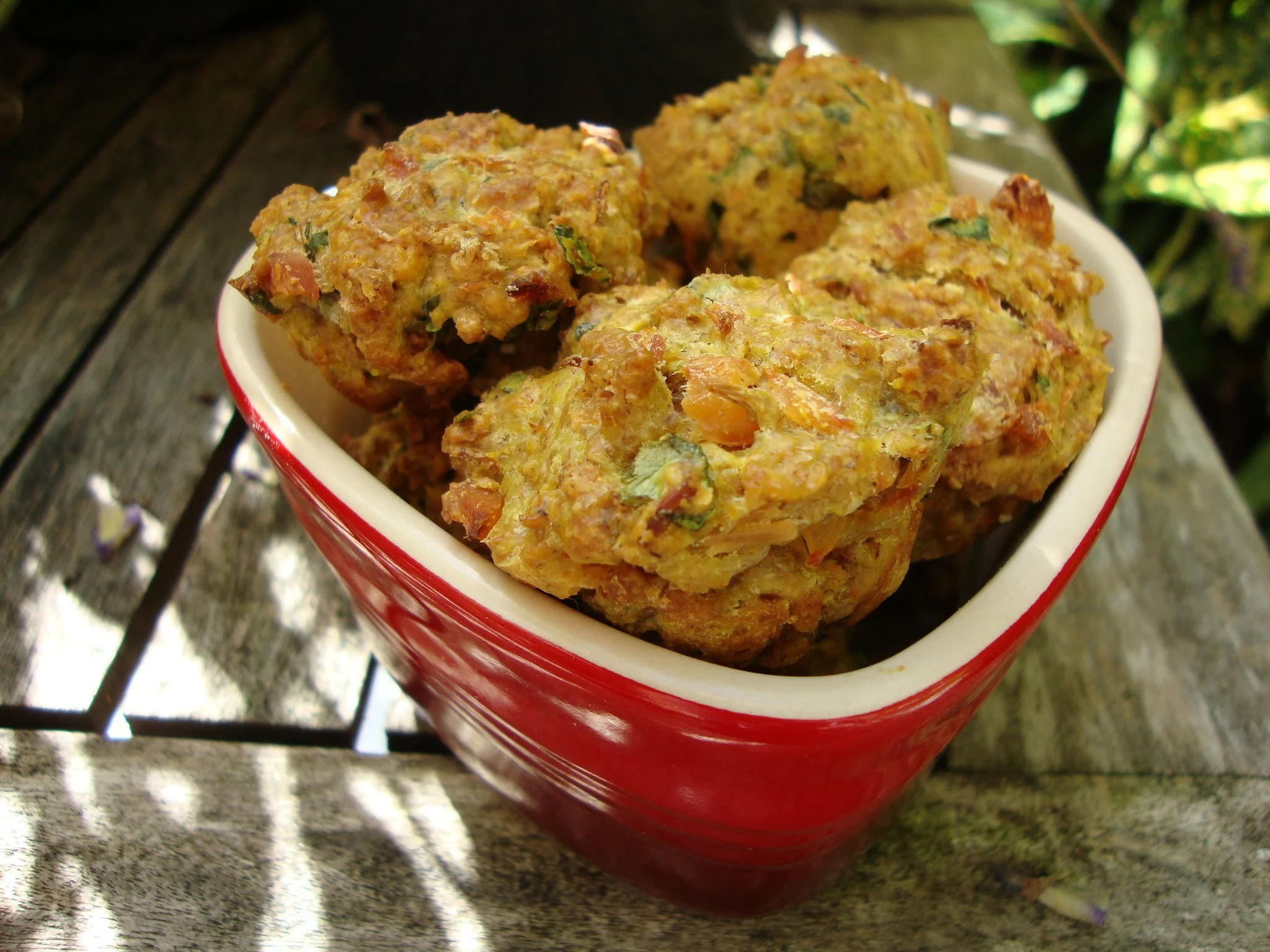
Sweet Potato Bites
These tasty treats take no time to prepare and will keep in the fridge for up to seven days.
Sweet potato is a member of the bindweed family and provides a good source of fibre and the antioxidant Beta-carotene.

These tasty treats take no time to prepare and will keep in the fridge for up to seven days.
Sweet potato is a member of the bindweed family and provides a good source of fibre and the antioxidant Beta-carotene.
Ingredients:
1 cup cooked, drained & mashed sweet potato.
Half a cup of coconut flour plus a little extra for dusting.
1 level teaspoon of melted coconut oil
Half a teaspoon of Greens, Seeds & Superfoods, or finely chopped parsley (fresh or dried)
Half a teaspoon of nutter butter (Pip & Nut do a great range which are palm oil & xylitol free)
Half a teaspoon of chia seeds
How to make:
Place all the ingredients into a bowl, and thoroughly stir until they are combined.
With a spoon, scoop out an amount that is a suitable size for your dog. If you make larger ones, they can easily be broken up after chilling.
Roll the mixture in the palm of your hand until it forms a ball, use a light dusting of flour if necessary.
Place in the fridge to set for 1 hour before serving.
Keep in the fridge and use within 7 days. They also freeze well and are best used within 4 months.
Caroline Hearn ~ Hedgerow Hounds
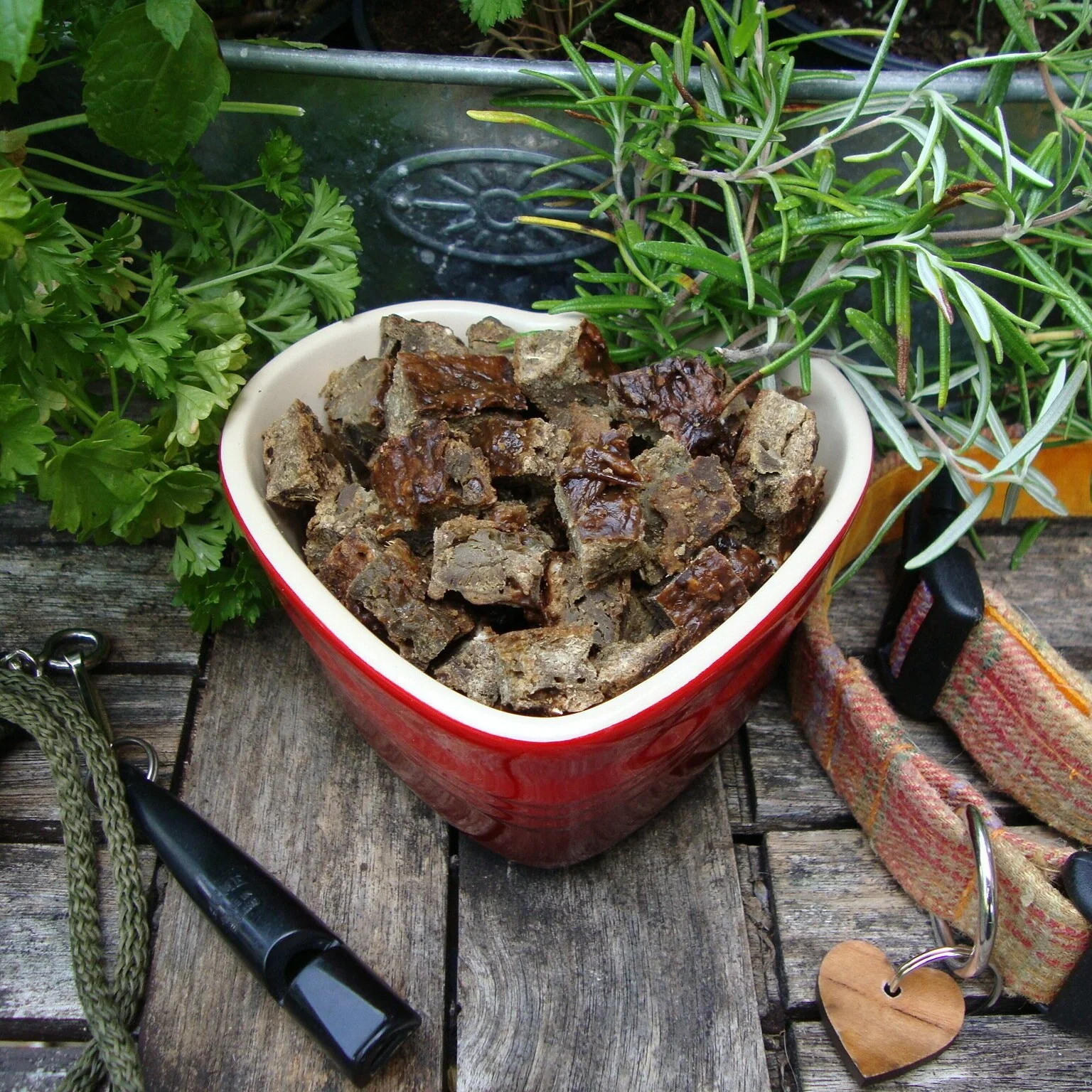
Liver Brownie Training Treats
Delicious, tempting liver brownies will make even the cheekiest hound pay attention!

These irresistible liver treats are very high value but be mindful that they are moorish and rich so too many will can loose stools.
Delicious, tempting liver brownies will make even the cheekiest hound pay attention!
For the Liver Brownie recipe you will need:
Raw liver 250g (lamb, chicken or beef)
Flour 200g (buckwheat , spelt or flour of choice)
Free range beaten eggs x 3 medium
Oatmeal or gluten free porridge oats 100g
Softened coconut oil x 1 teaspoon
Baking tray 10 inch
Baking parchment
Food processor
Mixing bowl
Sealed container or freezer bags
Preheat the oven 180c/ fan 160c or gas 4
Line a 10 inch baking tray with very lightly oiled baking parchment. In the food processor add the liver, eggs, coconut oil and pulse until it forms a smooth pate consistency.
Either add the flour and oats into the processor or if you prefer tip out the wet ingredients into a bowl and then fold in the flour and oats with a spoon. If you feel the mixture is a little too dry then a splash of warm water will loosen it slightly.
Pour the ingredients into the prepared tin, level off with a palate knife or the back of a large spoon. Place on the middle shelf of a preheated oven for approximately 30 minutes.
Remove from the oven and while still in the tray, leave on a wire rack to cool.
Cut to the required size to suit your dog and if using as training treats then squares are best. You can then break off tiny amounts to use as a reward, they have a strong taste and aroma, so a little goes a long way!
Keep the brownies in a sealed container in the fridge for up to a week. They can be frozen in bags so you just take out what you need for that day and they defrost quickly.
Head Chef ~ Hedgerow Hounds
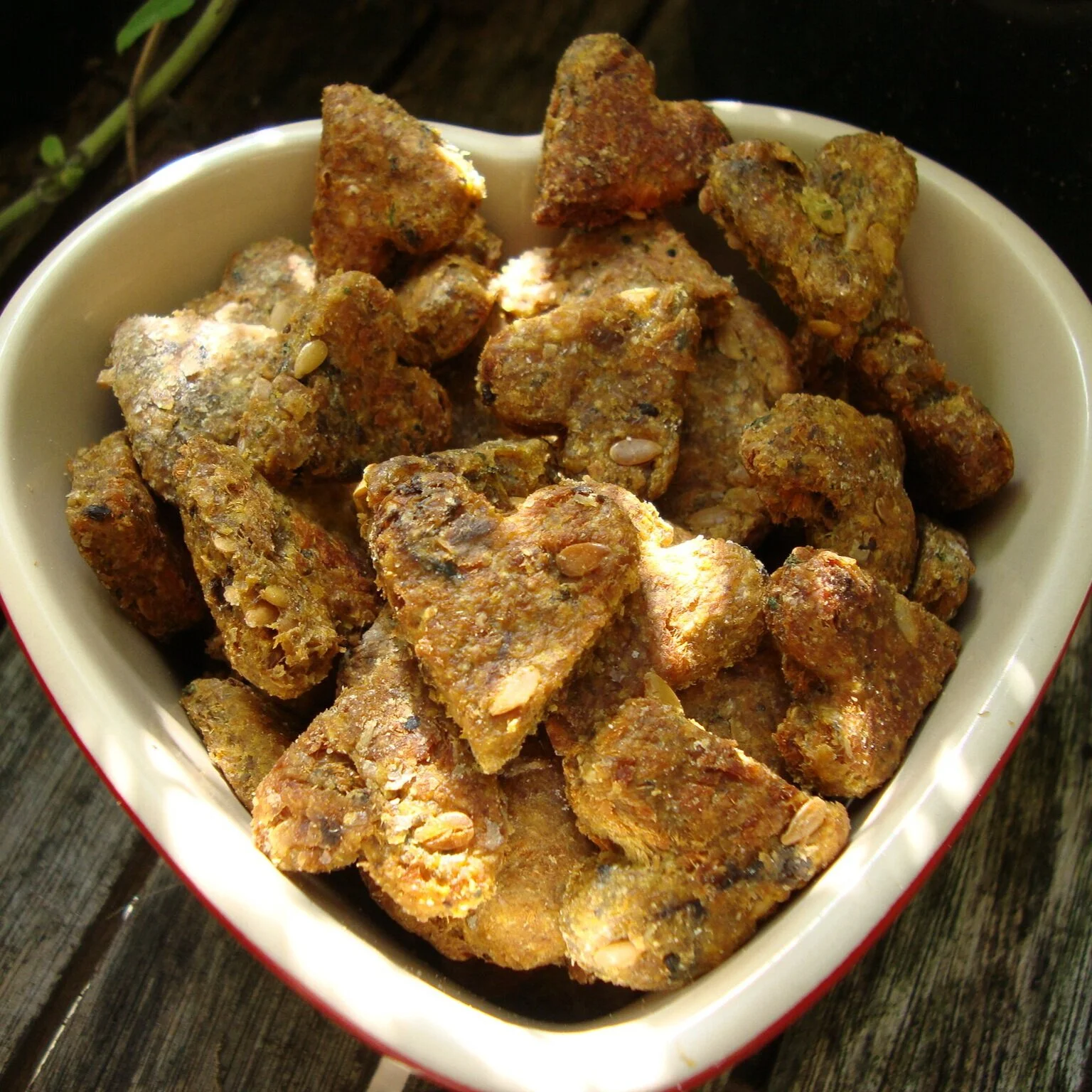
Tranquil Calming Treats
Perfect for when your dog needs additional emotional support or a lovely bedtime treat.

Make your own calming treats for when your dog needs a little more emotional support and perfect for a bedtime nibble.
You will need:
2 Level tablespoons of Hedgerow Hounds Tranquil blend or 2 chamomile teabags
250g Flour of choice and a little extra for dusting
125g Gluten free porridge oats
1 cup of Oat, Coconut or Goats milk
1 beaten egg (free range)
1 level teaspoon of Chia seeds
Optional 1 level teaspoon of Almond nut butter (must be xylitol and palm oil free) Pip & Nut is great
Baking tray and rolling pin
Coconut oil for lightly greasing the tray or baking parchment
How to make:
Place the Tranquil blend or tear open the Chamomile tea bags, into the flour, with the beaten egg, oats, nut butter and chia seeds. Gradually add in the milk, while stirring, until a dough starts to form.
Knead and bring the dough together to form a ball.
Lightly dust the surface and rolling pin and roll out the dough to an even thickness.
With your favourite cookie cutter shapes, cut out and place onto the baking tray which is either lightly oiled or preferably lined with baking parchment.
Re-knead the dough and roll out again to use the dough up, if necessary.
Place on the middle shelf of a preheated oven 180c (160c for fan oven) for approximately 15-20 mins until lightly golden in colour. Cooking time depends on how thick you have made your treats.
Remove from the oven and leave to cool on the tray or place on a wire rack.
When completely cold transfer into airtight containers.
Use within 2 weeks or freeze for approx. one month
www.hedgerowhounds.co.uk