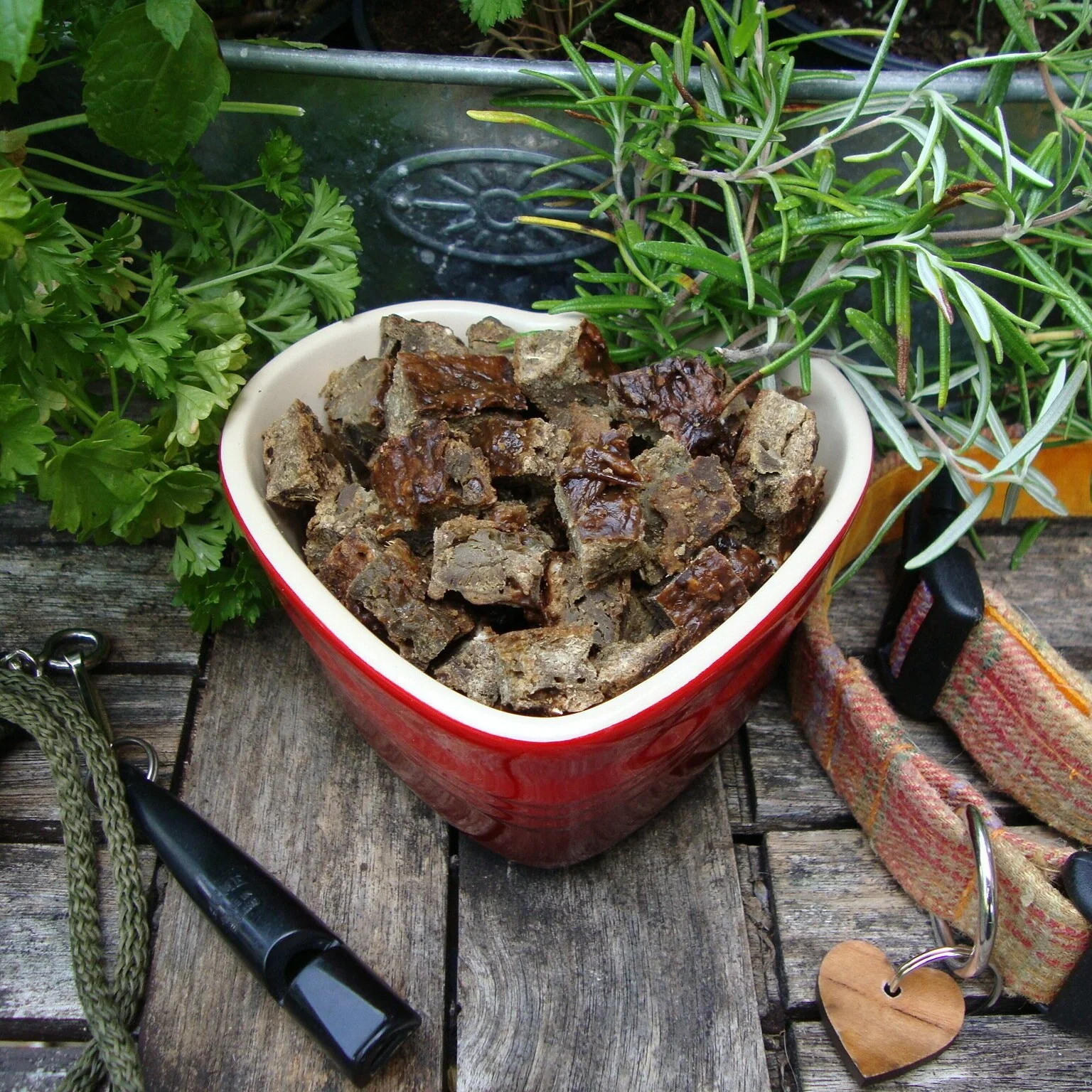
Liver Brownie Training Treats
Delicious, tempting liver brownies will make even the cheekiest hound pay attention!

These irresistible liver treats are very high value but be mindful that they are moorish and rich so too many will can loose stools.
Delicious, tempting liver brownies will make even the cheekiest hound pay attention!
For the Liver Brownie recipe you will need:
Raw liver 250g (lamb, chicken or beef)
Flour 200g (buckwheat , spelt or flour of choice)
Free range beaten eggs x 3 medium
Oatmeal or gluten free porridge oats 100g
Softened coconut oil x 1 teaspoon
Baking tray 10 inch
Baking parchment
Food processor
Mixing bowl
Sealed container or freezer bags
Preheat the oven 180c/ fan 160c or gas 4
Line a 10 inch baking tray with very lightly oiled baking parchment. In the food processor add the liver, eggs, coconut oil and pulse until it forms a smooth pate consistency.
Either add the flour and oats into the processor or if you prefer tip out the wet ingredients into a bowl and then fold in the flour and oats with a spoon. If you feel the mixture is a little too dry then a splash of warm water will loosen it slightly.
Pour the ingredients into the prepared tin, level off with a palate knife or the back of a large spoon. Place on the middle shelf of a preheated oven for approximately 30 minutes.
Remove from the oven and while still in the tray, leave on a wire rack to cool.
Cut to the required size to suit your dog and if using as training treats then squares are best. You can then break off tiny amounts to use as a reward, they have a strong taste and aroma, so a little goes a long way!
Keep the brownies in a sealed container in the fridge for up to a week. They can be frozen in bags so you just take out what you need for that day and they defrost quickly.
Head Chef ~ Hedgerow Hounds
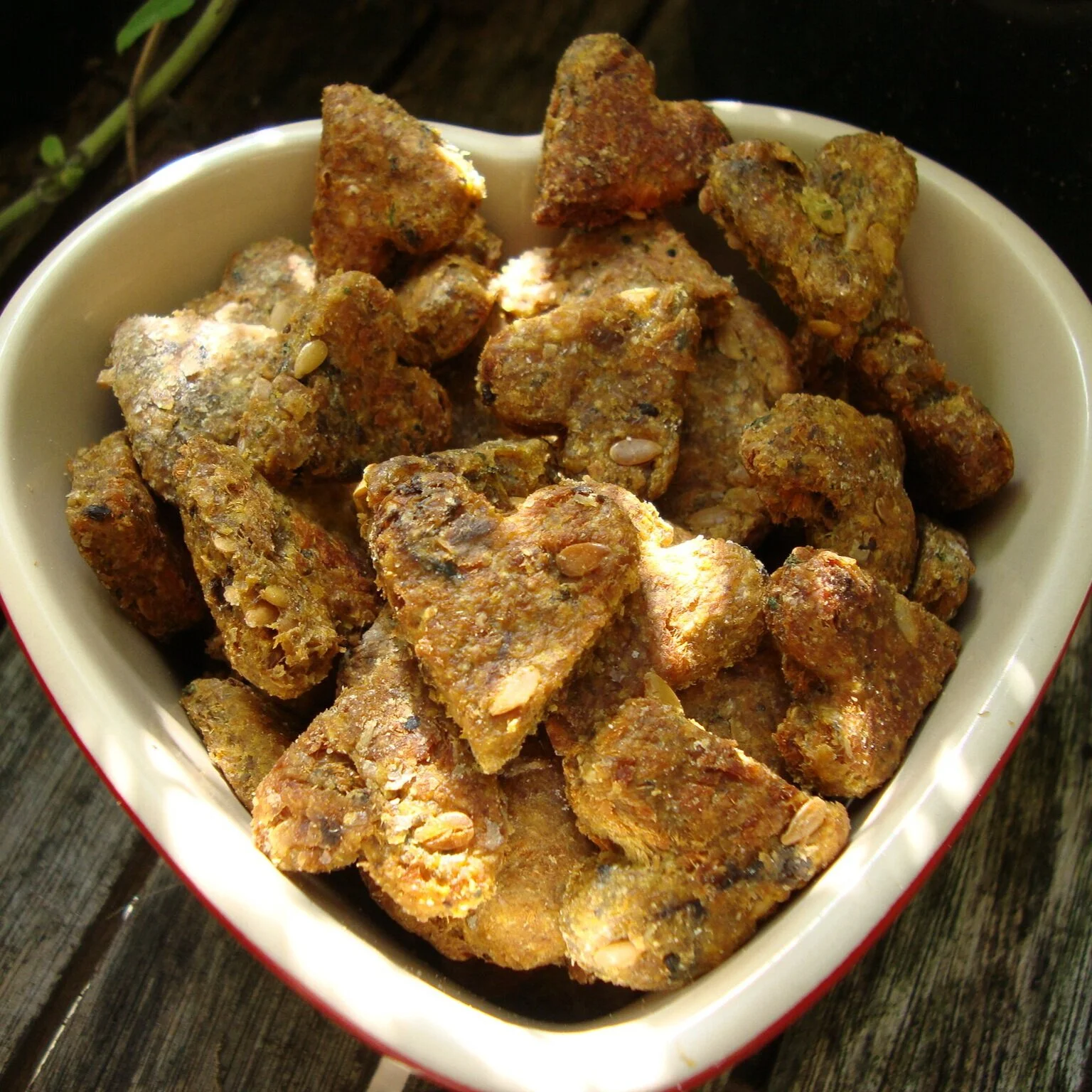
Tranquil Calming Treats
Perfect for when your dog needs additional emotional support or a lovely bedtime treat.

Make your own calming treats for when your dog needs a little more emotional support and perfect for a bedtime nibble.
You will need:
2 Level tablespoons of Hedgerow Hounds Tranquil blend or 2 chamomile teabags
250g Flour of choice and a little extra for dusting
125g Gluten free porridge oats
1 cup of Oat, Coconut or Goats milk
1 beaten egg (free range)
1 level teaspoon of Chia seeds
Optional 1 level teaspoon of Almond nut butter (must be xylitol and palm oil free) Pip & Nut is great
Baking tray and rolling pin
Coconut oil for lightly greasing the tray or baking parchment
How to make:
Place the Tranquil blend or tear open the Chamomile tea bags, into the flour, with the beaten egg, oats, nut butter and chia seeds. Gradually add in the milk, while stirring, until a dough starts to form.
Knead and bring the dough together to form a ball.
Lightly dust the surface and rolling pin and roll out the dough to an even thickness.
With your favourite cookie cutter shapes, cut out and place onto the baking tray which is either lightly oiled or preferably lined with baking parchment.
Re-knead the dough and roll out again to use the dough up, if necessary.
Place on the middle shelf of a preheated oven 180c (160c for fan oven) for approximately 15-20 mins until lightly golden in colour. Cooking time depends on how thick you have made your treats.
Remove from the oven and leave to cool on the tray or place on a wire rack.
When completely cold transfer into airtight containers.
Use within 2 weeks or freeze for approx. one month
www.hedgerowhounds.co.uk
Winter Bone Broth
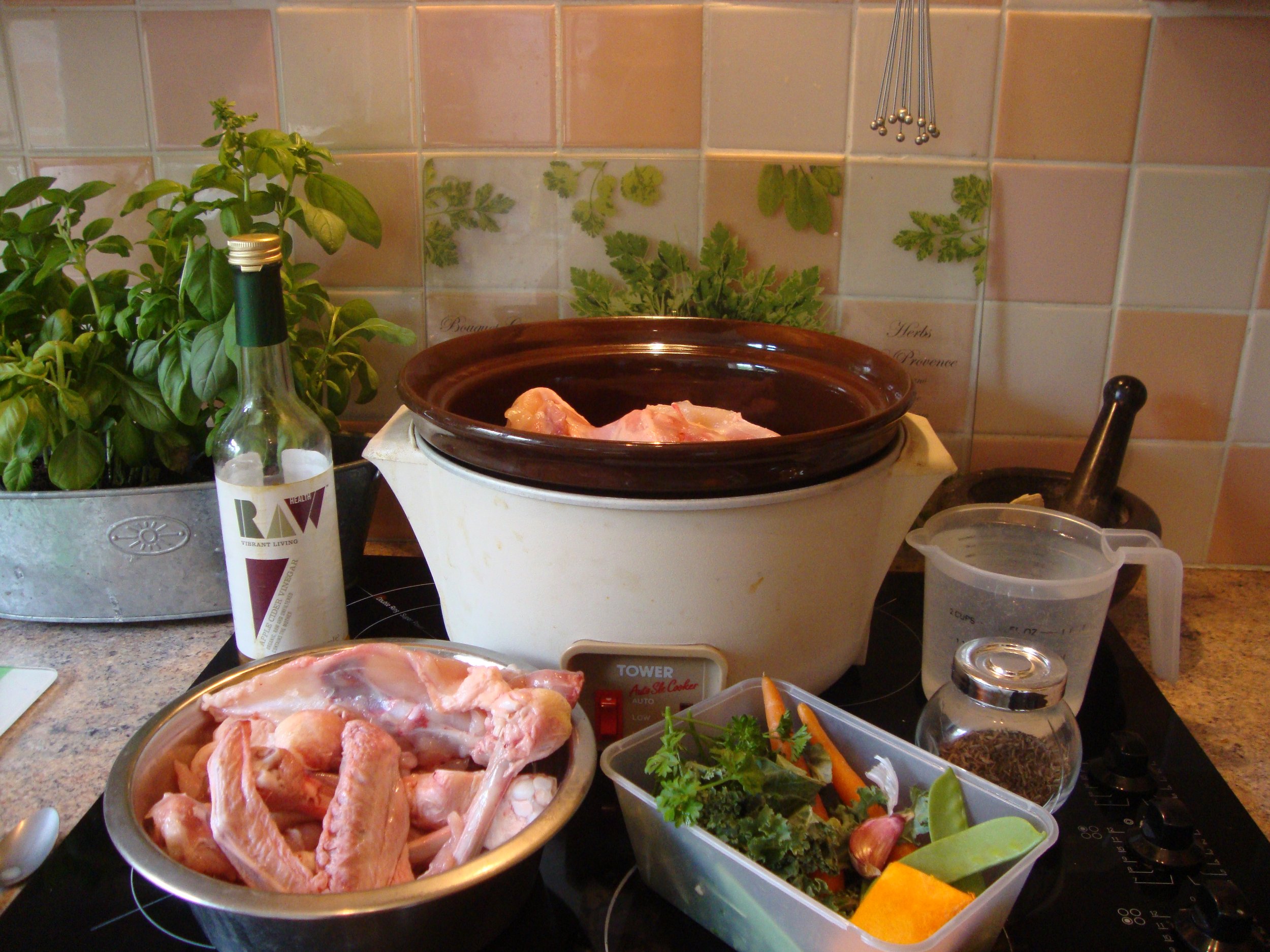
As we approach the coldest months of the year we turn to foods which offer comfort and warmth.
We can also provide our dogs with a seasonal variation on the usual bone broth recipe by adding ingredients which are traditionally used to support joint health and immunity.
As game is currently in season, try and find bones from venison, duck, pheasant or partridge. Duck and chicken feet are a good source of glucosamine, chondroitin and gelatine and after many hours of cooking will dissolve into the broth.
Avoid bones with a large amount of fat, skin and central marrow, which will just produce a very fatty and oily broth. Either remove the fat and marrow or chose a different type of bone. If your dog is prone to pancreatitis it is very important to select lean bones, remove any visible fat before cooking and skim off any that comes to the surface during cooking.
You will need approximately 4 - 5 pounds of bones of varying types and size to make a good broth. Some bones, such as ribs will completely break down into the broth, whereas harder bones will be lifted out in large pieces.
You will need:
A slow cooker or large stock pot with a lid
Bones such as duck, venison, pheasant, partridge, chicken, turkey, ox tail, beef, lamb ribs etc.
Enough water to just cover the bones when they are placed in the cooking pot.
1 stick of celery roughly chopped
Cider apple vinegar - 2 tablespoons
Ginger – 1 thumbnail size piece of fresh or half a teaspoon of powered
Turmeric 1 teaspoon (fresh or dried)
Cinnamon - quarter of a teaspoon
Shiitake mushrooms- quarter of a cup (dried or fresh)
1 level tablespoon Autumn Harvest herbal blend
2 grinds of black pepper
How to make:
Place your chosen bones into the pot and pour on the water so they are just covered. Add the cider apple vinegar and black pepper. The slow cooker is used on its lowest setting or a stock pot placed over a very low heat for anywhere between 24 – 30 hours, although some people prefer to leave the broth cooking gently for nearer to 36 hours .You may need to top up with water if the levels are getting very low.
In the remaining 2 hours of cooking add the spices, mushrooms and vegetables.
When complete, turn off the heat and carefully remove the bones with a slotted spoon plus skim off any excess fat that may be on the surface.
As the resulting broth starts to cool, transfer into ice cube trays or suitable sized pots to place in the fridge or freezer for later use. If you want your broth as a set jelly then you could stir in a level tablespoon of gelatine powder.
Store in the fridge and use within 1 week or keep in the freezer and use within 4 months.
Add the defrosted broth to meals, any recipes you make or gently warm through to provide a warm, comforting treat on a very chilly day.
**It is essential to remove the bones and dispose of them safely and under no circumstances should they be fed **

Green Dog Pesto - Spring
Spring brings with it lots of vibrant new growth, both in the veg patch and in the wild. It`s too good an opportunity to miss!

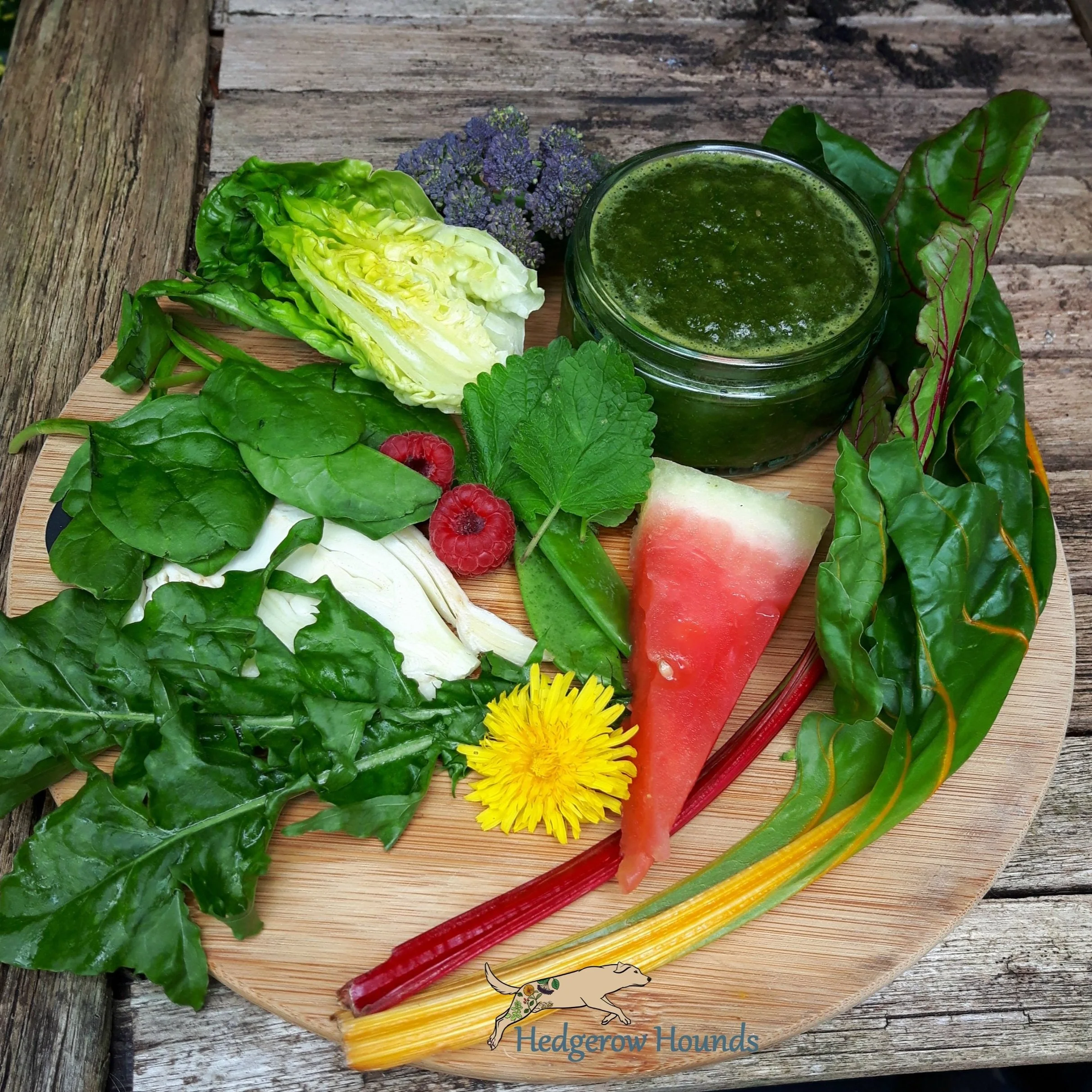
Full of fresh green goodness, this smoothie recipe for your dog, has a little twist in the form of added nuts and seeds.
Almonds are rich in vitamin E and Magnesium and Pumpkin seeds are a good source of zinc and selenium. As an alternative to almonds, a brazil nut can be added, but avoid using macadamia or any salted nuts.
At this time of year there is no shortage of seasonal greens, but the following are favourites of mine. Choose a few leaves from the following or add one or two to your dogs usual veggie blend.
Parsley, Basil, Little Gem or Coz lettuce, Wild Garlic, Dandelion leaves, Watercress, Cleavers, Spinach, Chard, Spring Greens, Asparagus stalks.
Many of these are easy to grow at home or can be foraged for and when freshly picked are even more nutritious.
You will need
A selection of Summer greens (approximately 2 cups full)
2 whole, un-blanched Almonds
5 Pumpkin seeds
Splash of water or make a tea from a Hedgerow Hounds herbal blend, Greens, Seeds & Superfoods or Natures Bounty as an example.
How to Make:
Place your selected leaves and any veggies into a smoothie maker or blender and add enough water or your herb tea to blend into a thick puree consistency.
Keep in the fridge and use within 2 days or freeze in individual moulds for later use
If your dog is new to eating vegetables, then start off with small amounts and gradually increase over a week or two. Steamed or pulped, (low GI and low starch) vegetables can make up around 10%-15% of your dogs meals and are a nice addition to any diet.
Caroline Hearn – Hedgerow Hounds
Feeding Raw Bones
When choosing a raw bone for your dog, take into consideration, their size, feeding style (ie: greedy), behaviour and their experience of eating bones.
Feeding raw bones can be a concern for some owners.
Here we explain the best bones to start off with and what to consider when feeding bones to your individual dog.

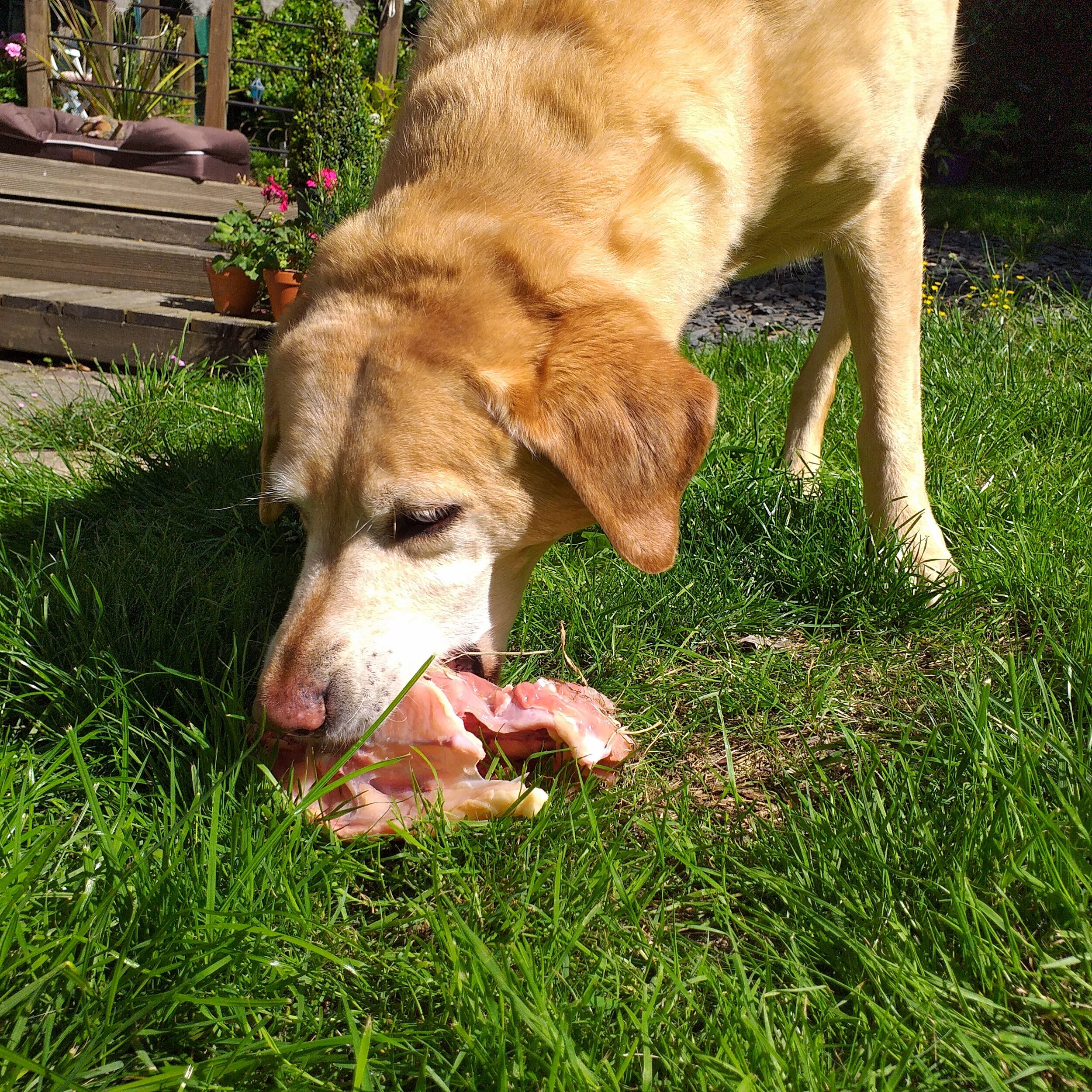
Edible bones, such as this raw chicken carcass, go towards the daily bone ration and are the ideal starter bone for pups, young dogs and beginners. They are soft, flexible and contain a lot of cartilage.
Bone is a very important part of feeding a raw food diet, but it is a subject that can cause worry and concern for the dog owner and often a reason people decide to rule out raw feeding altogether.
The inclusion of raw bone in the diet provides nutrients such as calcium, phosphorous, magnesium, fat soluble vitamins, amino acids and essential fatty acids, all of which are used by the body for blood and bone formation. Calcium is regarded as a macro-mineral and is the most abundant and essential mineral in the body. It isn`t just needed for optimum skeletal growth but also responsible for the correct functioning of muscle and nerve impulses, keeping the immune system healthy and regulating the heartbeat.
Meat contains high levels of phosphorous and very little calcium so feeding a diet of only meat and offal would be extremely deficient in vital minerals as well as giving the dog loose stools.
Our dogs anatomical features:
So what has nature blessed a dog with to make him so efficient at eating and digesting bone?
Just a glimpse inside a dog’s mouth will show a whole range of “tools” to make the job of piercing, tearing and slicing meat and bone an easy task. A pair of specialised teeth for crushing, called the Carnassial are the largest and most jagged of the premolars and you will notice your dog tilting his head on the side in order to bring them into full use.
Unlike ourselves and herbivores, a dogs jaw has no sideways, grinding action, so in order to add lubrication within the mouth and around the food there is a lot of saliva production to assist its transit to the stomach. Once in the stomach there is an incredibly strong stomach acid to not only help kill any bacteria but also to dissolve raw bone.
Edible vs Recreational
Raw bones are split into two categories of edible and recreational bones.
Edible bone is consumed completely in one sitting and adds towards the dog’s dietary calcium requirements. Examples would be chicken necks and wings, duck feet, lamb ribs, pigs trotters, chicken carcass or the finely ground bone within a minced complete meal.
Recreational bones are not completely consumed within one sitting and add little if anything towards the dietary calcium requirements. These would be something like a large beef knuckle bone or a venison neck as an example. The main advantage of these large bones is that they keep the teeth clean and also provide the psychological benefits that come with the chewing action, such as a release of serotonin, dopamine and oxytocin, which are the calming and feel good hormones.

Recreational bones are for teeth cleaning and also release feel good hormones as the dog chews them. They are not included as bone content, as they are not consumed in one sitting.
With 90% of dogs in the UK under 3 years of age having some form of periodontal disease and needing a general anaesthetic to remove a build-up of plaque on an annual basis, kibble despite what we are lead to believe, does not clean teeth. If you watch a dog eat kibble they gulp and swallow, there is certainly no abrasive grinding taking place in order to keep the teeth plaque free.
Potential issues with certain bones:
If ever there is a problem with bones it is generally due to feeding a bone which is too small for your particular dog, leaving the dog unsupervised or giving very rigorous chewers weight bearing bones.
Chicken wings: Better suited for small dogs as medium and large dogs or those that are greedy feeders, can try and swallow them whole and due to the shape of the wings, carry a choke risk.
Marrow bones: The central marrow is extremely high in fat and can cause diarrhoea. They tend to be weight bearing bones so are extremely hard, which in very vigorous chewers can cause tooth fractures. There is the danger of the bone encircling the lower jaw when it has been chewed down into a “ring”, often requiring veterinary assistance. Dispose of the bone long before this risk is a possibility.
Neck bones: Chicken and duck necks are better for smaller dogs unless you can guarantee your larger dog will not swallow them whole. I have seen dogs do this on a number of occasions, with no negative consequences whatsoever as their strong stomach acid made short work of digesting it, but it is better that they chew them first. The necks have a good covering of meat on the bone and turkey and goose necks are ideal for medium to large breeds and provide a meal in themselves.
Vertebral bones: Bones that form the neck and vertebral column in larger animals such as sheep and venison, when eaten right down will become circular and have a higher risk of causing choke. This also applies to ox tail. If your dog has a reliable leave command then you can remove the bone when it starts to become eaten down into smaller sections.
Ribs: If ribs are fed from young animals such as lamb or beef then they are soft and contain a good amount of central red marrow and you will find that dogs can crunch them up with ease. The only potential problem and why it is essential to supervise your dog when they eat bones, is that they can very occasionally become stuck across the roof of the mouth and require assistance to remove them.
Avoid:
There are some pet stores that still sell large baked knuckle bones for dogs. They are often sourced from overseas and are extremely dangerous due to the likelihood of cooked bones splintering and causing perforations to the gut often with fatal consequences. Raw hide chews are also a major choke hazard and are known to cause obstructions in the bowel which require emergency surgery.
Choosing the right bone for your dog:
The main problem area when introducing raw bones to a dog is not offering a bone that is appropriate in size or type for that individual dog. It is always better to feed a bone that is a little too large than too small and also pair the bone with the chewing style of that particular dog.
If you are transitioning a dog onto a raw diet that has previously been eating kibble and you plan to feed edible bones then it is wise to leave 2-3 weeks before introducing whole bones to give the stomach acid time to adjust in order to adequately digest raw bone. Your dog will still be receiving his calcium ration from the complete minces that contain 10% finely ground raw bone.
Raw chicken or duck carcass are good starter bones as they still contain some meat on the bones and plenty of cartilage making them flexible and easy to crunch. They are usually from young birds which mean that the bones are still quite soft.
If your dog is straining to pass a motion or the stool is very white and crumbly then you know that they have too much bone content in their diet and you will need to re-evaluative the percentage. The majority of dogs do well on 10% - 12% bone in their diets with no issues.
If you feed raw mince which contains the standard 10% bone, be mindful when also giving whole edible bones alongside. This will mean that your dog could have too much bone in their system at once causing constipation or gut problems. If you want to feed the occasional whole edible bone then give a mince that has no bone content for that day.
Multiple dog households:
This can certainly be a big challenge for some owners and even the most placid dog can see a raw bone as the highest valued item he has ever been in possession of. If you have a dog that shows strong resource and food guarding behaviour then offering a raw bone of any type could be a tricky situation so unless you are working through this particular type of issue with a qualified behaviourist it is wise not to put the dog in that situation.
Every dog has to be treated as an individual character in order for things to run smoothly. Some will strut around for ages showing everyone their “prize”, others will just take the bone off into the garden and bury it, you may have a dog that becomes very protective of such a precious item and then there are those greedy ones that will chew until their mouths bleed or the nervous dogs whose motto is “if it`s in my stomach then no one else can get to it” and attempt to swallow the bone whole rather than risk it being taken off them by another dog or their owner. Offering the bone or trachea when it is directly out of the freezer can help slow the consumption down.
If you have a number of dogs with very individual ways of tackling a bone then it can prove extremely difficult to manage and the only safe way is for them to be sectioned off in their own safe space where they can relax and enjoy their bone. Edible bones tend to be eaten within minutes, so they are less of an issue than the recreational bone which can be around for days on end.
When whole raw bones are just not an option.
It is really important that you feel confident and happy in providing your dog with nourishing meals. If feeding whole bones, edible or otherwise causes you to panic and worry and is creating friction and tension within your four legged family, then just don’t feed them whole bones.
If you are giving complete meals where muscle meat, offal and ground bone is added for you, then your dog will be getting the calcium they need. If the percentage is not clear on the product label then ask the manufacturer, as it should be between 10-12 % ground bone. The raw bone is finely ground so it is unlikely you will notice it when dishing up and your dog will have no trouble digesting it.
Semi frozen tracheas are a good alternative to bones, especially for seniors or those with missing teeth, large dogs need the beef version while small dogs can manage the lamb.
If recreational bones are not fed and even tracheas cause problems then you will have to resort to other ways of keeping their teeth clean via a toothbrush or micro-fibre cloth and dog friendly toothpaste.
www.hedgerowhounds.co.uk
Gelatine Treats

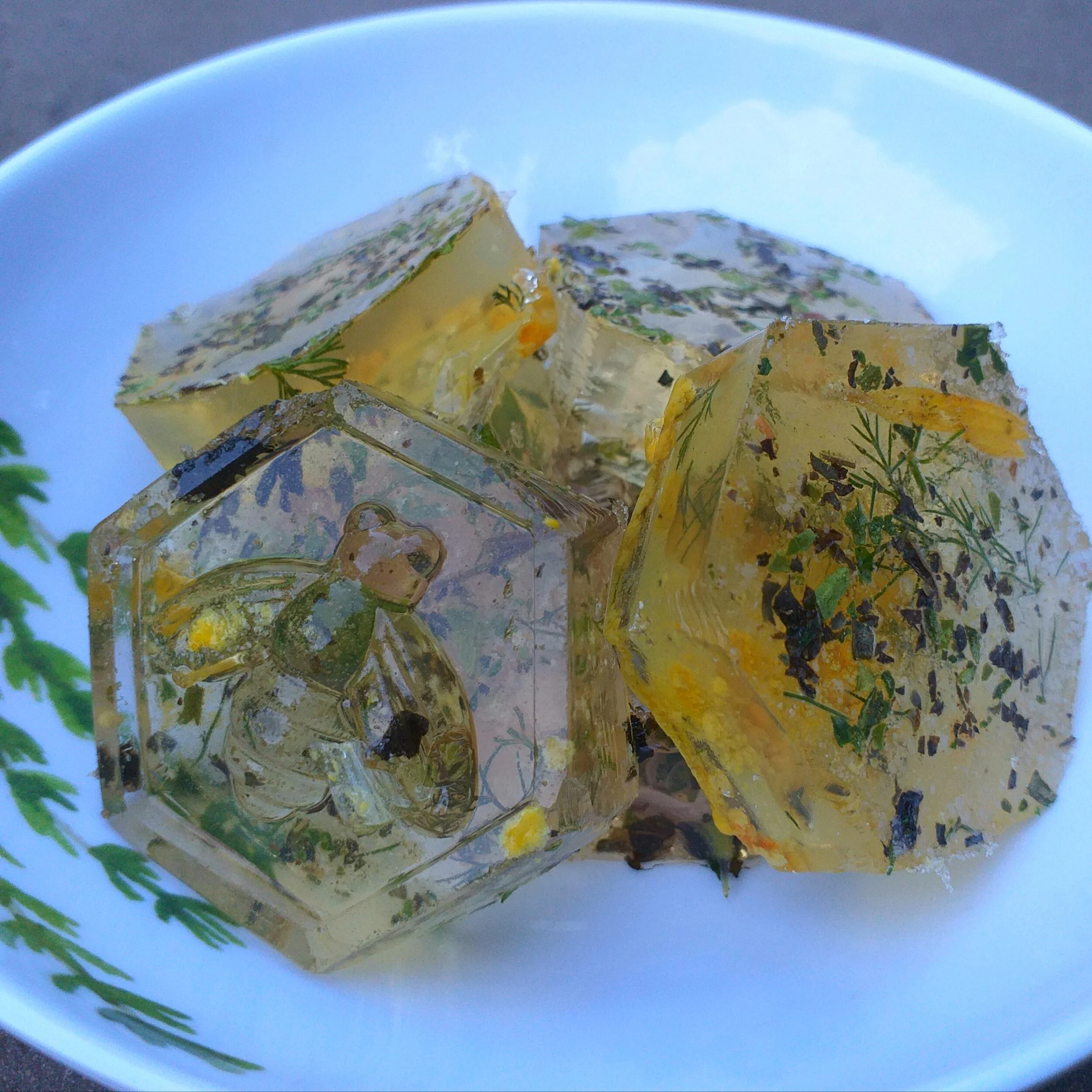
Gelatine is a colourless, flavourless, gelatinous substance derived from collagen, which is a protein found in great abundance in the body.
Gelatine is often used to additionally support arthritic conditions and to ease intestinal complaints. Glycine is an amino acid which occurs in gelatine and helps strengthen the gut lining and reduce inflammation and is believed to assist in the healing of leaky gut.
When using gelatine avoid coloured, flavoured, or sweetened varieties and instead go for the plain, grass fed versions. I used Great Lakes beef collagen but there are other brands available.
You will need:
One 12g sachet of gelatine granules or use 2 heaped tablespoons of loose powder.
550ml Water (you can also use coconut water or bone broth)
7 Tablespoons of hot water
2 measuring jugs
Flexible silicone mould of choice
One level teaspoon of your chosen Hedgerow Hounds blend. Here I used Golden Years in one batch and Greens, Seeds & Superfoods in another.
How to make:
Into a measuring jug add 7 tablespoons of hot water, tip in the gelatine, whisking with a fork until the granules dissolve, then pour on the remaining water and stir well.
*Always add the gelatine to the liquid and not the other way round*
Add your chosen herbs and pour into the silicon moulds.
Chill in the fridge for 3-4 hours and when set, gently remove from the moulds.
These treats can easily be cut to a size which is suitable for your dog and are soft enough for elderly dogs with dental problems to enjoy.
They will keep for up to 7 days in the fridge.
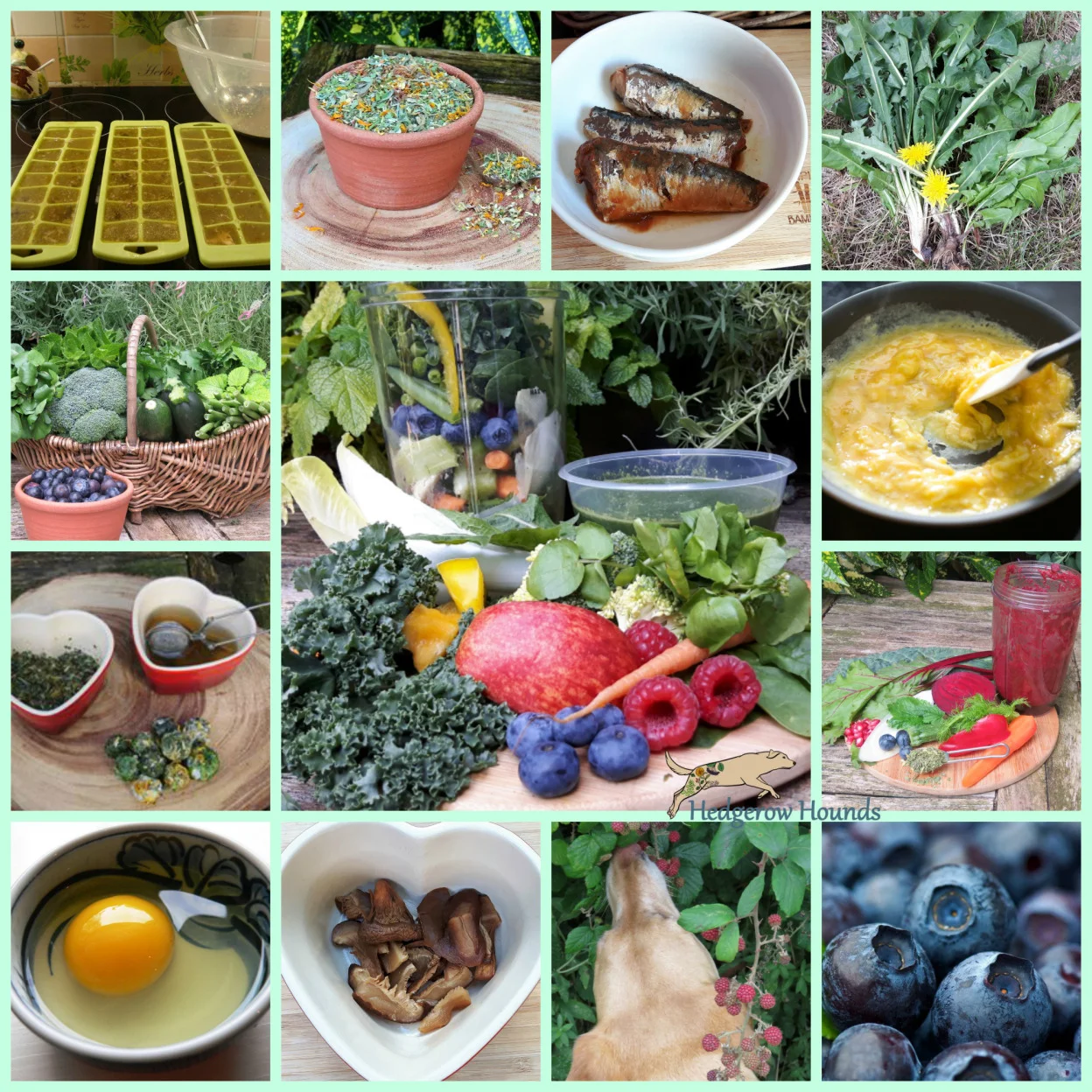
Simple Ways to Improve your Dogs Diet

Adding fresh food to your dog’s meals can give huge health benefits and help in the prevention of many serious diseases .
Not everyone wants to feed raw or home cooked food, and the majority of dogs still eat tinned food or kibble. When manufacturing kibble or muesli-type food, it requires a very high temperature, and many of the nutrients are lost in the cooking process, which are then replaced with synthetic vitamins and mineral supplements.
Adding a few of the following fresh foods at least 3 times a week will supply the dog with vitamins, minerals, omega 3 fatty acids, anti-oxidants, amino acids, glucosamine, and micro nutrients that they can easily absorb and utilise within their body.
Here are a few simple ways to increase the nutritional value of any meals and add variation:
Bone Broth: Packed full of glucosamine, chondroitin, hyaluronic acid, amino acids & minerals. Great for joint and gut health.
Tinned Pilchards or Sardines: Omega 3 fatty acids & DHA for coat and skin health and anti-inflammatory effects. Choose the ones in tomato juice or spring water
Eggs: Either raw or very lightly cooked, provide high-quality protein and fat, and are a good source of biotin.
Medicinal Mushrooms: Such as Reishi, Chaga, Turkey tail, Shiitake etc, have an abundance of health-giving qualities and are believed to help in cancer prevention and to boost the immunity.
Dandelion leaves: Contain vitamin C, B6, thiamine, calcium, iron, potassium, manganese, copper, and a flavonoid called zeaxanthin, which is crucial for protecting the retina and is an effective antioxidant. Pick from areas free from chemical sprays & pollution.
Berries: Blackberries, when in season, blueberries, and raspberries are packed full of vitamin C and rich in antioxidants.
Fresh leafy greens: Either lightly steam or, as I prefer, make vegetable smoothies for the dogs is a great way to add an abundance of vitamins, minerals, and antioxidants to their meals. It has also been proven to reduce the risk of some cancers just by adding a small amount of vegetables to processed food. Avoid the starchy veg and go for kale, broccoli, spinach, beet tops, dandelion leaves, Parsley, courgette, etc, plus a few berries.
Herbal Blends: Hedgerow Hounds offer a range of herbal blends to add valuable nutrition to your dog’s meal times.