Holistic Dog Care Consultation
A holistic approach is necessary in order to get the whole picture and cover any area that may be influencing the issues the dog is experiencing.

Sometimes we encounter a problem with our dog that requires additional expert help. These can be age-related, caused by anxiety or hyperactivity, dietary or a combination of factors which your dog is struggling with.
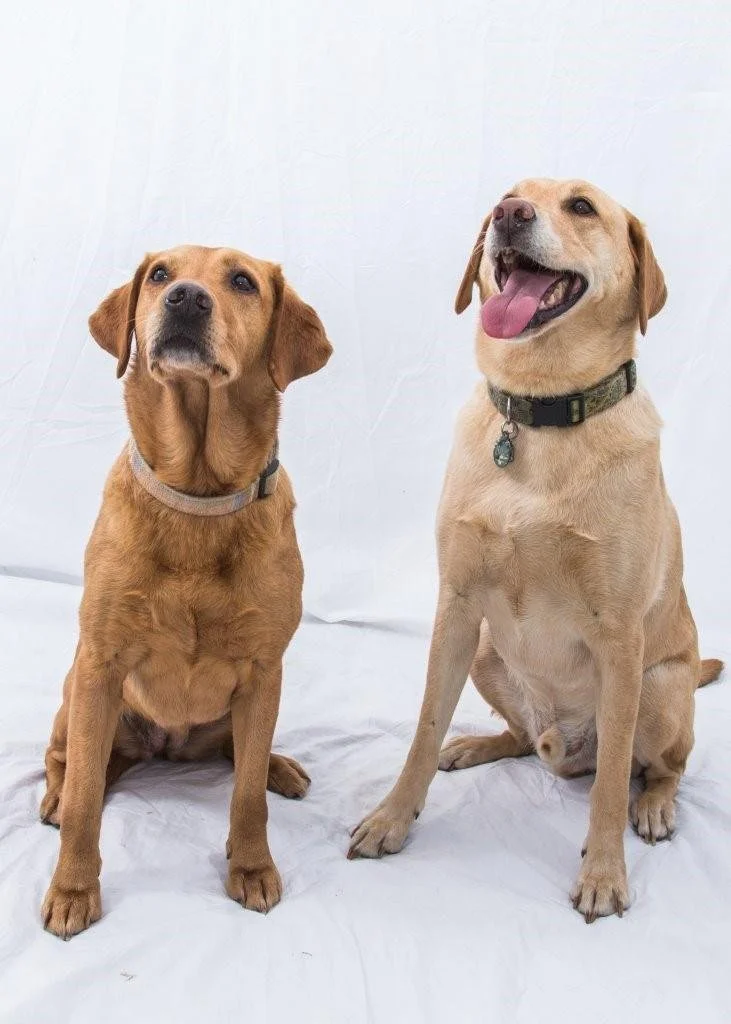
Caroline is a qualified canine therapist, with 30 years of experience in holistic healthcare, complementary therapies and feeding a fresh food diet.
These are some of the areas that will be covered in the consultation:
Diet. Is your dog thriving on their current diet, or would they benefit from a few changes?
Exercise. Is the exercise that your dog gets suitable for their age, fitness or mobility?
Holistic Lifestyle. This would include your dog’s daily routine & the things they find challenging.
Medication. If your dog is on medication, this may need to be taken into account, so as not to interfere with its effectiveness.
If you would like to discuss the problems you are experiencing with your dog, then a consultation with Caroline can help put you and your dog back on the right track. The consultation also comes with the option of a bespoke herbal blend and a discount code for use on the shop.
Here is the link: https://www.hedgerowhounds.co.uk/products/consultation
Caroline Hearn
MICHT. IIHHT. Dip.ICAT. ISCP.Dip.Canine Nutrition

Canine Enrichment Herb Garden
Everything is covered to help you easily build your enrichment garden. Important topics include the choice of herbs, adding interactive items such as snuffle mats, choosing planters and pots, soil health, the importance of a chemical-free lawn, and ways to embrace nature with your dog throughout the seasons.
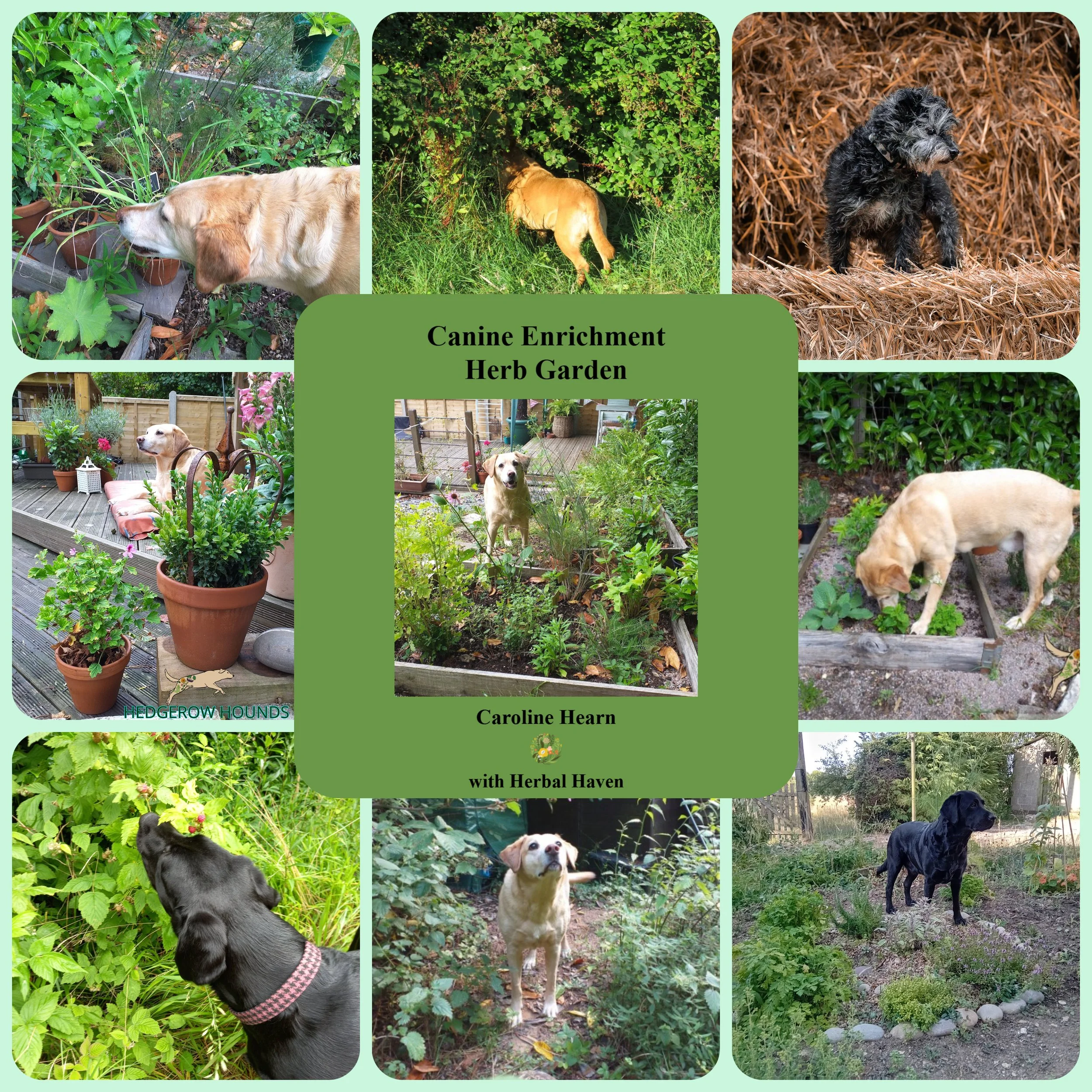
A book celebrating the love of dogs, the beauty of herbs, and the wonders of nature.
My first book is about a topic I am deeply passionate about and that has been an interest of mine for many years. It is written from a holistic approach to creating an enrichment space, using knowledge gained over the past 35 years and given to me by my greatest teachers: the dogs themselves.
So, what exactly is an enrichment garden, and why should we create one?
An enrichment garden offers dogs the freedom to move and explore at their own pace, without human interference or direction. This can be a dedicated space or incorporated into our existing garden. It encourages natural behaviours and curiosity, rather than learned responses, allowing dogs to be themselves without pressure to respond to our expectations of what they should be doing. The space will include herbs, textures underfoot, and aromas for the dog to interact with, as well as to move their body in a therapeutic way to calm the nervous system and improve mobility.
There is a section on providing enrichment for dogs with specific needs, such as the elderly, blind, or disabled dogs, as well as puppies.
Importantly, there is a chapter on ways we can benefit from this beautiful space, too.
The area we are going to create for our dogs can provide the following:
An outlet for instinctual behaviours such as sniffing, foraging, grazing, problem solving, digging, and exploring; all fantastic for reducing stress, frustration, and lowering anxiety.
Mental stimulation with scent from the environment and additional items such as snuffle mats and interactive toys.
A sensory experience with scent, sound, and texture underfoot. The garden will constantly change because of plant growth, weather conditions, seasonal changes, and what wildlife has visited the garden. Every day will offer something a little different.
Encouragement of natural movement without our influence or expectations.
Building confidence in themselves as the effects of sniffing and exploring lower the stress hormones and make the world seem a less scary place.
By going through a natural range of movements over varying textures and terrains, we are encouraging the dog to work all their body systems.
Enhanced well-being and quality of life.
A space that is appealing to look at, and that we enjoy spending time in with our dog.

We explore the many herbs that are suitable and safe for the herb garden, whether you choose to plant them in pots or directly into the ground.
With so many dog-friendly herbs to choose from, there is an extensive list in the book, as well as plants to avoid. Many are hardy and evergreen, so will provide interest all year round. If you have a small space and want to create an enrichment area in pots, then that is covered too.
Providing texture and varying terrain is also important, and how the dog’s body adapts and processes the information that is being fed back to them as they travel over hard and soft ground, slopes, and step over small obstacles.

Adding in texture, such as shingle, wood chippings, moss, mat-forming herbs, textured pathways, and sand, all add to the sensory experience.
Everything is covered to help you easily build your own enrichment garden. Important topics such as the choice of herbs, adding interactive items like snuffle mats, choosing planters and pots, soil health, the importance of a chemical-free lawn, and ways to embrace nature with your dog throughout the seasons.

Learn how simple adaptations in your garden can provide a sensory experience as well as therapeutic movement.
The book is available on Amazon as an e-Book or paperback on the link below: Here is the link https://www.amazon.co.uk/dp/B0FHKYK5T9
Or there are often paperbacks on the shop to buy. https://www.hedgerowhounds.co.uk/products/canine-enrichment-herb-garden-book
Hedgerow Hounds handmakes veterinary-formulated supplements for dogs. The company is run by a qualified canine therapist with 30 years of experience in holistic dog care & nutrition.
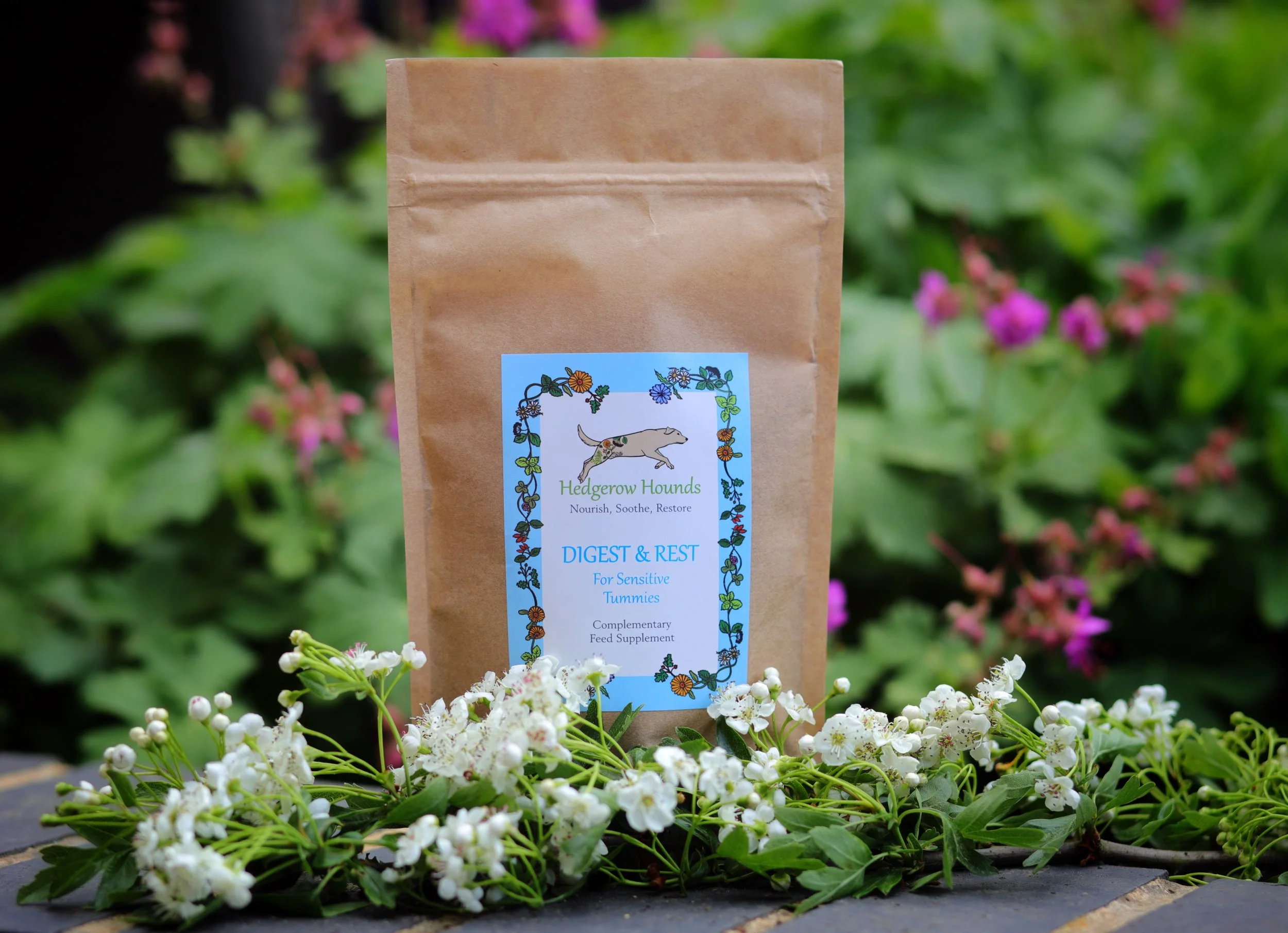
Digest and Rest
Digest & Rest is the perfect blend for tummy troubles, managing reflux and to aid in anal gland issues.

What does Digest & Rest help with? Digest & Rest was created to help dogs that suffer from digestive upset, constipation, and nausea. It is also ideal for managing anal gland problems. If your dog has a very sensitive digestion, then this blend is ideal if you are intending to make any changes to the diet and will make any transitions much smoother.
It has a very neutral taste and smell, so it will not be off-putting to even the fussiest dog and can be “hidden” in tasty food for the really suspicious, picky eater.
Here are a list of some of the ingredients in Digest & Rest and why they were specially chosen.
Marshmallow - Marshmallow root contains around 35% mucilage, which is a slippery substance to ease irritation of the mucous membranes. This makes it ideal to soothe an irritated throat, gut discomfort or tummy troubles. It is also invaluable for managing reflux and hunger nausea, which can occur just after eating or in the early hours of the morning when the dog’s stomach is empty. Marshmallows’ strongest affinities are with the digestive system, respiratory and urinary tracts.
Chamomile - Chamomile is chosen for its antispasmodic properties as well stimulating digestion as it is quite bitter tasting. Chamomile is also relaxing, so helps if the upset tummy is caused by an anxious, excitable, stressed mind.
Fennel - Fennel is useful for expelling intestinal gas and helping to ease stomach cramps.
Psyllium husks - Psyllium are husks from the Plantago ovata species. They provide a form of soluble fibre which when in contact with water, forms a soothing gel which passes through the digestive tract. The husks add bulk to the stools and help with constipation, diarrhoea and aids in the correct emptying of anal glands. Psyllium is also a useful prebiotic to encourage good gut bacteria.
How to use: Digest & Rest is a very versatile blend to use and you can adapt it to suit your specific dog’s needs. The measured amount can be added to wet food and stirred in, and for dried food, it is recommended that you add a splash of water to the powder and stir it into a paste before incorporating it into the food.
For supporting nausea. If your main reason for choosing this blend is to support reflux or perhaps your dog is recovering from a cough, there are several ways to use this blend for maximum effect. If the powder is made into a thick paste with a little warm water, this starts to release the mucilage, which will coat the mouth and oesophagus as it is consumed. You can try adding this paste to the food, or alternatively, some dogs benefit from a tiny meal or snack with Digest & Rest shortly before the main meal is given, so experiment with this to see what most benefits your dog. Small snacks could include a raw egg, plain cottage cheese, natural live yoghurt or a splash of goats’ milk.
For support with hunger pukes. Some dogs can experience hunger nausea in the early hours of the morning and may bring up some frothy, slimy vomit or start to retch as they experience an uncomfortable nausea. As long as they are well in themselves and have no other symptoms to suggest something more serious is going on, then feeding a very small meal or snack in the evening, which contains the Digest & Rest, can often ease these symptoms overnight and into the early hours. Small snacks can be those listed above or a tiny portion of their main meal set aside for this purpose.
Happy Customer Review
“Our French bulldog now sleeps all night, without the constant air licking, coughing, retching and regurgitation. I never want to be without Digest & Rest” Happy dog and happy owner.
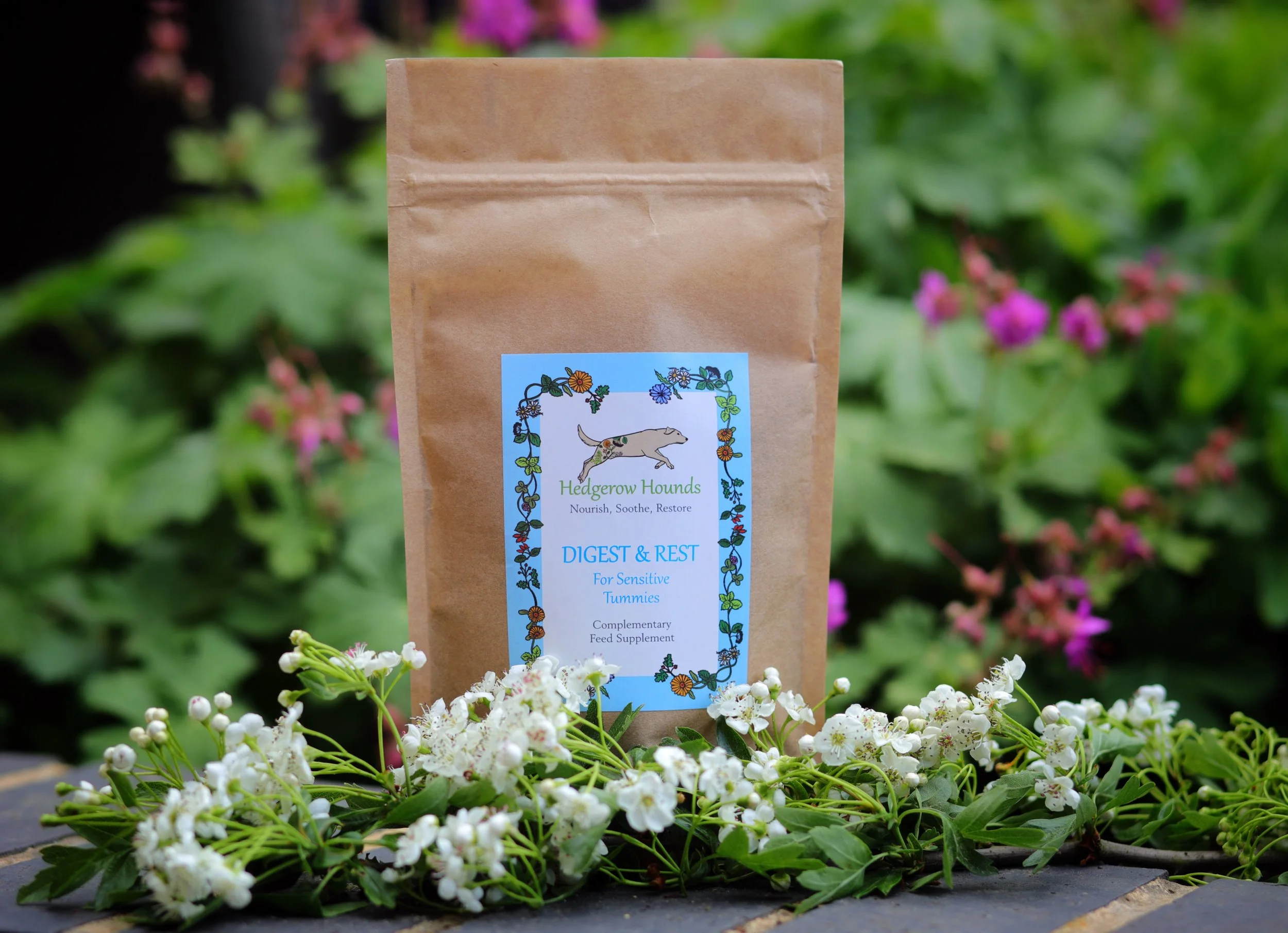
A beautiful blend of herbs, roots, and seeds specifically to soothe the gut, aid digestion, and help anal gland issues.

All our products are veterinary formulated, but should not be used instead of consulting your vet should your dog have a health problem.
Hedgerow Hounds is owned by a qualified holistic canine therapist with 30 years of experience in healthcare and nutrition, and the blends are formulated by a veterinarian.
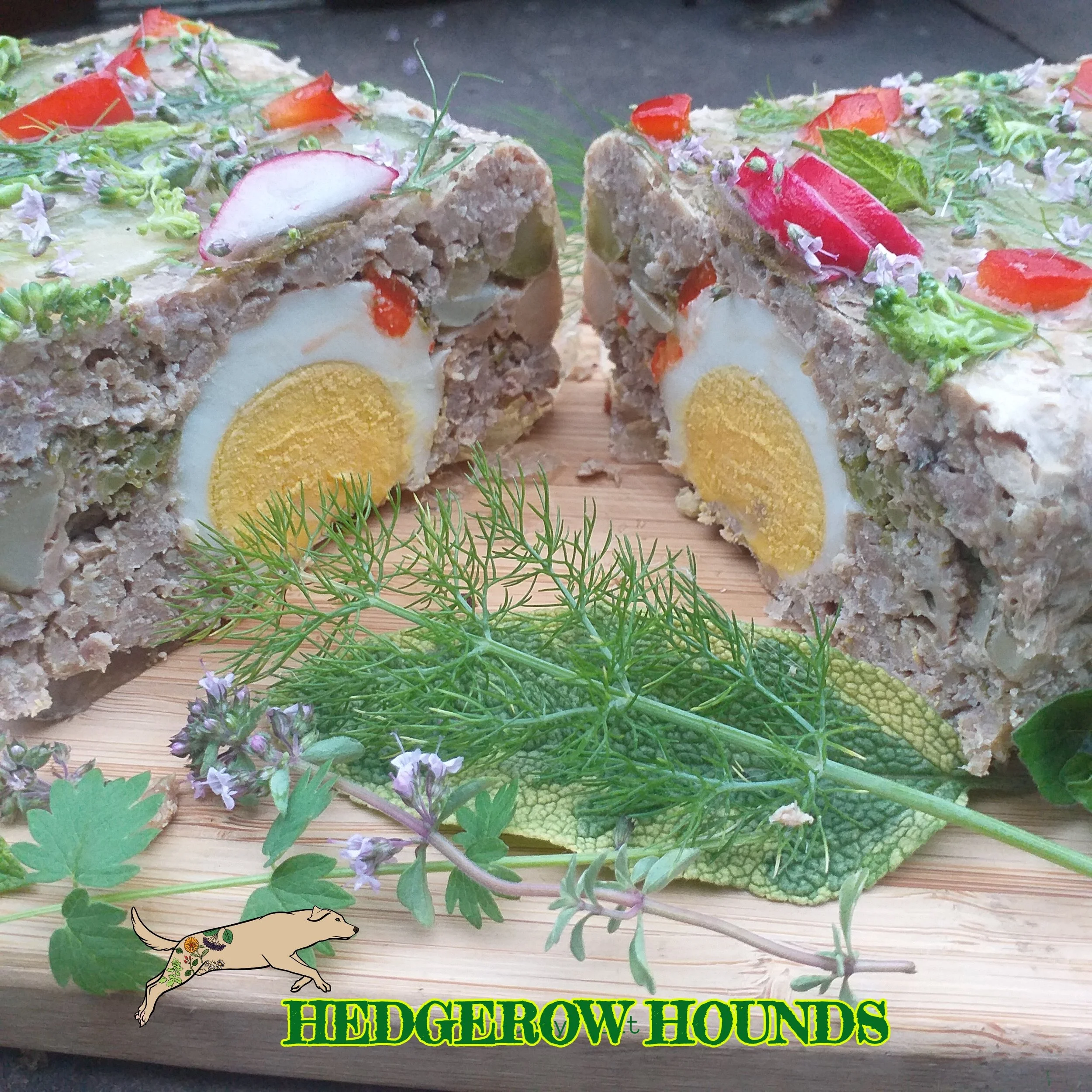
TURKEY TERRINE
A recipe that can be used as a celebratory treat for your dog on Christmas day.
Choose lean meat, as any fats will be released whilst cooking and make the terrine oily and only cook with a bone-free mince.

This recipe can be made as a raw or cooked terrine.
A recipe that can be used as a celebratory treat for your dog on Christmas day.
Choose lean meat, as any fats will be released whilst cooking and make the terrine oily and only cook with a bone-free mince.
Ingredients
1lb raw minced bone free turkey or free range chicken.
2 free range eggs, beaten
200g of cooked, well drained, seasonal vegetables (parsnip, carrot, broccoli, kale etc)
50g of boiled, sweet potato (mashed or thinly sliced)
1 tablespoon of Hedgerow Hounds herbal blend.
Optional- 150g of chopped chicken livers
How to make
Line a loaf tin with baking parchment or lightly grease with coconut oil.
Transfer the meat and optional liver into a large mixing bowl and stir in the beaten eggs to combine.
Pour half the mixture into the tin, levelling off and pressing down firmly with the back of a large spoon. Place a layer of chopped vegetables, then pour in the remaining meat mix, firming down as before.
Bake in the centre of a preheated oven at 180c for approximately 45 minutes.
Remove from the oven and leave for a few minutes. While still warm, gently drain off any excess oil that may be trapped in the tin. Set aside for 30 minutes until cool. It is easier to divide into individual portions if the loaf is placed in the fridge before slicing.
The loaf will keep in the fridge for 5-7 days or you could make it in advance, pop it in the freezer and defrost the day before use.
It will provide a nutritious, tasty, moist meal for your dogs to enjoy.
www.hedgerowhounds.co.uk

Pumpkin Puree for Dogs
Pumpkins are everywhere at the moment, and they are at their cheapest in Autumn. It’s a great opportunity to make some pumpkin puree for your dog.

Making pumpkin puree for your dog is a cheap and easy way to ease an upset tummy and add valuable fibre to your pet’s meals.
Pumpkin is high in both soluble & insoluble fibre. This makes it ideal for absorbing excess water, as in diarrhoea, and adding bulk to the stool if dealing with constipation.
The fibre in pumpkin acts as a prebiotic to feed the good gut bacteria and to aid in balancing the microbiome.
It is low in calories, low carb and high in antioxidants, particularly beta-carotene.
You will need:
A Pumpkin or Butternut Squash
Boiling water - Enough to cover the chopped pumpkin in the pan
Colander or drainer
Small pots or large ice cube moulds.
How to:
Chop into large slices and then peel off the rind. Scoop out & discard any seeds.
Cut into similar-sized pieces so they cook evenly.
Simmer until the pumpkin is tender, and then drain well.
Mash with a fork or potato masher.
Freeze in small individual pots or larger ice cube trays, which can be thawed quickly when needed.
If you want to make your dog a tummy-soothing meal, there is a recipe here using pumpkin, chicken, or white fish. https://www.hedgerowhounds.co.uk/news/pumpkin-chicken-mash
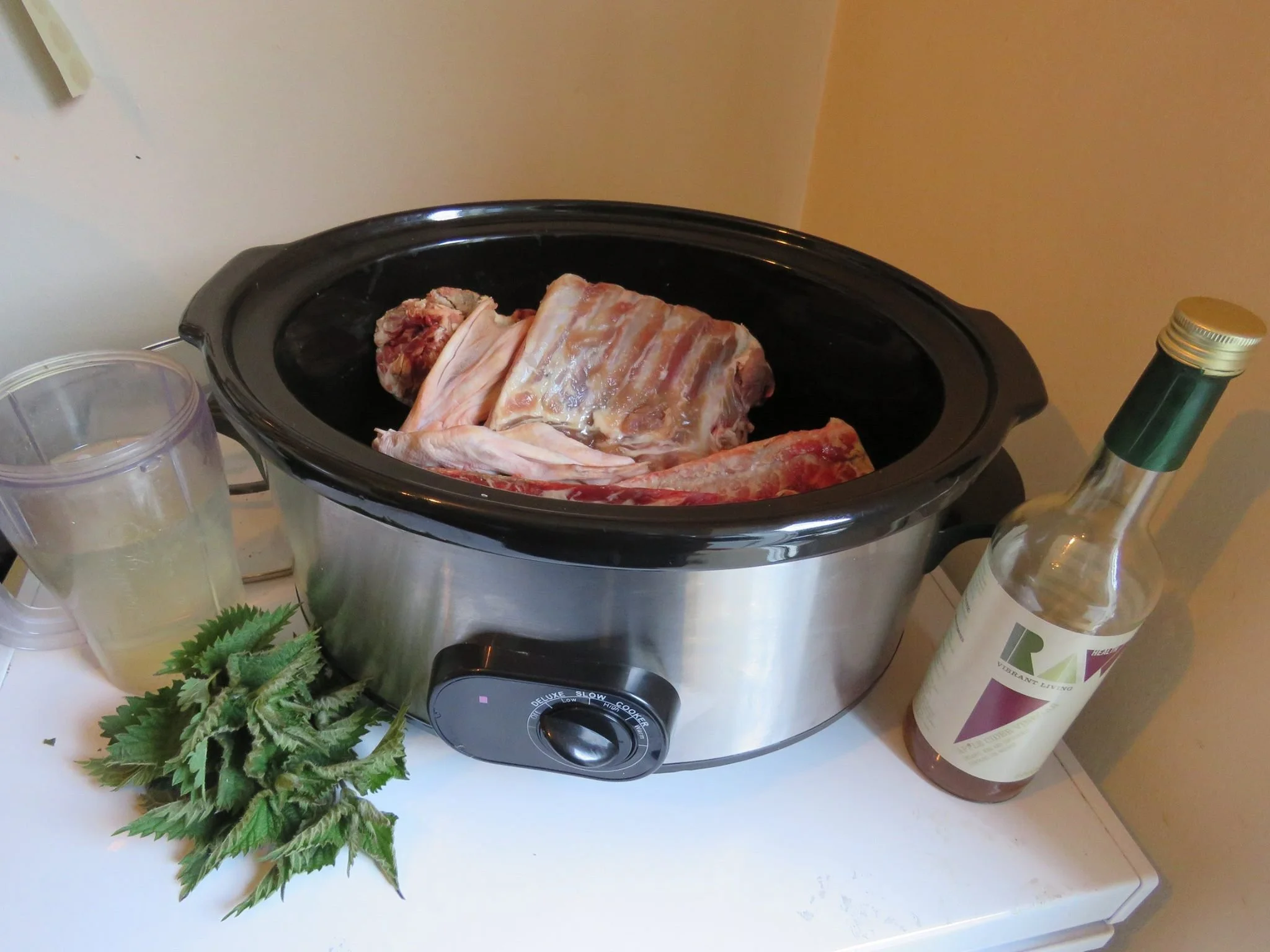
Bone Broth Recipe
Bone Broth is rich in naturally occurring collagen, gelatin, glucosamine, hyaluronic acid and chondroitin so you can see why it is beneficial to joint health and particularly useful for senior dogs.
It is very easy to digest and great as a nourishing pick me up for poorly dogs that are off their food. It is also full of flavor and will tempt even the fussiest eater.
Good bones to use are chicken & duck feet, ribs, chicken backs, beef or lamb ribs, chicken or duck necks, beef knuckles, pig trotter and ox tail. It must be noted that you are NOT going to feed the cooked bones to your dog, only the lovely broth and jelly that remains after the long cooking process.
If you add a marrow bone, remove any central marrow first or it will turn the broth very greasy. Cut off any excess skin or fat from the bones before adding to the pot, this is particularly important if you have a dog that is prone to pancreatitis.
You will need:
A slow cooker or heavy stock pot with a lid, which can be left on a low setting for many hours.
A collection of bones, a mixed variety will produce a better broth.
Enough water to cover the bones and a little set aside should levels drop too low
Apple cider vinegar (2-3 tablespoons) this helps leach the minerals out of the bones and into the broth
Optional small selection of vegetables, but not too much as we don’t want to dilute all the nutritious bone broth !
How to make:
Pre-heat your slow cooker on high for 15 minutes then turn down to its lowest setting. Add your selection of bones plus the water containing the cider vinegar. Place the lid on and leave on low for at least 24 hours although many people leave it for up to 36 hours.
After this time turn off the pot and when the broth has started to cool, thoroughly remove any cooked bones with a slotted spoon and make sure they are safely disposed of and out of the dog’s reach.
The resulting broth can be ladled or poured into suitable ice cube trays or pots and kept in the fridge for 3-4 days or frozen for later use.
**The cooked bones must be disposed of safely and never fed to your dog **.
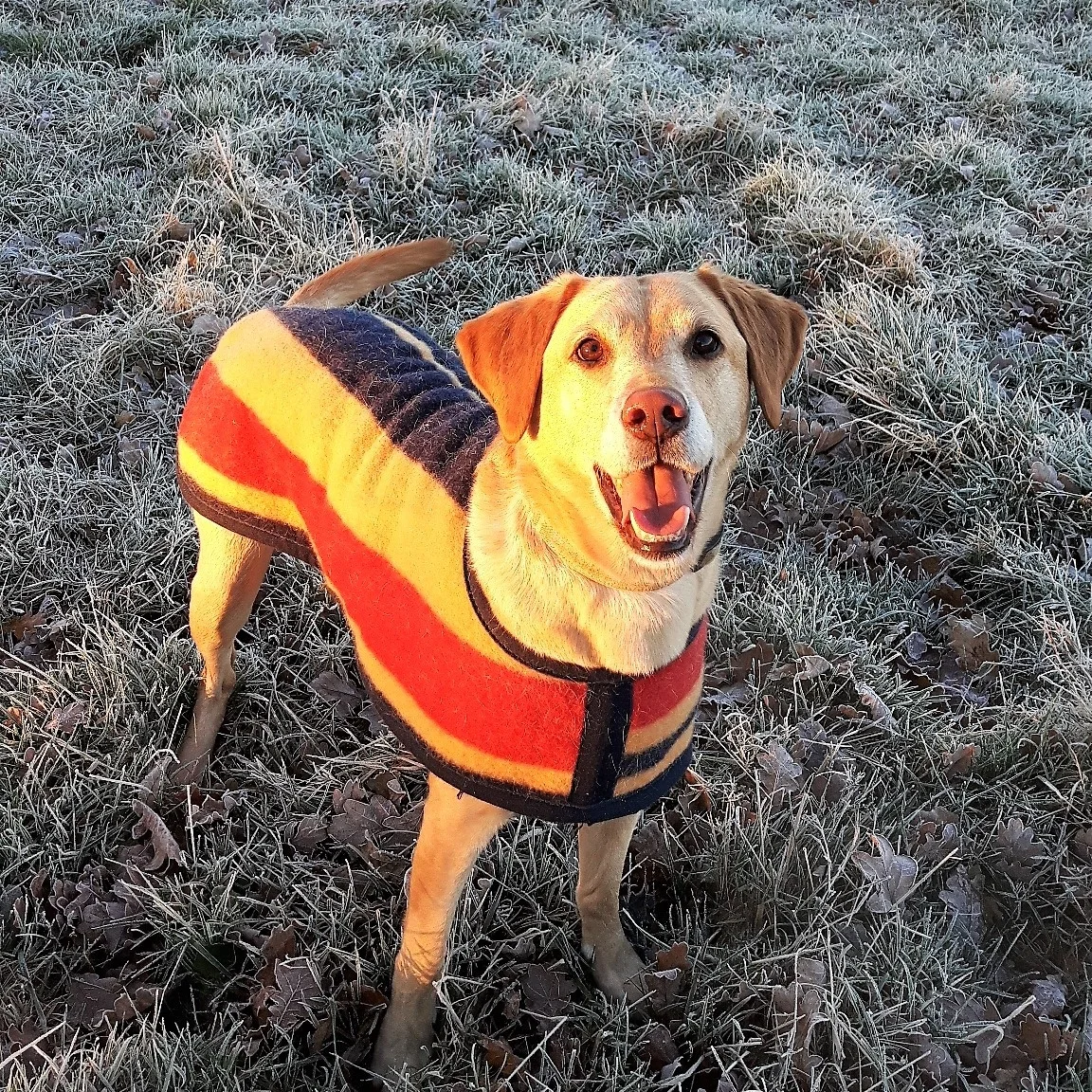
Walking your Dog in Winter
A few top tips for safe Winter walking
Exercising our dogs in Winter can sometimes be a challenge, here are a few top tips to make life easier and safer for your dog.
A frosty start to the day will mean that your dogs muscles are cold from the fall in temperature and also a little stiff from resting all night so will need to gradually limber up before strenuous exercise.
It is really important to give between five and ten minutes lead walking and even more so for seniors and dogs that have had an injury in the past, before letting them off the lead to run. A warm, lengthened muscle is far more prepared for a faster pace and much less prone to injury.

Old or arthritic dogs will benefit from a comfortable, warm coat to wear, this can always be removed if they start to get too warm once they have had a run around.
Be aware that the ground underfoot can change dramatically with a hard frost. The usual muddy track or gateway can become very treacherous and icy or any rutted ground frozen solid. This can cause damage to your dogs paws, joints and muscles should they run over it at speed. Also be careful when there has been snowfall and you are walking in an unfamiliar place as the snow can conceal many hidden dangers underneath. Snow can also bring out the hidden puppy even in the oldest of dogs so putting them on a long line can allow them some freedom to play without the danger of them overdoing it or injuring themselves.
If you have to walk on pavements and grit has either been laid down or spread across from the gritting lorry, then make sure you wash your dogs paws, legs and undercarriage off immediately with luke warm water on returning home, followed by towel drying as they are less likely to lick their legs if they are dry. When the pads are dry a paw balm can be rubbed in to avoid the pads cracking or becoming sore.
Here are 2 natural products that I wouldn’t be without at any time of the year but are particularly useful in Winter. All can be found on the shop.
https://www.hedgerowhounds.co.uk/products/green-clay
https://www.hedgerowhounds.co.uk/products/adore-the-paw-balm
If you walk your dog in the late afternoon or evening then remember to wear some sort of reflective clothing and also something on your dogs collar or harness. There are discs and collars that contain a battery and can be illuminated at the touch of a button. These are useful if you intend to let your dog off the lead, as you can see where the dog is at all times or if you mistime your walk and suddenly find you are walking back in fading light.
Be extremely vigilant of the dangers of anti-freeze, which can either be spilled or sometimes end up in puddles from a passing vehicle. If you are walking in an area where this could be a possibility then keep the dog on a lead and make sure you have a bottle of water and a travel bowl with you for longer walks to avoid the temptation of them drinking from puddles. If you see your dog lick anti-freeze then they need to be taken to the vet immediately as it is extremely poisonous.
If older or arthritic dogs suddenly stop wanting to go out for walks once the weather turns colder then it could well be that they are uncomfortable somewhere in their body and possibly have joint pain which is made worse by the cold, damp weather. Speak to your vet about any medication they are on and also look into feeding a quality joint supplement to help them feel more comfortable. They may only require a very short walk or just a wander around the garden if the weather turns very cold and miserable.
Snuffle mats, Licki mats and interactive toys are fantastic for less mobile dogs and encourage them up out of their beds and to gently move around, easing stiff joints and muscles.
A blog about using Snuffle Mats is here: https://www.hedgerowhounds.co.uk/blog/snufflmats-and-balls
Other blogs which covers injury prevention and managing senior dogs can be found here: https://www.hedgerowhounds.co.uk/news/repetitive-strain-injuries-in-dogs
https://www.hedgerowhounds.co.uk/news/holistic-care-of-senior-dogs
Caroline Hearn MICHT. Dip ICAT. MIAAT
Human, Canine & Equine Sports & Holistic Therapist
www.hedgerowhounds.co.uk