
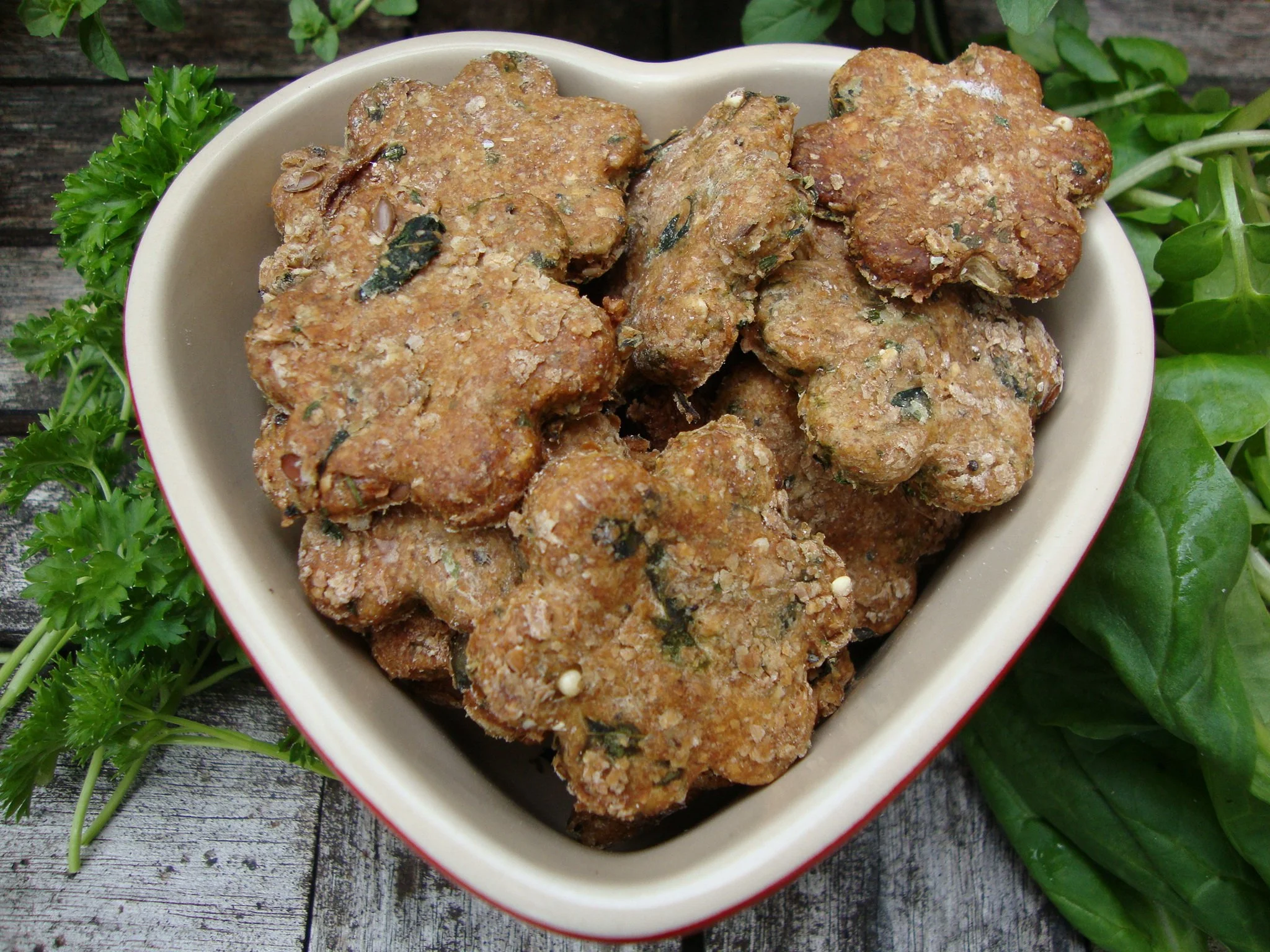
Fresh Breath Treats

Mint, parsley & fennel are a great choice for this fresh breath treat recipe.
This recipe uses fresh herbs, which hopefully you`ll have growing in the garden. Dried herbs can also be used to replace one or all of the ingredients.
250g Buckwheat or Spelt Flour
Half a dessert spoon of softened coconut oil
If using fresh herbs, they need to be finely chopped before adding to the flour.
Parsley - fresh or dried, approximately 1 dessert spoon
Mint - fresh or dried, approximately 1 dessert spoon
Fennel - fresh or dried, approx. 1 dessert spoon
1 medium free-range egg- beaten
Half a small, grated apple
An optional quarter teaspoon of fennel seeds
50ml water
Baking tray
Rolling pin
A cookie cutter that is appropriate to your dog’s size.
Baking parchment to line the tray
How to:
Pre-heat your oven to 180c/ Fan 160c or Gas 4
Place the flour, seeds (if using), and finely chopped herbs into a large bowl and stir together. Add the softened coconut oil, beaten egg, and grated apple, and stir while slowly adding the water until the mixture forms a dough. Add a little more water if necessary. Knead for 2 minutes, then place the dough on a lightly floured surface.
Roll out to an even thickness, around a quarter of an inch thick. Then cut out with your chosen shaped cutter and put onto a baking tray, which is lined with baking parchment.
Place onto the middle shelf of a preheated oven and bake for around 20 minutes or until lightly golden. Lift out of the oven and leave to cool on a wire rack.
The treats must be completely cold before storing in an airtight container, or they will go mouldy. Use within 2 weeks, or alternatively, freeze and take out what you need each day. Frozen treats will need to be used within 4 months.
Caroline Hearn - Hedgerow Hounds
Simple Ways to Improve your Dogs Diet

Adding fresh food to your dog’s meals can give huge health benefits and help in the prevention of many serious diseases .
Not everyone wants to feed raw or home cooked food, and the majority of dogs still eat tinned food or kibble. When manufacturing kibble or muesli-type food, it requires a very high temperature, and many of the nutrients are lost in the cooking process, which are then replaced with synthetic vitamins and mineral supplements.
Adding a few of the following fresh foods at least 3 times a week will supply the dog with vitamins, minerals, omega 3 fatty acids, anti-oxidants, amino acids, glucosamine, and micro nutrients that they can easily absorb and utilise within their body.
Here are a few simple ways to increase the nutritional value of any meals and add variation:
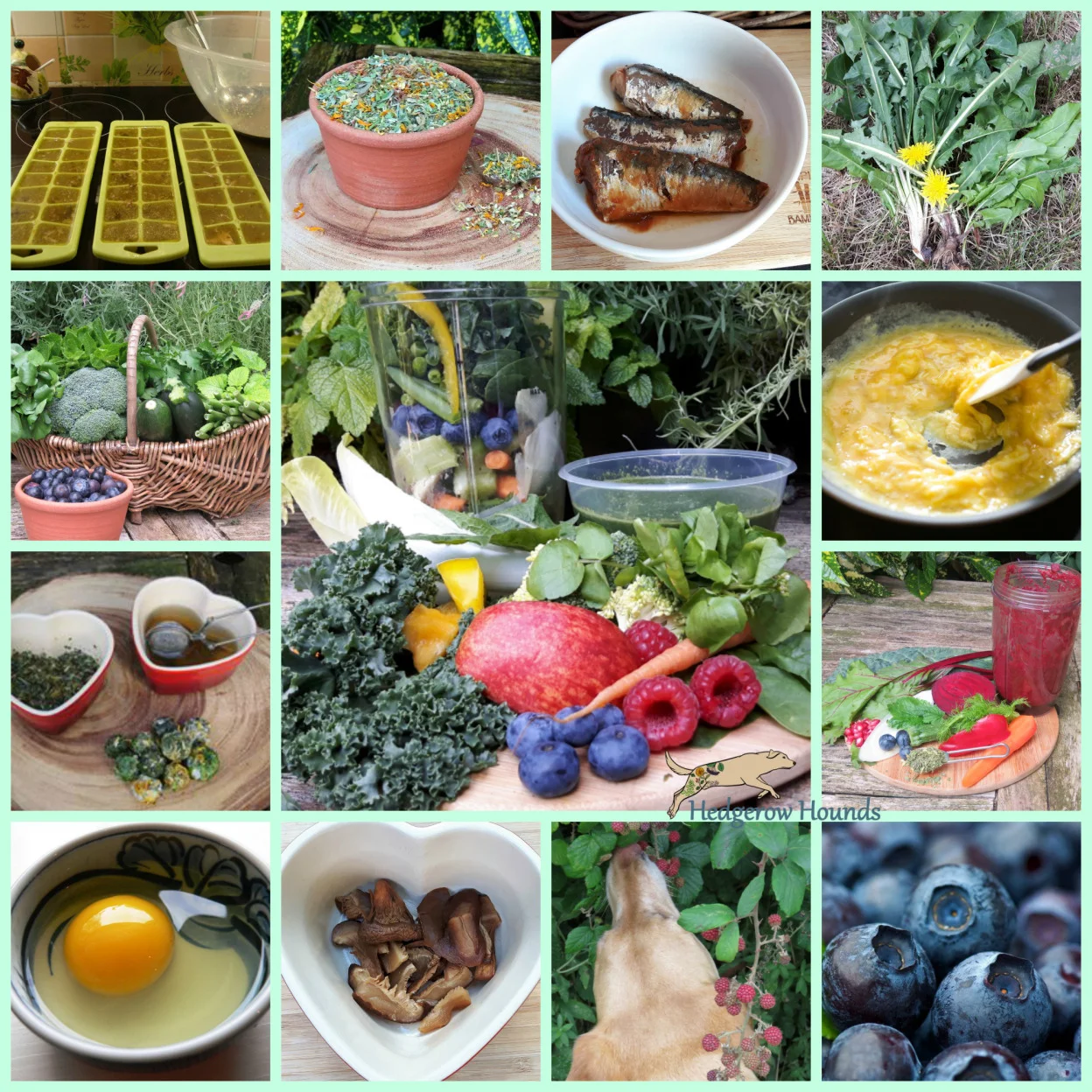
Bone Broth: Packed full of glucosamine, chondroitin, hyaluronic acid, amino acids & minerals. Great for joint and gut health.
Tinned Pilchards or Sardines: Omega 3 fatty acids & DHA for coat and skin health and anti-inflammatory effects. Choose the ones in tomato juice or spring water
Eggs: Either raw or very lightly cooked, provide high-quality protein and fat, and are a good source of biotin.
Medicinal Mushrooms: Such as Reishi, Chaga, Turkey tail, Shiitake etc, have an abundance of health-giving qualities and are believed to help in cancer prevention and to boost the immunity.
Dandelion leaves: Contain vitamin C, B6, thiamine, calcium, iron, potassium, manganese, copper, and a flavonoid called zeaxanthin, which is crucial for protecting the retina and is an effective antioxidant. Pick from areas free from chemical sprays & pollution.
Berries: Blackberries, when in season, blueberries, and raspberries are packed full of vitamin C and rich in antioxidants.
Fresh leafy greens: Either lightly steam or, as I prefer, make vegetable smoothies for the dogs is a great way to add an abundance of vitamins, minerals, and antioxidants to their meals. It has also been proven to reduce the risk of some cancers just by adding a small amount of vegetables to processed food. Avoid the starchy veg and go for kale, broccoli, spinach, beet tops, dandelion leaves, Parsley, courgette, etc, plus a few berries.
Herbal Blends: Hedgerow Hounds offer a range of herbal blends to add valuable nutrition to your dog’s meal times.
www.hedgerowhounds.co.uk
Eggs are great for our Dogs !
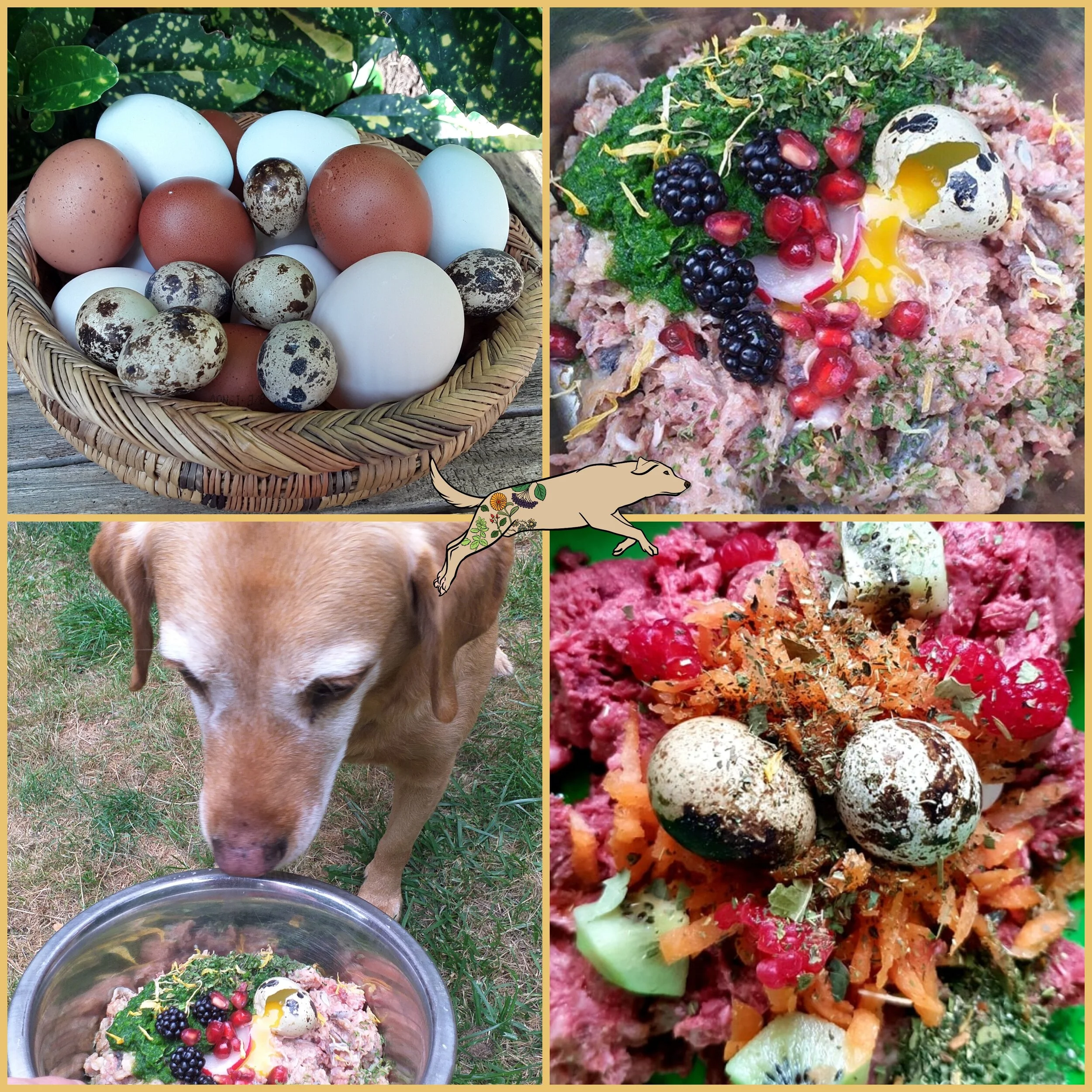
Either fed raw or lightly cooked, eggs are a valuable addition to our dogs diet.
Eggs provide a high quality, complete source of amino acids which are the building blocks of protein.
A good source of vitamin A, B12, Riboflavin, Iron, Folate, Zinc, Selenium, Fatty acids, Choline, Fat soluble vitamin E,D and K and provide the ideal ratio of calcium and phosphorous, if the shell is also fed.
Just one egg will provide 13 essential vitamins and minerals, including lutein which is essential for eye health. Egg whites contain a substance called avidin which affects the uptake of biotin, but the egg yolk has high levels of biotin. So, unless you are feeding just the egg whites on a regular basis rather than the whole egg there shouldn’t be an issue.
Egg shell can be used as a calcium supplement, and the inner membrane of the egg contains an abundance of nutrients to support joint health. This opaque membrane will provide collagen, elastin, glucosamine, chondroitin and hyaluronic acid.
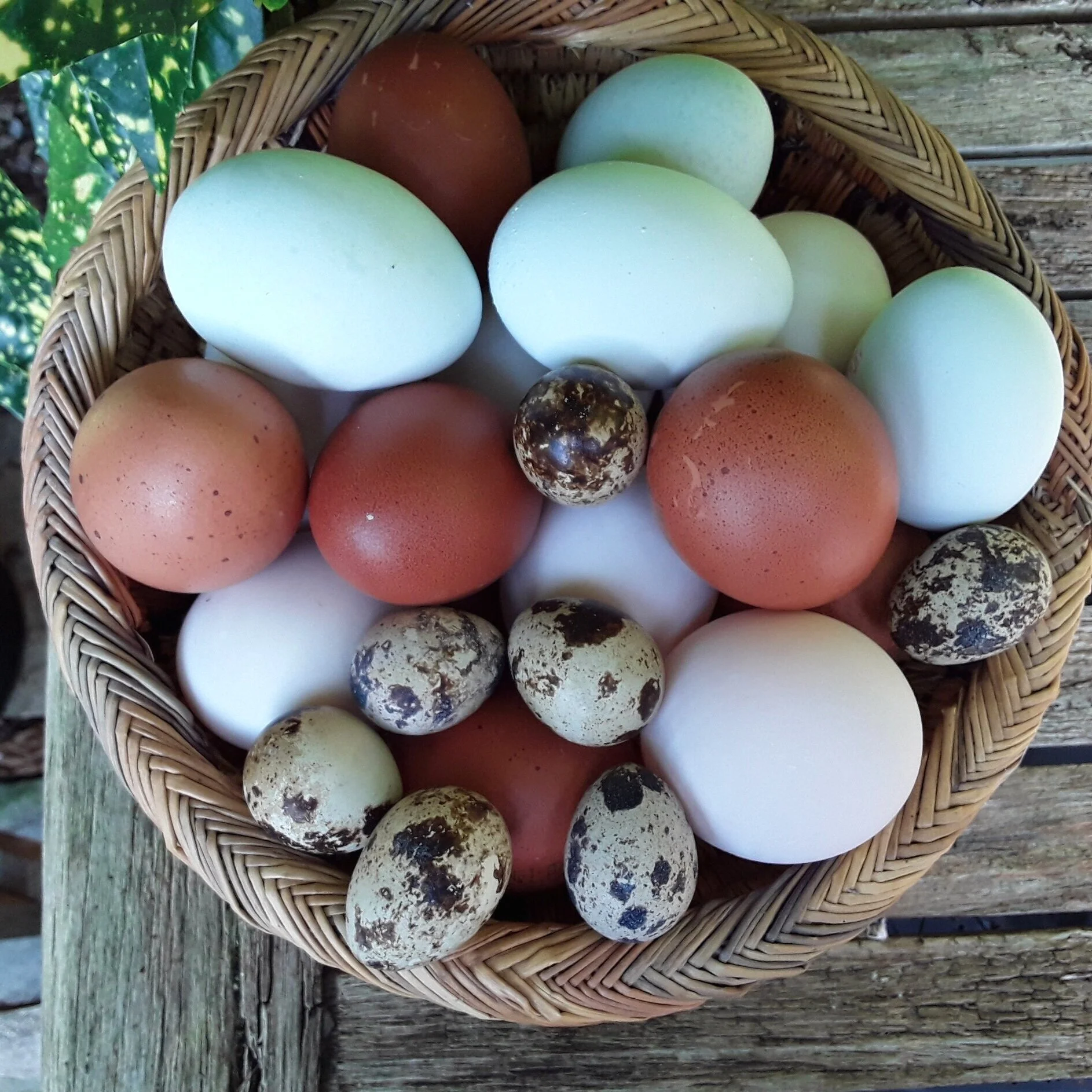
Feeding a selection of eggs including chicken, duck, quail and guinea fowl will offer a broader range of nutrients. One thing that is essential, is that the eggs must be free range and preferably organic as these are higher in animal welfare as well as offering higher levels of the anti-inflammatory Omega 3 fatty acids. These free range birds will have benefitted from a natural lifestyle of foraging, had sunlight on their backs and lived a more relaxed life.
The eggs pictured are from a local farm shop where the hens & ducks can be seen roaming free. The eggs are higher in nutrition as the birds have access to a natural lifestyle of foraging and I know that the shells haven`t been sprayed with chemicals unlike many supermarket eggs, which is important if you are going to feed the shells.
Duck eggs have a larger yolk to white ratio and are higher in protein, fat and contain more Omega 3.
Quail eggs although tiny, have large amounts of vitamin B1 and 5 times as much iron and potassium as hens eggs. Their protein value is 13% where as hens eggs are 11%. Quail eggs rarely cause allergies or sensitivities so worth considering if eggs normally cause problems.
Your dog will benefit from eating free range organic eggs 2-3 times a week.
Eggs can be offered whole, either raw or lightly cooked or broken onto your dogs usual food. If you would rather cook them then a scrambled or boiled egg very lightly cooked will be well received.

There are almost 200 different breeds of chickens in the world, and one hen will lay anything between 250 and 300 eggs a year !
www.hedgerowhounds.co.uk