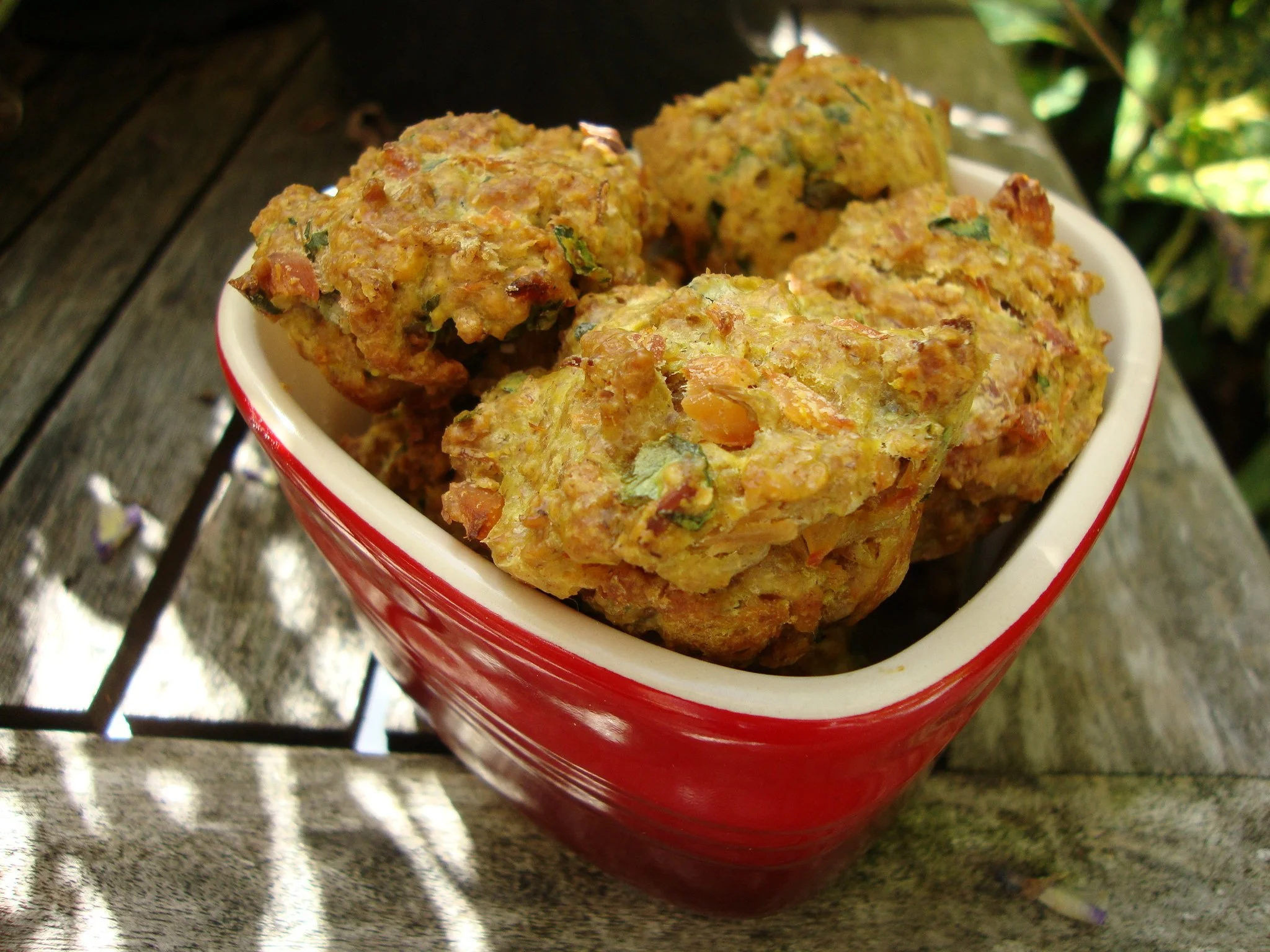
Sweet Potato Bites
These tasty treats take no time to prepare and will keep in the fridge for up to seven days.
Sweet potato is a member of the bindweed family and provides a good source of fibre and the antioxidant Beta-carotene.

These tasty treats take no time to prepare and will keep in the fridge for up to seven days.
Sweet potato is a member of the bindweed family and provides a good source of fibre and the antioxidant Beta-carotene.
Ingredients:
1 cup cooked, drained & mashed sweet potato.
Half a cup of coconut flour plus a little extra for dusting.
1 level teaspoon of melted coconut oil
Half a teaspoon of Greens, Seeds & Superfoods, or finely chopped parsley (fresh or dried)
Half a teaspoon of nutter butter (Pip & Nut do a great range which are palm oil & xylitol free)
Half a teaspoon of chia seeds
How to make:
Place all the ingredients into a bowl, and thoroughly stir until they are combined.
With a spoon, scoop out an amount that is a suitable size for your dog. If you make larger ones, they can easily be broken up after chilling.
Roll the mixture in the palm of your hand until it forms a ball, use a light dusting of flour if necessary.
Place in the fridge to set for 1 hour before serving.
Keep in the fridge and use within 7 days. They also freeze well and are best used within 4 months.
Caroline Hearn ~ Hedgerow Hounds
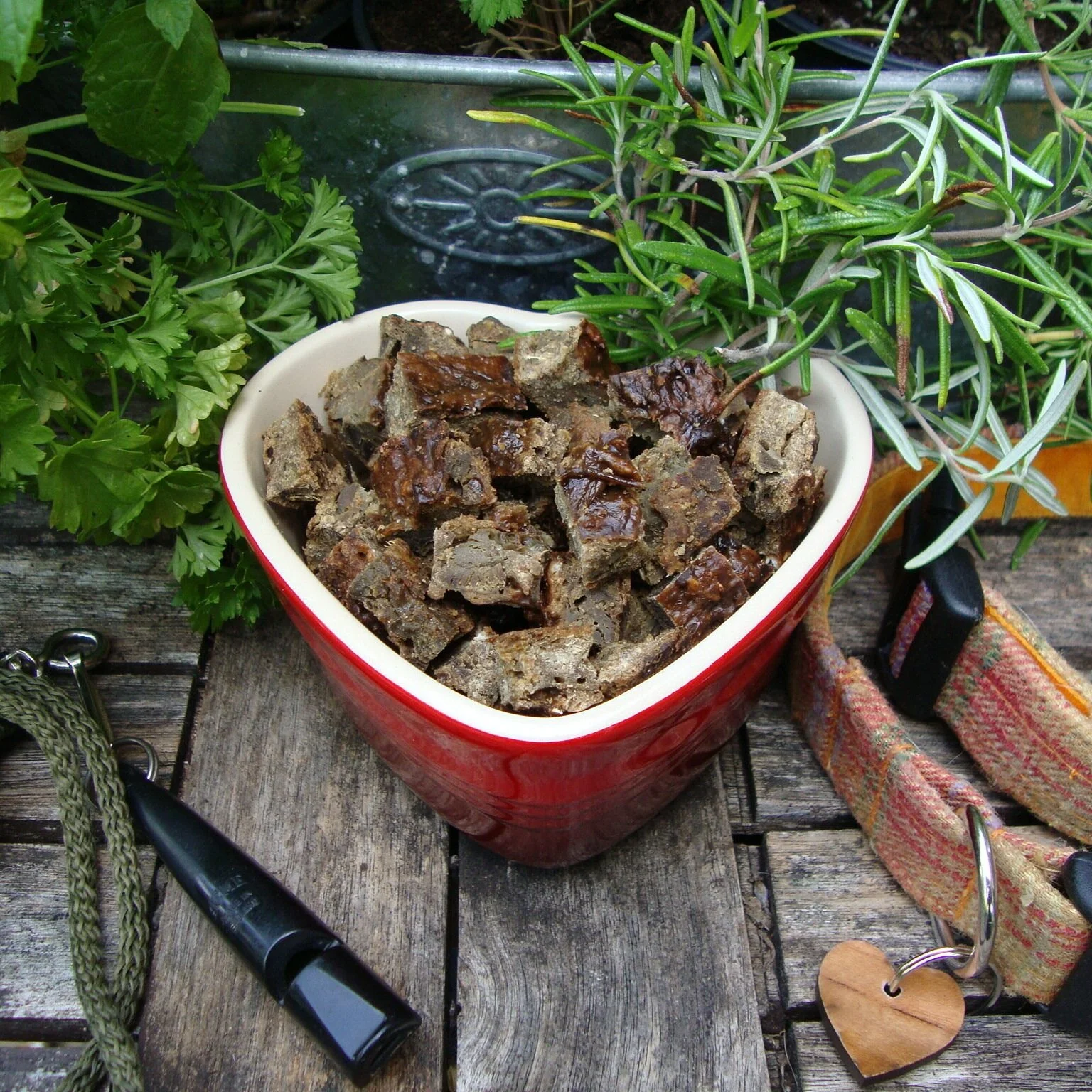
Liver Brownie Training Treats
Delicious, tempting liver brownies will make even the cheekiest hound pay attention!

These irresistible liver treats are very high value but be mindful that they are moorish and rich so too many will can loose stools.
Delicious, tempting liver brownies will make even the cheekiest hound pay attention!
For the Liver Brownie recipe you will need:
Raw liver 250g (lamb, chicken or beef)
Flour 200g (buckwheat , spelt or flour of choice)
Free range beaten eggs x 3 medium
Oatmeal or gluten free porridge oats 100g
Softened coconut oil x 1 teaspoon
Baking tray 10 inch
Baking parchment
Food processor
Mixing bowl
Sealed container or freezer bags
Preheat the oven 180c/ fan 160c or gas 4
Line a 10 inch baking tray with very lightly oiled baking parchment. In the food processor add the liver, eggs, coconut oil and pulse until it forms a smooth pate consistency.
Either add the flour and oats into the processor or if you prefer tip out the wet ingredients into a bowl and then fold in the flour and oats with a spoon. If you feel the mixture is a little too dry then a splash of warm water will loosen it slightly.
Pour the ingredients into the prepared tin, level off with a palate knife or the back of a large spoon. Place on the middle shelf of a preheated oven for approximately 30 minutes.
Remove from the oven and while still in the tray, leave on a wire rack to cool.
Cut to the required size to suit your dog and if using as training treats then squares are best. You can then break off tiny amounts to use as a reward, they have a strong taste and aroma, so a little goes a long way!
Keep the brownies in a sealed container in the fridge for up to a week. They can be frozen in bags so you just take out what you need for that day and they defrost quickly.
Head Chef ~ Hedgerow Hounds
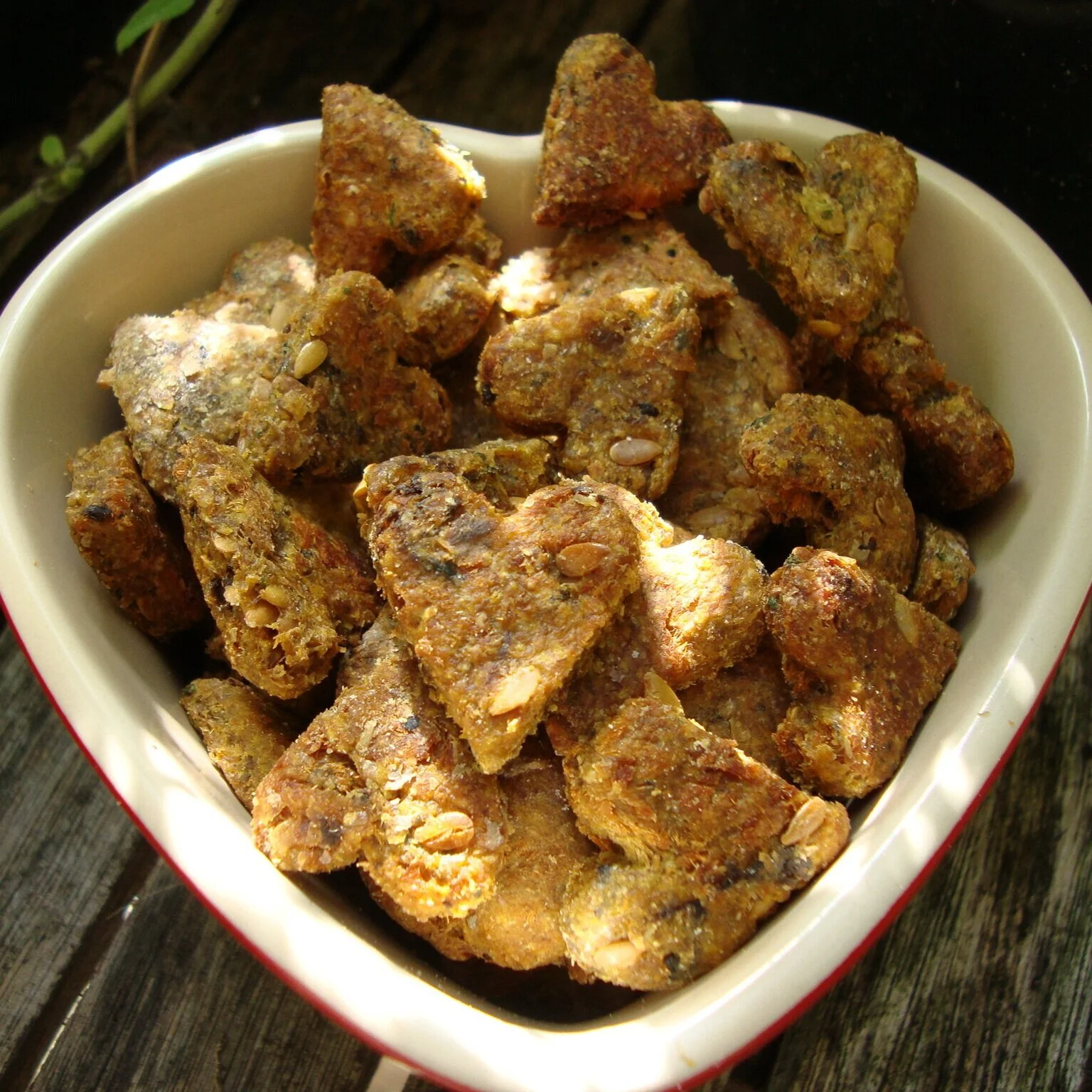
Tranquil Calming Treats
Perfect for when your dog needs additional emotional support or a lovely bedtime treat.

Make your own calming treats for when your dog needs a little more emotional support and perfect for a bedtime nibble.
You will need:
2 Level tablespoons of Hedgerow Hounds Tranquil blend or 2 chamomile teabags
250g Flour of choice and a little extra for dusting
125g Gluten free porridge oats
1 cup of Oat, Coconut or Goats milk
1 beaten egg (free range)
1 level teaspoon of Chia seeds
Optional 1 level teaspoon of Almond nut butter (must be xylitol and palm oil free) Pip & Nut is great
Baking tray and rolling pin
Coconut oil for lightly greasing the tray or baking parchment
How to make:
Place the Tranquil blend or tear open the Chamomile tea bags, into the flour, with the beaten egg, oats, nut butter and chia seeds. Gradually add in the milk, while stirring, until a dough starts to form.
Knead and bring the dough together to form a ball.
Lightly dust the surface and rolling pin and roll out the dough to an even thickness.
With your favourite cookie cutter shapes, cut out and place onto the baking tray which is either lightly oiled or preferably lined with baking parchment.
Re-knead the dough and roll out again to use the dough up, if necessary.
Place on the middle shelf of a preheated oven 180c (160c for fan oven) for approximately 15-20 mins until lightly golden in colour. Cooking time depends on how thick you have made your treats.
Remove from the oven and leave to cool on the tray or place on a wire rack.
When completely cold transfer into airtight containers.
Use within 2 weeks or freeze for approx. one month
www.hedgerowhounds.co.uk
Performance Blend
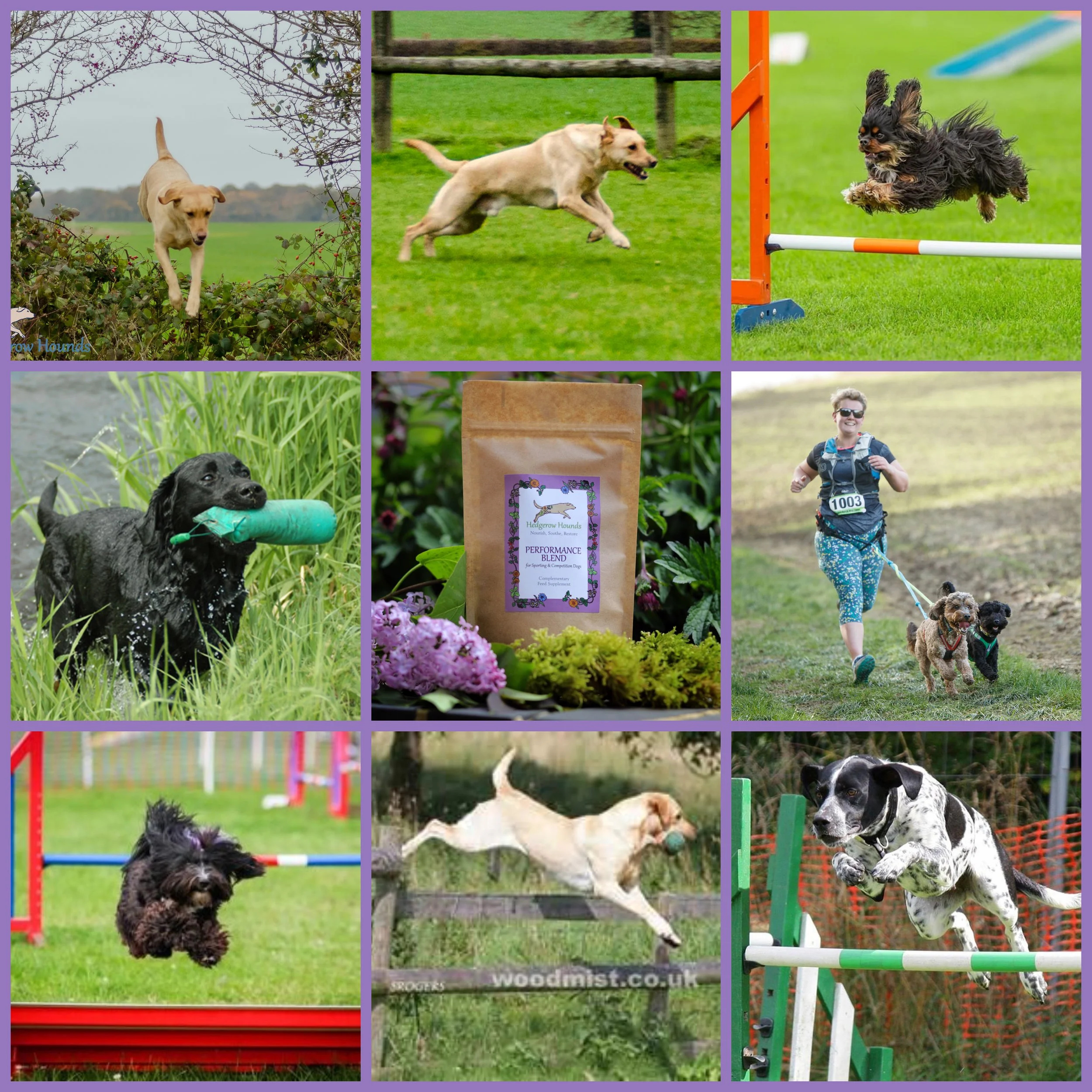
A carefully selected blend of Organic herbs, wild ingredients, and superfoods created for dogs that participate in strenuous activities such as Gundog Trials, Agility, Working Trials, Canicross, Sled Racing etc.
All the ingredients are chosen specifically for their ability to support hard-working, athletic dogs to combat fatigue, improve stamina, assist in quicker recovery, maintain condition, adapt to the stresses of competition, and provide many essential nutrients that active dogs need.
All the herbs used are of the highest quality and our products have been created by a canine sports and holistic therapist.
The blend can be stirred into raw, moist, and homemade meals or rehydrated with a little warm water and mixed into dry food.
Organic Wheatgrass, Organic Alfalfa, Organic Chlorella, Organic Ashwagandha, Organic Seaweed, Organic Hawthorn berry, Fenugreek seed, Organic Beetroot
If your sport is seasonal then I would recommend that you take a break from the blend when you are not competing and resume a month before your competitions start again. Alternatively, cut the amount of the blend down and then increase it again as you restart your sport.
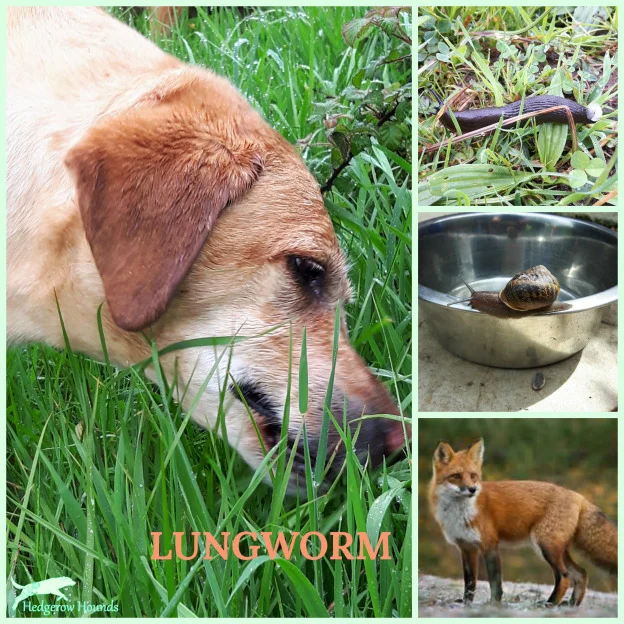
Be Lungworm Aware

Lungworm is becoming an increasing threat to dogs all across the UK due to a number of reasons including a milder and wetter climate and the increase in the number of urban foxes covering a larger area.
There are three main types of lungworm that dogs are most likely to become infected with:
Oslerus osleri (dog lungworm), Crenosoma Vulpis (fox lungworm) and Angiostrongylus vasosum
The lungworm needs a host such as a slug, snail, fox or sometimes a frog in which to grow and develop. The dog then, sometimes accidentally, eats a slug possibly on blades of grass, on a dog toy or water bowl or comes into contact with infected fox poo.
Approximately 3 days later the larvae can be found in the dogs stomach and then they proceed to migrate to the lungs where they continue to mature until they can lay thousands of eggs which are coughed up and are passed via the dogs faeces. The only difference with fox lungworm is that the mature worms live in the airways of the lungs and the trachea.
The parasite doesn`t pass directly from dog to dog, and other dogs in a household can be completely unaffected by it. The larvae do however pass out in the faeces of the infected dog so there is the potential for the infection to be spread that way.
Slugs and snails are partial to dog poop so if it is left out in the open they will crawl all over it and consume some, therefore becoming infected by the larvae and if eaten by a dog or a fox the cycle starts again. So it is crucial that any dog poo is picked up immediately before slugs and snails have access to it. Also avoid leaving water bowls outside at night and bring in any bones or dog toys to prevent contamination.
The biggest worry with lungworm is that occasionally there are no symptoms present until the disease is at a critical level, hence the importance of taking a regular worm count.
There are many symptoms that are usually present these include :
General lethargy and intolerance to exercise
Breathing difficulties and noisy breathing
Loss of weight even though the food is increased
Sore throat, swallowing hard and developing a cough or gag reflex
Staring into space and a change of temperament, unusually unsettled
Discharge or bleeding from the nostrils
Chest infection or pneumonia
Pale mucus membranes of the eyes and gums
Excessive bleeding even from a tiny wound and blood shot eyes
Collapse and seizures
The easiest way to regularly test for lungworm is by a faecal count. If your dog has had lungworm before or you are in an area of high risk then it is advised to test every 3-4 months or sooner should any tell tale symptoms appear.
The company I use is www.wormcount.com and I can highly recommend them.
Due to the fact that lungworm don`t shed larvae every day it is necessary to collect a small sample from 3 days worth of poo in the hope that they are shedding on one of those days. If your dog has had lungworm it is really important to send off another test within 3 months as they may still be carrying the worms but they were not shedding larvae on those particular days of testing. There will be a blood test available shortly which gives results with 15 minutes which is obviously a great help if your dog is showing severe symptoms by that stage and a speedy diagnosis can be life saving. Currently the faecal results take from 1-3 days to come back.
Although the fox lungworm can cause serious breathing problems and additional complications it rarely causes death unlike the other types of lungworm, but it should always be treated as an emergency to prevent the deterioration of the disease.
Due to the fact that the larvae are only in the stomach for a short while there is a short window of opportunity to influence them with alternative prevention before they migrate to the lungs and trachea. If products such as Verm-x or Four seasons are used it is usually necessary to give a larger or more frequent dose when preventing lungworm, so it is recommended that the product manufacturers are contacted for the dosage in this case.
These natural products are useful to use as a prevention but should NOT be used to treat a confirmed case of lungworn infection.
Caroline Hearn MICHT, Dip.ICAT, Dip.MLD
Canine and Equine Sports & Holistic Practitioner
Winter Bone Broth
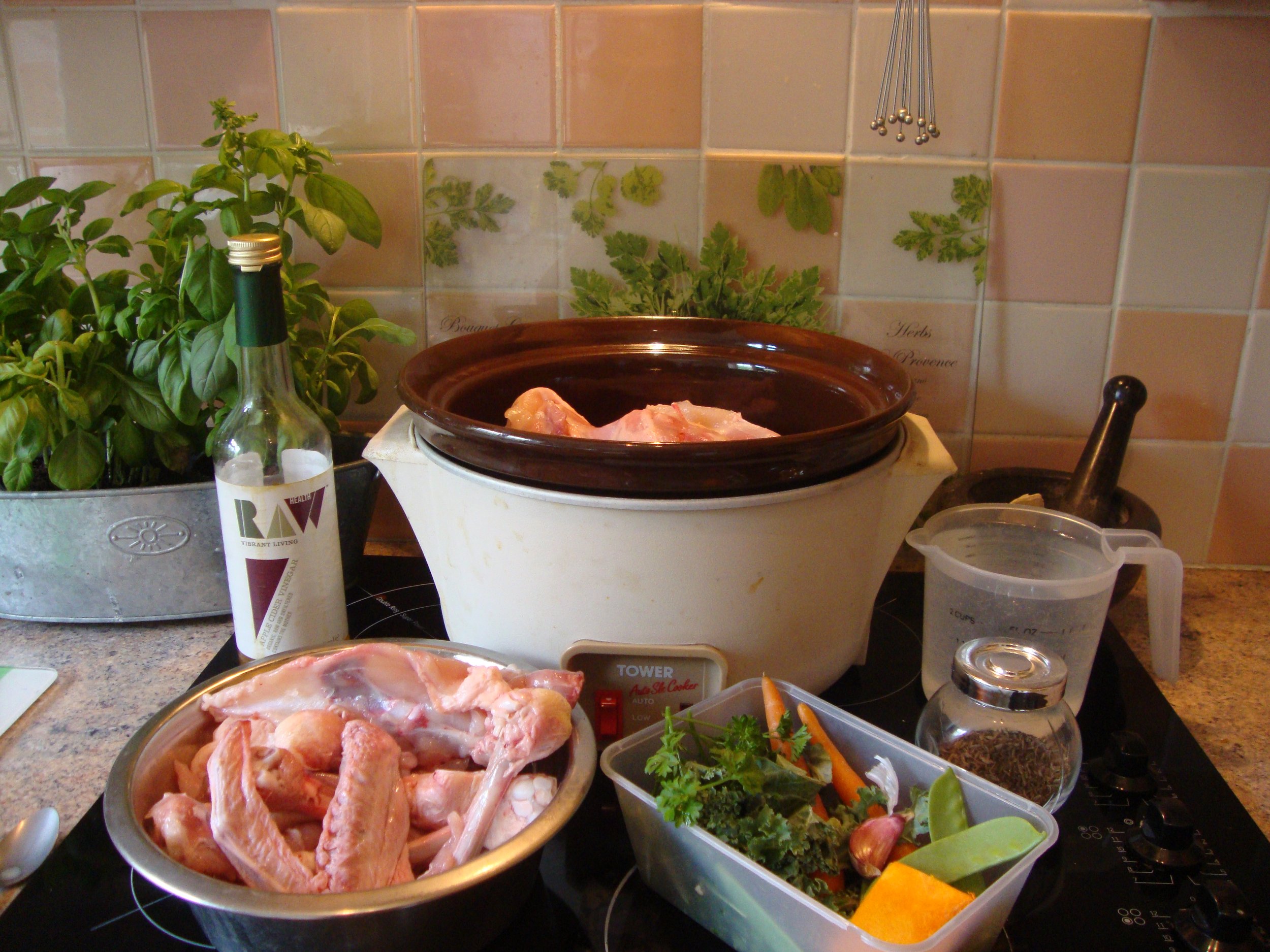
As we approach the coldest months of the year we turn to foods which offer comfort and warmth.
We can also provide our dogs with a seasonal variation on the usual bone broth recipe by adding ingredients which are traditionally used to support joint health and immunity.
As game is currently in season, try and find bones from venison, duck, pheasant or partridge. Duck and chicken feet are a good source of glucosamine, chondroitin and gelatine and after many hours of cooking will dissolve into the broth.
Avoid bones with a large amount of fat, skin and central marrow, which will just produce a very fatty and oily broth. Either remove the fat and marrow or chose a different type of bone. If your dog is prone to pancreatitis it is very important to select lean bones, remove any visible fat before cooking and skim off any that comes to the surface during cooking.
You will need approximately 4 - 5 pounds of bones of varying types and size to make a good broth. Some bones, such as ribs will completely break down into the broth, whereas harder bones will be lifted out in large pieces.
You will need:
A slow cooker or large stock pot with a lid
Bones such as duck, venison, pheasant, partridge, chicken, turkey, ox tail, beef, lamb ribs etc.
Enough water to just cover the bones when they are placed in the cooking pot.
1 stick of celery roughly chopped
Cider apple vinegar - 2 tablespoons
Ginger – 1 thumbnail size piece of fresh or half a teaspoon of powered
Turmeric 1 teaspoon (fresh or dried)
Cinnamon - quarter of a teaspoon
Shiitake mushrooms- quarter of a cup (dried or fresh)
1 level tablespoon Autumn Harvest herbal blend
2 grinds of black pepper
How to make:
Place your chosen bones into the pot and pour on the water so they are just covered. Add the cider apple vinegar and black pepper. The slow cooker is used on its lowest setting or a stock pot placed over a very low heat for anywhere between 24 – 30 hours, although some people prefer to leave the broth cooking gently for nearer to 36 hours .You may need to top up with water if the levels are getting very low.
In the remaining 2 hours of cooking add the spices, mushrooms and vegetables.
When complete, turn off the heat and carefully remove the bones with a slotted spoon plus skim off any excess fat that may be on the surface.
As the resulting broth starts to cool, transfer into ice cube trays or suitable sized pots to place in the fridge or freezer for later use. If you want your broth as a set jelly then you could stir in a level tablespoon of gelatine powder.
Store in the fridge and use within 1 week or keep in the freezer and use within 4 months.
Add the defrosted broth to meals, any recipes you make or gently warm through to provide a warm, comforting treat on a very chilly day.
**It is essential to remove the bones and dispose of them safely and under no circumstances should they be fed **

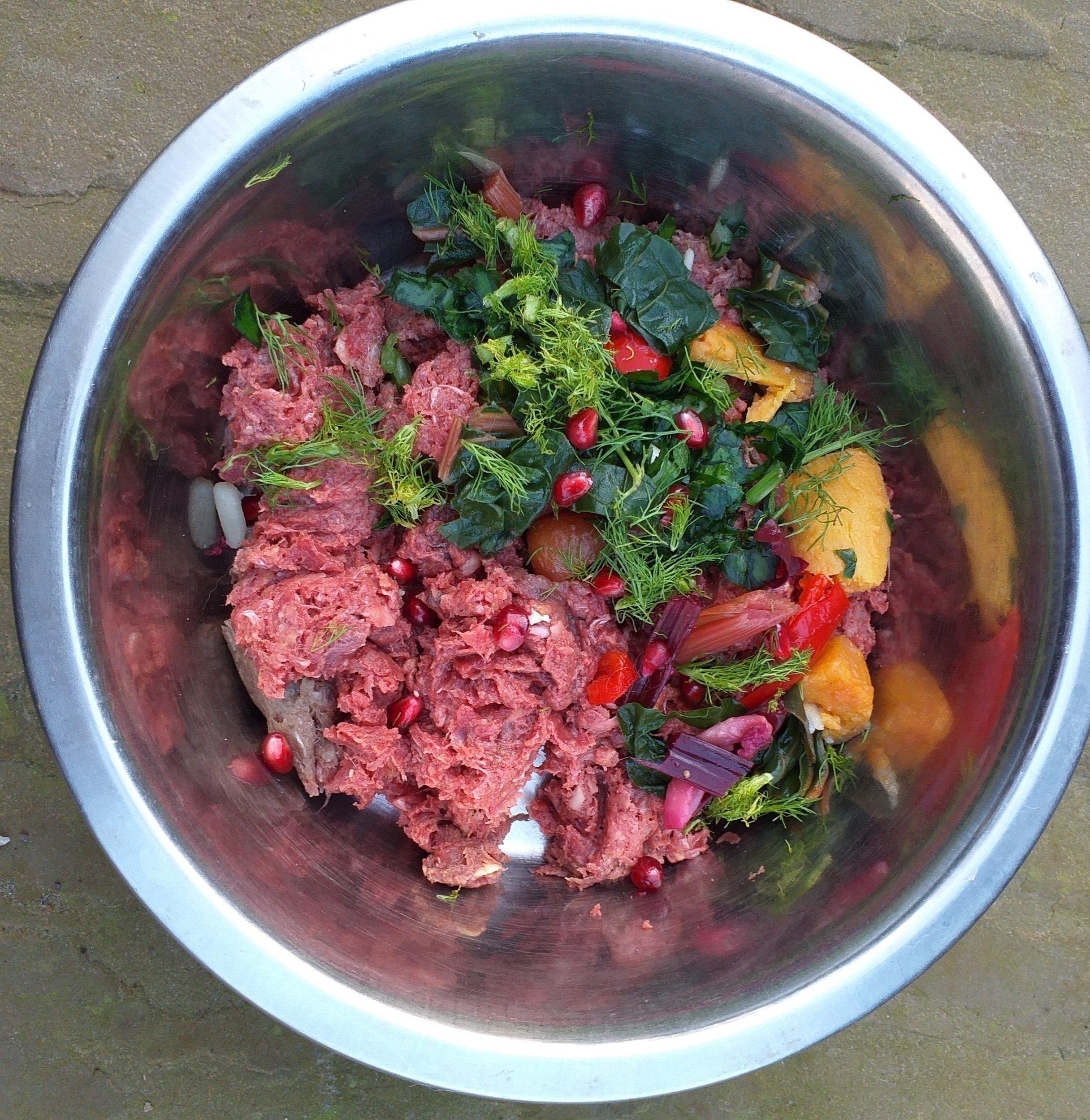
Feeding Vegetables to Dogs
There is a lot of conflicting advice about feeding dogs vegetables. Here we will explore which are suitable and what to avoid or keep to a minimum.

Should I add vegetables or not? If so which type?
So should we bother feeding vegetables to our dogs and will it even benefit them?
There are many benefits to including some fresh vegetables to our dogs diet. It is important that they are prepared in a way that our dogs can digest them either through cooking, steaming or blitzing to a smoothie. We should all be including more veg in our diets so maybe the easiest way is just to prepare a bit extra when you are preparing your own meals and then set it aside for your dog.
Phytonutrients
The term ‘phytonutrients’ is a name for a variety of compounds only found in plants that have a vast array of health-giving properties. They are covered in far greater detail in the vegetable and fruit section and are a useful way to provide additional micronutrients and antioxidants to your dog’s diet. If the inclusion of fruit, vegetables and seeds is a new experience for your dog, then start off by incorporating tiny amounts until his system adapts and you find the ingredients that suit your particular dog.
Probably the best known of the phytonutrients are carotenoids and flavonoids.
Carotenoids are plant pigments responsible for the vibrant red, yellow, orange and green hues found in vegetables, fruits and plants that can play an important role in protecting cells against harmful effects of light, air and pollution. Beta-carotene, lycopene and lutein are all different types of carotenoid that can easily be included in the diet. They act as anti-oxidants which protect cells from free radicals, which are substances that work to destroy cell membranes and DNA.
Foods that are rich in carotenoids are:
· Lutein: collard greens, Swiss chard, lettuce, spinach, kale and dandelion greens.
· Lycopene: red/orange bell peppers, watermelon, pomegranate, apples, mint and blackberries.
· Beta-carotene: carrots, sweet potato, broccoli and romaine lettuce.
· Flavonoids: These give berries their red, blue and purple colour and can be included in the diet in the form of blueberries, blackberries, raspberries and bilberries.
So, what does the inclusion of veg and fruit have offer to our dogs?
They provide a wealth of vitamins, minerals, anti-oxidants and fibre, including vitamins A, B, C, E and K, and minerals such as calcium, potassium and magnesium.
Anti-oxidants protect against many diseases due to the aging process, and for a degenerative condition such as progressive retinal atrophy a diet rich in anti-oxidants is the only known way to slow down the deterioration of this eye disease.
Fresh vegetables also encourage enzyme production and offer a gentle cleansing and balancing effect on the ph. levels of the body.
Depending on the type of vegetable, they provide soluble and insoluble fibre, which benefit the gut bacteria, and can bind to and remove certain toxins as well as adding bulk and moisture to the faeces.
With intensively farmed animals and soil depletion becoming a concern, our food is lacking in the level of nutrients that it provided many years ago, so the addition of vegetables, herbs, berries and some grains is a way to try and fill any nutritional gaps. The more variety we can add into our dog’s diet the less we will have to rely on dietary supplements.
An ideal herbal supplement in the Hedgerow Hounds range is Nature’s Boost, which combines vegetables, herbs, seeds & superfoods.
How to prepare and feed.
Due to the fact that dogs cannot digest the cellulose in vegetables, the best way to serve is to blend in a food processor to break down the plant’s tough cell wall, until they resemble a thick smoothie consistency, which also mimics the partly digested contents of a prey animal’s stomach.
Other options would be to lightly steam them or finely grate them into the food.
If you want to make larger batches up or you are lucky enough to grow your own veg and have a glut in the summer, then the pureed, pulped veg can be frozen into ice cube trays or pots for convenience.
If they are served whole many dogs just lift pieces of veg out, eat around them in the bowl, or pass them out the other end undigested, to make full use of the nutrients they need to be broken down.
A good feeding guideline would be 7% vegetables and 3% berries, although if you are looking to reduce the overall cost of home-prepared food, or if the dog needs to lose weight, then more veg can be added to make up a quarter of the meal.
The addition of vegetables will change the overall percentages, so subtract from the muscle meat and not the bone or offal which provides the calcium and vitamins. So, for instance a usual 80-10-10 ratio would become 70% (meat) 10% (bone) 10% offal and 10% vegetables.
Start off with a small amount and then monitor how your dog is handling the inclusion of vegetables in his diet.
It is not essential to feed vegetables every day, but even three times a week will be beneficial, rotating different types and changing with the seasons where possible
